
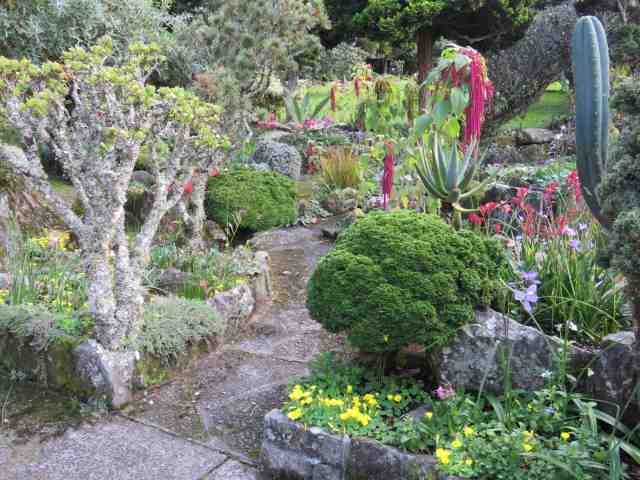
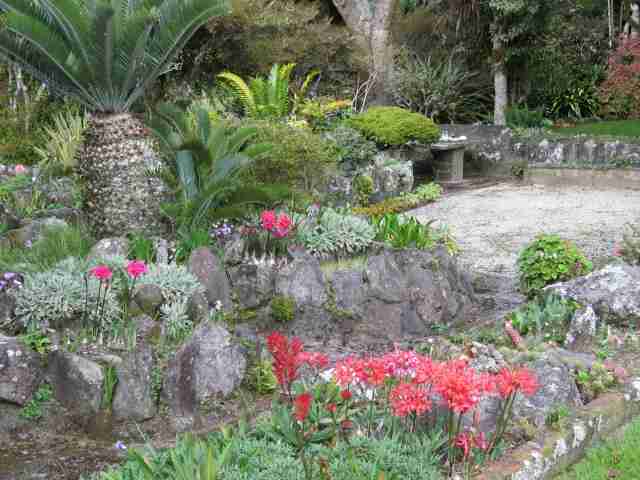
I am not quite gone yet; on Wednesday I start the long haul over to Barcelona and then the south of France. In the meantime, the rockery has been bringing me much pleasure. If I ever have to downsize both house and garden, I might be tempted to turn any new, smaller garden into rockery. Rockeries lend themselves to highly detailed, high-interest level gardening and I can see I could be quite happy pottering in a rockery – as indeed was Mark’s dad, Felix, in his later years. It is a particularly absorbing area to garden, even if there are times I regard it as the gardening equivalent of micro-surgery.


Ours is a raised rockery with different levels so it has detail in its design, not just in its plantings. Mark’s mother always used the plural ‘we’ when she talked about building the rockery, but we think it more likely that she designed it and then supervised Felix in its construction, which included some excavation to achieve different levels. Every original garden structure here was done by hand or, on occasion maybe, using horse power. Felix did not have a tractor or access to any of the machinery we can call on these days.
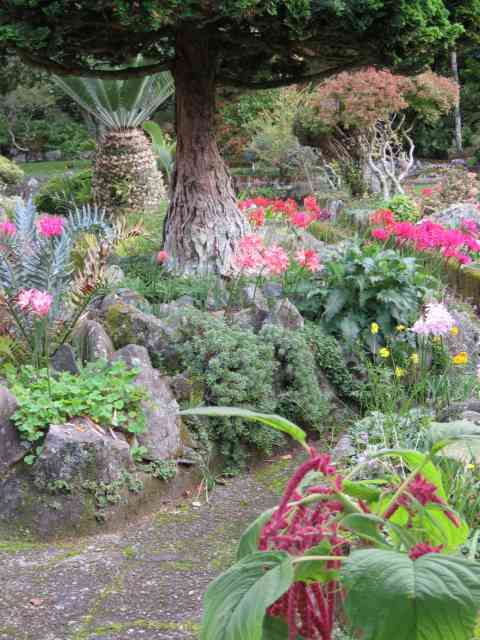
As our rockery measures some 20 metres by 10 metres, it is not small and it is certainly not low maintenance. Because it is largely raised beds and pockets of soil for separate plantings, it dries out and heats up in summer. Our frequent heavy rains drain quickly but that also leaches a lot of the nutrients out of the soil in the process. Bulbs generally need excellent drainage and many thrive in poor soil so they are quite happy in this environment. We try to get around with a thin layer of compost every spring and when I excavate a pocket to sort out its contents, I will add compost when I replant. But the soil overall is pretty impoverished and generally lifeless in the summer heat. There are almost no earthworms in summer but they seem to return as temperatures cool.

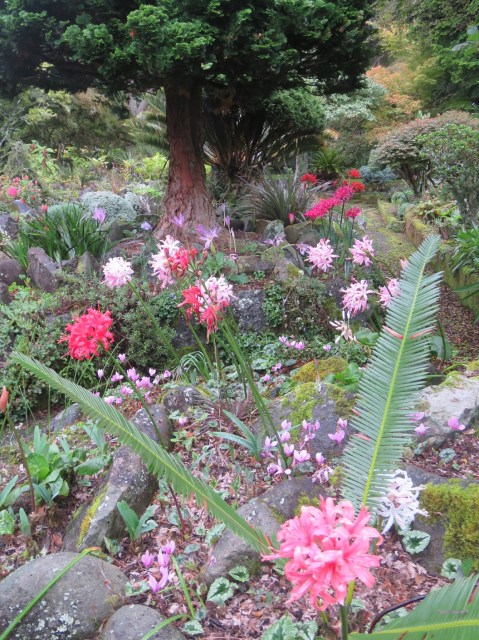
Rockeries are traditionally a re-creation of rocky mountain slopes to grow alpines. We can’t grow alpines here where our conditions and climate are anything but alpine. Our rockery basically consists of elderly dwarf conifers of considerable character and a few cycads giving all year round structure, offering some shadier areas beneath for bulbs of many descriptions. Smaller bulbs and many species rather than bigger hybrids which look out of scale, with one notable exception.

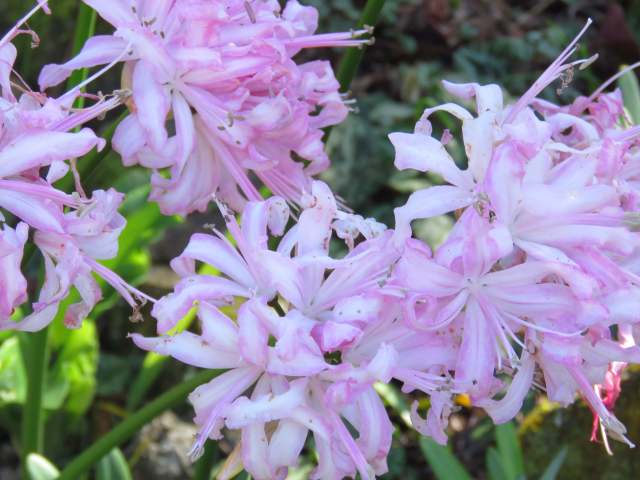
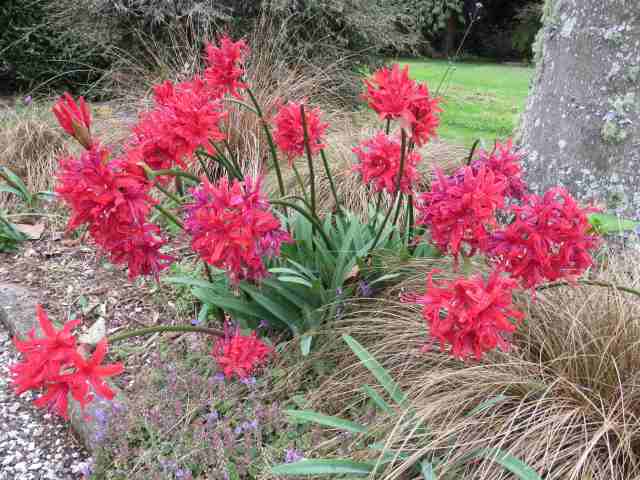
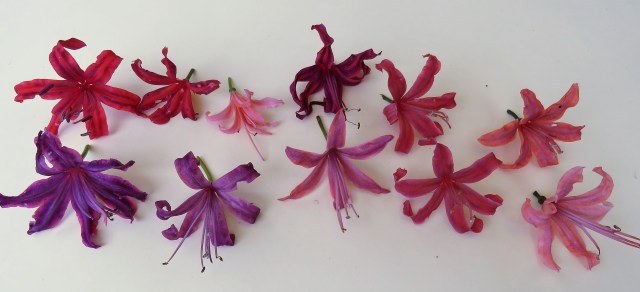
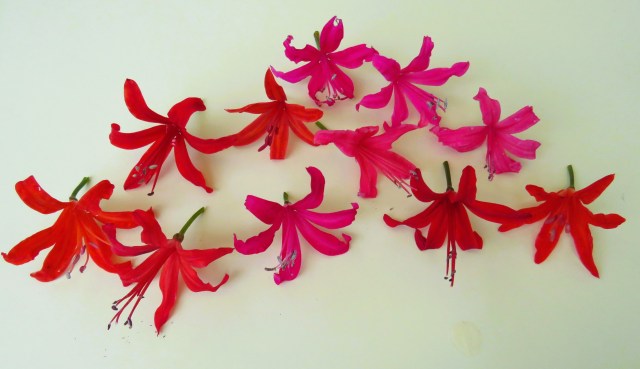
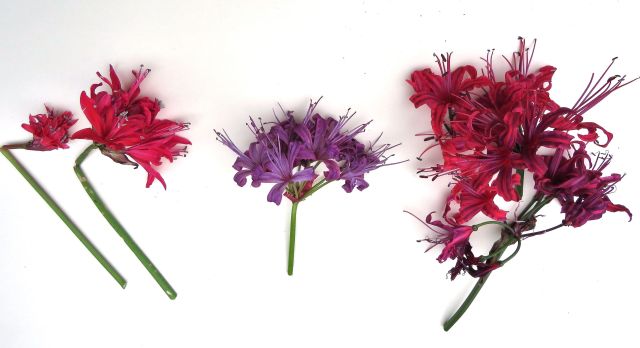
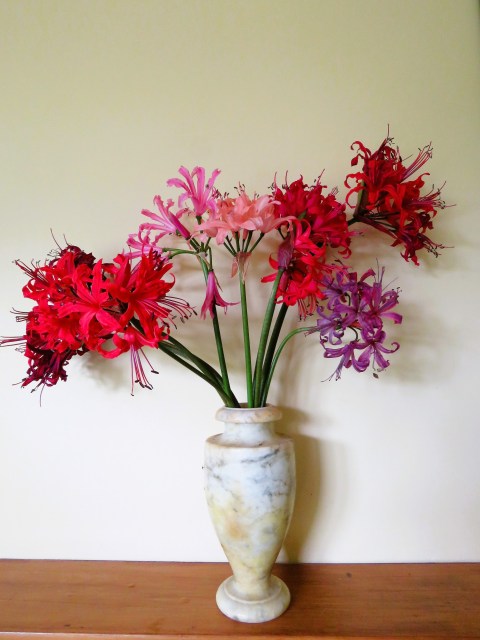
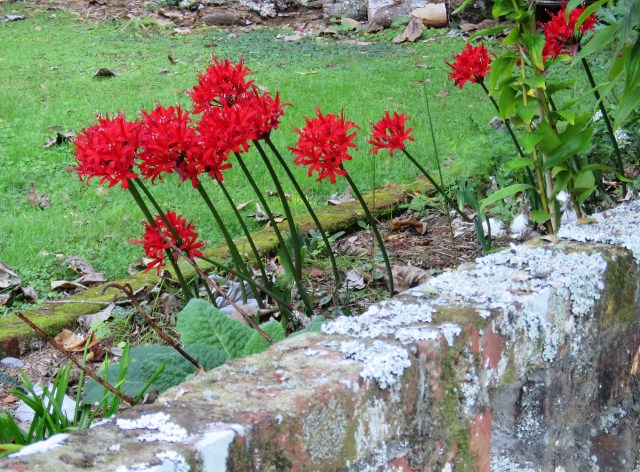
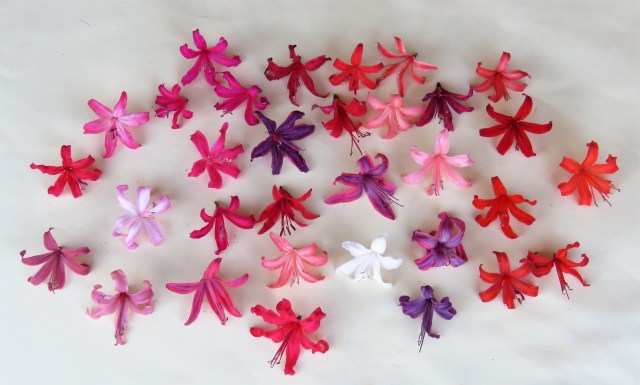
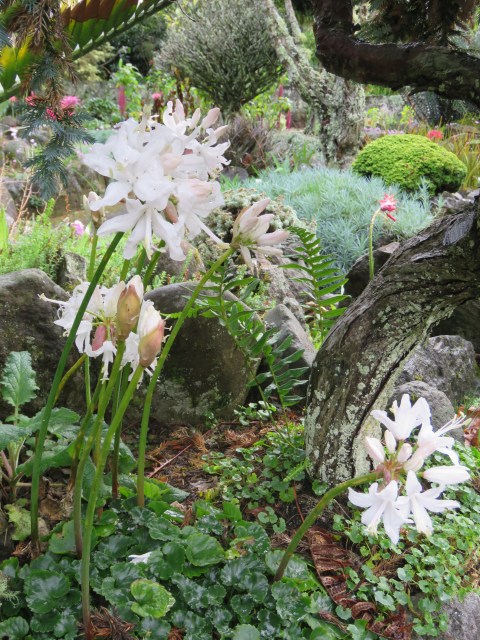
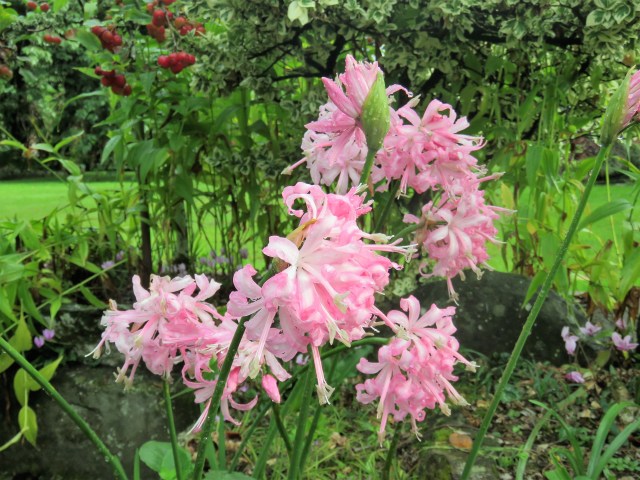
That exception is the Nerine sarniensis hybrids, most of which were bred and selected here although we have a few of the early Exbury ones and some of the species nerines. They are sensational at this time of the year. Along with Cyclamen hederafolium and the ornamental oxalis, they keep the autumn rockery full of blooms and colour.

Last year, Zach reassembled the oxalis collection. Years ago, I planted them all out because I didn’t want to be repotting them every year and he set about retrieving some of each. We had only lost one or two inbetween times and he now has over 30 varieties in pots – most from the garden and a few extras he has picked up from local markets.
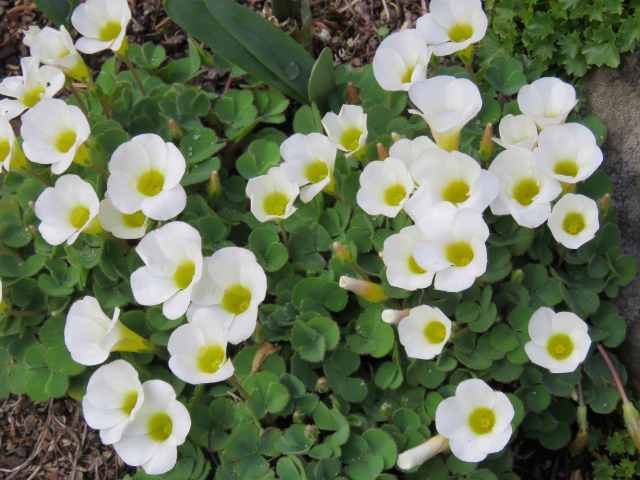
A much maligned genus, the oxalis shine at this time of the year. We are only a few months off the short snowdrop season and the start of the dwarf narcissi and lachenalias. There is always something of interest going on in the rockery and it is constantly changing as different bulbs and plants take their time to shine. Always, Mark and I remember Christopher Lloyd saying in conversation on a TV programme, “I think you will find high maintenance is a great deal more interesting.” We could not agree more.








 As 2018 draws to a close, I decided that I do not have anything to say on
 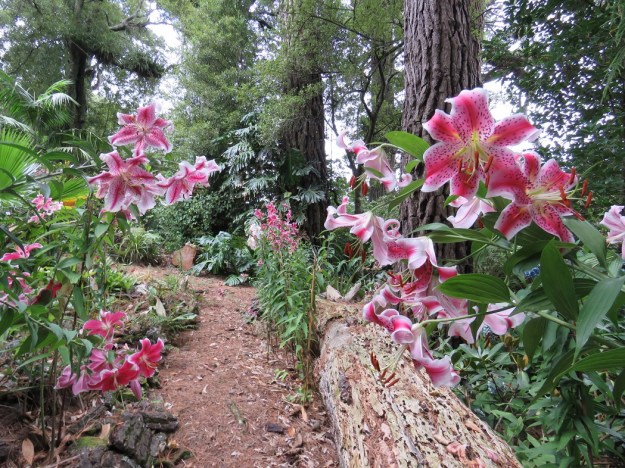 Firstly, January is for lilies.
 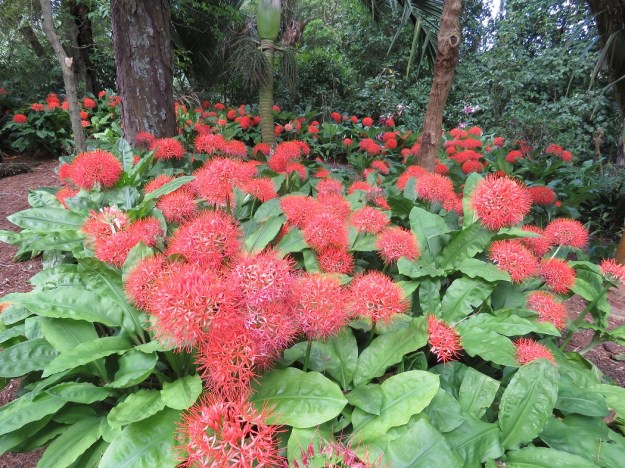 February is peak summer here, when we get the most settled and warmest weather. And the
 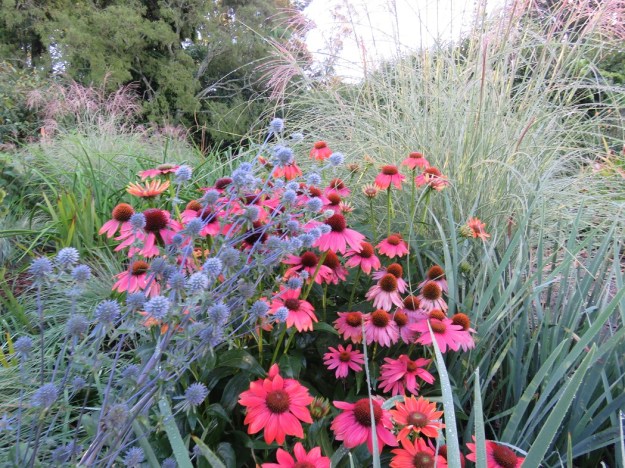 March is still summer here although the day length is shortening and the nights noticeably cooler. It used to be a very green time for us, because we have so much woodland garden and there is not a whole lot of high impact flowering in later summer woodland. We went to England three times to look at summer gardens and it is the sunny perennials that flower into this time. It has been really exciting putting in a large summer garden in full sun. I am extremely impressed by the echinaceas which flower from December to April and I have a very soft spot for the blue eryngium, even if I often need to put a stake in to hold them upright.
 By April, we can no longer pretend that summer will go on forever. The flowering of the
  May brings us the early camellias in bloom, in this case
  June is early winter here. Definitely winter. I could have chosen Mark’s Daphne ‘Perfume Princess’ which flowers on and on through the winter months, but instead I picked Vireya Rhododendron macgregoriae. This particular plant has
  July is our bleakest, coldest month. But there is light ahead. July brings us snowdrops and by the end of the month, we have the earliest blooms opening on both the deciduous magnolias and the early michelias. Nothing shouts spring more than the earliest spring blooms. Mark would like some galanthus varieties that flowered later in the season as well and he has tried all that are available, but none of them compete with Galanthus ‘S. Arnott’ for showy and reliable performance and the ability to naturalise in his bulb meadows that are a long-term project.
 August – yes there is a lot of snow on our Mount Taranaki. All the better to frame our
 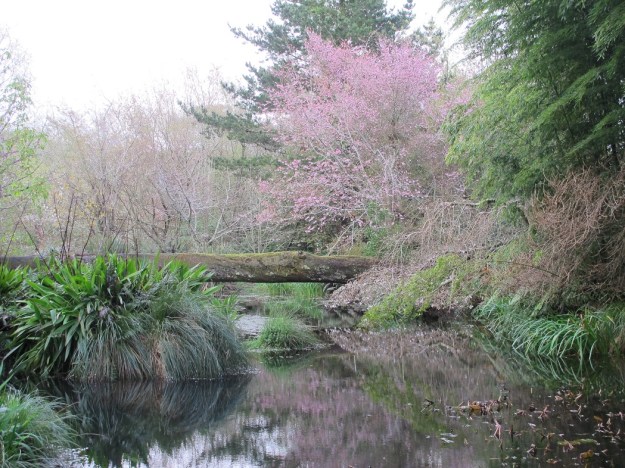 I gave September to the prunus, the flowering cherries. It is probably the campanulatas that are the showiest and they flower in August and I had already allocated that month to magnolias. But we grow quite a range of flowering cherries and this one is down in our wild North Garden, an area that we find particularly charming at this time of the year.
 October is mid spring. And for October, I chose the clivias yellow, orange and red, seen here with Hippeastrum papilio and dendrobium orchids in the Rimu Avenue. As I selected photos, I realised I was leaning to what we might call our backbone flowering plants – the ones we have a-plenty. Not all of them. I had to skip the azaleas, the michelias, the campanulatas and the hydrangeas owing to my self-imposed restrictions of one per month.
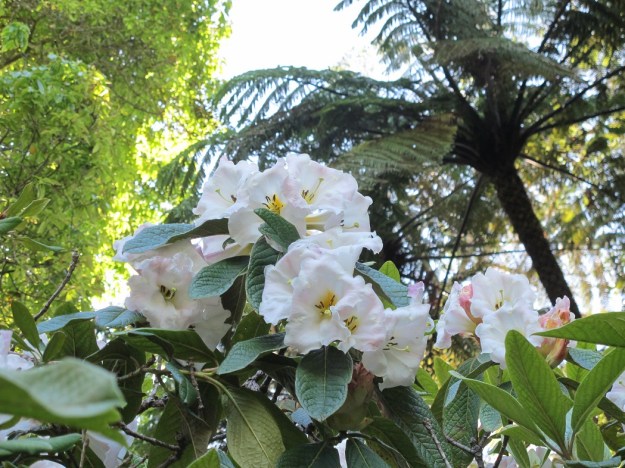 November brings us peak nuttallii and maddenii rhododendrons. The rhododendrons start in August, sometimes the first blooms as early as July, and flower well into December. But the beautiful nuttallis and maddeniis peak in November and are a source of great delight.
 Finally, December is marked by the Higo iris down in the meadow in our park. What prettier way to end the calendar year? And gardening being what gardening is, we start the cycle again with a new year. Best wishes to all readers for a happy and rewarding 2019.


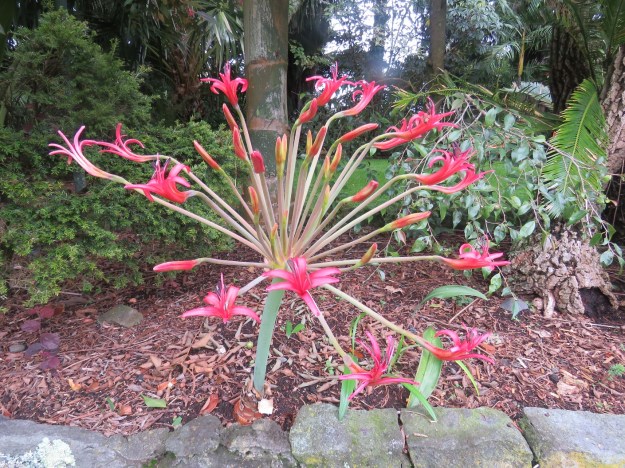
 Autumn is also
 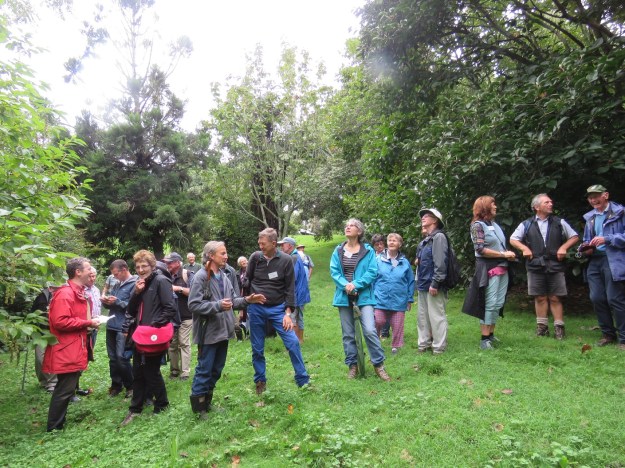 With our garden closed to the public these days, we don’t accept many tours or groups but the New Zealand chapter of the IDS (International Dendrology Society) was an exception a few weeks ago. Of all the horticultural societies we have encountered over time, the IDS remains our favourite. It attracts the most interesting and knowledgeable people and we really enjoyed their visit. There were 50 in the group and they ate lunch here.

 Tikorangi The Jury Garden