Tag Archives: Tikorangi: The Jury garden

Garden lore

It is a curious thing that people will sometimes spoil some garden project for the sake of a word. For instance, a blue garden, for beauty’s sake, may be hungering for a group of white lilies, or for something of palest yellow, but it is not allowed to have it because it is called the blue garden and there must be no flowers in it but blue flowers…. My own idea is that it should be beautiful first, and then just be as blue as may be consistent with its best possible beauty.

Gertrude Jekyll Colour in the Flower Garden (1908)
016-copy
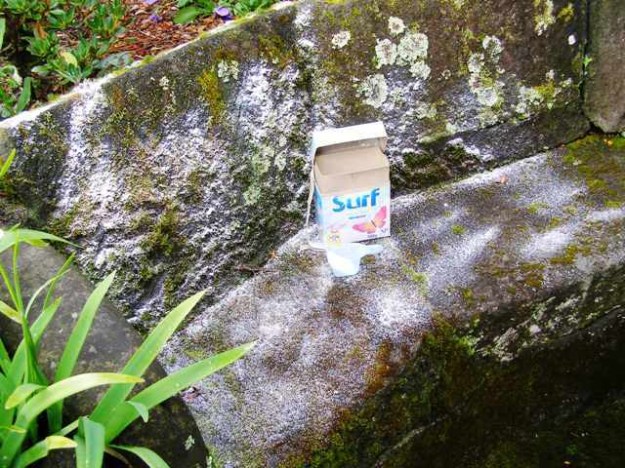
Dealing to moss

The easiest way I know to kill moss growing in the wrong places is to lightly sprinkle soda ash. This is in fact powdered washing soda (sodium carbonate or Na2CO3 for the scientifically inclined) and you can buy it from bulk bins. Cold Water Surf is often recommended and does work. I am guessing Cold Water Surf contains a relatively high proportion of soda ash as a water softener because it works much better than the budget washing powder I tried. Having found what the active ingredient is, I now prefer to use straight soda ash without the unnecessary extras. It is non toxic and occurs naturally so, as far as I know, is not going to harm the environment. It kills moss overnight though you then have to wire brush the dead moss off hard surfaces or rake it out of lawns. Experiment lightly – it doesn’t take a lot to be effective.

Published in the Waikato Times and reprinted here with their permission.
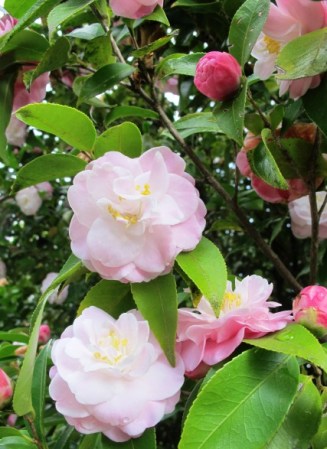
Plant Collector: Camellia Sweet Jane

Sweet little Sweet Jane

Sweet little Sweet Jane

How pretty Camellia Sweet Jane looks at the moment. The flowers are darker pink on the outer petals fading to the faintest blush in the centre with a hint of golden stamens. It is a full flower, described in the camellia world as a peony form and it only measures about 5cm across so it is classified as a miniature. Yes it gets petal blight, but there is such a generous bud set that it still manages a good display over time. It came to this country in the 1990s from Australian breeder Ray Garnett. Readers who know their camellias may be surprised to learn that one of its parents is C. transnokoensis.

In that nineties rage for miniature camellia flowers, many people assumed that the bushes would also stay obligingly small. Few do. Our Sweet Jane, unclipped, is now about 3.5 metres tall and that is true for many of those small flowered varieties like Cinnamon Cindy and Gay Baby. But they do at least have correspondingly small leaves and are easy to clip if you want them kept lower. Camellias only need clipping once a year after flowering, or twice if you are after a tighter form.

We used to grow Sweet Emily Kate commercially. It came from the same breeder and its flower is arguably prettier (and pleasantly scented). Now that we are no longer selling it, I will admit it was a wonderful nursery plant and could look good if well cared for as a container plant but I’ve never seen it looking good planted out in the garden and left to its own devices. Sweet Jane is a much superior plant.

First published in the Waikato Times and reprinted here with their permission.
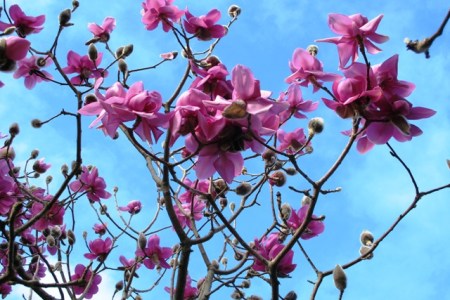
Tikorangi Notes: Friday 10 August, 2012

Lanarth again - at its best against our blue skies

Lanarth again – at its best against our blue skies

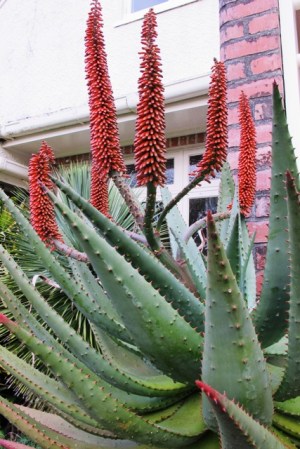
Aloe aloe aloe

Aloe aloe aloe

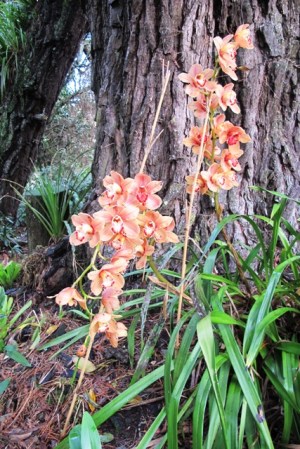
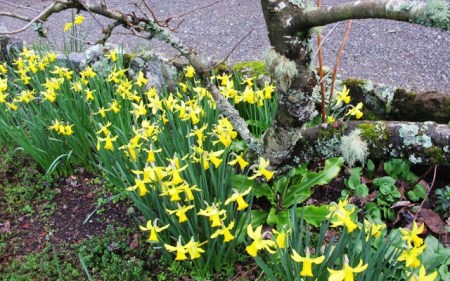
I was caught slightly on the hop this week when somebody rang from the Wairarapa, planning a garden visit. I suggested another week would be better for the magnolia display and he asked what else was in flower. I burbled on, mentioning the big-leafed rhododendrons, michelias and camellias. I could also have reeled off the campanulata cherries, swathes of early flowering narcissi, vireya rhododendrons, hellebores, early clivias, azaleas, the last of the snowdrops, early lachenalias, calanthe and cymbidium orchids, Cyclamen coum, bromeliads, even some of the aloes. Mark keeps reminding me that in harsher climates, gardens don’t have flowers all year round. We take it for granted here and while August is technically winter, the spring flowering has started in earnest now. It is unstoppable. Mind, the magnolias did not appreciate the hail storm two days ago. I went out looking for a good photograph and the first Vulcan blooms all looked as if somebody had ripped all the edges of the petals. Give it another few days, and many replacement blooms will have opened. It is a magic time of year here and the birds are in agreement too.

Cymbidium orchids in the woodland

Cymbidium orchids in the woodland

All the early narcissi are in flower

All the early narcissi are in flower

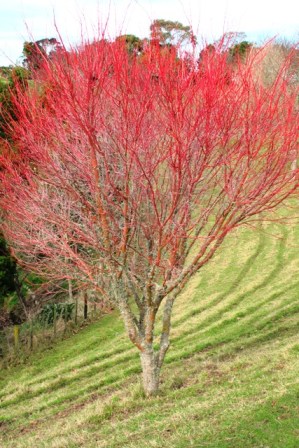
Plant Collector: Acer Senkaki or A. 'Sango-kaku'

Acer Senkaki, as it is commonly referred to in NZ

Acer Senkaki, as it is commonly referred to in NZ

These vibrant red branches belong to what is commonly known as Acer Senkaki, or the coral-bark maple. I will go with Britain’s Royal Horticultural Society’s note that in fact, the correct name is Acer palmatum var. dissectum ‘Sango-kaku’. I wonder if Senkaki is the anglicising of Sango-kaku? The RHS gave it their prestigious Award of Garden Merit.

This is one of the Japanese maples with finely cut leaves (which explains the dissectum bit of the name), in five lobes or fingers (hence palmatum). The leaves are pale green tones throughout most of the season, colouring to gold in autumn. However, mostly one grows it for the glorious winter bark. It is a tree, albeit a smallish one. Over time it will get maybe five metres high by three metres wide.

I photographed this specimen in a country garden, Puketarata, where it stands as a splendid feature all on its own on a hillside, so it is able to viewed in its entirety. It really lit up a bleak winter Sunday afternoon.

Most maples need to be out of the blast of winds because their foliage is soft and relatively fragile. If the roots dry out over summer, the plant shows stress by burnt edges to its leaves. So positions which are well sheltered and moist all year round without getting waterlogged will give the best results. Grown well, the Japanese maples are lush and lacy in appearance and give superb autumn colour.

First published in the Waikato Times and reprinted here with their permission.
Grow it Yourself: courgettes (the final in this series)

This is a great crop for a beginner because it is so easy and productive. Rampant, but easy. Courgettes (French) are the same as zucchini (Italian), sometimes reshaped as scallopini (like flattened muffins) and also known as summer squash. They are a cucurbit, as is pumpkin. You probably only need two plants and they will need a good metre each in area. In under two months, they will drown you with such a deluge of produce that you will wonder why they are relatively expensive to buy. If you tire of the taste and texture, look up recipes for stuffed courgette flowers and nip them off in their infancy.

Courgettes are started in individual pots and planted out when soil temperatures rise around late October (or even later in colder areas). You can start seeds in pots under cover in September or just buy a couple of plants when you need them. The reason you start with individually potted plants is because they don’t appreciate their roots being disturbed.. Because they are such large and rampant growers, they need rich, well drained soils. We prefer to use compost to feed all our vegetables. Worm wee would also be a good option or you could turn to some of the off the shelf fertiliser options. Keep the moisture levels up through summer because these are plants with a very high water content. Keep harvesting every couple of days to encourage the plant to keep producing. The time between a desirable little courgette and a large, tasteless marrow is short indeed and if the plant is left with maturing marrows, it will stop producing baby courgettes for you.

First published in the Waikato Times and reprinted here with their permission.