Tag Archives: Tikorangi: The Jury garden

Needs must when drastic pruning is required

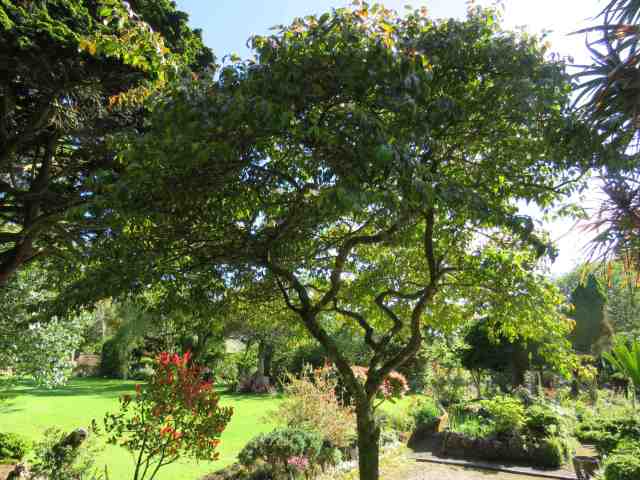
We generally prefer to lift, limb and encourage the natural form of a plant like this mature Camellia ‘Tiny Princess’ but it isn’t always possible.

We carry out a lot of pruning in our garden but not a whole lot of drastic, hard pruning to reduce a plant to juvenility. Generally, we like to celebrate maturity in plants and to shape or clip to bring out their natural form if required. But sometimes there are plants that are beyond that and drastic action is needed because they have lost what ornamental merit they had.

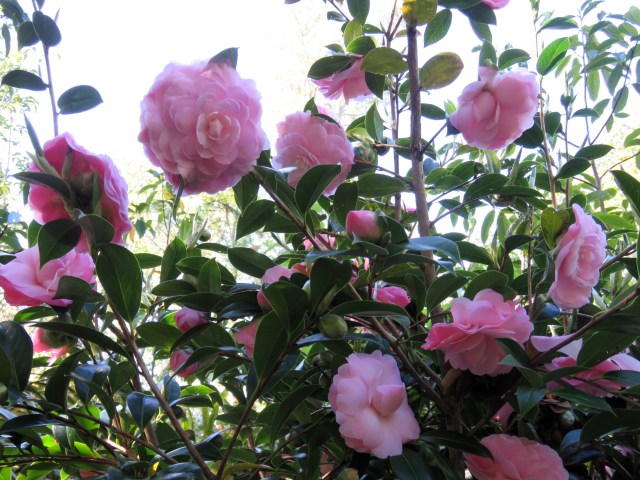
I was delighted to find some perfect blooms on a specimen of Camellia ‘Mimosa Jury’ on a former nursery stock plant this season but it is many years since the original plant in the garden has looked like this.

So it is with some of the original camellias bred by Felix Jury, some of which are now household names. We regard the original plants as having some intrinsic value simply because they are the very first one but there comes a time when they can lack any aesthetic merit, especially these days when camellia petal blight has robbed them even of pretty flowers. In particular, ‘Mimosa Jury’, ‘Waterlily’ and ‘Softly’ had reached for the sky and left nothing but bare legs and messy, blighted blooms and aborted buds visible at ground level.

What remains of Camellia ‘Softly’ after a brutal prune but we expect it to recover. It must have been at least six metres tall last week.
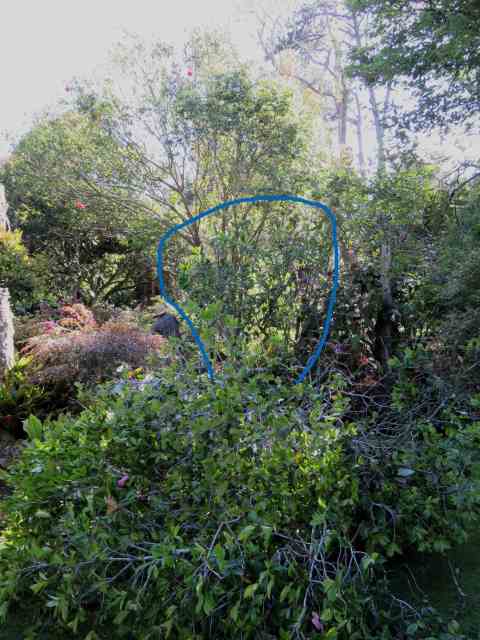
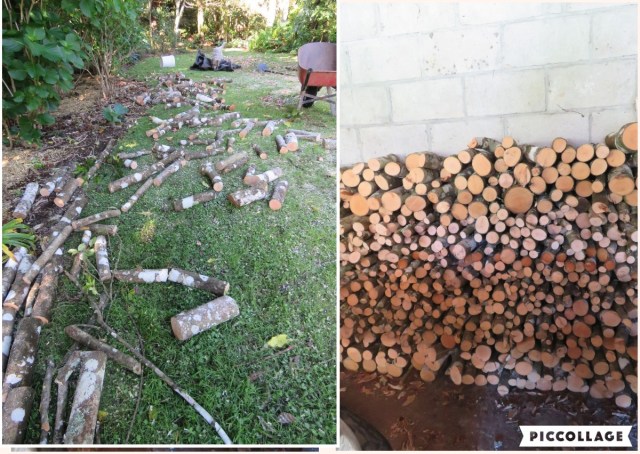
That is Zach, to the left of the blue circle, taking down ‘Mimosa Jury’ which was taller than the one still standing behind. In front is the mountain of material taken off already.

A word of warning: we have a fairly long season when we can do this sort of extreme pruning – late winter through spring is best, so August to October. We can get away with going into November this year because spring has been a little late and we get regular rain. It really is too late and risky for people in climates who are staring down the barrel of a long, dry, hot summer which may start very soon. Your plant may just sigh and die rather than springing into fresh growth.

This specimen of Camellia ‘Tiny Star’ had become leggy and way too tall to appreciate the dainty blooms. It was cut back very hard indeed two years ago so has just put on its third season of fresh growth and should be as pretty as a picture in flower next spring.

You can cut back to ground level with camellias and they will grow again but you get a thicket of young shoots and no form to the plant. We prefer to cut off to anywhere between a metre up to three metres, depending on the situation, so that the plant will look established again quickly. If we can, we will leave a few wispy branches that still have leaves on them, even if we trim them off later when the new growths have appeared. In this case, ‘Softly’ is back to bare wood while ‘Mimosa’ has a few thin branches with leaves. We shape the remaining trunks and branches, often reducing them to a strong central leader and maybe five or seven branches from that leader.

When I say reestablish ‘quickly’, I mean two years. The plants will push out new shoots this season and bush out again next growing season but they won’t flower and look lush until they have that second growing season behind them so into the third flush of new growth. Patience is a virtue in gardening.

As is our usual practice, we deal with the waste by retrieving what is suitable for firewood and putting the leafy and twiggy remains through the chipper to use as mulch.

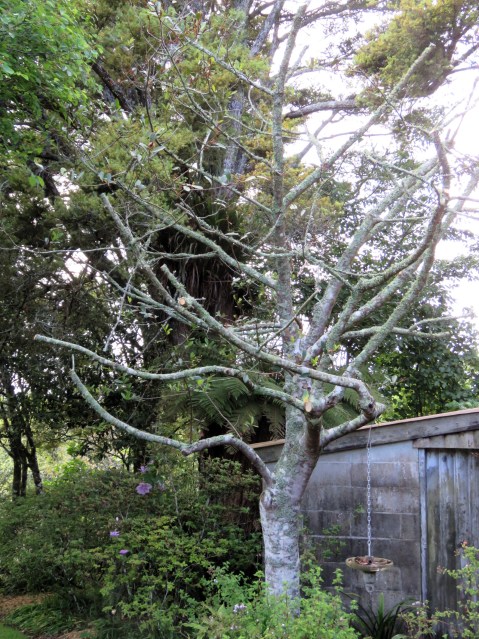
The bare branches of an established plant of ‘Velvet and Cream’ – an extreme example of getting a decent shaped plant out of it after we failed to train it adequately from the start.

You can do this style of extreme pruning on michelias, too and we have reduced a M. laevifolia ‘Velvet and Cream’ to a leafless frame this week as well but you do need to start with a strong growing, healthy specimen. If it is not growing vigorously, it is may die. If you are wondering about hard pruning a michelia (botanically magnolias these days), there are more before and after photos over time here from an earlier effort on another specimen.

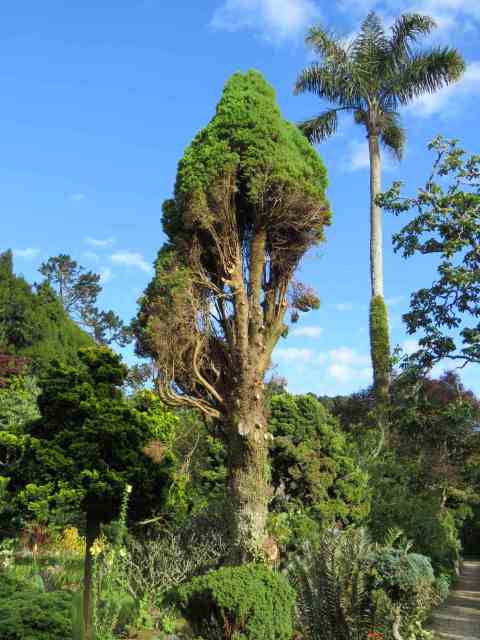
Work has stopped until the babies fledge and fly. Then, sadly, it is farewell to Picea albertiana ‘Conica’.

Some plants are beyond rescue. Work has stopped, temporarily, on the Picea albertiana ‘Conica’ in the rockery. It was once a fine specimen of admirable size and form. It was also kept in good health because Mark sprayed it for red spider once a year. As it grew larger, it became harder to spray and Mark – He Who Used To Do All The Spraying here – became increasingly reluctant to routinely spray to keep plants healthy. We decided that good environmental practice was more important than keeping inappropriate plants alive in the garden. In the years since he stopped spraying, the red spiders have pretty much taken over and the tree has gone into serious decline, as well as developing a pronounced lean. Time for it to go.

Cutting down has stopped because what remains houses a bird’s nest with babies. It may just be a common old blackbird but we are not willing to knowingly kill a family simply because we want to finish a task. Completion can wait a little longer until the branches are no longer occupied.

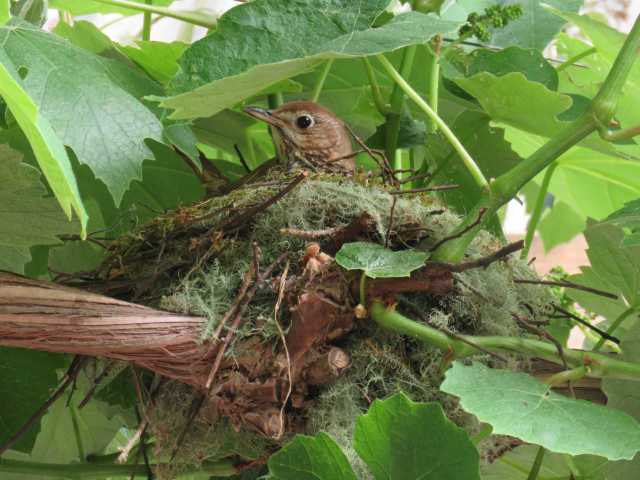
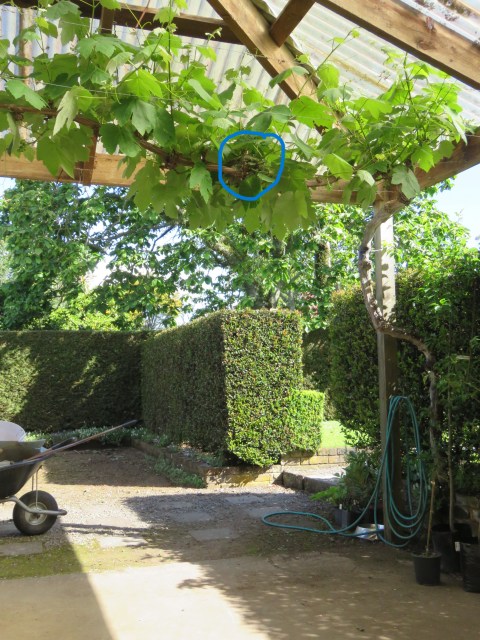
Talking of birds, Mama Thrush is bringing Zach and me delight although Ralph the dog is not so appreciative. She built her nest in the grapevine that grows beneath the verandah on the front of our shed which happens to be our main seating area when Lloyd and Zach are here at work. Her early anxieties appear to have faded and she has become accustomed to humans below. We can co-exist.

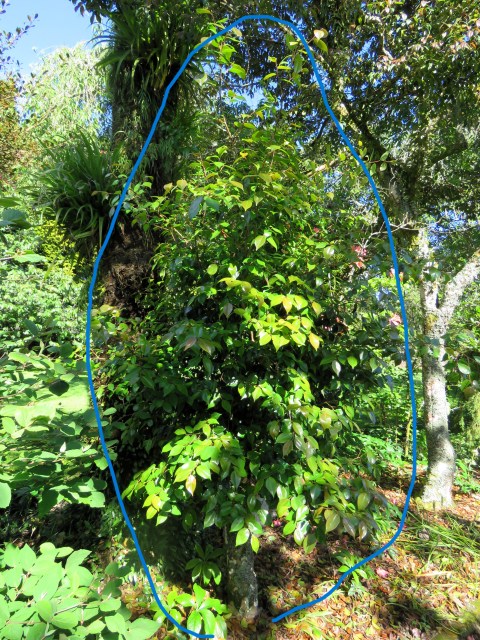
Mama Thrush’s nest outlined in blue – sheltered from the weather but taking a few chances on the humans nearby.

Life amongst death

Te Henui cemetery

I have been a little quiet here for the past few weeks. In part this is because life can get in the way and indeed, some fairly large chunks of my time have been consumed by matters unrelated to gardening. And sometimes I think I have nothing worth saying that I have not said before. But I am back again.

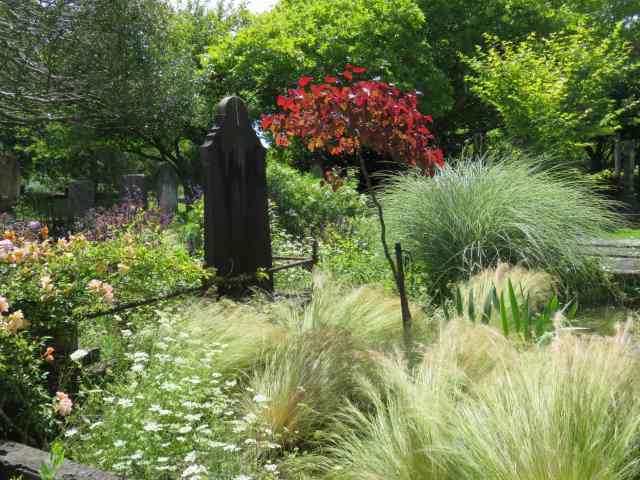
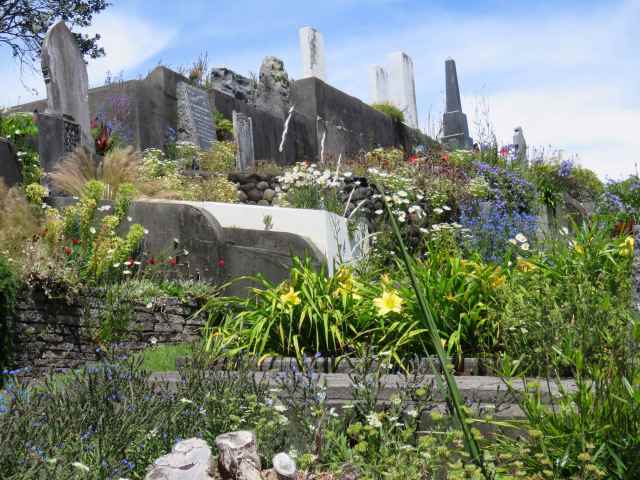
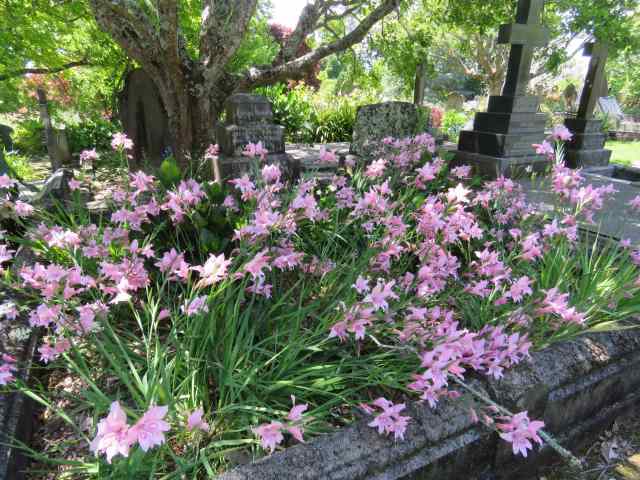
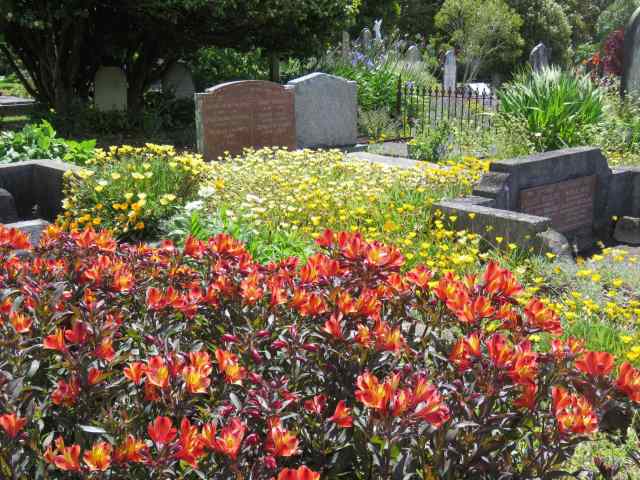
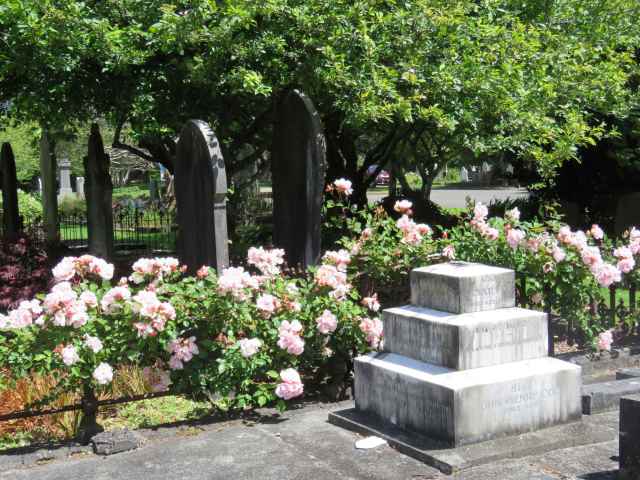
I dropped in yesterday to Te Henui cemetery yesterday, not to pay respects to the dead but to revel in the flowers. It was a while since I had last visited. On a day with bright sunlight and a strong, blustery wind, it was distinctly less than ideal conditions for photographs but the graveyard never disappoints.

The catalyst to visit came in part from being sent a newsletter written by Michael McCoy who had visited it in the pouring rain a week earlier. McCoy is not a name that is well known in this country and when he came here the following day, I wished I had googled him before he arrived because he certainly has a much higher profile elsewhere – particularly in Australia – and an impressive résumé to match. Garden designer, writer of books, TV writer and host and leader of masterclass tours, he has covered his ground internationally and in an extended conversation with him, we found so much common ground that I was both inspired and affirmed.  

Alas, his newsletter to subscribers (like my Canberra daughter who forwarded it to me) does not appear to be posted to his main website (https://thegardenist.com.au/)  and I can’t find it on line to add the link so I can not share it in full. Suffice to say, his joy in the experience of visiting the cemetery made me proud to be a local and to have a loose connection to some of the volunteers who turn this place of death and often long-forgotten memories into a place that celebrates life with colour and light. His concluding sentences are:

“But what I’m forever chasing, and experience with joyous regularity, are those magical moments when conscious enjoyment turns to inexplicable enchantment. 

I never imagined it could happen in a cemetery. In the pouring rain.”

Just those lines have started me thinking about those magical moments I have experienced in other people’s gardens in this country, in other parts of the world and, indeed, in our own garden. There is a good thought to carry me through the day. But in the meantime, I will leave you with some (mostly) joyous moments from amongst the tombstones. I still think of this graveyard as the grown-ups version of miniature gardens and sand saucers that so many of us made in our childhoods and that adds to its charm.

Alas poor Annie and Clarence

Out and about but just across the bridge in Lepperton

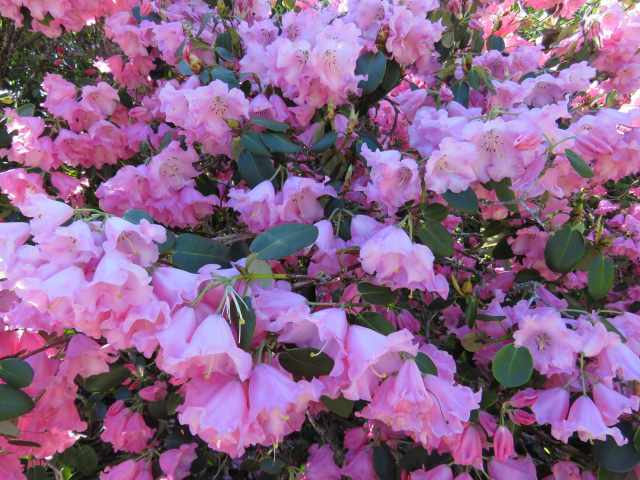
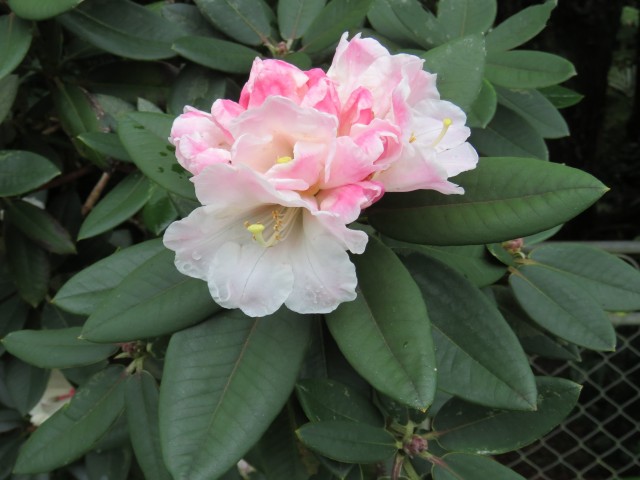
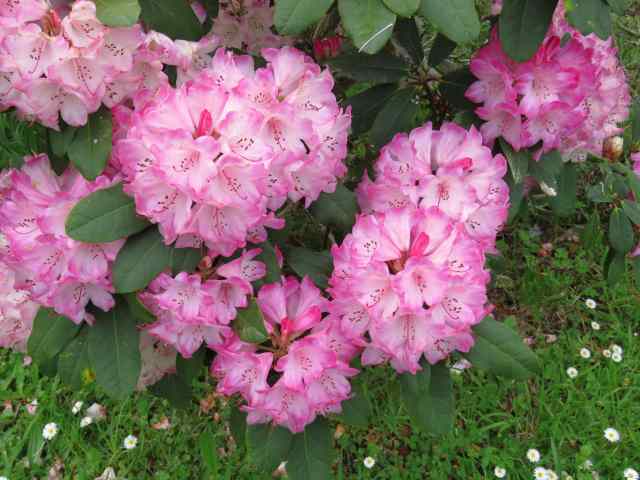
Rhododendron Lollipop Lace

We have had quite the week here. Although the garden is no longer open to the public, we hosted the NZ Rhododendron Association conference attendees on Friday. They were two years later than originally planned; the 2021 conference was cancelled at the last minute due to Covid dramas. I thought I would get some photos to record the event but there were so many people, so many vehicles to park – including three coaches – and so many staggered departures to catch flights and the like that we were scrambling to keep all the juggling balls in the air. Not a single photo was taken to record this event so all I can do is illustrate with  Rhododendron ‘Lollipop Lace’, a lesser-known Jury hybrid that was looking very pretty on the day. And say that it was a highly successful visit and it is very affirming for us to have so many people really enjoy the garden.

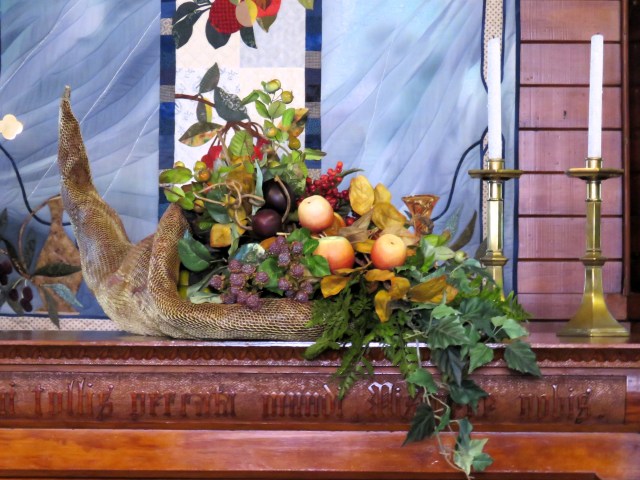
Unexpectedly delightful in the little Lepperton church.

The annual garden festival here opened the same day and we are deeply relieved to have retired from that 10 day event. Despite being a little zombie-like yesterday, I headed over to nearby Lepperton where I found an unexpected delight. Floral art is not an area in which I have any expertise at all; I lack even a framework to understand any of the principles and skills involved. I rarely cut flowers to bring indoors because I feel that as soon as I cut blooms, they start dying and I would rather see them living longer in the garden than commit flowercide. But in Lepperton, I found a floral art display which made me stop and reach for my camera.

The little Lepperton church is, I am told, 123 years old. From the outside, it is a typical white, weatherboard church of that era, inside it is unexpectedly charming and the floral displays were simply spectacular. Immaculate blooms arranged by floral art enthusiasts make a grand display. If you are local or currently visiting the area, it is well worth a visit.

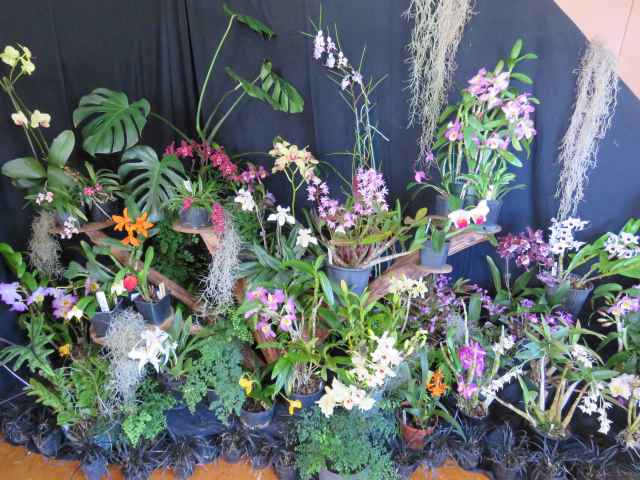
Not your usual orchids on display in the Lepperton church hall

Out the back of the church is a little church hall with an interesting display of lesser-known orchid treasures put on by the Taranaki Orchid Society, which is well worth a look as well. There are a few crafts and local honey on sale, as well as our gardener, Zach, selling plants he has potted up for the season, which was my main reason for visiting.

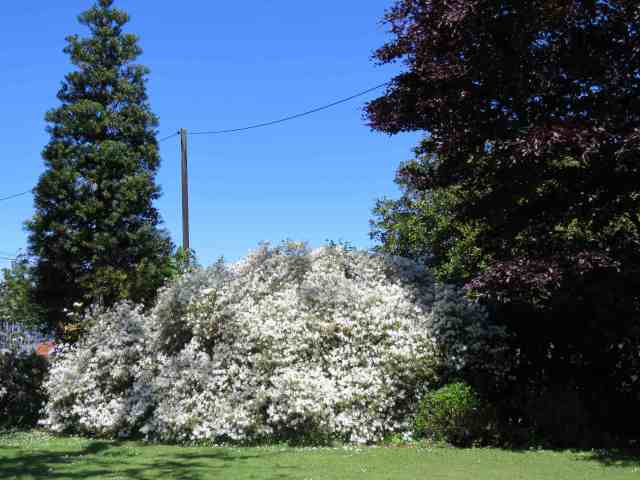
Out the front of the church, there is a splendid white azalea in bloom. I didn’t ferret around the base to see if there is more than one plant growing or whether this is all just from a single original plant layering along the ground, but it does show the size these plants can reach if not kept clipped to the tight, little mounds that most gardeners seem to favour.

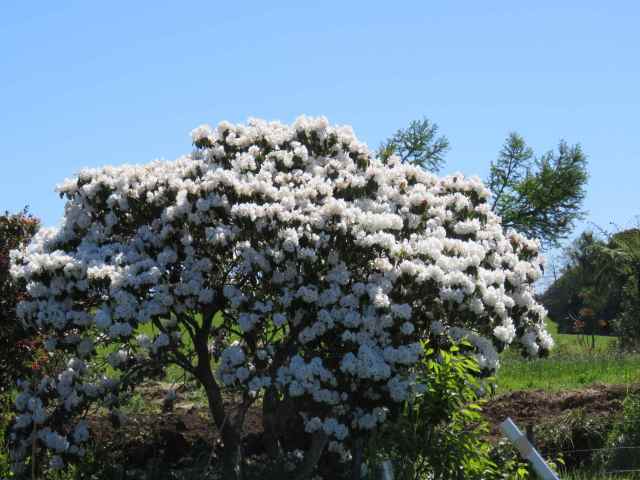
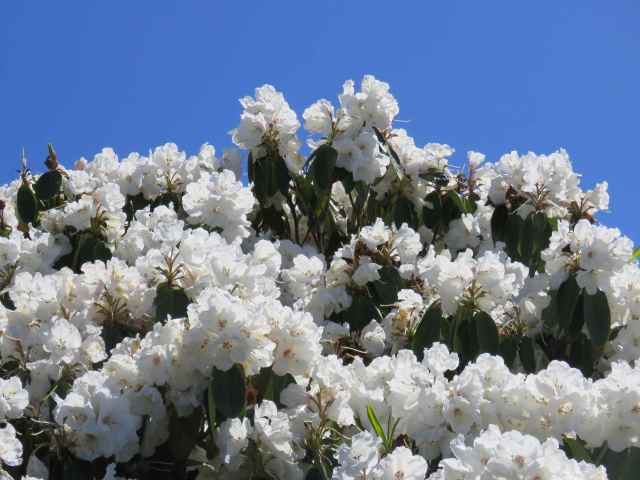
Down the road and round a corner or two, a roadside rhododendron was showy enough to make me turn around and go back for a second look. It appears to be an old house site to me because there were other ornamentals also left edging an empty section. Offhand, I don’t know which one it is but it will be an early cultivar because it is quite old.

The Lepper Garden in Lepperton
Most of the plants I recognised in this garden were of the woody tree and shrub type but I am pretty sure Pauline bought this Farfugium tussilagineum argenteum from us and the pink petals are from Felix Jury’s Camellia Dreamboat

There is quite a cluster of gardens open this week around Lepperton for both the main garden festival and the fringe festival but I only had time to visit one. I chose Lepper’s Garden because we used to know the creator of this garden – the late Pauline Lepper. I was only halfway round the garden when I thought, ‘my goodness, Pauline must have spent a lot of money at our nursery back in the day’. There were so many plants that I recognised as coming from us that it was like meeting old friends. If Pauline is looking down from above, I am sure she will be smiling to see the next generation continuing her garden and watching the plants she chose grow to maturity.

Simple bedding plants but I like the blue haze and the repetition of blue at ground level through the garden

This is the biggest garden visiting week of the year in our area. We plan to visit a few gardens that we haven’t seen before and hopefully there will be many others out appreciating the huge amount of work garden owners put in to preparing their gardens to open for others to enjoy.

Of rhododendrons and the roof

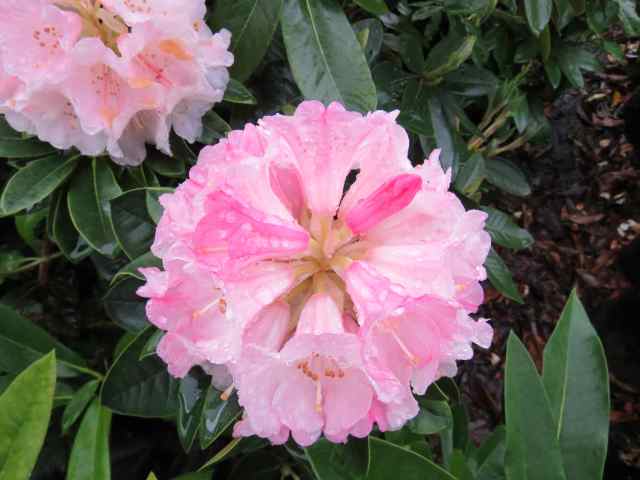
Mark’s ‘Floral Sun’

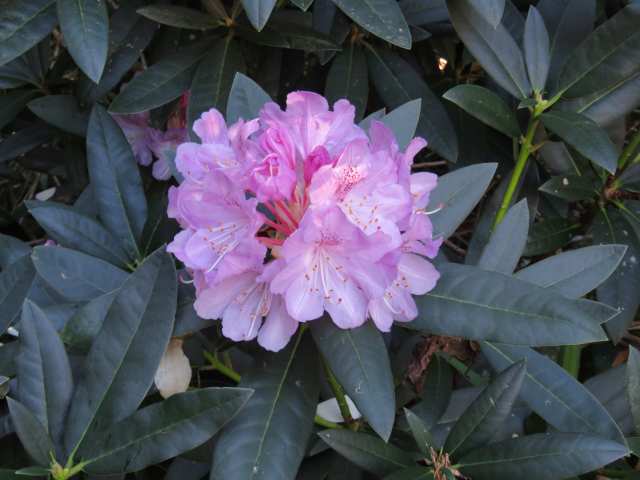
As the deciduous magnolia season draws to a close, it is time for the rhododendrons to star. And Mark’s rhododendron hybrids ‘Floral Sun’ and ‘Floral Gift’ have indeed been starring this week. Not only are they gorgeous, they are also scented, Gift even more so than Sun.

On Friday next week, we have the New Zealand Rhododendron Association conference attendees coming here. This was originally scheduled for 2021 but cancelled at the last minute as large parts of the country went into the second Covid lockdown. We agreed to them coming this year even though we no longer open the garden.

We are not the rhododendron garden we once were. They were a key plant when Felix and Mimosa started the garden here and Mark started the nursery on rhododendrons. We produced a huge range, including many of the showy American rhododendrons that were all the rage back then. Some readers will remember the days when everybody wanted ‘Lems Cameo’, ‘Lems Monarch’, ‘Puget Sound’ and the likes.

Mark’s ‘Floral Gift’ has been a bit of a sleeper star. We worried that it was a bit sparse on foliage at the start but it has gone from strength to strength as a garden plant. This plant was moved a few months ago from an area where it had become too shaded and it has not worried at all about that relocation.

In the time since, we have lost many plants which either faded away or up and died on us, as Mark describes it. This includes a lot of the species, the dwarf varieties which are largely bred from alpine species and the showy hybrids from places with colder climates. Rhododendrons are reasonably adaptable plants as long as they get a winter chill (which they don’t here), a situation which is not hot and dry in summer or too wet at any time. I console myself with the knowledge that the British Royal Horticultural Society’s flagship garden, Wisley, has recently felt the need to relocate a lot of their rhododendron collection to more northerly RHS gardens in order to save it. Wisley has a low rainfall and the combination of increasingly dry conditions combined with milder winters meant that many varieties were endangered.

Public gardens play a major role in preserving species and collections but that is not a responsibility we take on as a private garden. We just go with the flow and adapt. One of those adaptations has been to largely eliminate the use of sprays. Some of our rhododendrons required spraying every year to keep them healthy but there is nothing sustainable in that. So it comes down to accepting that we will lose ‘Rubicon’, ‘College Pink’, the Loderi hybrids and some others.

At least the nuttalliis still thrive here

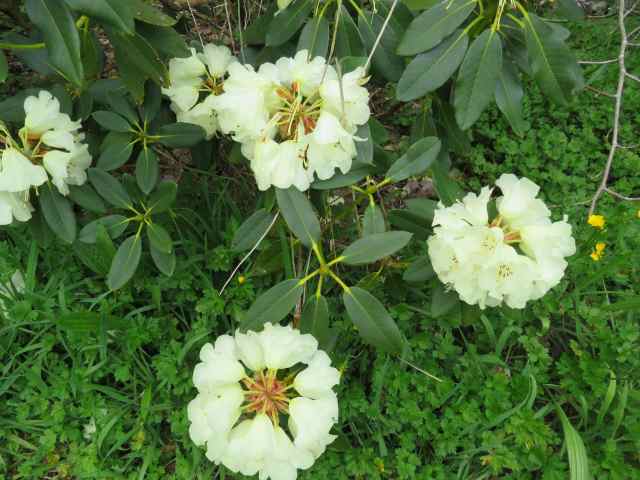
What we do know is what will thrive and look good without spraying. We have always been fond of the maddenii group and particularly the nuttalliiis. None of them have the big, round, ball trusses commonly associated with rhododendrons but most are scented, keep good foliage, do not get infested with thrips (which is what gives white leaves and weakens the plant), suffer from leaf burn on the edges of the leaves and they are far happier in our mild conditions without a winter chill. I much prefer them to the classic ball trusses now but I spent countless hours trying to persuade customers and retailers of their merits when we were producing them commercially. Too many just wanted rhododendrons with big red trusses.

One of Mark’s unnamed hybrids. Please notice the foliage.

Mark set out to see if he could breed healthy plants with ball trusses and clean foliage in order to meet the market demand. But it takes a long time to breed and assess new woody plants (except for roses which have a super-quick turnaround) and, in the meantime, rhododendrons fell from favour for all the reasons mentioned above, meaning demand dropped away and we retired from the nursery and plant production. So even though some of them are pleasing, they just sit in a long row in a paddock and we look at them from time to time.

It is more about the foliage than the flowers on these unnamed seedlings. Of course they need to put up plenty of good blooms but plants that stay looking good and lush all year round with no spraying, feeding or mollycoddling was the important factor in breeding.

I may pick blooms of those that are looking good to show the conference attendees when they visit. It is not that the flowers are exciting breakthroughs; it is that they have good foliage and a healthy habit as well as mass flowering, even when grown in full sun without ever being fed or sprayed. That is an achievement. One day, rhododendrons may come back into fashion and there is a little resource sitting here for a future generation to capitalise on.

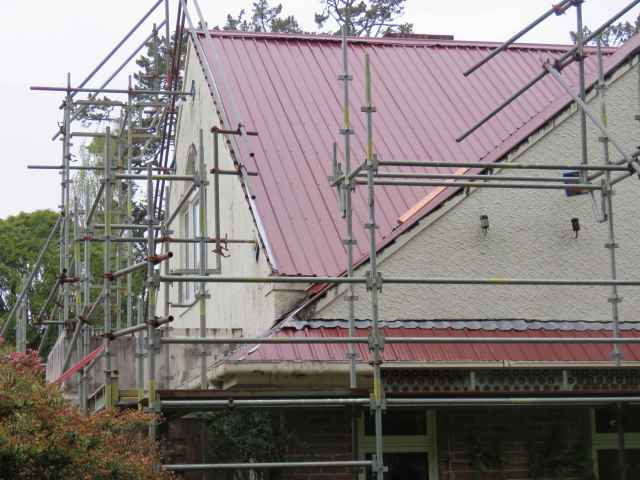
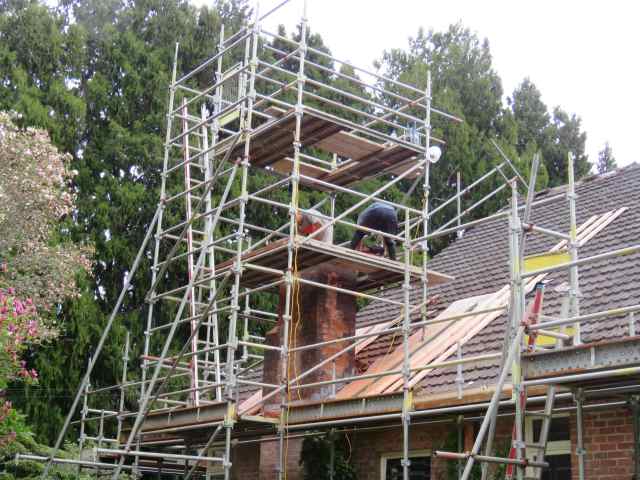
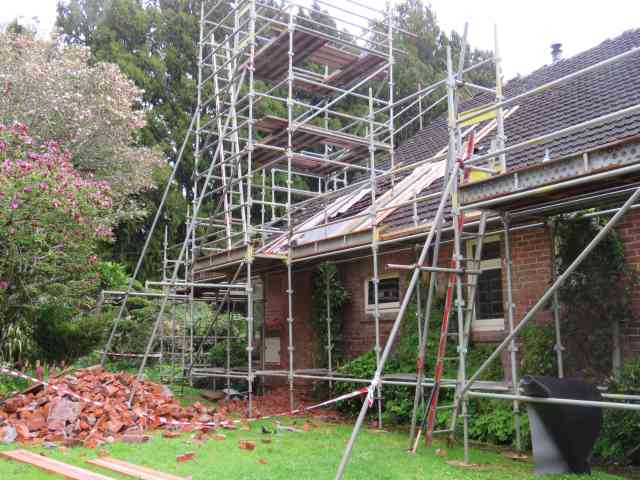
Besides preparing the garden for the conference and an overseas tour due soon after, our roof has been dominating our lives here for the past few weeks. Like other houses from the same era of the early 1950s, we have – or had – a concrete tile roof and those tiles are now so fragile that they break if you so much as look at them. We bit the bullet and decided we could no longer delay replacing the roof. It is not an easy roof and therefore eye-wateringly expensive. The lead scaffolder commented that it is one of the most difficult scaffolding jobs on a domestic house that he has done because of the different roof levels. So we are surrounded in scaffolding, piles of tiles, bricks, new roofing and a whole lot more. And a partially reroofed house with stop-gap weather proofing in a Taranaki spring is high stress. Yesterday’s rain had Mark and me crawling around in ceiling cavities patching remaining cracked tiles from inside and strategically placing buckets. I don’t often concede to age but I came to the conclusion that we really are getting too old to be crawling around in ceiling cavities. If it is fine tomorrow, we should see the main body of the roof finished with only ridge cappings, flashings, spouting and downpipes to go. I am looking forward to the day when we no longer have to worry about leaks and occasional internal floods (two so far this year).

A work in progress

The new roof is an anachronism in materials – long run roofing iron – but not in colour. The old tiles had weathered to grey-brown but we can see that they started off in a shade that was more orange than red and I can remember those startling orange tile roofs from my childhood. The new roof is dark brick-red-brown and that will be fine, probably an improvement on the earlier orange-red. I did not want a grey roof. There is enough greyness in the world without voluntarily adding more.

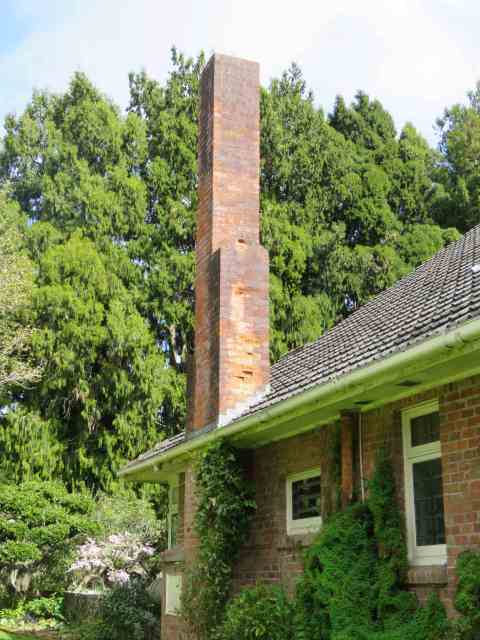
The chimney was a cause of nagging anxiety

Dropping the back chimney to below roof level was a major job that took three men with a jackhammer and a sledge hammer all day on Friday. We didn’t use that fireplace – we have three others – and we have long worried that the massive brick tower was an earthquake hazard that had the potential to demolish part of the house and take lives if it ever snapped off. We have to take earthquake risks seriously in our shakey, quakey isles. Architecturally, I am sad to see it gone but it will be a relief not to worry about earthquakes or leaks.

Going, going…
… gone.

Whether all this will be completed, cleared and the outside areas reinstated before the conference people arrive at the end of next week remains to be seen but they are coming to see the garden, not the house. At least we are not open for the garden festival because that would have been a problem.

Faffin’ around

This lemon cymbidium orchid has not flowered before that any of us can remember but it is a little charmer. The lilac is a Dendrobium Bardo Rose.

I am a faffer in the garden. At times it feels like an indulgent use of time but really, the greatest pleasure I find in the state commonly called ‘retirement’, is being time-rich. I have the time to faff and I derive a great deal of pleasure from paying attention to detail to get things right, in my eyes at least.

Our gardener, Zach, brought us two orchids he picked up at the local orchid show, knowing that we wanted to extend the cymbidiums beyond the ones Mark and our daughter gathered several decades ago. We wanted clean colours that could light up a space and provide contrast to the rather large number of brown cymbidiums we have. Brown was the fashion colour back when our young daughter became the recipient of generous gifts from enthusiasts wanting to encourage her.

Zach and I placed them where we thought they would work and he planted them in slightly raised mounds of coarse woodchip and bark that we gather on site. As soon as I looked, I knew they were wrong but I was a bit reluctant to say anything after he had gone to the trouble of planting them. Then Mark came in and started to say, “I was walking down the far end of the Avenue Garden when something startled me.” I have lived with him long enough to be able to finish his observation for him – “a lime green orchid?” “Yes,” he replied. “I didn’t realise when it was sitting on the bench that it was such a synthetic, fluorescent colour. Maybe it would fit in better in a more shaded area surrounded by green foliage.”

Better when placed more discreetly and not out on its own shouting ‘look at me! Look at me!’ The photograph has come out more gold and the earlier lime colour seems to be changing as the flower matures.
I think the white will bed in more harmoniously than where we had it
I originally placed it by this massive red-brown orchid but it was too stark a contrast and instead of adding a light touch, it simply looked out of place. This one may be brown but it has at least nine very long flower spikes laden with bloom.

Zach, bless him, is very obliging and willing to see the garden through our eyes. We found what we hope are final homes for the new orchids. The white one was also misplaced and looked far too starkly bridal amongst the browns but fits in more naturally in another place entirely. While we were about it, he moved one I thought was hideous – a caramel brown in tone with a startling red throat – to a less prominent position where it fits in with the colours of the clivias as opposed to being beside a pretty, pink cymbidium.

Not my favourite cymbidium

I am much happier with the result. Zach has been quietly dividing and relocating bits to extend the orchid display and feeding them with compost. The plants are responding most gratifyingly after decades of benign neglect. What the cymbidiums may lack in subtlety, they make up for with their exotic character and the many weeks they last in good bloom in the garden.

Pleione orchids flowering now

The pleiones are pretty rather than exotic and very much a seasonal delight. Their flowers are much more delicate and they have a short season. They also need more attention each year to keep them going. Without looking after them and replanting most years, we would lose them. We like them enough to be willing to fuss over them.

Dendrobiums in pink and white, backed by the primrose calanthe orchids that are passing over now

The Bardo-Rose dendrobiums are also dainty but not as pernickety as the pleiones. They too can survive on benign neglect with minimal attention.

We have brown brown, red brown, murky brown, caramel brown and golden brown. Six flower spikes so we can’t complain.

Faffing about pays dividends in my book. We garden on a pretty large scale for a domestic garden but it is the detail within that larger scale and landscape that keeps it interesting for us all year round.

In Monet’s garden – taking garden grooming to ridiculous lengths

Attention to detail is not to be confused with immaculate gardening. I have been in a fair number of immaculate  gardens in my time – not a leaf out of place, not even a blade of grass. Preternatural tidiness. It is much admired by some but really only achievable by extraordinarily precise, tidy people who have a small garden, because it needs attention every day. And maybe these immaculate gardeners only maintain this pristine perfection when their garden is open to the public. Even if we aspired to that level of garden grooming it is neither achievable nor sustainable across the 10 acres that we actively manage as garden. Fortunately, it is not one of our garden goals. I have never forgotten the sight of four young gardeners at Monet’s  garden in Giverny, picking over the pelargoniums. They were not dead-heading; they were literally dead-petalling – picking off the spent petals from each individual bloom. I was riveted by the sight but honestly, I couldn’t think that it was worth paying four sets of wages to pick off dead petals for the visiting hordes. That is much too much attention to detail.