Tag Archives: Tikorangi: The Jury garden

Tried and True – Helleborus orientalis

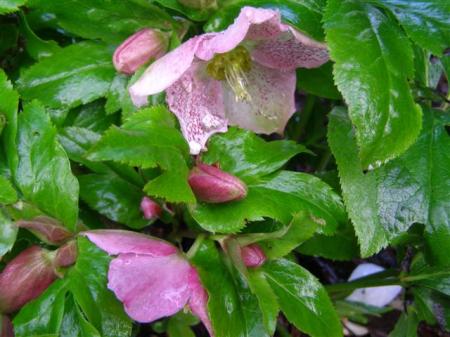
Helleborus orientalis - gentle and understated garden performers

Helleborus orientalis - gentle and understated garden performers

  • Winter flowering.
  • Require very little care and maintenance.
  • An undemanding plant for filling spaces.
  • Very hardy evergreen.


Helleborus orientalis are not from the exotic Orient. In fact they are native to areas of Turkey and Greece which may explain their tough constitution. They are often called winter roses, presumably because they flower in winter and are easy to grow. Their link to roses is as remote as their link to the Orient. They are an enormously obliging and gently understated plant, with pretty cup flowers which face downwards. These are not plants for deep shade – keep them to the margins of bush or woodland or even the open because they need reasonable light levels and can cope with full sun. Easy-care plant and leave specimens, they don’t appreciate being lifted and divided but are happy to be left to their own devices with the occasional feed.

There has been an explosion of different hellebore cultivars on the market in recent years, many of them orientalis hybrids. Some of the frilly doubles are very pretty, some are just average doubles. The really good dark maroon and slate colours will be better if you live inland and can give colder conditions. The simplest seedling forms are just single flowers in shades of pink, white and green, with or without freckles on the inside. Floating blooms in a glass bowl is the usual method of displaying them once cut.

Helleborus orientalis sets seed freely but the seed will not come true to its parent and you will get considerable variation. Push hoe or weed out surplus germinating seed to prevent too much competition. Aphids can make the spent flower head their home so it is often advisable to deadhead once at the end of the flowering season in spring. We cut off all the old foliage in mid autumn which gets rid of any lingering aphids and also exposes the pretty flowers to view before the fresh foliage appears.
Tikorangi notes: December 31, 2010

LATEST POSTS: Friday 31 December, 2010

1) A pink flowered cordyline from Australia – C.petiolaris in Plant Collector this week.

2) Decoding the jargon of garden design and probably ensuring that I remain off somebody’s Christmas card list – Abbie’s column.

3) Garden tasks this week including dealing with the explosion of blight and mildew we can expect with current high humidity levels.

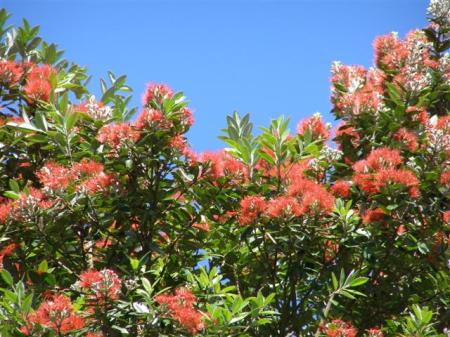
The colours of a New Zealand Christmas - at least in the upper half of the North Island

The colours of a New Zealand Christmas - at least in the upper half of the North Island

TIKORANGI NOTES: Friday 31 December, 2010

The colours of a New Zealand Christmas – a clear blue sky and the red pohutukawa flowers. It was a bit of a close-run thing this year with a week of dreary weather and far too little sun in the lead-up, the roses taken out by too much rain and the Christmas lilies looking distinctly weather-marked but the day dawned fine and we could lunch outdoors.

After a visit to friend and colleague Glyn Church today, we are thinking that we should be using more hydrangeas in the summer garden, particularly the smaller growing lace-cap serrata types. Glyn has a fine collection of hydrangeas but it was the serrata that kept attracting our attention.

Plant Collector: Cordyline petiolaris

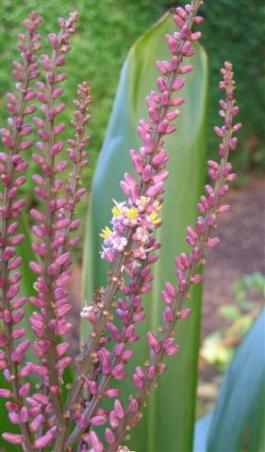
The Paris pink and yellow flowers of Cordyline petiolaris

The Paris pink and yellow flowers of Cordyline petiolaris

I have been waiting for weeks for these cordyline flowers to open and finally it is starting to happen. It is not that they are overly spectacular, more that they are an unusual Paris pink in colour with golden centres. In due course, they will turn to eye-catching red berries which hang on for a long time and are widely regarded as the more spectacular feature. Though it should be added that the wide, spatula-shaped leaves measuring up to 8cm across are also eyecatching.

Cordylines are of course what we commonly refer to as cabbage trees but the family is a little larger and geographically more widespread than our iconic native species, C. australis. This is an Australian species which occurs in the rain forests of northern New South Wales and Queensland. Our loyal cabbage tree moth whose offspring caterpillars chew the leaves of our native cabbage trees to shreds does not appear to like our Australian neighbours and consequently the foliage stays clean which is a distinct bonus in a garden plant. However, its flowers lack the heady summer fragrance of our native forms. The plant is somewhat hardier than its subtropical origins suggest, though it won’t tolerate heavy frosts. Given moist, sheltered conditions, it is not difficult to grow and will eventually reach about 5 metres high, keeping leaves down most of its length. It can be propagated relatively easily from stem cuttings or raised from seed.

Plant Collector: Lilium regale

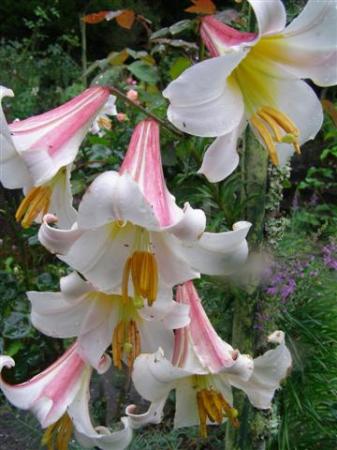
Lilium regale - often called the Christmas lily in New Zealand

Lilium regale - often called the Christmas lily in New Zealand

There seems to be a little confusion as to whether Lilium regale or Lilium longiflorum is the Christmas lily in New Zealand, but I can’t see that it matters. My guess is that florists may refer to the latter as the Christmas lily because it commonly comes with pure white flowers and is a reliable standby for picking, much favoured in floristry. But many gardeners associate the regal lily with this festive time of year. It too has the wonderfully fragrant white trumpets but usually with deep red or purplish markings on the back of the petals. L.regale comes from the Szechuan area of China whereas L.longiflorum is from Japan.

There is nothing too difficult or rare about either. L.regale gets to just over a metre tall and generally we get away without needing to stake it, especially when it is grown in the rose garden and has some taller plants around it to prop it up if it starts to list too far. If you have both sun and good soil, you are fine and it should reward you with eminently pickable flowers to adorn the Christmas table. Like most lilies, the bright pollen falls off rather freely and will probably stain the white damask Christmas tablecloth. Apparently you can brush the pollen off the stamens if you are working in dry conditions. Alternatively, nip the tops off the stamens but leave the anthers in the centre. Don’t harvest the flower stem right back at bulb level. It needs some length left because the stem contains both leaves and flowers and the bulb needs its energy replenished through its foliage or it will waste away.

In the Garden this week: Friday December 24, 2010

• Dear Santa, thank you for the pre-Christmas gift of rain. But enough is enough. Water tanks are overflowing, the grass is growing again and we really could do with a return to sunshine and warmer temperatures for the Christmas and New Year break.

• Watch for an explosion of fungal ailments in the humid conditions, especially on tomatoes, cucurbits and potatoes. Roses will also suffer but they can grow out of it whereas vegetables can succumb entirely. It will almost certainly be necessary to get a copper spray on when the weather dries out. If you would rather try baking soda, a level teaspoon per litre is the recommended dose. The big problem with baking soda is that you have to spray a great deal more frequently – probably weekly.

• The wet weather means that you can still lift and divide many clumping perennials even now. Most of them are in full growth, so as long as you make sure they don’t dry out, they will recover quickly. Replant into well cultivated, tilled soil enriched with compost.

• Grapes need thinning out. We keep to one bunch per side branch. More is not better and you can over crop grapes, leading to inferior fruit. Trim back laterals. If they get too heavy, they can break away too easily and you will lose your bunches of fruit. You also want the plant to concentrate its energy on the fruit, rather than the excessive leafy growth.

• If you have not mulched your garden beds and were alarmed at the recent dry spell, this week’s rain has probably raised the moisture levels sufficiently for you to get a layer of mulch on now. We much prefer vegetative mulches which break down and get incorporated into the soil over time – compost, leaf litter, bark or shredded wood waste and the like. Inert mulches like stones, gravel or lime chip do work to keep the soil moist and suppress weed seeds to some extent but they are not suitable for gardens that you want to dig over or replant at any time and they certainly do nothing to add nutrients or texture to the soils. They are best for areas you don’t actually garden and even then, they are a bit of a mission to keep clean unless you have a handy blower vac.

• Keep up with deadheading (basically anything that has finished flowering) and try and stay on top of the weeds which will have been triggered into rapid germination and growth by the rains.

• If you had a problem with silver leaves on rhododendrons last year and haven’t sprayed this spring, check underneath the leaves for something that looks like dirty threads. These are the thrips which suck the chlorophyll out of the leaves. Photinia and honeysuckle both harbour thrips too. If you are going to spray, it needs to be a systemic insecticide so the plant sucks it into its system (as opposed to a contact one which only kills insects where it touches). Bands soaked in neem oil secured around the trunk are getting good reports. If you want to make your own, soak a strip of old woollen carpet in neem and then secure it around the main stem with the carpet pile inwards. Thrips don’t usually go away of their own accord. You either need to change the growing conditions, kill the insects or remove the host plants altogether.