Tag Archives: Tikorangi: The Jury garden

Plant Collector: Tecomanthe montana

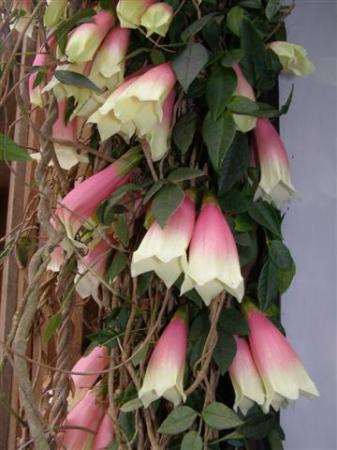
Pink and cream hanging bells of Tecomanthe montana

Pink and cream hanging bells of Tecomanthe montana

Most visitors tend to think that the dainty pink and cream trumpets mean this climber is a lapageria (Chilean bell flower) but far from it. Tecomanthe montana is a tender climber from New Guinea. We tried it in the garden and it survived a couple of years before it succumbed to winter. This plant is grown under complete cover though it has its roots in the ground. It is by far the showiest tecomanthe when in flower.

Apparently there are only five species of tecomanthe. Our own native form, T. speciosa, was found as a single plant on the Three Kings Island and has been saved by commercial production. It has much bigger leaves and is a very strong grower. Unless you train it along a horizontal frame, it tends to shoot up the tallest tree where it will produce its pale lemon trumpets right on top where you can’t see them. We also grow T. venusta under complete cover but it is even more tropical than T. montana and only occasionally flowers for us. When it does, its pink trumpets appear out of the gnarly bare wood of the climbing stems. We gave up on the Queensland species, T. hillii because it mildewed badly with us. All of the tecomanthes are forest climbers from the tropics or sub tropics. Montana came to us from former Pukeiti director, Graham Smith, who gathered the seed in New Guinea. It is not the easiest plant to get established but if you can find the right conditions, it is a winner in spring.

In the Garden this week: November 26, 2010

· It is looking dangerously like drought territory so start battening down the hatches just in case. The word from the chief garlic grower here is to water your garlic regularly. After many years of growing it with unpredictable harvests, he has come to the conclusion that very dry conditions at this time of the year can stunt growth badly.

· If your container plants are not getting watered every day now, they will suffer. If you are getting behind, move them to a shady area near an outside tap or relocate them by your outdoor living area or doorstep where their poor, sad, droopy appearance is more likely to remind you to look after them.

· You shouldn’t put mulch on to dry gardens – it can act as a barrier to stop moisture getting in as well as out. If you were intending to mulch before summer, make it top priority this weekend but you will need to get the garden free of weeds first, then give it a really good soak (not just wetting the top surface) and then get the mulch on.

· Lift the level of your lawnmower a notch. You do not want to stress the lawn by scalping it in the dry conditions or you will lose your desirable lawn grasses and risk an invasion of hardy weeds. A reminder – deal to onehunga weed straight away and don’t let it get hold and go to seed. It is the seed that is prickly.

· At least with the sun, you can push hoe or hand pull weeds and leave them on the surface to wither and die. Just make sure that you remove any seed heads first, or you are merely sowing the next crop of weeds. It is what pockets are for (to store the seed heads) or have a bucket nearby.

· Keep up the successional sowings of corn, green beans and salad greens – a little very two weeks is the key to ensuring continued supply.

· A correction to Plant Collector from two weeks ago – the little shrub with the lilac blue pouch flowers is in fact Jovellana punctata, not Jovellana violacea. Both are from Chile but the true violacea has larger leaves and deeper coloured but smaller flowers. The friend and plantsman, who pointed out the error, also brought me a plant and flowers from violacea to compare and the differences were obvious. He has seen them growing in the wild. He was kind enough to note that it is a widespread error in this country to misname punctata which is more common here than violacea. I was, apparently, in good company with my mistake.

A step-by-step guide to staking and tying plants

1) If you can avoid staking a plant, do so. A plant can rely on the stake and not build the strength to hold itself up. If your plant has a small root system and too large a top (referred to as the sail area because it catches the wind) reduce the volume of foliage and branches to cut back the sail area.

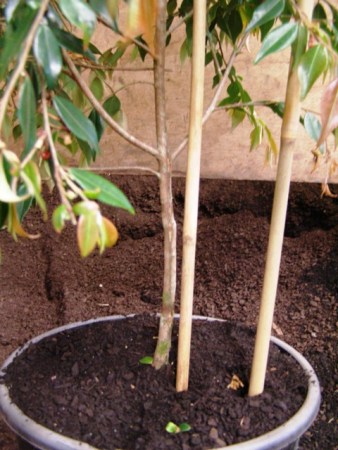
2) This is heavy duty staking carried out on landscape grade plants put in to a windy situation on a road verge. Two, sometimes three or even four tanalised batons are used with wide ties. This allows some flexing of the tree without it blowing over and the stakes will last for several years. The flexing of the tree in the wind encourages it to develop a natural taper to its shape which gives it strength. To allow this flexing, the ties should never be more than a third of the way up the tree. All this staking will be removed when the tree has developed the root system and strength to hold itself up.

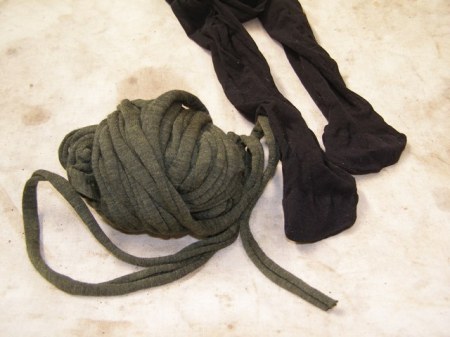
3) Avoid tying with string, rope or wire which will cut in to the bark and cause damage, potentially ring barking the trunk. For the home gardener, old pantyhose or strips of stretch fabric are commonly used or you can buy balls of interlock fabric tie at garden centres which are cheap and easy to use. Black, grey or muted green are less obvious in the garden. Strips cut from old inner tubes are another traditional tie.

4) Commercial growers use tying machines called tapeners which staple a flexible plastic tie in two movements so they are quick to use. However the tape does not break down in the garden situation so we avoid using a tapener except in the nursery because we don’t want little bits of black plastic through the garden.

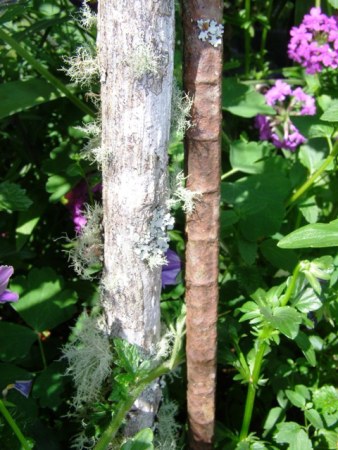
5) Never force a stake hard in by the trunk of the plant, large or small. If you do this, you are damaging all the roots on that area of the plant, usually severing them entirely. If you think of the roots like a piece of pie or an umbrella, you are potentially damaging an entire segment of the root system. How far out you place the stake depends on the root system but even a couple of centimetres can make a big difference on small plants. You can see in the photo how much more damage the stake near to the stem will do compared to the one a little further out.

6) Bamboo stakes will usually last about a year before rotting off at ground level and this is often long enough for a plant to get established. Tanalised batons are a better option for longer term staking such as the trees in step 2 which will need stakes in place for up to 3 years. Where semi permanent staking is required for plants such as standard roses, metal stakes gently rust and become less obvious over time than other options.

Tikorangi Notes: Friday, 19 November 2010

Latest posts: Friday November 19, 2010
1) The romantic Moorish gardens of Andalucian Spain and the likely debt to it shown in modern, western gardens – Abbie’s column.
2) Manfreda maculosa – an herbaceous plant with a singularly dramatic flower spike topped with a rather anticlimactic flower.
3) Tasks in the garden this week include getting swan plant seeds sown without delay.

Tikorangi Notes: Friday November 19, 2010

Looking more cottage garden than rockery this week

Looking more cottage garden than rockery this week

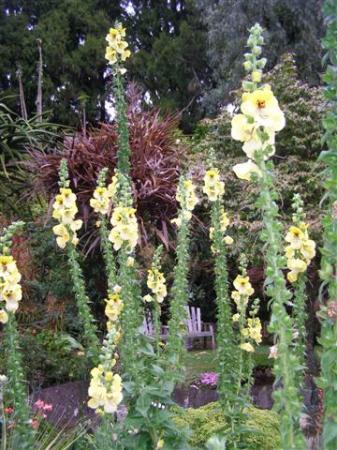
A particularly good verbascum for our conditions

A particularly good verbascum for our conditions

Drought is a relative matter. About three weeks without significant rain here and farmers are already fearing drought while gardeners are worrying about the dry. A light volcanic soil does not help because it dries out quickly but our rains are usually so predictable that we never have to water the garden. I have been pottering in the rockery, excavating a highly decorative but dangerously invasive equisetum (horse tail rush). A mere ten months or so and it was already making an escape for it, including between the rocks. Plants that burrow underground and pop up some distance away can be unnerving but the speed at which this equisetum was doing it indicated downright dangerous tendencies. Strictly one for a pot, I think, and even then it may be on borrowed time. The rockery is looking more like a cottage garden at this time of the year. Most of the spring bulbs have finished flowering but the splendid large flowered yellow verbascum (name unknown) gives some presence and height in November. One or two plants are left to set seed each year and it conveniently perpetuates itself.

Plant Collector: Manfreda maculosa

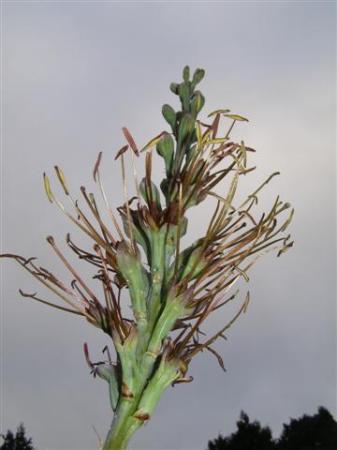
Manfreda maculosa - looking rather more dramatic in the photograph than in reality

Manfreda maculosa - looking rather more dramatic in the photograph than in reality

Manfreda maculosa is a very curious plant, not the least because it has a spectacular flower spike topped with singularly unspectacular flowers. The stem of the bloom can be well over 2 metres tall and is strong enough to hold itself up with staking. It appears in late spring as something of a surprise because the plant itself is low to the ground with just a few fleshy leaves spotted with burgundy. The first time it flowered for us, I waited in anticipation, expecting something showy and exotic. It is neither – browny green tubular flowers with exceptionally long brown stamens, giving a rather ragged appearance. Apparently it is renowned for attracting humming birds to your garden. What a shame we have no humming birds in this country.

This manfreda is also called the Texas tuberose or Spice Lily and it does indeed hail from southern Texas and Mexico so is somewhat tender. It tends to run below ground so when it gets hit hard in a cold winter, it is capable of sending up fresh shoots in spring. I have it planted in a mixed border situation and thin out the surplus runners from time to time. It just sits harmlessly as part of the herbaceous plantings until it gets a rush of blood and sticks out its outrageous flower spike.