
Plant Collector: Tulipa saxatilis
I am not a great fan of the common tulip and even less so of the novelty forms so prized in colder, northern European gardens. But get back to the original species, (how they occur naturally in the wild) and it is a different matter altogether. This very pretty tulip is a combination of soft lilac with a yellow throat which is not the world’s most obvious colour scheme but generally the colours of nature do not clash. It hails from the island of Crete (the home of Zorba the Greek) though apparently it is also found in Turkey. In their natural environment, these are wild flowers and if you have ever visited the Greek islands or the coast of Turkey, you will know that conditions are hard with poor stony or clay soils, very low fertility, drying winds and next to no rain for most of the year. These are not conditions that we can replicate in the garden here but Tulipa saxatilis is not too picky and has thrived in our rockery for many years. With open conditions and excellent drainage, it is genetically programmed to be a survivor.
This is an early spring bulb, so it starts to grow in winter (triggered by autumn rains) and flowers in early spring for a period of several weeks. Each bulb puts up a stem which flowers its way down in succession so you get several blooms per bulb. It is a good example of a bulb which will find the depth it is happiest at in the soil so it will often drag itself down quite deep and it is a rarity amongst the tulips because it runs below ground. Because the foliage doesn’t hang on very long, it lends itself to being co-planted with a summer perennial which is dormant when the tulip flowers. We have had a dwarf species oenothera, better known as Evening Primrose, interplanted with our main bed of Tulipa saxatilis for many years and it comes into its own as the tulip goes dormant.
-39.042098
174.300314

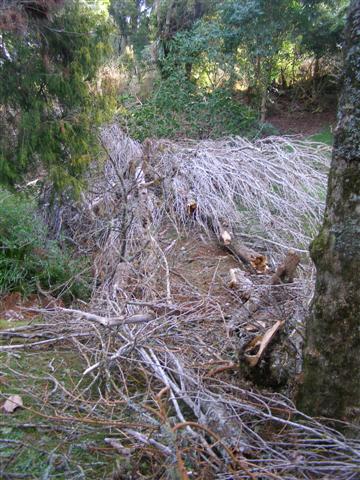
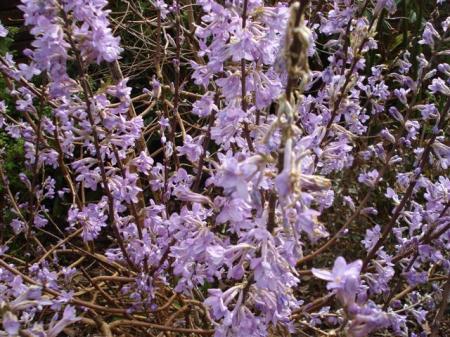
 1) This tree aloe (Aloe thraskii) is in the wrong place and has been for at least fifteen years. Large plants can be moved, but this involves taking a large enough root ball to support the top. It is best carried out between late autumn and early spring so that the plant has a chance to settle in and put out new roots before summer.
 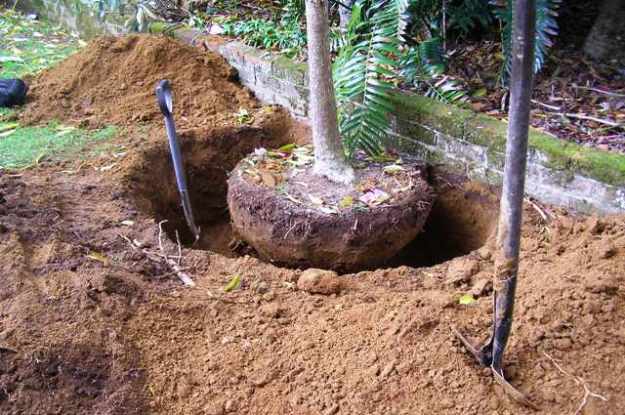 2) A large trench needs to be dug out, wide enough for you to stand in. This trench is around 60cm deep. Dig it with straight sides to start with. It allows you to look at the plant’s roots and to get access right underneath the plant. Keep it well out from the plant because you can make the root ball smaller but you can’t make it larger again.
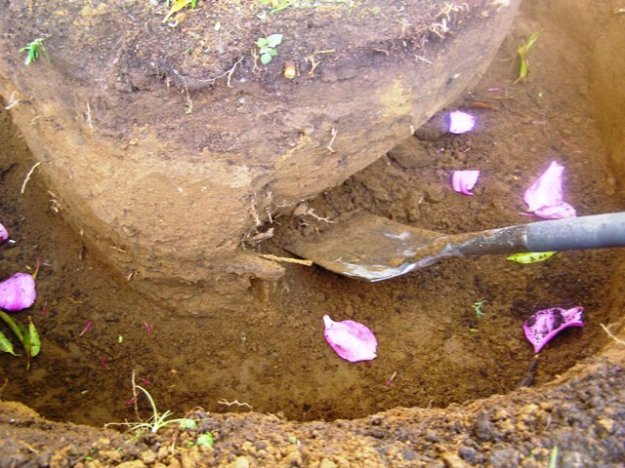 3) Standing inside the trench, start digging to excavate right underneath the plant. We wanted to keep the root ball relatively whole to act as an anchor because this plant is very top heavy. Gradually reduce the size of the clump, removing excess dirt, keeping a close eye on the root system. If it has a huge root system, you don’t want to be cutting into it too much. If it has a smaller root system, you can reduce it to a size that is more easily managed. We were surprised at how small the root system was on this plant and they were mainly on the surface.
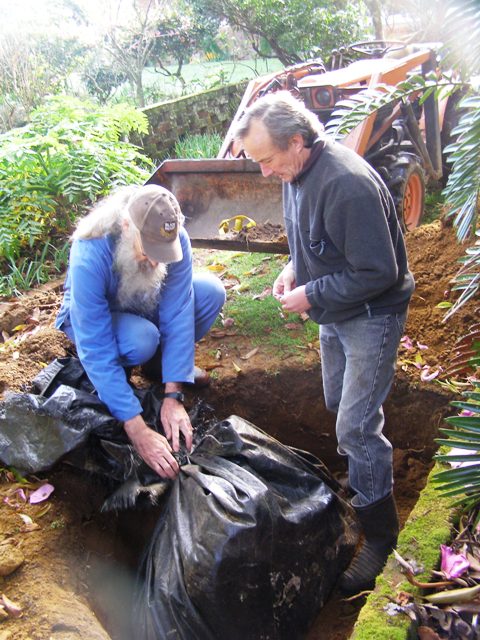 4) Get some heavy plastic, sacking or old weedmat underneath the plant. Do this by rocking the plant to one side and getting the wrapping right underneath it. This usually requires more than one person. Do not let the roots dry out at any stage. With very big plants, the plant can be raised out of the hole by tilting it to one side and backfilling that side. Then rock the plant back and put dirt in on the other side. Repeat the process until you have raised the plant to the level where you can lever it out of the hole more easily. We moved this plant on the front bucket of our baby tractor. You may need to do it by trailer.
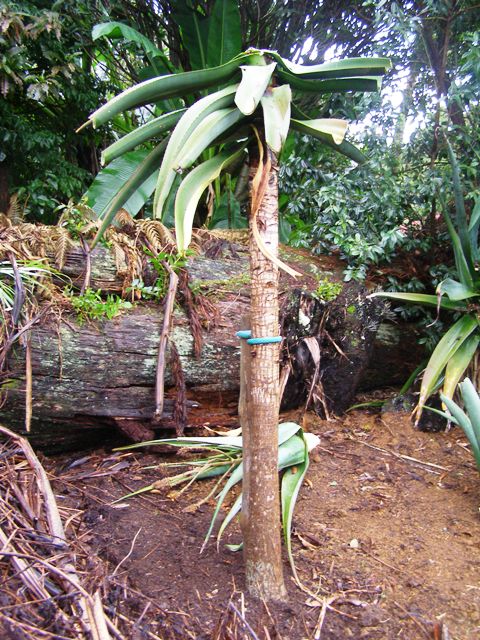 5) In this process, we had an accident and the heavy top was knocked out so we were forced to cut the the poor aloe back but there is no reason why it should not recover. Get the planting level as close as possible to where was. Measure the depth of the root ball and the depth of the hole before planting by placing a board across the hole and measuring from that. Put the stake or stakes in before the plant so that you do not cause more damage to the roots by driving the stakes through them later. We have gone for one very strong stake and a flexible tie.
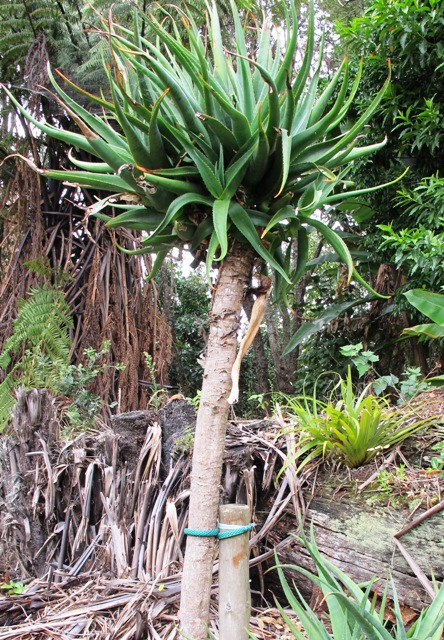 6) Two years later and the plant is recovering well although the foliage has yet to reach its former spread. It should now be safe to remove the stake.
