Tag Archives: Tikorangi: The Jury garden

Not all wheelbarrows are equal

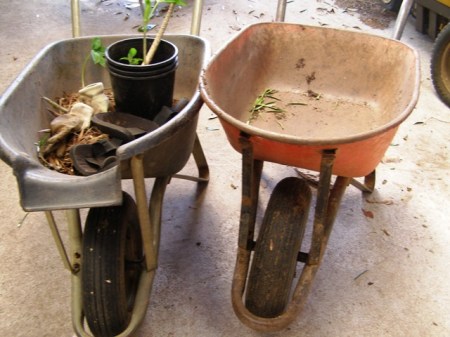
1) Contractor’s barrows tend to be larger, more solidly built, heavier and more expensive than garden barrows. Better quality barrows can cost from $200 but these two barrows have been used on an almost daily basis here over 10 years. Some women may find the handles too thick to use comfortably and the barrow too heavy.

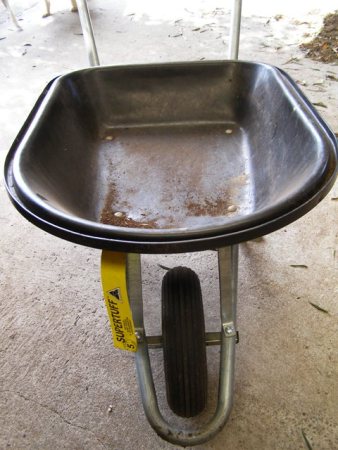
2) Metal or plastic tray? Metal trays can last the distance if you look after them and don’t leave them out in the rain or full of debris. Because I am guilty on all counts, I strongly prefer a plastic tray with galvanised steel frame, neither of which will rust, but this is considerably more expensive. This garden barrow is pretty much top of the range, costing around $180 but I like its wider shape and its stability and I have two of them.

3) Cheap barrows are usually in the $38 to $60 range and commonly have a light metal construction which is prone to rust if you don’t look after them. They also have a tendency to tip back if you don’t load them properly. However, with some care, the much cheaper price may be sufficient to offset those disadvantages.

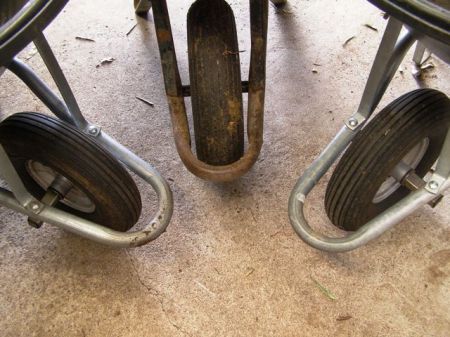
4) Most wheelbarrows are sold in flat packs. Make sure you try out an assembled one in the store before you buy so that you know that you will find it comfortable to use and that it has acceptable stability. If you assemble the barrow at home and find that the wheel is loose with no means of adjustment, return it to the store. A wobbly wheel is a major weakness from the start. If you ever come across barrows with small or narrow wheels, shun them. You need a robust wheel to support the weight of a load.

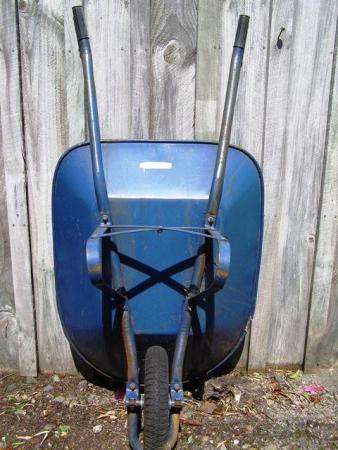
5) If you store your barrow leaning against an outside wall, make sure that rain can not get down the handles because it will pond in the pipes and quickly rust from the inside out.

6) I have never tried the new tub style of barrow and can’t see that they have any advantage over the traditional barrow which has been around in more or less the same form for 800 years in Europe and up to 2000 years in China where they were invented to carry military supplies. However, should any readers swear by this new design, I would be happy to hear. Otherwise, I suggest you borrow one to try before you spend between $75 and $150 on buying one.

Plant Collector: Anopterus glandulosa


Anopterus glandulosa - a slow growing treasure

Anopterus glandulosa - a slow growing treasure

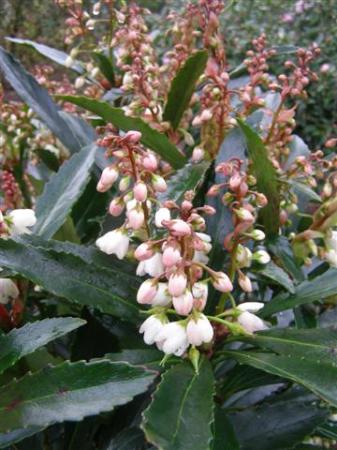
It did take a long time for our Anopterus glandulosa to do much other than just sit and put up a few racemes of flowers each spring but eventually it grew a little and after a decade (possibly more than a decade, in fact) it just gets better every year. Its flowers look like lily-of-the-valley but this is an evergreen shrub from Tasmania. The literature tells me it can make a small tree but at the rate it is growing, that might be when our grandchildren (who have yet to make an appearance) are adults. I can see why it is rated as rare because this is not a quick turn-over shrub for the trade so if you ever see it offered for sale, grab it because you may be looking a long time to find it again. The leaves are long, leathery, shiny dark green with saw-toothed edges. Even without its flowers, it is a tidy little evergreen shrub which keeps good form without needing pruning and then for many weeks in spring, it is adorned with its racemes of pink buds opening to white flowers.


There are apparently only two species of anopterus and the other member of the family must be of negligible merit because most of the references only record glandulosa. They are closely related to escallonias which readers may know for a hedging option. If you find somebody with an anopterus, you may be able to raise it successfully from seed.

Plant Collector: Calanthe orchids

Calanthe orchids - happy growing in our woodland

Calanthe orchids - happy growing in our woodland

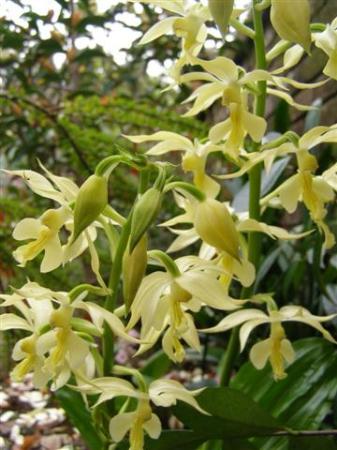
Orchids are one of the largest and most complex groups in the plant world – fearfully complicated to try and navigate your way through. Our interest here is in orchids as garden plants and one of the star performers is the calanthe family. These are called ground orchids or terrestrial orchids – in other words they are happy to grow in good garden soil. In the right conditions, you can plant them and leave them alone for many years where they just gently build up and make a better display with more flower spikes. There are well over 150 different species of calanthes and inevitably some will be better and showier as garden plants in our conditions than others. There is a bit of a question mark over the correct name for this lovely soft yellow one- probably a form of sieboldii or striata. Note: I have now been informed that in fact it is Calanthe ‘Higo’ (C. sieboldii x C. aristulifera) which makes sense to us.

Most of the calanthes come from tropical and sub tropical Asia and are generally evergreen. Presumably the forms thriving with us are the sub tropical types because tropical, we are not. We use them as woodland plants and have only once ever had them tickled up by a vicious frost. Their only downside is that they are quite leafy and the foliage hangs on for grim death long after it has become tatty and shredded. They benefit from an occasional tidy up. The new growth comes in spring and is quite lush so that every year garden visitors ask us which variety the yellow flowered hosta is.

Probably because orchids are such a complex plant family, orchid societies continue to grow, show and share when many other specialist groups have gone out of existence. They are a friendly and knowledgeable bunch and if you want to start building up a collection, either joining the local branch or visiting their shows is the best place to start.

Propagating cordylines: step-by step guide

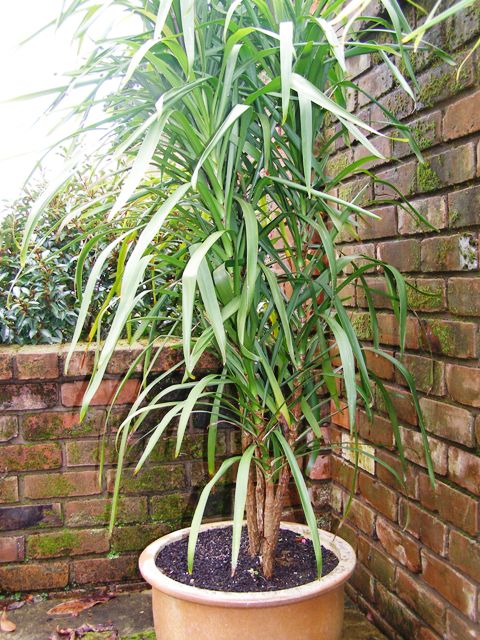
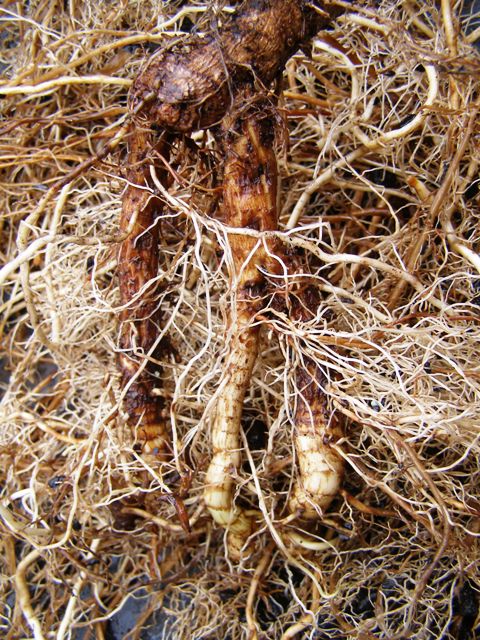
1) Most cordylines or cabbage trees grow a solid, fleshy tap root below the soil and it is easy to increase plants from sections of these roots, commonly called toes. This particular cordyline is an Australian species, stricta, but it shows similar structure below ground to our most common NZ cordyline which is confusingly named Cordyline australis.

2) Taking the toes off this cordyline will reduce the size of the root mass and allow me to replant it back to the same pot with fresh mix and fertiliser. Container plants are best repotted annually if possible and will generally deteriorate badly if you leave them any longer than three years without repotting.

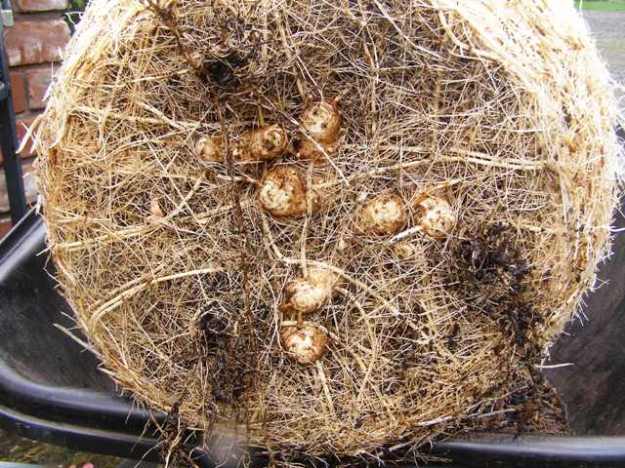
3) Shake off the mix. Wash it off if necessary so you can see what is there. The same steps apply if you are lifting a cordyline out of the garden. We have never tried taking the toes off a large, established plant while leaving it in the ground although you can presumably do it without killing the plant because Maori used to harvest the toes as kauru – a form of starch similar to root vegetables. Try digging in from one side of the plant only if you plan to try this.

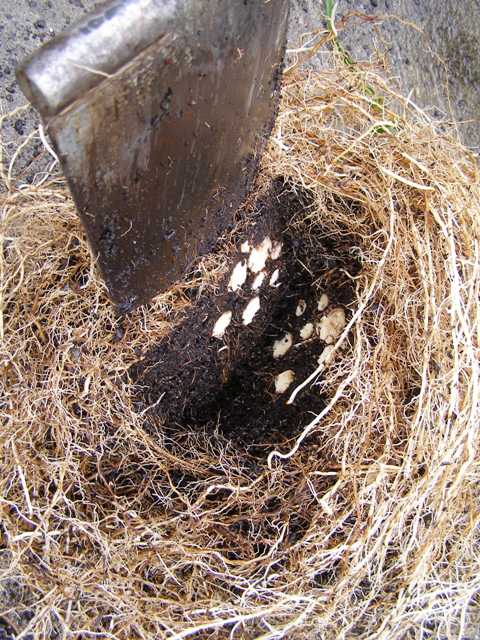
4) Because the toes can be very tough, a sharp spade or saw may be needed to cut the lower section off. We cut around 15cm off the bottom of the central root system of the plant.

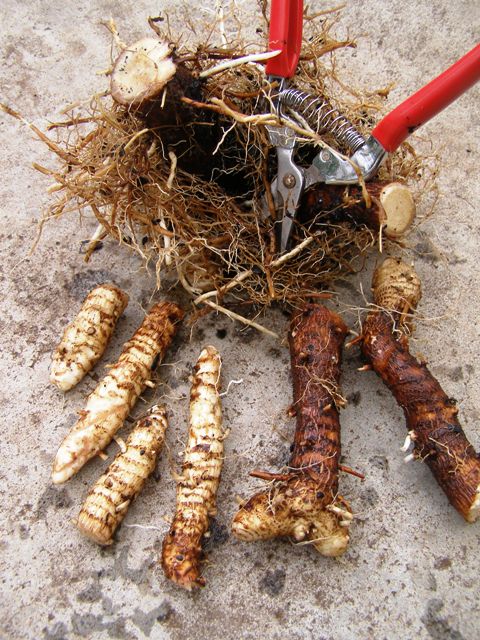
5) If you wash the cut section, you are better able to see what you are doing. Cut the roots off the toes. They will die back anyway. If you want plenty of plants, cut the biggest toes into sections but don’t go much smaller than about 3cm in length.

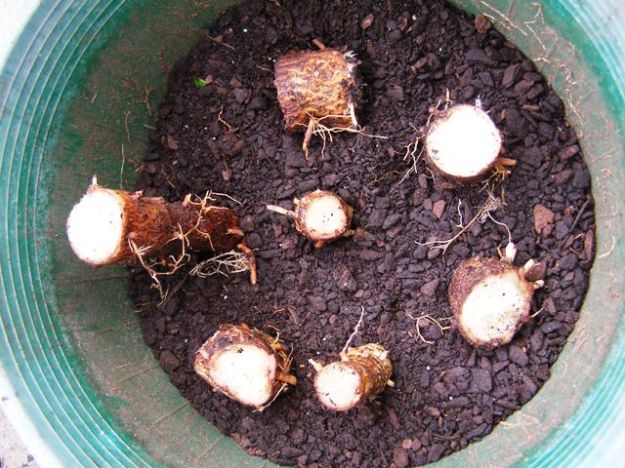
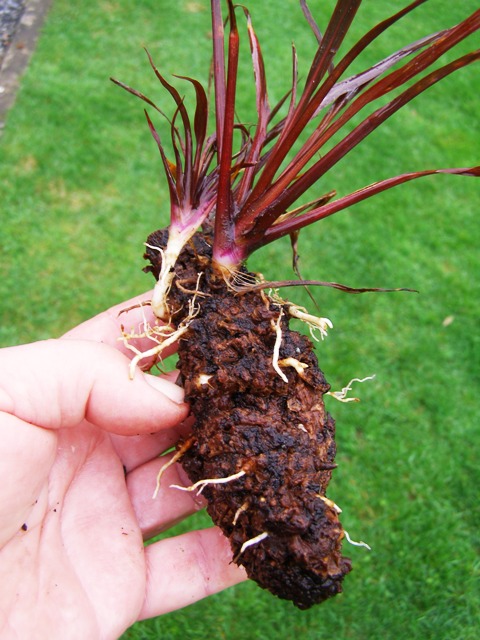
6) Pot the toes fairly close to the surface, either flat or on end (cut side up on the whole toes because that is the top) in seed raising mix (low nutrient potting mix). Do not let them get too wet or they may rot. Within a few months, they will be sprouting afresh as shown on this toe of Cordyline Red Fountain.

Just as well we don't need yew wood for longbows here

Taxus baccata fastigiata - no longer fastigiate in our rockery

Taxus baccata fastigiata - no longer fastigiate in our rockery

A little piece on yew trees in our local newspaper garden pages started us talking about them. They are a most interesting plant. It is just a shame they are not generally happy in Taranaki conditions and there are reasons why they have never featured large in New Zealand gardens and plantings.

We have one feature yew tree still surviving here, a venerable specimen of what is probably widely known as the Irish Yew – Taxus baccata fastigiata. At some point it keeled over at an angle and decided to stay there so we clip it tightly once a year and it resembles a kiwi body (minus any head) as a feature in our rockery. I say venerable, but that is venerable by New Zealand standards – as in probably 60 years old – not venerable by British and European standards where yew trees can survive for a very long time. Many hundreds of years is common and the oldest known tree at Fortingall in Scotland is thought to be somewhere between two and five thousand years old. Astonishing. We used to have many other yew trees here. Mark’s parents were as heavily influenced by English gardening traditions as others of their era and yews are an integral part of that. But over the years, many have, as we say, whiffed off which is our way of describing plants that die from root problems. If you look at where yew trees thrive, it is generally in colder, drier climates and their natural habitats in Britain are on chalk soils. We occupy the cheese side of the chalk and cheese equation – nothing even remotely resembling chalk soils here, thank goodness. We would not try planting more yews here – there are other plants we can grow better in our conditions.

Added to that, another reason why yew trees have never been a big hit in New Zealand is that we still have very strong rural roots and yews are deadly to stock. We know. The remains of our golden yew killed four of our beefies when they got into the paddock with the fire heap in it. This is not at all a suitable tree for country folk to plant here.
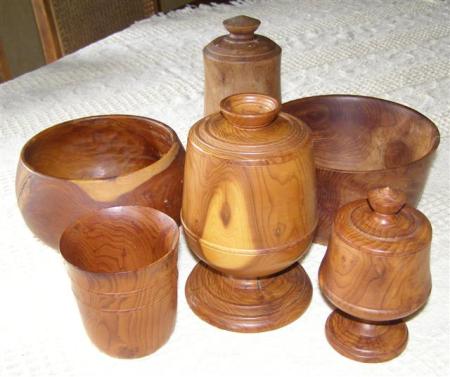
Mark's little collection of treen turned from yew

Mark's little collection of treen turned from yew

The fact we can’t grow them well does not stop them from being an interesting plant. They are pretty sacrosanct these days in Britain but if you ever come across anyone cutting down an old yew, get down on the timber. Mark pretty much destroyed a chainsaw cutting into one many years ago (it wasn’t the yew that was the problem – it was the metal stake that somebody had driven in to support the plant and left there to be hidden as the tree grew). But when he came to turn the timber on his lathe it was not only one of the very best woods he ever used – he described it as being like turning hard butter – it also had one of the richest and most varied grains and markings you will ever see. We still have an assortment of treen turned from that one tree. Unusually for timber, the pale sap wood is also durable.

While there are other yew species from Japan, Canada, China and North America, it is the European form of baccata, also known as the English yew, that is the most widely used. It belongs to the family of conifers and its leaves are needle-like. These days it is highly rated in its homelands as a garden plant for specimen, hedging or clipping because it grows slowly, doesn’t ever get too large, it sprouts from bare wood and so lends itself to long-lived topiary and formal hedges where its fine, dark green appearance acts as a splendid punctuation mark in the garden. It is one of the main topiary candidates in English gardens. It is most commonly found with a spreading habit, not upright. In fact the vertical yews which make such splendid pillar shapes, are a far more recent addition dating back just two hundred years to a mere two trees selected in Ireland. No doubt other forms have been discovered since, but the so-called Irish Yew is identified as fastigiata (fastigiate just means tall and narrow) and is traced to those two specimens.

In its natural state, the yew is dark green but it can sport to a yellow variegation and in a country with a long winter, British gardeners continue to value yellow foliaged plants for a spot of colour whereas we tend to shun them in this country. Our most recent yew to kick the bucket (and not greatly mourned) was a specimen of the Golden Irish Yew. I don’t care if yew trees are all class, I still don’t go for yellow variegated conifers.

It may be as garden plants that the yew family are valued nowadays but that was not always the case. They have a history steeped in warfare. For it was the development of the longbow that made Britain a military force and yew wood made the best longbows. As far back as the thirteenth century, England was importing yew wood from Europe and the local supplies were under huge pressure. Within a hundred years there was a serious shortage and in 1350, Henry 1V basically nationalised all the yew trees in Britain so they could be harvested to meet the needs of the royal bowmen. Not only that, but trade with Europe was dominated by the supply of yew timber and within the next couple of hundred years, Bavaria and Austria were stripped of all their native yews to supply bows for the King of England’s archers. The move to firearms at the end of the sixteenth century had more to do with a lack of adequate supplies of yew wood left anywhere in Europe, rather than technological advances. Given the warmongering tendencies of the Middle Ages, it is a bit of a miracle that any yew trees survived in the wild anywhere in Britain and Europe.

Many, if not most of Britain’s significant yew trees survive in churchyards and there are many theories abounding as to why they are such a common tree there. It may just be that a respect for the church meant these specimens could not be plundered for the making of longbows.

There was considerable angst amongst conservationists and historians when researchers first found that Taxus baccata had natural compounds which could be used in the manufacture of a new drug to treat cancer. It seemed that the future of the remaining yews could be under threat because it takes a vast amount of raw material to yield a small amount of the compound. The loyal British gardeners rose to the occasion. When the call went out for them to gather up their yew clippings to contribute to research, apparently they did so in droves. It was sufficient to progress the research to the point where the compound could be manufactured synthetically in a laboratory.

The future of the yew tree seems secure.