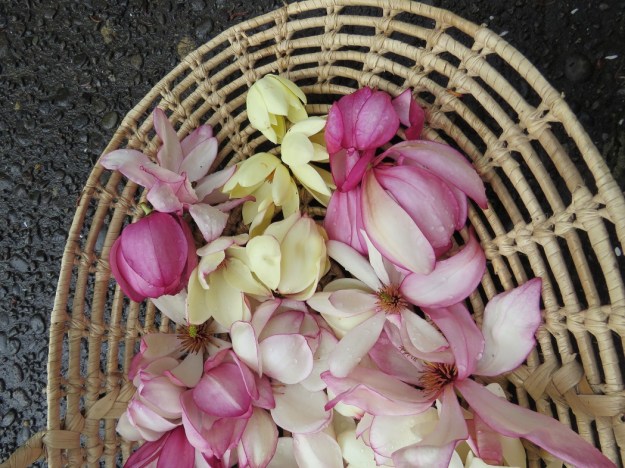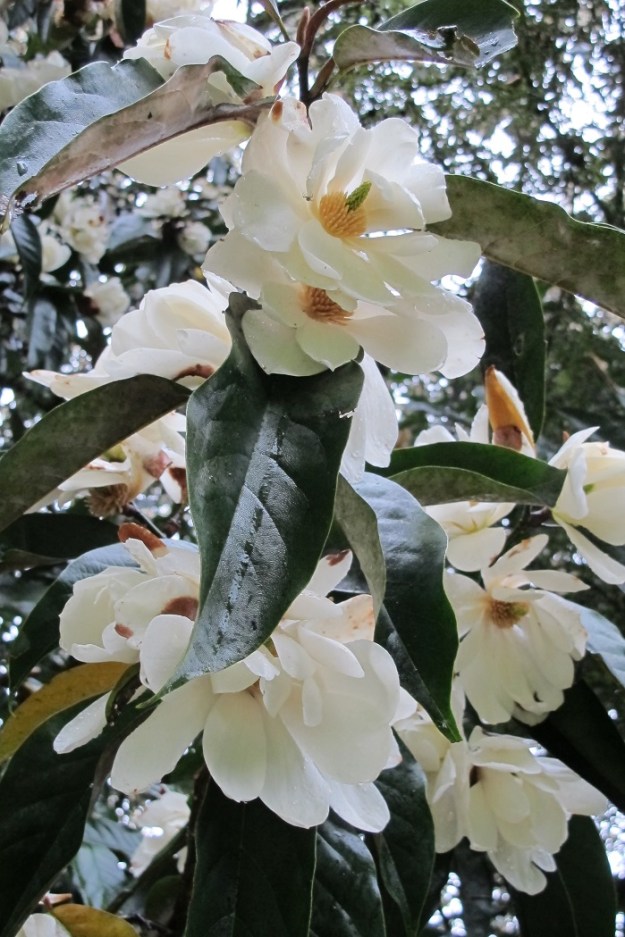
Tag Archives: Tikorangi: The Jury garden

Sad thoughts on camellias

We used to take perfection in camellia blooms for granted

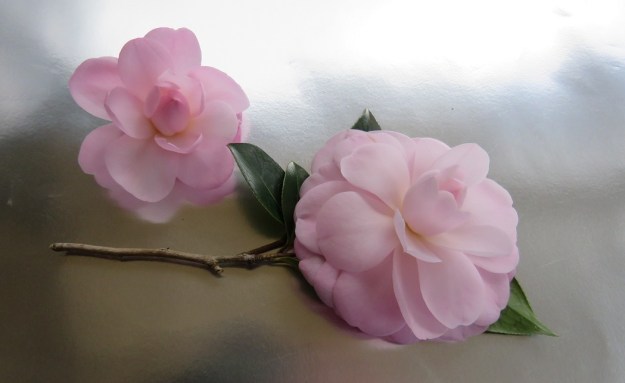
Why did this camellia make me so sad that I picked it to photograph it? It is just a pretty, formal japonica-type that is an unnamed seedling, known here as ‘Mimosa’s sister’ because it is of the same breeding that produced the beautiful pink formal that Felix Jury liked so much he named it for his wife, Mimosa Jury. The answer is because it is a rare sight, now – a perfect, undamaged bloom.

When we set up the nursery in the early 1980s, rhododendrons and camellias were our main lines. The former have fallen from favour these days, the latter have been decimated by camellia petal blight. Mark’s dad, Felix, loved the formal flower shape so much that most he named were of this form – ‘Waterlily’, ‘Dreamboat’, ‘Softly’, ‘Julie Felix’ and ‘Mimosa Jury’. The first two are international classics now and ‘Mimosa Jury’ deserves to be there, too.

These days, this is a more common sight – blooms showing various stages of unsightly damage

We still have many camellias in our garden, both of Jury breeding and named cultivars from around the world. Right now should be peak display for the japonicas, hybrids and reticulatas but camellia petal blight has dealt a death blow to that. It is maybe two decades since we have had a good early spring display and we will never see it again from that grouping of mass bloomers. It really is a bit sad to lose a major family of flowers. We keep the plants we want for shelter, overhead cover and as background filler plants but now without the pleasure of a clean floral display.

Sadly, even the interesting tropical yellow species like Camellia nitidissima suffer from petal blight in our conditions 

More of botanical interest than rewarding garden plant – Camellia nitidissima again

Camellia petal blight is a problem throughout much of the world. Australia hasn’t got it and long may their border control keep it out. As I commented after attending the International Camellia Congress in China,  it is not as devastating in other areas as ours. It is nowhere near as bad in dry climates. But here, with our generally mild climate, high rainfall and high humidity all year round, it is as bad as it can be. I doubt that we will plant another japonica or reticulata in our gardening lifetime. Were we still selling plants, we would have contracted our range to sasanquas, the garden-worthy species and some of the tiny flowered cultivars that don’t show a problem with petal blight because each individual flower only lasts a few days.

There is work going on to try and breed for blight-resistant choices but they are limited to tiny flowered cultivars as far as I have seen. I do not think we will ever see the japonicas and reticulatas free of blight. The progress on trying to find a treatment for petal blight is painfully slow and if it comes about, it may be suitable for treating individual specimen plants but not for the mass plantings that New Zealand went for in the past.

At the time it was discovered, it was only in four places in Wellington and could have been eradicated but it wasn’t seen a priority, either high or low. So it spread – everywhere. The theory back then was that it may have come in on a corsage being worn by an airline passenger from the west coast of USA where it was already well established. From such minor events can a major change be brought about.
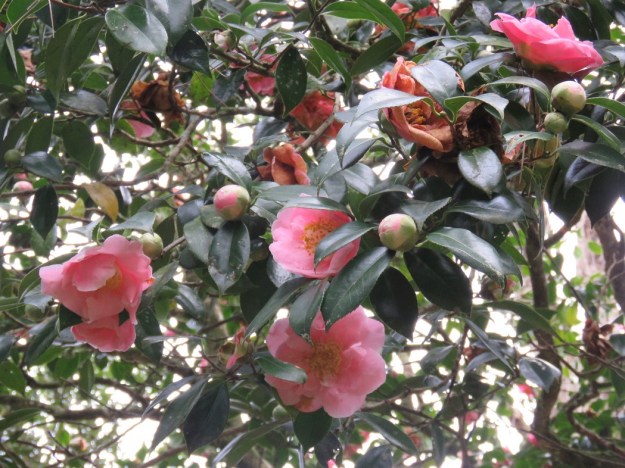
Most of our camellias look more like this now – hanging on to blighted blooms

I just feel a bit sad that I won’t see the mass display of beautiful blooms that we took for granted for so long. If you live in a drier climate, they are probably still a viable option. Look around and see if the garden plants in your area are putting on a clean display and dropping their spent blooms (blighted blooms usually stay hanging on the bush). If, like here, there are no mass displays of blooms any longer, I would be looking at planting other options than the larger flowered camellia types. When you come from the camellia family of Jury, that is bleak advice.

Ever the Pollyanna, I should finish on a positive note. Fortunately there are plenty of other beautiful flowering plants we can choose from for this time of year. Look at the range of colours Mark is getting to in his breeding work on garden-friendly michelia shrubs. Most of these are also blessed with good fragrance which is not common in camellias.
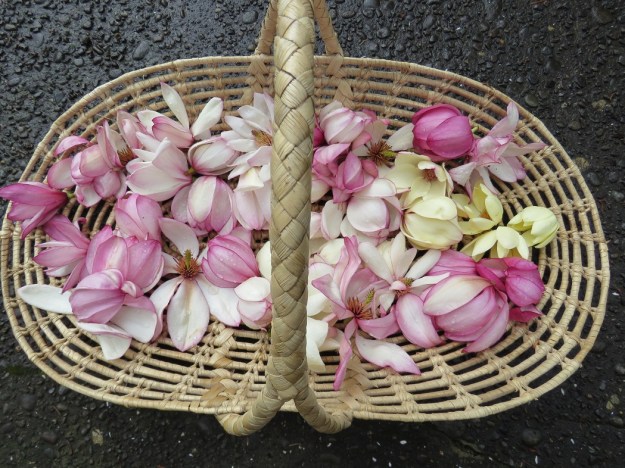
The magnoliafication of our local town

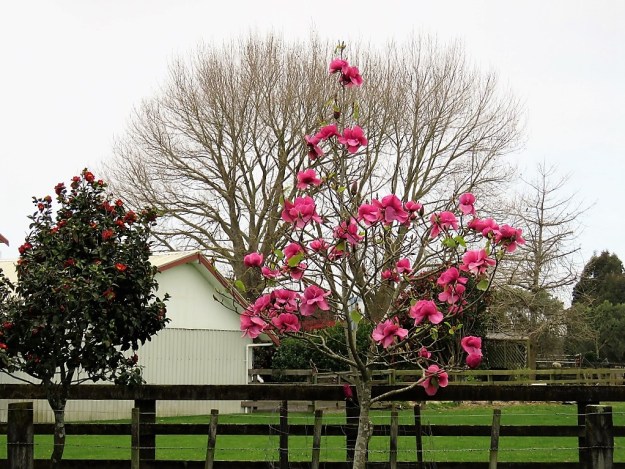
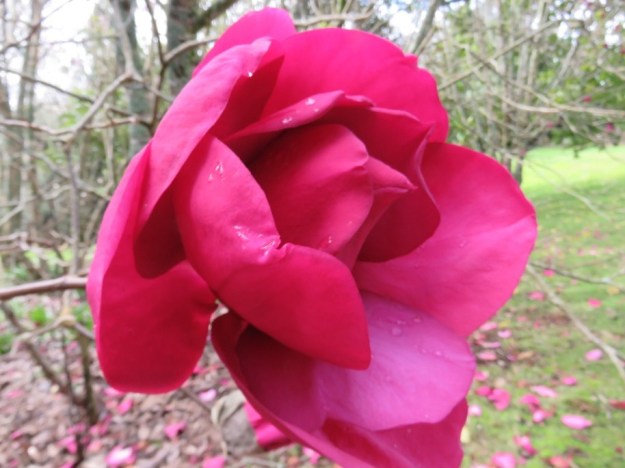
Our flagship magnolia, ‘Felix Jury’

Back in our nursery days, we used to send our reject plants down to be given away, sometimes sold for just a dollar or two, at a local op shop that a good friend was closely involved with. There are always reject plants that don’t make the grade to sell – usually due to being poorly shaped or sometimes over-produced –  and it seemed a good solution. Our local town of Waitara is what is often politely described as ‘lower socio economic’. There isn’t a lot of spare cash in the community and no local plant retailers so we saw it as a means of encouraging planting in an area where most people wouldn’t buy plants.

In the early days, we had more reject plants of Magnolia Felix Jury than we would have liked so quite a few of those went down to be dispersed and I quipped at the time that if only a quarter of them grew, they would make their mark. The magnoliafication of Waitara, I used to describe it.

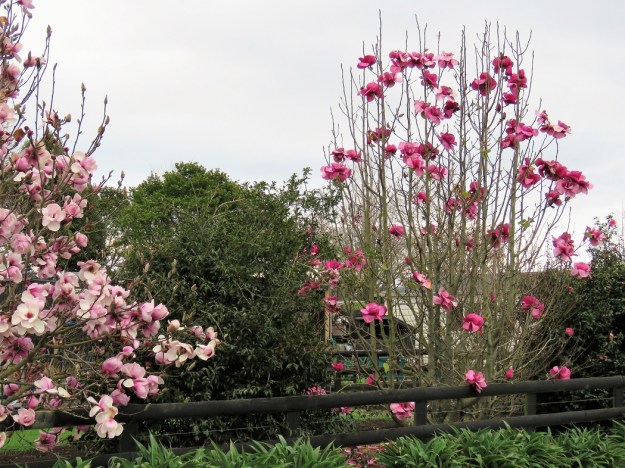
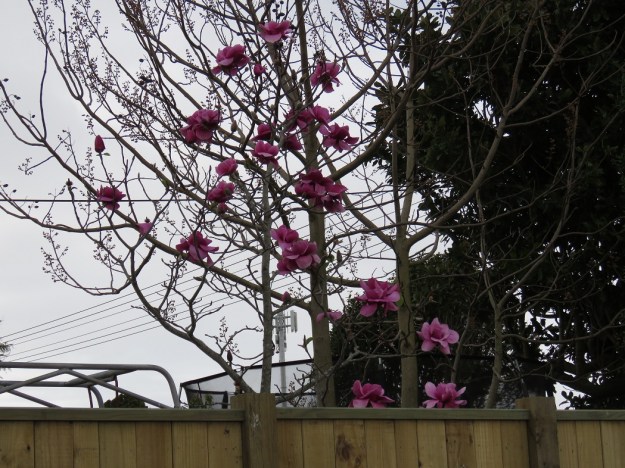
Iolanthe to the left, Felix to to the right

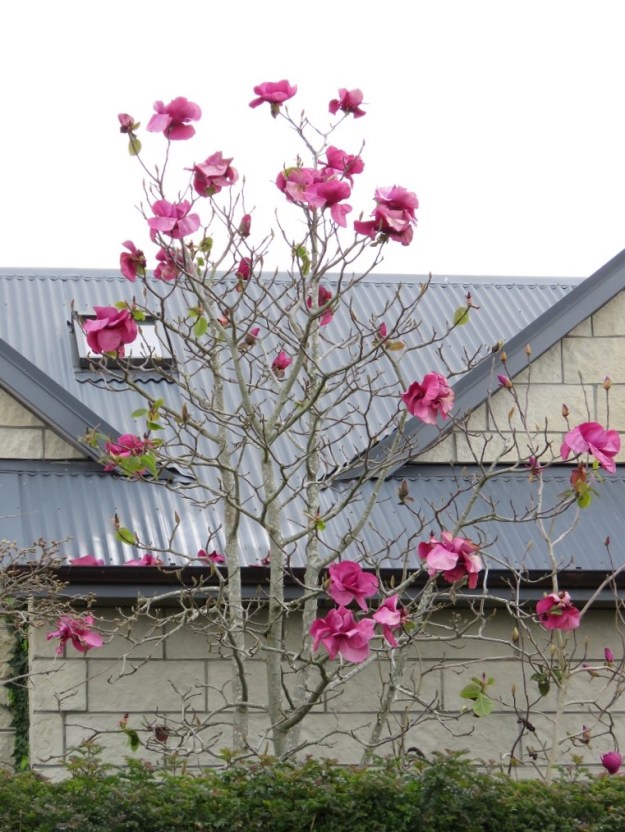
This year was the first year I have really started to notice Felix in bloom locally. It is unmistakeable with its enormous flowers so I drove down just a few streets, Felix-spotting, when I went to the supermarket yesterday. I doubt that the locals know that it was bred locally, named for a long-term resident and is now our flagship magnolia internationally but that doesn’t matter. It is just pretty spectacular and will continue to get better year on year. Magnolias are long-lived plants if they are allowed to be. I was a week too late to catch them with the best colour, but you can see what I mean.

Best colour – it fades out with age as the season progresses

We can get deeper and richer colour here than in some other parts of the world. Why? We don’t know whether soils, seasonal weather or climate affect it. All Mark is willing to say is that the stronger the plant is growing, the better the colour it achieves. I am loathe to recommend piling on the fertiliser; we never do and we don’t think it is good practice. We plant well, keep them mulched and will feed with compost if a plant needs a boost. Other gardeners like to manage feeding differently but the advice from the breeder is to get your plants established and growing well and you may find the colours are richer.

Next year, I shall get around a week or two earlier to catch the local plants in peak bloom. By then, I will have canvassed local friends to find the location of more trees.

Poor light and nearly finished, but another local Felix

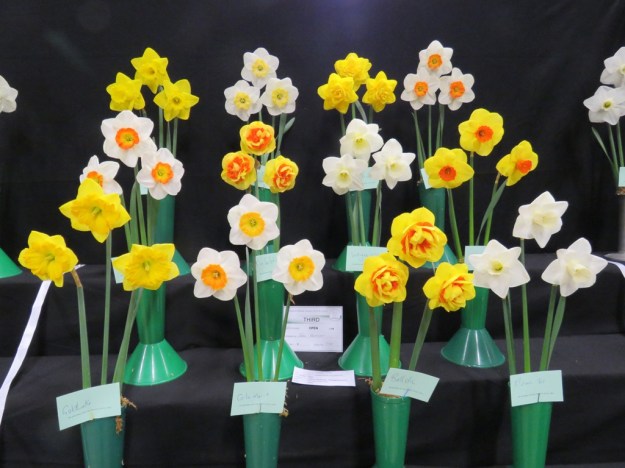
The trouble with daffodils

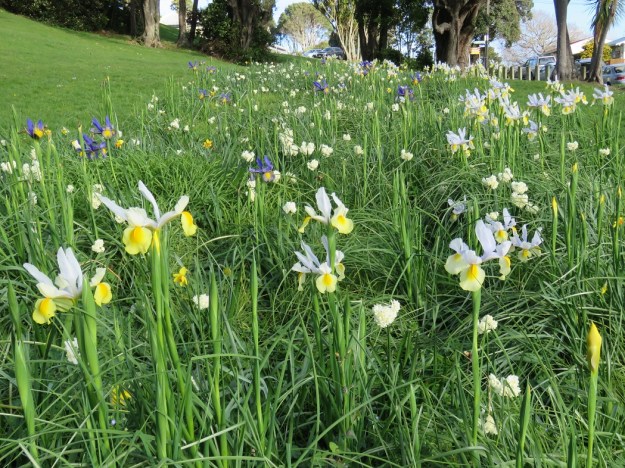
The bulb meadow on Marsland Hill

I headed back to see the bulb meadow in town that I wrote about a fortnight ago to see how it was evolving. My friend Susan had told me that this and another beside the race course opposite New Plymouth Boys High School had both been planted by Fiesta Bulbs about four years ago. The first year, she said, they were absolutely glorious. The second year, there was so little flowering that she thought ‘well that was a one season wonder’. But now they are at least staging some repeat blooming .

Where purple meets yellow – I really don’t like those murky brown tones 

The clear blue that was also used is my preference

The Marsland Hill planting is being carried by the Dutch iris. They are simply splendid and I think I need more of these easy-care bulbs to carry some of our own larger scale meadow plantings. I still particularly dislike the purple and yellow variety with the brown tones (sorry, pcsecretary who left a comment disagreeing with this assessment but at least I found out that you should be able to source it from Fiesta Bulbs, if you live in NZ) but there was also a clearer blue one being used and the pastel variety didn’t look so anaemic with many more of it in flower. So a big ups to the Dutch iris.

Too much leafage! Poor light conditions but you can see what I mean in the planting by the racecourse

But the daffodils – too much leafage. This was even more the case on the racecourse plantings where fewer Dutch iris were used. This is why Mark has never been a daffy fan when it comes to garden plants. Dwarf narcissi – yes, in abundance. Big full-on daffodils, no. The foliage swamps them and the flower heads are too heavy to hold up well in the spring wind and rain.

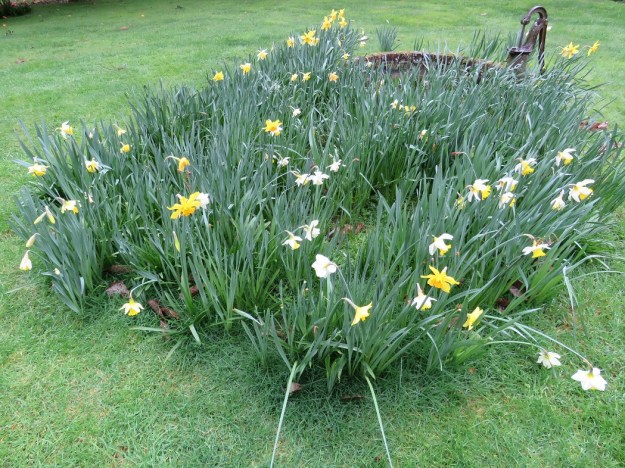
Pretty enough at home but still too high a ratio of foliage to flower. And the outer blooms all fall over in the weather. 

I came home and looked at my patch on the back lawn and thought yes, there is too much foliage there for the number of flowers. And I don’t think the ratio of blooms to leafage is going to get better.

Big daffs are best as show blooms and cut flowers 

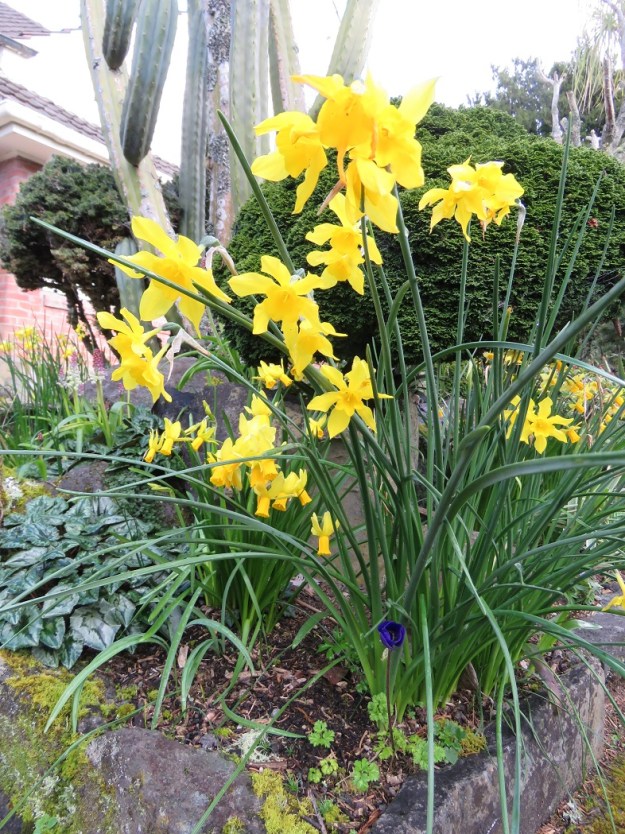
Narcissus x odorus never drowns in its foliage but its season in bloom is brief

The big daffodils are better as show blooms and cut flowers. But as meadow plants, not so much. I looked again at the narcissi we are growing at home. Narcissus x odorus (N. jonquilla x N. pseudonarcissus) is gorgeous, fragrant, does not have a lot of foliage to drown in but its flowering season is brief.  ‘Tête-à-tête’ (I assume it is meant to have the French accents) is a great performer which keeps on blooming well even when left undisturbed for many years – most narcissi respond brilliantly to being lifted, divided and replanted but stop flowering as they get congested. Ditto ‘Twilight’ and most of the cyclamineus types we grow. Bulbocodiums are not so good for meadows because you can’t pick the foliage from grass when it is coming through.

I rather think that meadows may be better with alternative bulbs like ixias, strong growing lachenalias, sparaxis and tritonias. And Dutch iris. Daffs are not compulsory.

Maybe a N. pseudonarcissus hybrid rather than a straight species selection

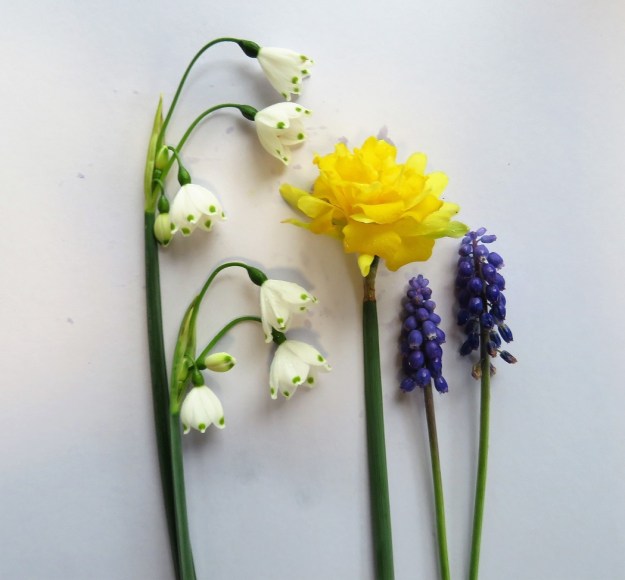
A Facebook friend posted a photo of her double daffodil which was most likely a form of the wild N. pseudonarcissus. I asked Mark if this one flowering in woodland conditions here was too. He didn’t know on that one but directed me down to the old orchard area established by his great grandmother, where the old classic is growing. Okay, there weren’t many flowers but that patch has been there, undisturbed, for anything up to 140 years, which is quite amazing really. It is the common old double that is often found growing wild alongside snowflakes (leucojums) on the sites of original early settler cottages. N. pseudonarcissus is a wild daffodil throughout the UK and Europe, more commonly single but the double has long been prized as a garden plant. It has the same problem of the weight of the head dragging the flower down but at least this one has some personal history for us.

Great grandmother’s flowers – snowflake (leucojum, not snowdrop), double daffodil (wild N. pseudonarcissus) and grape hyacinth (muscari, not bluebell)

The upshot of all this is that it is entirely understandable that, in this day and age, Council would contract a commercial bulb supplier to come in and plant a designated area. But if you want to establish a bulb meadow at home that has greater longevity, there is no substitute for spending some time observing and researching. And shun selections that are best as cut flowers – unless they are Dutch iris which seem to be able to fill both roles.

Learning botanical art in practice

I mentioned the introduction to botanical art workshops being offered in the garden here during the annual Taranaki Garden Festival. For the past two Sundays, Dr Tabatha Forbes has given private lessons to Mark and a friend. This is not my field at all so I spent the time gardening but it was great to see Mark picking up pencil and paintbrush again after a hiatus of about 35 years – and getting a result even I am not going to embarrass him by reproducing here.
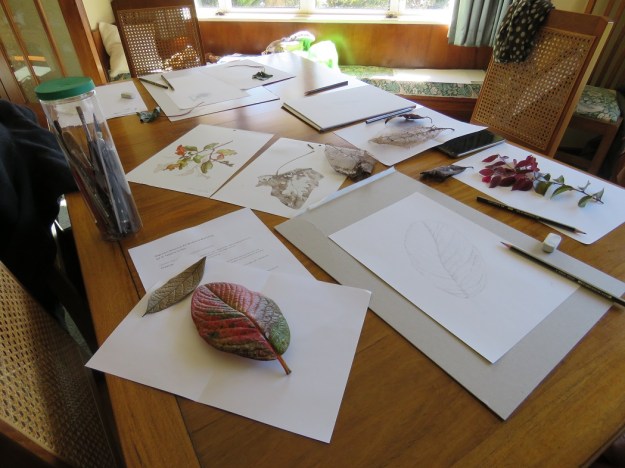
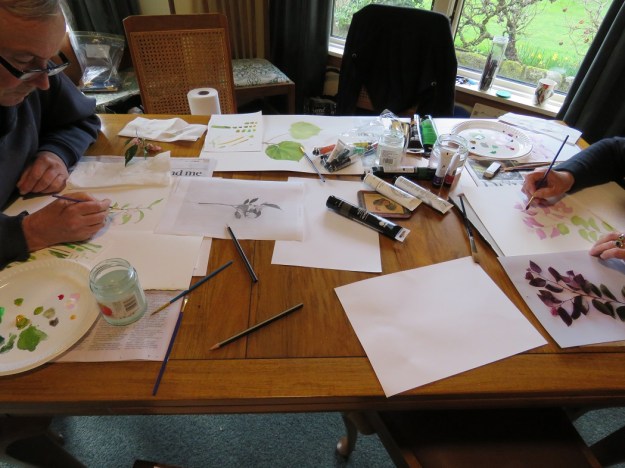
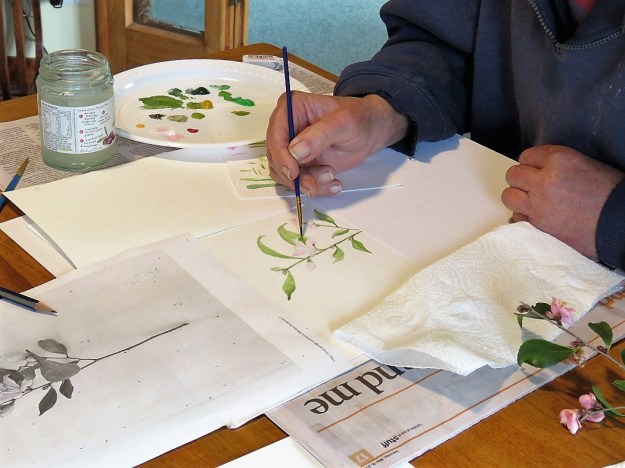
I would be misleading you if I didn’t mention that the festival workshops will not be in our dining room (we don’t have enough space there), but I thought some readers might be interested to get some insight into the approach Tabatha takes.

The first day was spent drawing leaves in pencil, refreshing basic drawing skills.

The second day was painting. Tabatha prefers acrylics because they lend themselves to building up layers of colour. By the end of that day, both Mark and our friend had their first painting more or less completed. Mark painted a small spray of Camellia ‘Tiny Princess’, our friend painted a spray of Loropetalum ‘China Pink’.

Work in progress

My earlier post gives more information here.

Brief details are:

When: Saturday 2 and Sunday 3 November from 10am -3pm each day for beginners.

November 9 and 10 –  going on to the next level – berries and fruit.

Where: here in our garden at Tikorangi

Cost: $100 per two-day workshop. All materials provided.

For more information contact Tabatha at drtab72@gmail.com


The plant breeder’s garden

“It’s very white out there,” he said

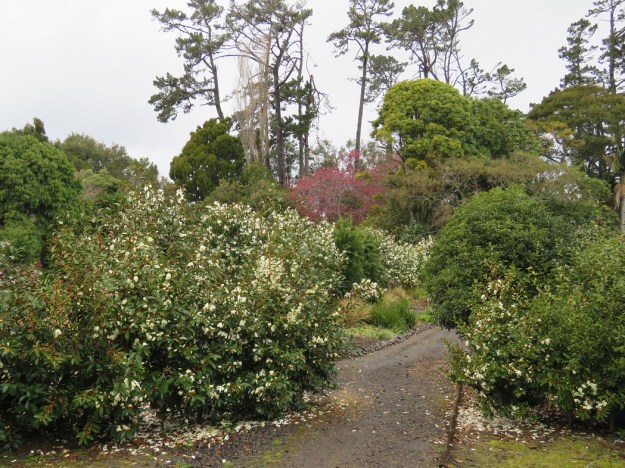
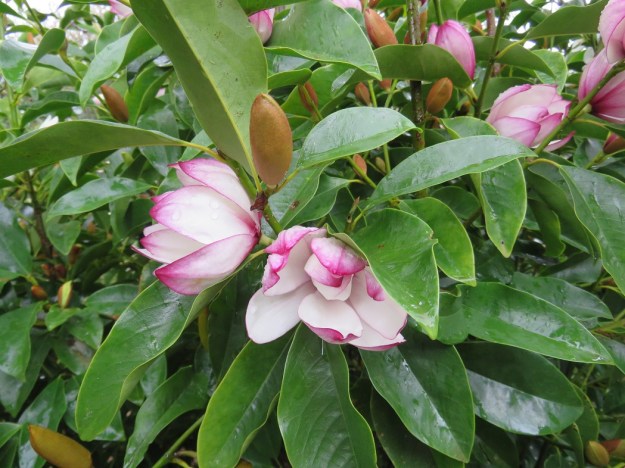
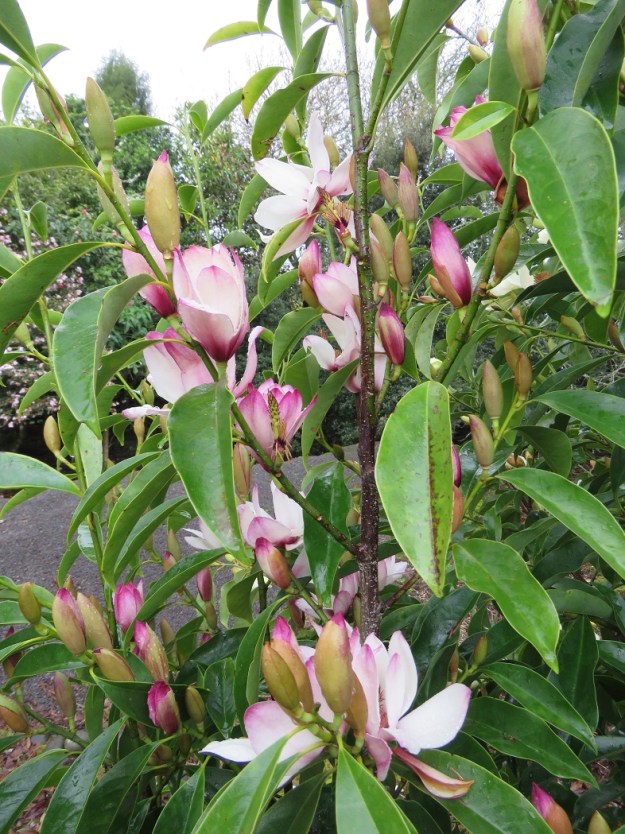
“It is very white out there,” Mark observed. We were standing in the roller door of our large shed, sheltering from another rainy squall and looking out to the new summer perennial gardens. The photo doesn’t fully convey the white experience. The row of Fairy Magnolia White, Camellia yuhsienensis and Mark’s hedges of michelia seedlings were all in view. Mark was envisaging a carpet of snowdrops at ground level as well, even though they are but a fleeting delight. I was looking at the michelia seedlings.

Mark has planted two sides of the new garden area in michelia hedges. Technically – in accurate nomenclature – these are all magnolias now but we continue to use the earlier term ‘michelia’ for the sake of clarity. When we say ‘magnolia’ here, we are almost always referring to deciduous magnolia trees so it is confusing to include the world of evergreen michelias which also feature very large in our lives at this time of the year.

Some of the seedlings are simply gorgeous but won’t be named

When planting seedlings, it means every plant will be different. For the largest length of visible hedge, he planted out one particular cross that had not come out as he hoped because very few were coloured. The nature of the parentage means that they will flower well, not grow out of control and be suited to clipping but they will never have the precision of planting a row that is all one clone – in other words, identical to each other. Mark likes seedlings for mass plantings because it adds interest to have them all similar but not identical.

Others are pretty on their day but floppy blooms don’t cut the mustard

I paced along his hedging, estimating how many individual plants there are. Getting close to 200, was the answer, planted at about 30cm spacings because we want a quick hedge that can be trimmed as required. Each individual plant in bloom is lovely on its day but some are lovelier than others. However, none will be named and put into commercial production. Mark has already named Fairy Magnolia White and Fairy Magnolia Cream and he won’t name any more white or cream ones unless there is something that is radically different or a major improvement. So these are ours to enjoy alone.

Heading into pink 

Part of a breeding breakthrough in colour but not good enough to select

At one end, there are about three different pink-toned varieties which are something of an oddity in amongst the cream and white majority. Again, he has already named Fairy Magnolia Blush in this colour range so they will just stay as a quirky aberration in the hedge at flowering time. We are okay with quirks.

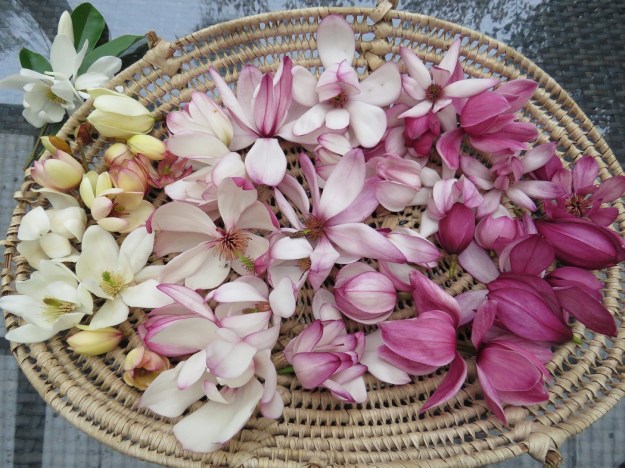
Hardy michelias are basically white or cream. While there are new tropical species still being discovered and some of those show more colour, Mark has no interest in trying to breed with them, even if we could get them into the country to work with. Most of the michelias are not overly hardy at the best of times and he has been trying to get hardier selections (will they grow well and flower consistently in places like the UK, is one of his measures) without introducing more tropical genes. But he has managed to get as far as pinks, purples and primrose yellow by ever more complex crosses using the material he has available.

From white through to pinks and purples with a few heading into pale yellow –  blooms from the breeding programme

I see it was four years ago that I set out to pick a representation of single blooms from his seedlings to show the range in colour, flower size and shape that he has reached in what is predominantly a white or cream plant genus. While he has continued to flower more since, this photo remains a fair summary. We have selected three new ones that are currently in propagation and performance trials for probable release but there is a whole lot more to selecting a plant than the just flowers. My lips are sealed as to what makes these three worth singling out until we are further down the track of commercial trials.

Fairy Magnolia Cream just coming into flower

In case you are interested in what goes into selecting a plant (or you want to name something you have found), off the top of my head, the checklist includes the following:

  • Is it either distinctively different or a major improvement to similar plants already on the market? (This is arguably the single most important criterion).
  • Are there plenty of flowers? How long is the flowering season (some can be a short flash in the pan)? Does it flower consistently well every year?
  • Are the blooms reasonably weather hardy?
  • If it is scented genus, are the flowers fragrant?
  • Do the blooms age gracefully and fall cleanly?
  • Is the foliage as good as the flowers?
  • Is the foliage in proportion to the flowers?
  • Where do the leaf buds open from? In the case of michelias, does it just set leaf buds on the tips (in which case it will look leggy and bare very soon) or does it set leaf buds right down the stem.
  • Does it ever defoliate in a wet spring (a feature of Magnolia laevifolia formerly known as Michelia yunnanensis)?
  • What is its performance like as a garden plant , not just grown in a container? It takes several years to make this assessment. In the longer term, will it stay a garden-friendly size? Does it take pruning, trimming or clipping well?
  • What is its international potential? How is it likely to perform in more extreme climates?

Only then do the propagation trials start. There is no point at all in selecting a plant that is difficult to propagate, where the percentage of cuttings that do not set roots is too high, where plants *whiff off* – Mark’s phrase meaning die – during production, or where very particular propagation and growing techniques are required for success – growers just do not want to put the time and expense into growing plants that are unreliable or too picky.

New releases used to be the life blood of our mailorder business. Some selections stood the test of time, others not so much. At least all the magnolias have proven to be worthwhile. It is the vireya rhododendron selections and a few of the camellias that have fallen off the Jury plant wagon. These days, we get a new plant through the initial selection and then we hand it over to our agents to manage through final trials and then getting it to market.

It is a long path to getting a new cultivar onto the market. But in the process, we get a lot of unique plant material to use in our own garden.

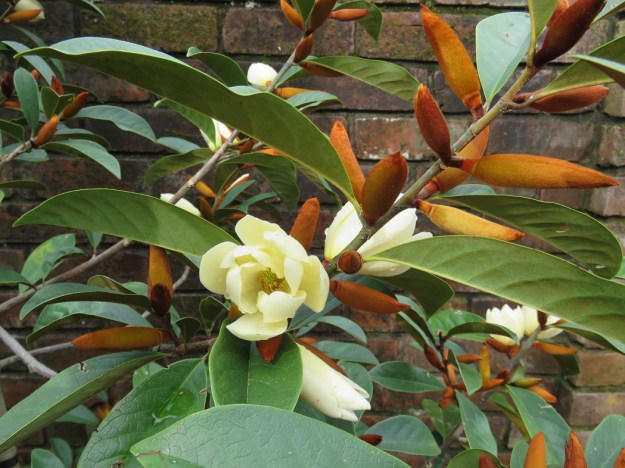
Magnolia doltsopa syn Michelia doltsopa – a selection released as ‘Rusty” by nurseryman, Peter Cave. Pretty flowers but showing typical floppy tendencies of this species and the original plant in our park is massive.