Tag Archives: Tikorangi: The Jury garden

Back from a near death experience – an obscure fig


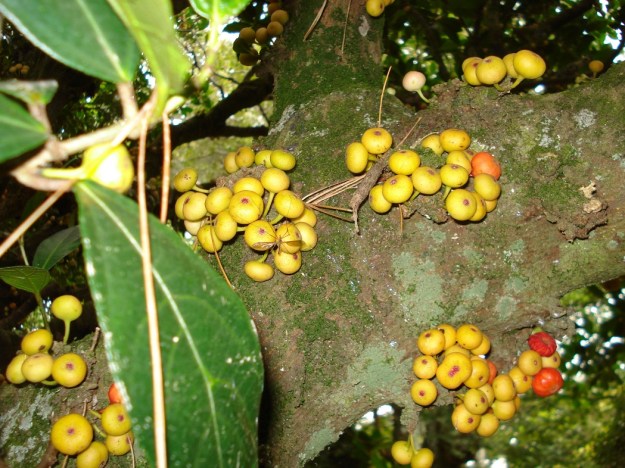
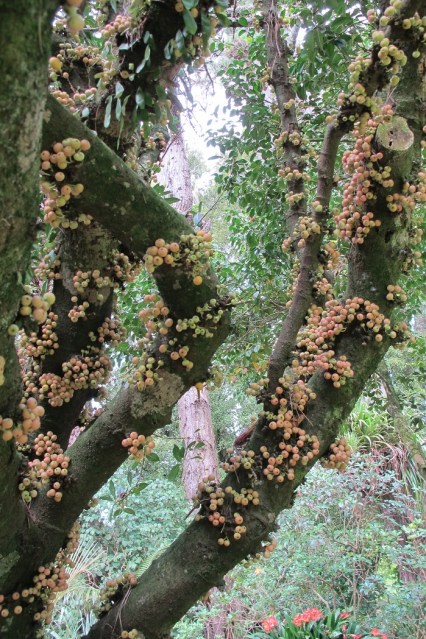
Very curious fruit on Ficus antiarus

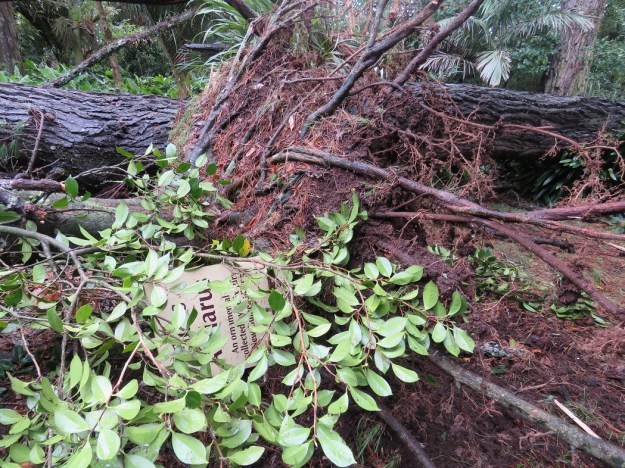
The most asked about plant in our garden was Ficus antiarus. I say was because the small tree became collateral damage when a massive pine tree fell over last April. We feared for its long-term survival as all that remained in the ground were some of the longest roots.

Brought down by an enormous falling pine last April. That is the root system, uprooted. 

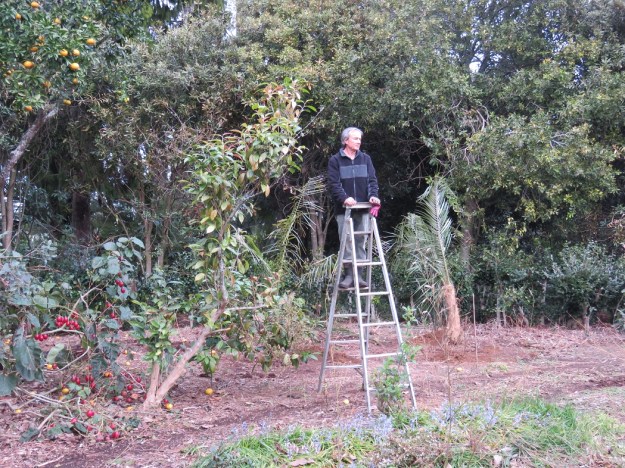
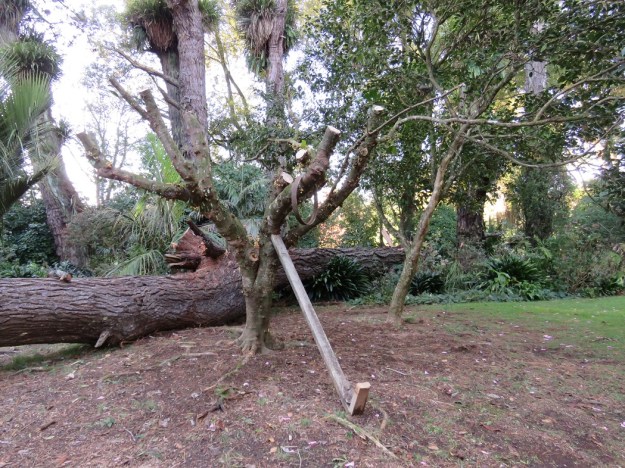
It took a couple of weeks to clear the area sufficiently to have room to move and then Mark and Lloyd levered up what remained and installed a prop to hold it more or less upright. Mark took a chainsaw to it to remove most of the canopy and the broken branches. He pruned to keep the shape while reducing the stress on the tree by reducing the smaller branches and much of the foliage. Too much leafy growth would mean increased loss of moisture and we hoped it would put its energy into re-establishing the root system over winter. We crossed our fingers.

levered more or less upright, pruned by chainsaw and propped in place last April

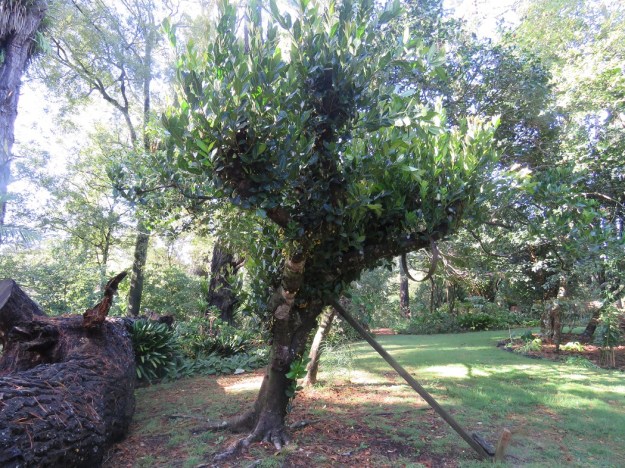
Behold the fresh leafy growth now. It is a sight to behold. It set no fruit this year but we didn’t expect it to after such a shock. It appears that it will live on for another few decades. I asked Mark how long the prop would need to remain in place and all he said was that he had no idea so I guess he hasn’t thought about that yet.

Ten months later and we are delighted by all the fresh growth

Mark’s father Felix brought Ficus antiarus back from his one and only intrepid plant-hunting trip – to the highlands of New Guinea in 1957. He thought that in the cooler temperatures of the areas with altitude that he might find interesting plants that would survive back here. He didn’t bring a big haul back but the ficus, Schefflera septulosa and Vireya rhododendron macgregoriae have all stood the test of time.

The ficus has mid to dark green leaves with an interesting rasping texture – not unlike green sandpaper. It is evergreen, unlike most eating figs. What is most remarkable about it is the generous set of tiny figs growing out of bare wood. They start out cream, ageing through orange to red. Birds don’t strip the tree so the fruit must not be very inviting to them. I have nibbled the odd red fruit and they have a faint figgy flavour but not enough to make them an addition to the diet. We just like it as a curiosity at the end of the Avenue Garden.

Before it was knocked down – we are now optimistic it will return to this state.

Covering the ground – our free mulching options

Oh look! I made a little display board.

Mulching is what enables us to maintain our garden to the standard we want, particularly keeping the new herbaceous plantings free of invasive weeds. Being economical gardeners, we don’t ever buy mulch in but rely on the resources we have here. I laid our main options out to photograph them.

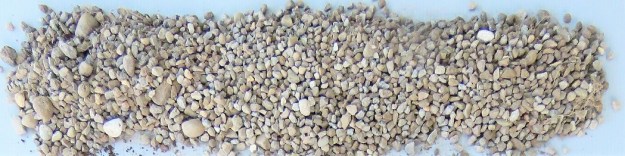
Gravel mulch

Mulching with gravel at Wisley

I have seen gravel used at the RHS Wisley Gardens, particularly in the Piet Oudolf borders and the Missouri Meadow. In its favour, it is weed-free and it makes a good seed bed in that managed meadow where seeding down is encouraged. However, it is heavy to handle, expensive and, in a situation with herbaceous plants which need digging and dividing, it is inevitable that a fair amount of it will end up in the soil even if you make efforts to scrape it to the side. I am reluctant to use it and that is a pity because we have a small mountain range of it retrieved from the capillary beds when we dismantled them. Maybe 10 cubic metres of it and that is a lot.

Granulated pine bark is a stable mulch and a neutral dark brown. I doubt that it comes cheap if you are buying it for this purpose. Not only do we have a small mountain range of gravel, we also have what is referred to here as ‘the bark slug’. When we ran the nursery, everything was potted into granulated bark and Mark decreed that the bark was not to be re-used when plants were being re-potted. His position was that the bark potting mix was one of the cheaper inputs overall (he didn’t pay the bills; I was often somewhat shocked at how much the bark bill came to each month at around $750 a truck-load) and that using fresh bark cut down on weed contamination and disease issues. All the used bark went out to the bark heap and as the heap grew, it seemed to take on a life of its own and creep out like a sand slug.

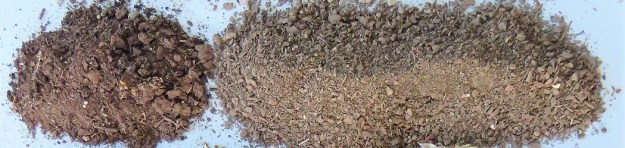
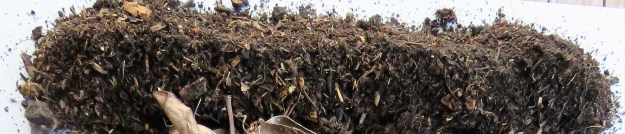
Granulated pine bark – after at least a decade and fresh, but dry

We don’t re-use the old bark as a garden mulch any longer because of the fertiliser bubbles within it. We always used Nutricote as a fertiliser for commercial plants and very good it is too. But, and it is a huge but, the coating on the fertiliser granules remains long after the actual fertiliser has been used. Mark initially rejected the use of the waste bark on paths and gardens because his eye zoomed in immediately to the fertiliser bubble casings within it. Now we are even more concerned that it does not appear to be biodegradable and we don’t want to be spreading a non-biodegradable product through the environment.

This is not a problem that you will have if you buy in bark chip because it won’t have fertiliser added (and not all fertiliser comes with a coating). To the right, is fresh(ish) bark that we still use as a potting mix. To the left is what it looks like after more than a decade in our bark heap. Despite being an organic product, pine bark does not decompose readily.

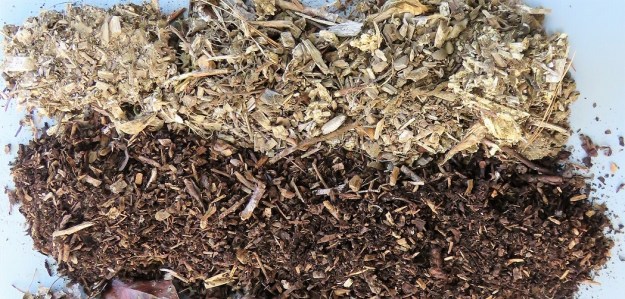
Commercial chipping at the top, our home chipper below

Next is the woodchip mulch after nearly two years on the garden. It is not my favourite mulch but we were given a large truckload of freshly mulched copper beech branches and leaves and I needed to cover a few hundred square metres of newly planted garden. Beggars can’t be choosers. It was put through a commercial mulcher and is much coarser than we get out of our domestic mulcher machine. It is very light to handle and forms a crust across the surface, discouraging weed growth. I just don’t like the colour – it is pale creamy yellow when it goes on – and because it is so coarse, it takes a long time to mellow out to something more neutral. And I don’t like the coarseness. It looks… utility, which indeed it is.

Our home-generated woodchip, being of a finer texture, discolours far more quickly and is less dominant visually. But it takes a lot of prunings to generate much quantity.

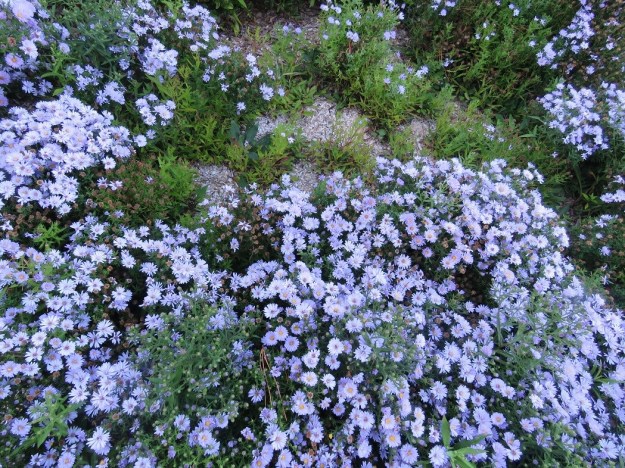
Evidence of nitrogen robbing at the top – plants are sparser and showing a yellow tinge while others have thrived

The advice with woodchip is to be careful to lay it on the top because it robs the soil of nitrogen as it decomposes if it is incorporated into the soil. Behold an example. I did the initial planting of this aster and laid mulch. I must have gone back into the area to add some more plants. Clearly, I was not sufficiently careful to scrape the mulch to one side and some of it was dug in when planting. The somewhat bare area and yellowish tinge to the plants are signs of nitrogen deficiency. I keep telling myself to get out and scatter a bit of blood and bone on the affected plants to combat this but we do not generally add fertiliser to our garden so I haven’t got around to it yet.

Leaf litter mulch

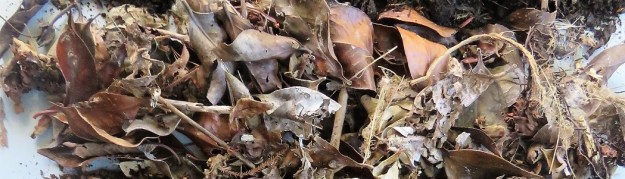
Smaller leaves look tidier

Next up is leaf litter – natural, free, nutritious, enabling a healthy soil ecosystem but untidy for small, tightly maintained areas. The birds will scratch amongst it (which is a sign of a richer soil environment because they are looking for food) and it often needs raking back into place until it builds a good under-layer. I like leaf litter mulch visually but where I am using it is in larger, more naturalistic spaces. It would not be my first choice for small, confined areas. Though the smaller your leaves, the tidier they will appear.

Compost is king

And finally compost – our preferred mulch by a country mile. Because our soils are so friable, we generally add compost as a mulch rather than digging it in around the roots of the plants. The worms will do the work and incorporate it over time. We often choose to put the woodchip and leaf litter through the composting process first. Compost is light to handle, natural in appearance and makes a major contribution to soil and plant health. We make a lot of compost here, putting it through a process that heats up sufficiently to kill off many nasties but even so, we try and avoid putting seed heads and invasive plants on the compost heaps. The problem is that even though we have compost mounds that are turned by tractor, we don’t make enough to compost to meet our mulching needs which is why we sometimes have to go to alternative options.

Our gravel mountain (with a pretty apricot foxglove seeding into it)

Upon reflection, I may have to turn to the gravel mountain to mulch the new grass garden that I plan to plant this autumn. It is about 450 square metres and laying an 8cm mulch across that area is going to take a lot of whatever I use. At least this is a planting that I do not anticipate having to do frequent digging and dividing.

A cautionary tale (with advice for active gardeners)

A cautionary tale this weekend: last week my foot encountered a stick. The skin abrasion was so minor that I didn’t worry about it, though when it started to show signs of infection rather than recovery three days later, I reached for antiseptic salves and bandaids. Two days on from there, when my whole foot was swelling rapidly, I took advice and headed in for urgent after-hours care at the hospital. Yup, cellulitis – the bacterial infection was spreading rapidly into the surrounding soft tissue and skin.
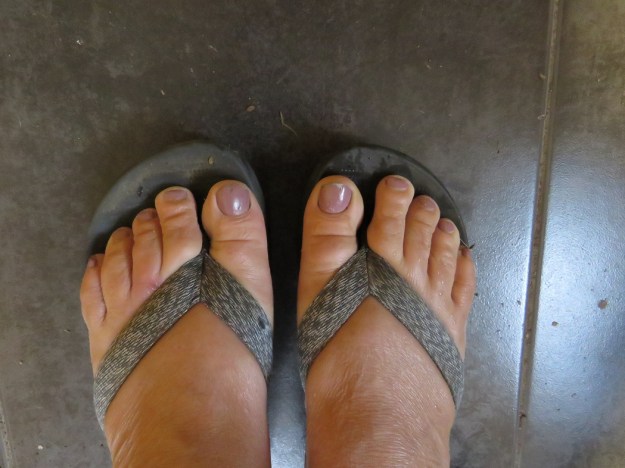

I have been in this situation before, about 20 years ago. In that case, I knew I was in trouble within three hours of puncturing my foot and went for medical attention. Unfortunately, that escalated over the next week to the point where I became an emergency admission to hospital for surgery and then a four-night stay on intravenous antibiotics. In that case, the problem was that the bacteria, just a particular strain of E coli, was resistant to all but the remaining last-line-of-defence hospital-only antibiotics but it took a week of spiralling infection and ineffective antibiotics before that was ascertained. I was understandably nervous about this scenario repeating itself but fortunately, this time the bacteria responded to the more common antibiotics that are tried first. My foot is fine now but I still have another four days of antibiotics to take to finish the course.

Ringing at the back of my mind is my mother’s oft-repeated anecdote that the first autopsy my father ever carried out was on a man who died of a whitlow – a hang nail. That would have been before antibiotics were widely available because my father qualified in the later 1930s. I bet the victim developed cellulitis from that minor skin tear and it all spiralled out of control from there.

The left foot is just a little swollen today but I shall no longer garden in my jandals.

What is disturbing is that our future holds a return to this past if antibiotic resistance continues to grow. It is genuinely worrying. Without being too neurotic about it, the lesson we have learned is to keep a close eye on the minor injuries that we often sustain as part of our gardening activities. I have heard of major complications being caused originally by rose thorns. I am telling myself that I must garden in closed shoes, though that wouldn’t have helped me this time because I was just wandering out to pick up a couple of ripe rock melons to give away. I am not going to put on protective boots every time I go out the back door.

For overseas readers living in countries where medical attention is a personal cost, the total charge for my recent experience (hospital care at Accident and Emergency, a precautionary tetanus injection, antibiotics and after-care if required) was … $5. Yes, $5 for the dispensary charge on the extended course of antibiotics. I am feeling very kindly towards paying taxes this week.

Lagerfeld Rules – should he ever turn his attention to gardening

The man himself - Karl Lagerfeld (photo: Wikimedia Commons)

The man himself – Karl Lagerfeld (photo: Wikimedia Commons)

In honour of the now late Karl Lagerfeld, I recalled a piece I wrote back in April 2012 when I was still writing for The Waikato Times. I don’t usually republish, but I thought maybe it was acceptable at this time.

I admit I had never really registered Karl Lagerfeld until last week. Sydney daughter sent a little clip of his quotes. “Sweatpants are a sign of defeat. You lost control of your life so you bought some sweatpants.” Ouch. “Florals are for middle aged women with weight problems” and “Having adult children makes you look 100 years old. I don’t want that.”

I started to feel vulnerable until daughter pointed out to me that while I am upon occasion seen in public with one or more of my adult children (and isn’t Lagerfeld so right that it makes one look old?), she could not recall me wearing florals or sweatpants.

In case you are equally ignorant about Lagerfeld, think elderly German fashion designer, made his name with Chanel, now slim, white haired, permanently suntanned and always wears dark glasses. These days, his main claim to fame appears to be his capacity for pithy, outspoken comment. I could find no evidence whatever that Mr Lagerfeld has had anything to say about gardening. But let that not matter. Shamelessly putting words into his mouth, we started a meme: Karl Lagerfeld on gardening. This is what we consider he would be likely to say, should he ever turn his attention to botanical issues.

Only the real thing will do

Only the real thing will do

“If you can’t afford the real thing, then it is better to go without.” There would be nothing armless, legless or headless in Karl’s garden, especially nothing white unless he could persuade the British Museum to loan him some of the Elgin marbles. Reproduction classical just wouldn’t do.

“Never plant an avenue of the same tree unless you can afford to replace the lot should one ail. A gap in an avenue is like a toothless smile – engaging in children but an indication of lack of care in an adult.” Karl understands that when an established plant dies, it is almost always an indication of a problem below ground so there is no point in replacing like with like. The incoming plant will succumb to the same problem sooner rather than later. And avenues with gaps look, well, like avenues with gaps or a smile with missing teeth, really.

“Glazed blue pots are so last century. There is nothing aesthetic about a bright, shiny blue pot from Vietnam. Leave them to women who wear floral prints or straw hats adorned with fake flowers.”

“Buxus hedging,” declaims Karl with withering scorn, “is the polar fleece of the garden. Ubiquitous, utility but the comfort refuge of the unimaginative.” Harsh this may seem, but edging garden beds in rows of grassy plants gives rise to even stronger condemnation: “Reminiscent of crimplene trousers with elastic waists.”

Karl would put the not into knot gardens – as in advising not to be seen dead with one in your garden unless you have a European title (minor nobility is fine), live in Europe and can claim direct lineage to the design. Otherwise it is a knock-off copy and Karl does not do knock-off copies. Ever. Accordingly, he rejects chevron gardens, parterres, potagers, rills, canals and the like, unless you have the castle or palace to go with them. At the very least, a stately home is required.

Perhaps better than the toilet bowl recycled as a garden feature, but blue pots are problematic

Perhaps better than the toilet bowl recycled as a garden feature, but blue pots are problematic

“Unspeakable. I will say no more,” is his response to any toilet humour in gardens. He shudders in distaste at the thought that anybody, anybody at all, could ever think it was witty or clever to recycle an old toilet bowl as a plant container. In fact Karl is equally unimpressed with any efforts to recycle old baths, laundry tubs or other accoutrements as garden features. “We don’t have a bathroom in our dining rooms. Some things are best kept discreetly out of view at all times if you want to retain any mystique.”

When faced with the new breed of gardener who will only grow plants that are edible, Karl sniffs. “You might just as well say that you will only wear clothes that can be machine washed and never need ironing. Fashionistas would not be seen dead in polyester. Just as high end fabrics are used for high end clothing, so too are high end plants used for high end gardening. Some things exist because they are beautiful. That is enough. Broccoli is never beautiful.”

Long an advocate of the little black dress, Karl is only too well aware that the same little black dress on one woman will look like a shapeless sack whereas another will carry it off to perfection and on most men it will simply look silly. So too with gardening. “You cannot fake chic,” he says (yes he actually really did say that!) “Some do it with style. Others just follow the rules and it shows.”

“I am a fashion person, and fashion is not only about clothes – it’s about all kinds of change”. Karl is well used to ringing the changes, to leading the way. Not for him to slavishly copy and follow rules.

We will leave the penultimate comment to the man himself: “I’m very down to Earth, I’m just not from this Earth.” If he thought about it, he would be likely to add the advice that you should not think that just because you are working in your garden, trackpants or floral attire are acceptable.

First published in the Waikato Times and reprinted here with their permission.

It’s all in the detail

In the absence of a photo of the Isola Madre steps, I give you Villa d’Este steps even though they are not the same. And they are missing the elegant white peacocks.

In all the gardens I have seen, two sets of steps are etched in my memory. The first is the graceful flight leading down to the original boat landing on Isola Madre in the northern Italian Lago Maggiore.  I do not think I even have a photo of it and I failed to find one on a cursory look on the internet, so you will just have to imagine a long and sweeping set of stone steps, populated these days by oh-so-exquisite pure white peacocks rather than ladies in long gowns.

Lutyens steps at Great Dixter

The second enduring memory is of a style, not a particular set of steps. The circular Lutyens steps from the early twentieth century, seen in many gardens but perhaps best known from Hestercomb and Great Dixter. We wanted some of our own as soon as we saw them. It has taken a decade, but we are into slow gardening here. Finally, we had a location where we needed steps and where we had enough space to consider steps that would be a design feature, rather than utility access. And let me tell you, executing such steps is not as simple as it looks, even when you have had a good close look at them.

One of the lessons I took away from looking at a garden that I wrote about at the time as being the closest to perfection that we have ever seen, was the importance of quality construction. I am not big on what I call ‘veneer gardening’ – somewhat like theatre set design but in a garden context. It may hit with the wow factor but soon becomes tacky and doesn’t last the distance. The same goes for poorly executed constructions and installations. Good design and construction underpin a good garden over time. We wanted to get our steps right.

Fortunately we have Our Lloyd who is a perfectionist with a good eye, backed up with his theodolite, string lines, tape measures and various other accoutrements. Even so, it took three goes and three sets of eyes to get it right. The site does not have a large fall and the two levels are defined by small brick retaining wall. We figured the steps needed to be two metres wide so that is the distance between the two small pillars.  Firstly, Lloyd mocked it up for us to look at. I was slightly disappointed that the mock up did not have the generous look I was hoping for but Mark picked the problem at first glance. Lloyd had laid it out so the widest point was two metres, not starting with the inner circle being that diameter.

From a book – the circle of steps is fully contained in the gap of the small retaining wall.

It is the same mistake, I think, that is found in this set of steps photographed in a book we had. To be fair, that may have been how they wanted their steps, but it wasn’t how we wanted ours. We only have sufficient fall to get three wide, shallow steps – one set back into the top level and two opening out to the area that is destined to be planted as the Court Garden this autumn. The second glitch came when we realised after the initial construction, that the outward facing bricks to the central circle needed to be set lower than the bricks on the top half circle. On the top, those bricks are the riser, on the lower side, they are the retaining edging and the riser to the next step down so they are set at a lower level. It is surprisingly complicated.

Mock up number two (I did not photograph the first one) – the inner circle is now the width of the opening but the top step set into the terrace has yet to evolve so it is a flat circle 

The next mistake was not to drop the half circle on the left during construction

Getting there.

The thing about circles is that when you expand the diameter, the circumference increases hugely. The final width at the lowest point is about three metres. I think I am going to really like these when they are completed. At this stage, the plan is to fill the centres with compacted hoggin (golden, crushed limestone). We don’t do fully bricked steps in our climate. With our high humidity and rainfall, they get mossy and dangerously slippery very quickly. I like the colour of the hoggin, it is said to compact down to a very hard layer, is durable and cheap and cheerful. I am hoping to use it for the paths through this area although Mark has flagged a concern that, being limestone, it will leach into our acid soils and alter the pH so we are still pondering this matter.

Lime chip to the left, lime fines, more soft golden yellow than white, in the middle. 

At the other end of this large space, we need another set of steps but in this case, the low brick retaining wall is straight, not curved so we will do straight steps.

But, here is food for thought. My landscaper friend, Tony, looked and said, “You will set the steps back into the top terrace and not build them outwards into the lower space, won’t you?” And I admit it had never even occurred to me that this was a decision that needed to be made. I had just assumed we would build them outwards into the open space. But the visual effect is going to be very different, depending on the design decision made. Because the top terrace is not so wide, we may go half and half – perhaps the top step set back, the middle step set between the small end pillars that will define the space and the lower step set leading into the large, open area.

It took a while, but I think we are right now and they will be graceful, wide, shallow steps

No-one will ever look at these steps as closely again, bar the occasional professional, perhaps. But that is as it should be. The hard landscaping plays a key support role to a garden but it is not the star, at least not in our style of gardening. If it is right from the start, it will define the area and play a key role in how the garden is seen and experienced. If it is wrong or badly executed, it becomes an ongoing irritant, maybe just a nagging regret or sometimes an ongoing issue.

An earlier photo sequence I did of different styles of steps – from back in the days when I wrote for the Waikato Times – can be found here.