
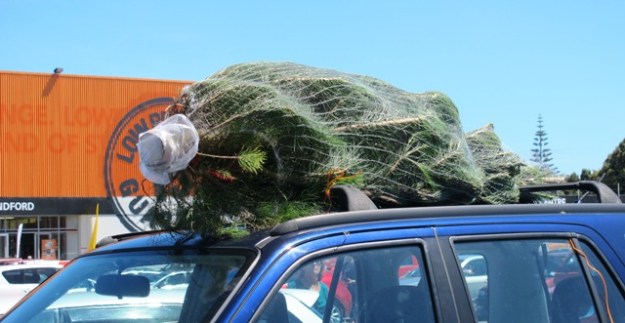
A southern Christmas – the pine tree on the SUV roof against a background of blue summer skies and orange Mitre 10.
A visit to a Christmas tree farm was a new experience for me. In fact, I was amazed when I called in on Saturday morning. The whole place was buzzing. Cars, trailers, families, staff, a tree wrapping machine – even a sausage sizzle. It was like a single focus gala day. This was a set-up where you chose your own tree and it was cut to order on the spot.
My interest had been whetted when I saw a vehicle outside the supermarket with a wrapped tree tied to the roof. Clearly this was not one purchased from a trailer beside the road. Christmas trees were already on my mind because there is something about the disposable nature of them that was nagging at me and I had been gently looking for alternative ideas. Ours is a household where we have a tree every year – but not a tinsel one in sight – but we have never paid money for one. I can remember our second daughter once wistfully suggesting that maybe we could buy a perfectly shaped specimen but the DIY ethos rules supreme and this was dismissed on the spot. Of course we live in the country with self-gathered options available. It is different for urban dwellers.
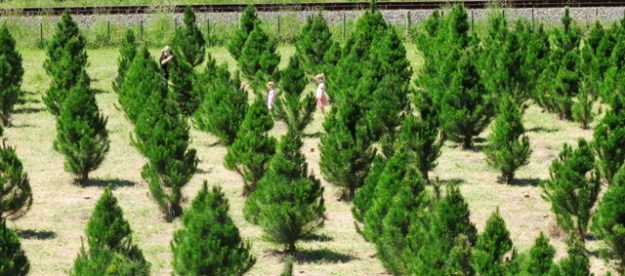
Choosing exactly the right tree was a family affair although the choice is Pinus radiata or Pinus radiata
I was so impressed by this Christmas tree farm. Our main local one is Cedar Lodge Nursery. Outside this period, they continue to produce and sell a range of interesting conifers which are not widely available on the market. With a proud tradition over the decades, they are one of the few remaining tree nurseries in this country to still offer a mail order service. But come December, it is all about pine trees for Christmas.
The use of Pinus radiata as the main Christmas tree is largely a New Zealand tradition. The Europeans and North Americans lean more to members of the abies and picea families – the spruces and the firs. These are much slower growing, even more so when you factor in naturally slower growth rates in less hospitable climates than we have here.
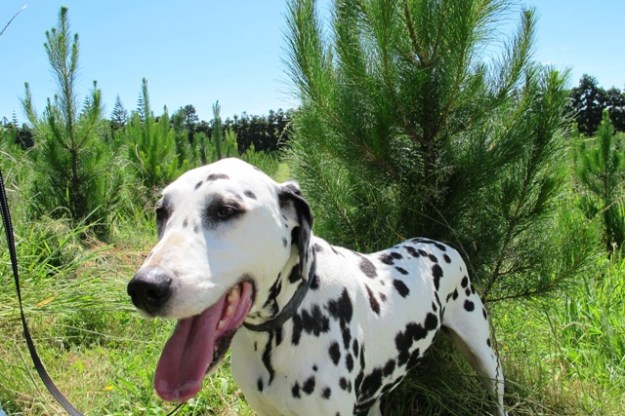
Max the Dalmatian posed amongst the pine trees destined to the 2015 crop for harvesting. These have yet to be trimmed to get the denser habit which is desirable.
The clipped and shaped Pinus radiata that I was looking at last Saturday were three and a half years old. That will be from the time they were sown as seed and they had made handsome trees around the two metre mark. It will take longer than that to get the Northern hemisphere abies and picea Christmas trees to saleable size. In the hierarchy of splendid, long term trees, the abies and piceas rank much higher than the utility pine.
I hesitated over severing probably hundreds of thousands of them in their youth to hold the tinsel and a Christmas fairy for a few short weeks when in London in early December a decade ago. There were hundreds of Nordman firs (Abies of Nordmanniana) being sold cheaply in the Portobello Road street markets. Mark allayed my fears by pointing out that many of these will be thinnings from forestry plantings and the ability to sell them as Christmas trees is no doubt a welcome addition to income.
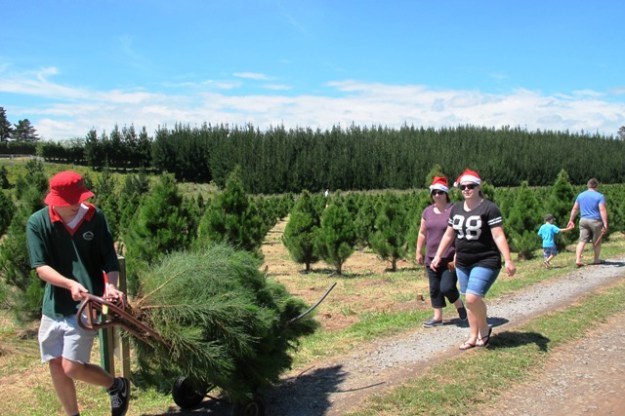
It was a hive of cheerful activity at the Christmas tree farm
Our pine trees are grown as a crop, as are many other plants. Yes they are a disposable, consumer commodity. So are poinsettia and most pot chyrsanthemums. The trees are starting to die the moment they are cut off to your request but so are all cut flowers. It is not as if we are stripping out our forests. If you are worried about environmental issues, I am sure you can forgo the synthetic wrapping to hold the tree in a more compact form until you get it home.
Some suppliers offer a recycling service where you can return the poor dried out thing to be mulched. Or if you can find a suitable spot to hide it, it will break down naturally over time and feed the soils – saving on the fuel to run the powerful mulcher.
The advice on care for cut Christmas trees is that the critical issue is to re-cut the main stem of the tree when you get it home and plunge it immediately into a bucket of cold water. This fresh cut enables the plant to keep sucking up water which is what extends its life. Keep topping up the level every few days but the advice to seal the cut with boiling water, or to add sugar or aspirins is unnecessary and unlikely to add to the longevity of your tree. A tablespoon of bleach should stop the water from going stagnant.
Enjoy your pine Christmas tree with a clear conscience. Our quick turn-around Christmas trees will have made more contribution to the environment in their short lives than any more permanent tinsel tree.

Last year’s leftover trees, kept trimmed, now 4 ½ years old for those who want a super duper grade of tree and have wide enough doors to fit one inside
First published in the Waikato Times and reprinted here with their permission.
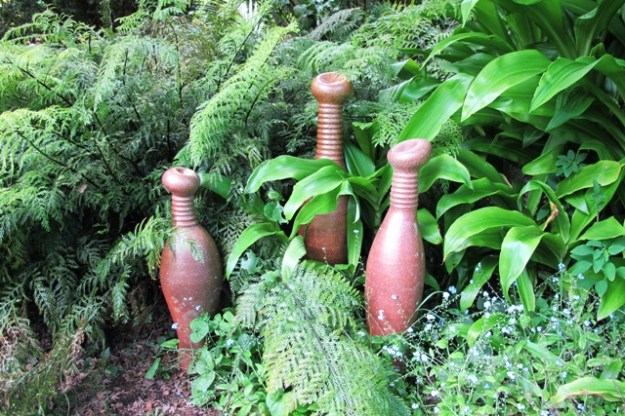


 3) I admired these rope balls constructed around a metal frame at Winterhome Garden near Kaikoura. Garden owner, Sue Macfarlane, told me she had made them herself because she wanted an avenue entrance for a wedding party. I saw something similar offered for sale recently – though smaller and made from recycled barbed wire, which gives a distinctly rural New Zealand flavour. However, because barbed wire is somewhat hazardous, these balls would need to be placed where nobody is likely to brush against them or hit their heads standing up after tending to any garden below.
 4) Personally, I am not a fan of classical-inspired statuary in New Zealand gardens. The cultural reference of such works is usually to Europe and to me it looks out of context here. I might be tempted to make an exception for this piece but it is the studied nonchalance of the setting with its long grass and the artfully casual placement which makes it such a romantic image. I also photographed it in an English garden, Gresgarth, where it looked wonderfully at home.
 5) Unable to hold back my didactic tendencies, I include this example as a message. Dear readers, a beautiful pot does not need to have a plant in it. It can exist as a decorative feature in its own right and will often look a great deal better for the absence of a plant. I don’t know the origins of this pot – it looks like a lime-washed oil jar – but I think the phallic trichocereus cactus spoils it, even without the plastic stake which is out of sight in the photo.
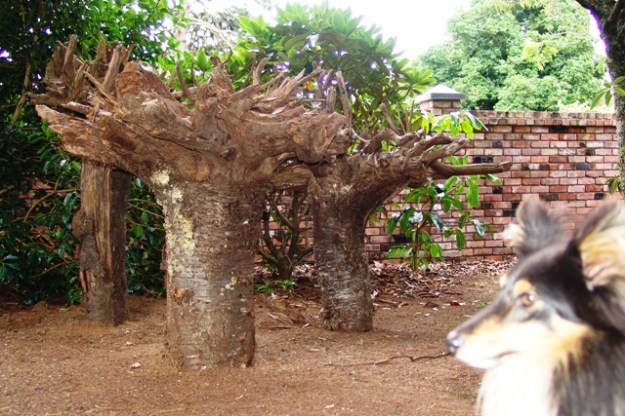 6) Finally from our own garden, I offer the inverted plum trees. These were dug up and reburied upside down to make the root systems the feature. We did not treat the trunks to preserve them. Eventually they will rot out and fall over but they have been in place at least a decade now and are still stable. The white stones were a gift from a geologist friend who gathered them from somewhere on the Marlborough coast. I bleach them once a year to remove lichen and discolouring and they just sit casually on a stone table.
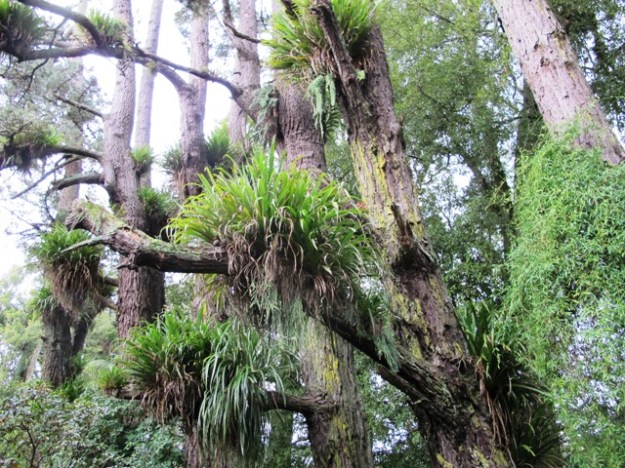 It is both a blessing and a curse to have a garden with very large trees. The pines (mostly Pinus radiata), native rimu trees (Dacrydium cupressinum) and Australian eucalypts all date back to 1870 to early 1880s when Mark’s great grandfather planted them. The rimus are rock solid with a life expectancy of many hundreds of years but from time to time we lose a pine or gum.
 While we can manage most of our tree work ourselves, this one posed a major problem. It broke about 6 metres up where Mark’s grandfather had topped the row in the early 1900s, creating a weak point. But it didn’t break cleanly and the top formed a major swinger. We did the initial cleanup but dealing to the body of the tree required specialist attention.
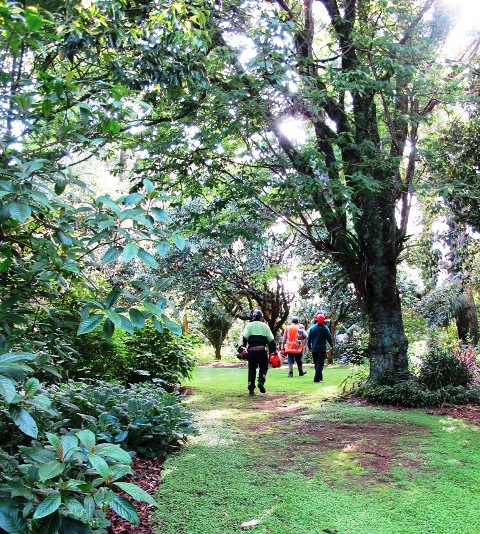 Enter the arborist crew this morning.
 There was a lot of consultation for this was a tricky operation.
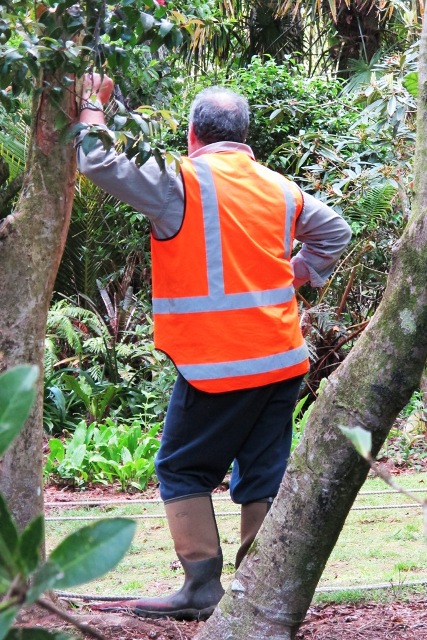 And a lot of supervision.
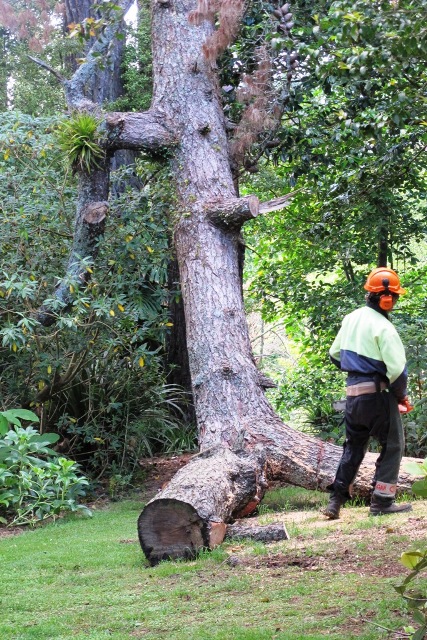 Cuts were made but things did not quite go to plan.
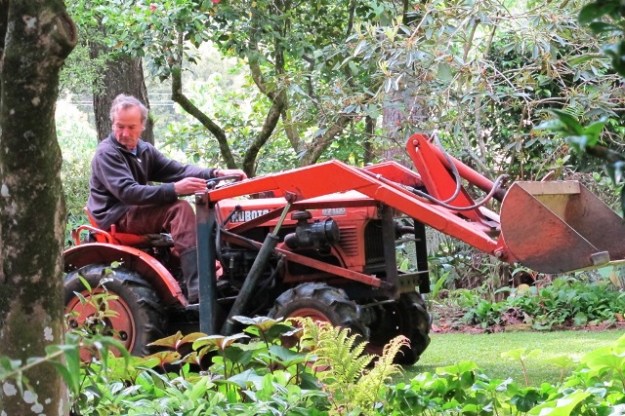 Soon, more equipment was needed. Do not laugh at our baby tractor. It is enormously useful, though not quite equal to this task.
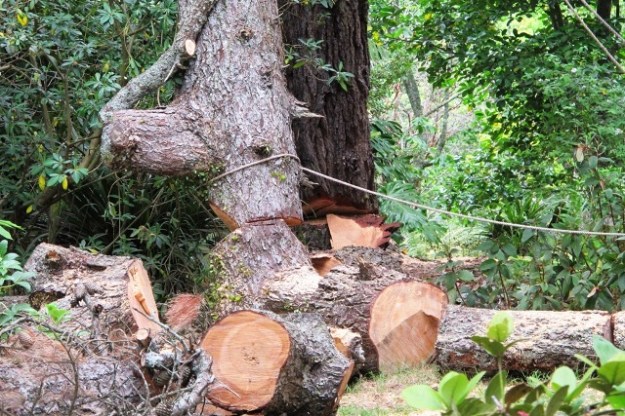 Both ends of the tree were cut through but it remained determinedly in position, defying all attempts to unbalance it.
 There was much manly consultation.
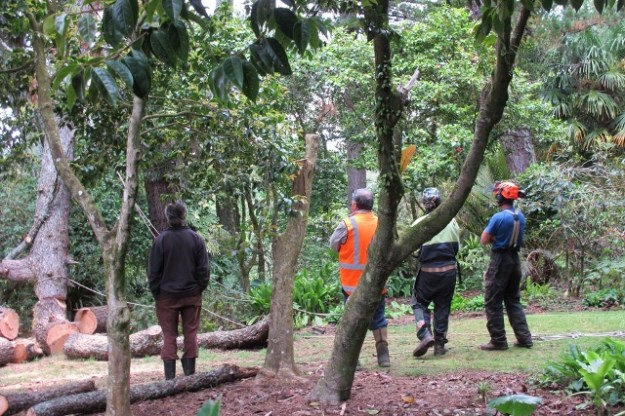 And even more consultation. Lots of consultation. A winch was needed, they decided. The crew departed for more gear.
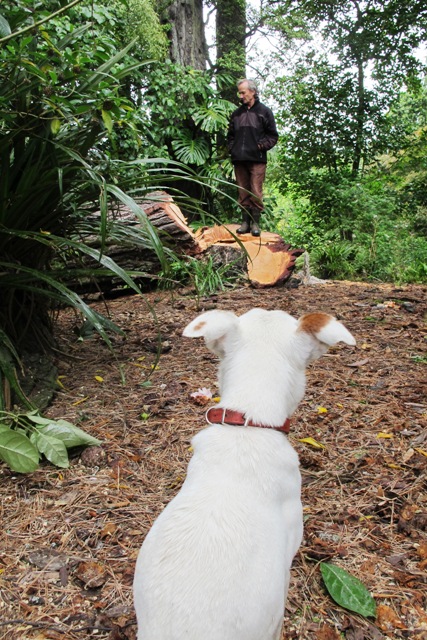 In the end, the crew returned with us not even noticing and both Mark and I missed the final rites when the tree was winched down. We were a little disappointed. It all seemed a bit of an anticlimax but is at least a major problem solved. It is remarkable how a tree some 40 metres high can eventually come down with minimal damage.


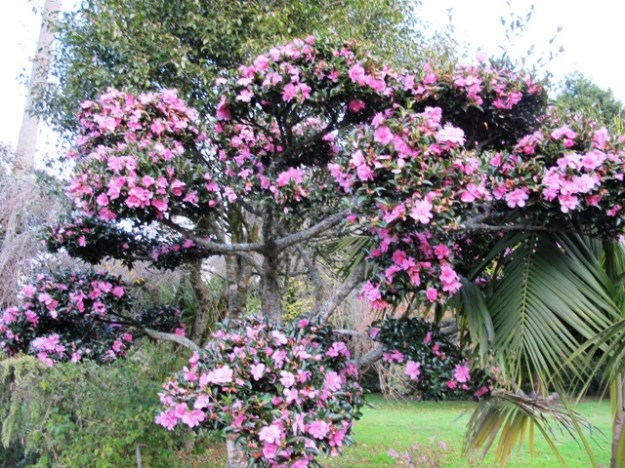
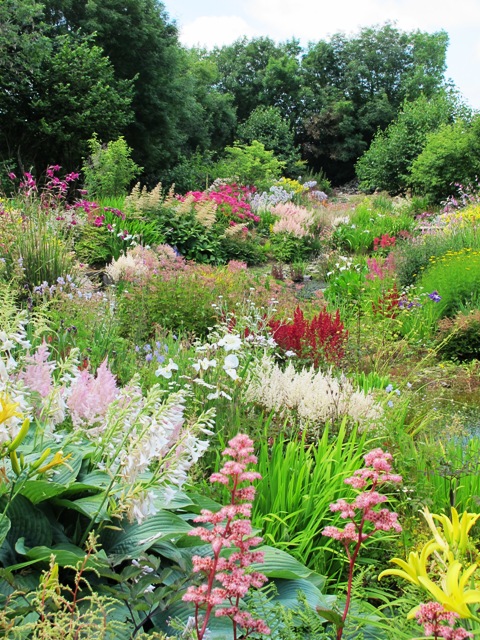 1) I want to try and capture the magic of a particular garden in a few words and photos. This is Wildside in North Devon and was quite simply one of the most exciting modern gardens we have seen. It is not that we will try and re-create it at home, but we found it interesting, stimulating and inspirational in many ways. It has been about 10 years in the making to this point.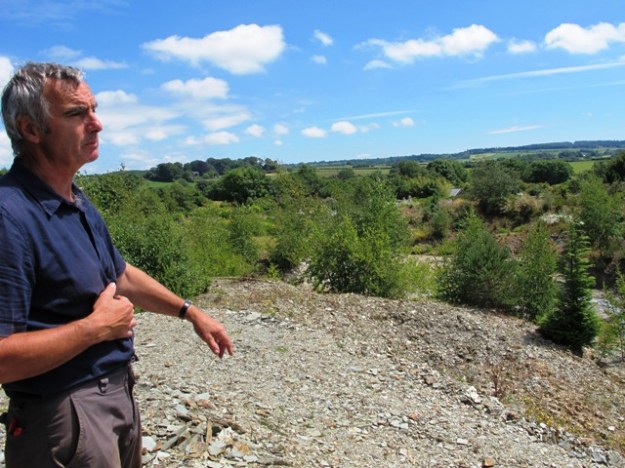
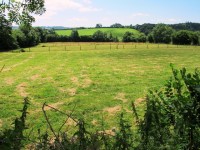 2) The creator, Keith Wiley (and let us acknowledge the active assistance from his partner, Ros) has taken a 4 acre (1.6ha) flat field and created a landscape. When he started, it looked identical to this neighbouring field. All the top soil was removed and substrata redistributed to create ponds, canyons, shallow valleys and hills. At this stage, it is still possible to see this process in the upper garden which has yet to be planted. Once shaped, Keith returned the top soil in varying depths, depending on what plants he planned to grow in each area.
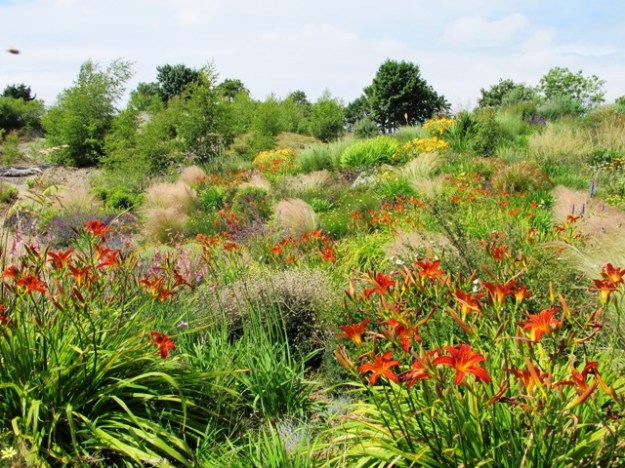 3) The interaction between the created landforms and the plants are the key components of this garden. When we visited, the upper garden was dominated by oranges, golds, yellows and whites. We would love to have been able to return a few weeks later because we could see that the dominant colour was going to change to blue and it would have looked very different. It takes exceptional plant skill to be able to get that transition and successional planting across seasons, let alone within the same season.
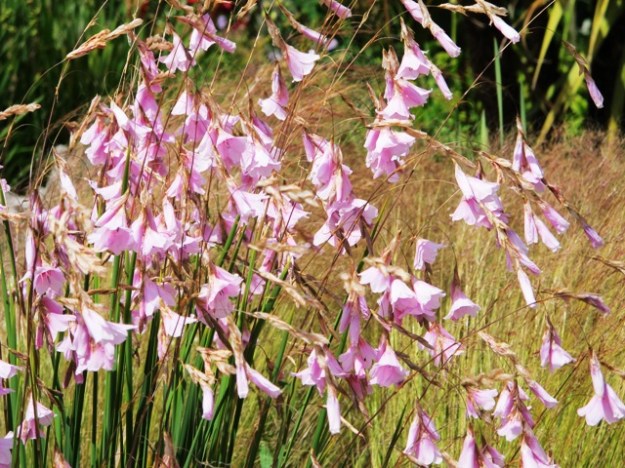 4) These are dierama, commonly called Angel’s fishing rods, one of the few corms and bulbs that were in flower in midsummer but this was a garden which was rich in drifts of bulbs – another layer of plant interest and a means of ensuring colour and detail when most perennials are either dormant or resting. In keeping with the modern perennials movement, there were grasses used but in moderation. Plants were in good sized clumps and often in drifts, but always in combinations, not chunky blocks standing in their own right as seen in many modern gardens.
 5) There is very little hard landscaping and very little ornamentation. There may have been one small lawn, from memory, but this is a garden of plants and flowers. Some may consider the lack of formality and structure to be a shortcoming, certainly in a country with a long history of landscaped gardens full of permanent features. We saw a garden that pushed the boundaries of the prairie style and New Perennials movement, combined with the creation of sustainable ecosystems, underpinned by exceptional plantsmanship.
 6) We travelled a long way to visit Wildside which is on the edge of Dartmoor, near Yelverton, and we would gladly travel a long way to see it again. However, it is currently closed to the public and it is uncertain when it will reopen. The owner told us that he needed to get the house built. After a decade of living in temporary quarters while giving priority to the garden, they had reached the point where the house had become a priority.
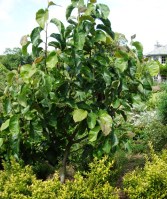 Yes, a prologue. We first became aware of Keith Wiley’s style when we visited The Garden House in 2009 – the garden of the late Lionel Fortescue which Keith managed for many years. True, he had no hand in the first sight to gladden our eyes. As we went to enter the garden, lo and behold there was Mark’s very own Magnolia Felix Jury in prime position. To say we felt proud would be an understatement.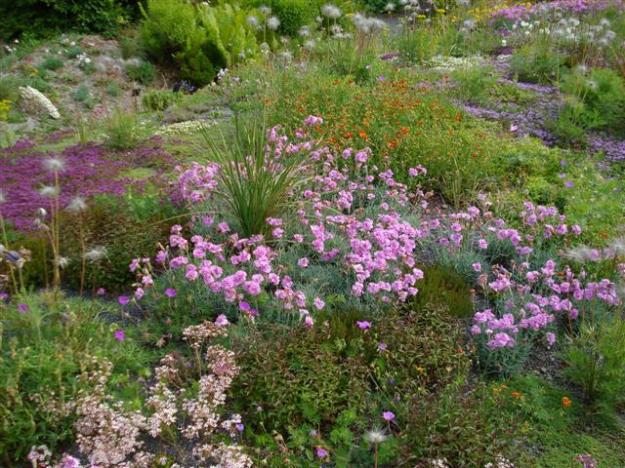
 Tikorangi The Jury Garden