Category Archives: Abbie’s column

Abbie’s newspaper columns

In Praise of Plunging

First published in the Weekend Gardener and reproduced here with their permission. 
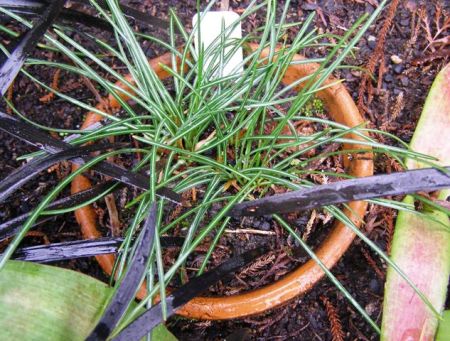
Plunging is a gardening technique that has been around for a long time but is not often seen in New Zealand. It is simply burying a porous pot in the ground so that only the lip is visible. Traditionally, in the United Kingdom, it was often done to stop the roots of the plants from freezing in cold winters. It also stopped terracotta pots from shattering in severe frosts. It is also done to equalise moisture and to stop plants getting either waterlogged or too dry. If you visit the alpine houses at the RHS Wisley Gardens, you will see that all the alpine treasures are grown in pots which are plunged into beds of compacted sand.
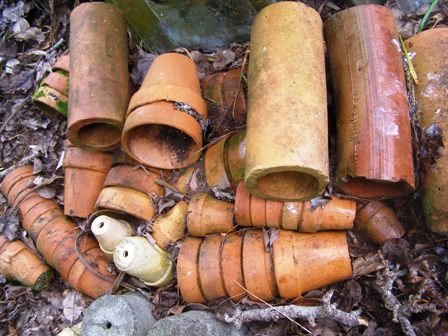
Plunging is a technique I have been using around our garden for a variety of purposes. It is important to note that it only works with porous pots. Fortunately, I inherited a collection of aged terracotta pots and drainage pipes in various sizes which fit the bill. If you use glazed or plastic pots, the water cannot move between the surrounding soils and the plant’s roots in the pot.
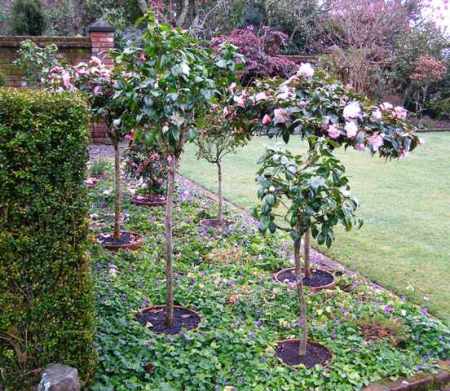
1)      I had some rather special camellias which blew over every time it was windy and which dried out too quickly in summer because I was erratic with watering. They were also getting too heavy to move easily and root pruning and repotting became difficult as the plants grew ever larger. I did not want to plant them out in the garden because I still wanted to feature them as a group. Plunging the pots into a border was one solution. They never blow over. They do not need anywhere near as much hand watering because the moisture from the surrounding soil keeps the pots damp and cool. They remain featured as individual plants. Where some were badly root-bound, I cut off the base off the pots to allow the roots to get into the soil. The remaining plants are treated as container plants and repotted every two years with fresh mix.
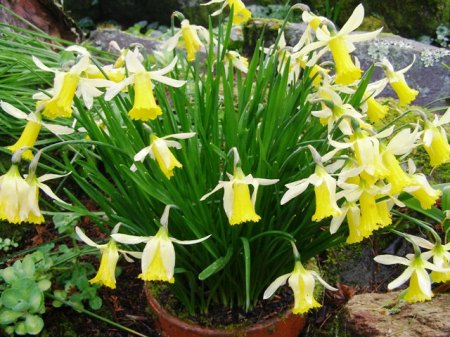
2)      I frequently plunge pots of seasonal bulbs to add colour and interest in key spots. When they are past their best, they can be removed out of sight and replaced with something else instead. This particular pot is Narcissus Twilight, One of Felix Jury’s cyclamineus hybrids.

3)      Plunging is one way of keeping track of special plants, especially bulbs which are easy to lose when they are dormant.
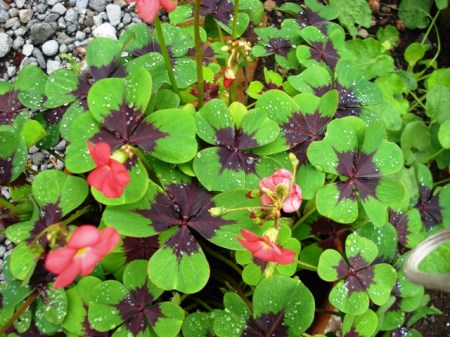
4) Equally, plunging can be used to keep invasive plants confined. It won’t work where a plant spreads by setting seed but it is successful in keeping runaway plants under control. Most of the mint family have this tendency, as do many of the ornamental oxalis.
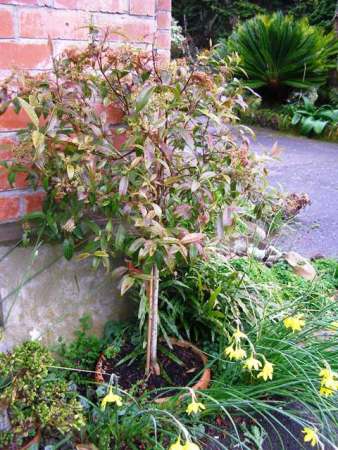
5)      Plunging can be used to restrict growth and to keep plants reduced in size, so it is a rough form of bonsai. I wanted this deliciously fragrant lemon myrtle (Backhousia citriodora) by the house but left unchecked, it would become a tree. Similarly, I have plunged a pot of rosemary to check its growth and also because the position near the back door was in heavy soil which this Mediterranean type of shrub would not enjoy. The pot gives it hotter, drier conditions.

Plunging is essentially container growing in the ground.

Points to remember:

  • Plunging does not eliminate the need for all watering in summer. It merely reduces it. Plants still require watering every pots every two or three days in hot, dry weather. Making sure there is a gap between the level of the potting mix and the top lip of the pot makes watering easier and any water which drains straight through is still going to be available in the surrounding soil.
  • It is important to remember that plunged pots are still container plants so they will need repotting from time to time and they will need feeding in between. All container plants should be repotted in fresh mix every two years with slow release fertiliser.  That fertiliser can last about nine months. Topdress after that as required.
  • If plants start to look deeply stressed with yellow leaves and poor performance, it is likely that they have either run out of food or they are root bound. If the plant starts to drop leaves and look utterly miserable, check that it has not blocked the drainage holes with thick roots. When this happens, the pot becomes a reservoir for water and the plant starts to slowly drown. It will die if left unattended.
Managing meadows or drifts of bulbs

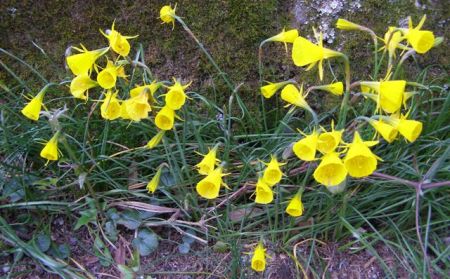
The bulbocodiums are the highlight of the narcissi world this week

The bulbocodiums are the highlight of the narcissi world this week

We are bulb fanatics here. It doesn’t matter how large or small your garden, there is always space for bulbs. They mark the progression of the seasons in a wonderfully detailed manner, often little pictures of ephemeral delight. We have been charting the narcissi here this year, tracking which ones flower for long periods of time and which ones give us a succession of blooms to extend the season as others are just finishing. We don’t grow many of the big, show daffodils, preferring instead the dwarf and miniatures, both species and hybrids. It is the bright yellow hooped petticoat type that are the showiest at the moment (bulbocodium citrinus). The best early variety, flowering over a long period, has been Peeping Tom. The single best mid season variety has been the cyclamineus hybrid, Twilight.

Now the erythroniums or dogs tooth violets are opening, as are the veltheimias (big bulbs which resemble lachenalias on steroids), the early arisaemas are through the ground and the bluebells are coming into bloom. Early to mid spring is peak bulb time and that is because we do best with South African bulbs whose growth is triggered by the autumn rains. It is not that the autumn rains are significant here. Most of us get winter rain, a great deal of spring rain and some summer rain too. It is more a case that the autumn rain bulbs are in full growth during our rather wet winters so they don’t rot out as readily.

Bulbs are easiest to manage in pots and in designated areas such as a rockery. Sometimes I combine the two and plunge the pot to sit flush with the soil level in the rockery (a good technique for confining invasive bulbs as well as keeping track of vulnerable treasures). They can be a bit problematic in garden beds and borders where it is all too easy to find their location by severing them with the spade.

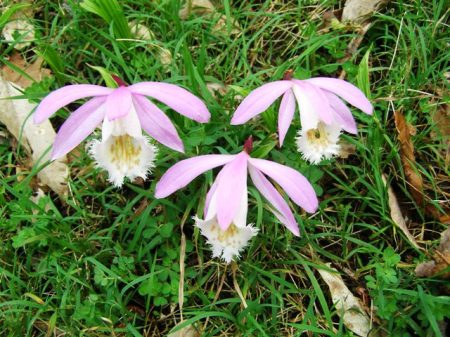
Not perhaps the most obvious candidate for Mark's hillside of naturalised bulbs - pleione orchids

Not perhaps the most obvious candidate for Mark's hillside of naturalised bulbs - pleione orchids

But the real challenge here is to extend the meadow drifts of bulbs and that has taken a great deal of thinking and planning. It all comes down to grass growth. Areas of the country which are suitable for intensive dairy farming tend, by definition, to have more fertile soils and an abundance of grass growth for most of the year. Most bulbs naturally grow in opposite conditions – often dry and poor ground – and are triggered into growth by seasonal change. Romantic woodland drifts occur in open, deciduous forests where enough light gets through during winter to allow the bulbs to flourish while in summer, a canopy of foliage creates shade which reduces rampant grass growth which can choke the bulbs. After years of experimentation, the lessons we have learned include:

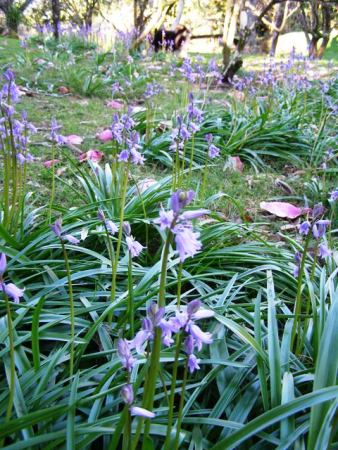
1) Only plant bulbs in areas which won’t need mowing during their growth season. This can be easier said than done with bulbs which coincide with the spring flush of the grass. We have been working on extending the bluebell drifts but have taken care to site the bulbs closer to the trees and shrubs, so to the side of the main mown areas. They still look as if they are drifting naturally but it is a managed drift.

2) Don’t use bulbs which are going to need frequent lifting and dividing to keep them flowering well. For this reason, we have pretty well given up on the big daffodils. They look great for one or two seasons but in our conditions, it is all downhill from there to the point where they can be mostly foliage with very few blooms. They do better in harder conditions.

3) Control the grasses. Mark (the husband) has gone to considerable lengths to eliminate strong growing grasses from his bulb hillside in favour of the weaker growing, fine native grass, microlina. We can get away with only needing to weedeat the microlina occasionally so the bulbs are not disturbed and we can manage a succession over several months.

4) It takes a lot of bulbs to get a drift. Many hundreds of bulbs, not tens. We multiply ours by dividing existing clumps but also gather our own fresh seed each year to increase the numbers.

5) The most successful bulbs so far are: bluebells (also pink bells and white bells), colchicums or autumn crocus, cyclamen species (hederafolium, coum and repandum), proper English snowdrops (galanthus) and some of the dwarf narcissi. Pleione orchids and assorted lachenalias (especially the more desirable blue ones) take a bit more work but are worth the effort. All except the pleiones disappear entirely below ground when they are dormant.

6) Large bulbs which grow with their necks above ground include the belladonna lilies, crinums and veltheimias. These can never be mowed over or walked on so have to be placed in areas which don’t generally grow grass. This means they are not suitable candidates for meadow drifts.
There are those for whom gardening is all about controlling nature and those for whom it is about emulating nature and managing it. We fall into the latter category. Meadow bulbs and drifts of spring delights are an important ingredient for us.

Managed drifts of bluebells

Managed drifts of bluebells

First published in the Waikato Times and reproduced here with their permission.

Trees for Small Gardens

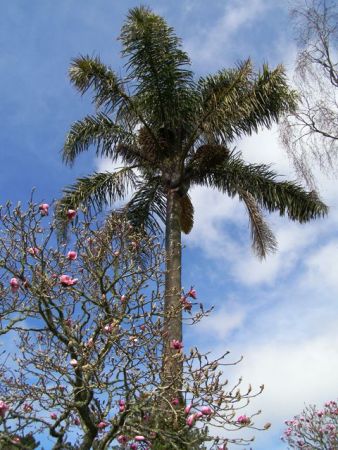
The handsome Queen Palm (Syragus romanzoffiana) comes with a warning

The handsome Queen Palm (Syragus romanzoffiana) comes with a warning

While I am a big garden specialist, gardening across hectares, not square metres, I have spent enough of my life selling plants and dispensing advice to understand that trees are problematic on the tiny urban sections that have become the lot in life for most people. I still think trees can be an option in small gardens or courtyards where a bit of height and form can give stature to an otherwise closed in space.

Worry about width, not height. I call it the footprint – how much space it takes up. Many people think that Magnolia Leonard Messell is a good option for small gardens because it only grows about 3 metres high. True, we have a specimen that is coming up to 30 years old and it isn’t much more than that – but man alive, it must be getting on for 5 or 6 metres wide. That is a lot of space. In fact it is about the same footprint as our large specimen Magnolia Iolanthe and nobody in their right minds would plant that in a tiny garden.

Magnolia Burgundy Star - a good choice where space is very limited

Magnolia Burgundy Star - a good choice where space is very limited

By contrast, Magnolia Burgundy Star is very narrow and upright. After fifteen years, the original tree here is about 5 metres tall but it is not much more than a metre wide. This means it can give height and presence without casting deep shadows and taking up room.

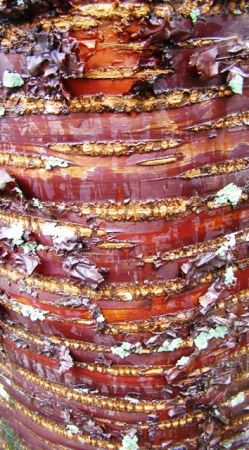
Prunus serrula - exquisite bark and narrow, upright growth

Prunus serrula - exquisite bark and narrow, upright growth

Flowering cherries tell a similar story. If you only look at the projected height so keep to lower growers like Prunus Shimidsu Zakura or sweet little weepers like Falling Snow, you are highly likely to get caught out by the width of the canopy over time and end up either brutally hacking into it or facing removal. Prunus serrula won’t give you the mass of fluffy flowers but it has wonderful bark and an obliging habit.

Palms, you may be wondering. Some upright, single trunked varieties like the bangalow (Archontophoenix cunninghamiana) or the more desirable Queen Palm (Syragus romanzoffiana) grow splendidly tall while taking minimal space. They are much favoured by landscapers for confined areas. However, they should come with a warning. They become too tall to groom so you have to let the spent fronds fall naturally and the sheath at the base of the frond is so heavy that it will break anything in its path, potentially ripping the spouting off your neighbour’s roof or causing panel damage to any vehicle in its path.

Conifers are often favoured – the narrow pencil cypress is the traditional look. Personally, I think they are a bit funereal and sombre, but others disagree. Conifers are not an area in which I have any expertise but you need to make sure that you have a variety which is not prone to red spider mite and be cautious if you think you will trim – many conifers don’t appreciate trimming and you can end up with unsightly bare patches.

Key pointers for choosing trees for small gardens:
1) Choose one that grows from a single trunk. Multi trunked and branched specimens take up a lot more room.
2) Keep to very narrow, upright growth. Shun anything with danger words like spreading, cascading, weeping or arching in the description. Think pillar-shaped (known as fastigiate).
3) Be cautious about a specimen you will have to prune regularly to keep under control. Anything over 2 metres high means you need a ladder and probably a pruning saw and loppers. It is better to plant the right sort of tree in the first place so that trimming requirements are minimal. By my definition, if it is under 3 metres, it is a shrub, not a tree.
4) Remember that it is not in the nature of trees to grow rapidly to the height you want and then to stop getting any taller. Trees that grow quickly will usually keep growing well beyond that. Small tree usually means slower grower. If it matters to you, pay the extra and buy an advanced grade specimen.

If you can find a tree with lovely bark or a seasonal flower display, then it is so much more interesting. Apropos of this, I came across a wonderful book recently by Waikato authors and tree-lovers, John and Bunny Mortimer. “Trees and their Bark” was published in 2003 but, being self published, I don’t think it received the attention it deserved. It is a delightful book, very readable with plenty of colour photos, by authors who know the topic inside out. It is still available and what is more, it is being remaindered at a ridiculously low price. I would not pass it by – it is worth having in the bookcase even if you are not in a position to plant trees. You will find the Mortimers listed in the Hamilton phone book or the white pages on line – there can only be one Bunny Mortimer.
Bunny’s pick for a small tree which can be grown on tiny sections is psuedocydonia which she feels ticks all the right boxes. You may have to get a copy of their book to find out more about it – it certainly has very striking bark as well as quince-like, fragrant fruit following on from japonica flowers. The only problem is finding it. You will probably have to grow it from seed.

First published in the Waikato Times and reproduced here with their permission.

Blighted!

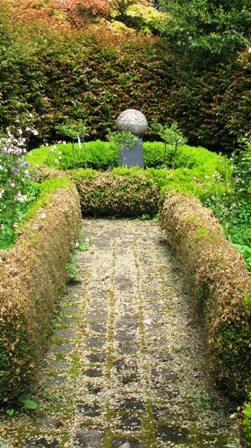
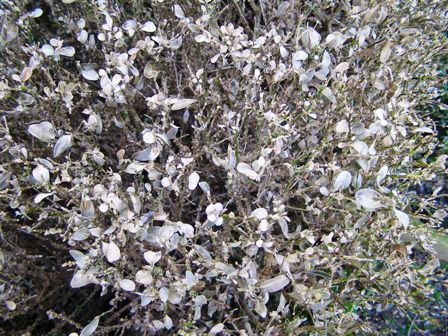
Fortunately not our garden, but it has been pretty discouraging for the friends whose garden it is. Buxus blight on the rampage.

Fortunately not our garden, but it has been pretty discouraging for the friends whose garden it is. Buxus blight on the rampage.

I am not the world’s greatest fan of buxus hedging. But I have some sympathy for the multitude of gardeners who are watching their prized box hedges turn brown. Judging by the Google search terms, it is an alarmingly common problem at the moment. “My buxus has no leaves. Is it dead?” Basically, yes. Buxus is an evergreen plant which never loses all its leaves. “Buxus turning brown.” It is dying. If it is any consolation, Prince Charles is reportedly having the same problem at Highgrove.

The problem is buxus blight – cylindrocladium. It is a fungus so it spreads by spore and it has dispersed extensively across the globe. It is particularly troublesome because it is not affected by temperature – hot or cold, its progress is undeterred, particularly in wet or humid conditions. I have yet to see any information on how far the spore can be carried by wind but it is more likely to be kilometres rather than metres. So unless you are in the country, isolated from other buxus, odds on that your buxus will become infected sooner or later, if it isn’t already. You will know if you have it. The leaves turn brown and fall off and it can spread rapidly. Left to follow its natural course, it is generally terminal.

You can treat buxus blight but you don’t seem to be able to eradicate it. This means you will have to continue treating it for the life of the plants. The best you can hope is to hold it at bay because the spore can survive for a year, maybe two, on the dead leaves and I defy anybody to succeed in removing every single blighted leaf.

A blight upon your buxus

A blight upon your buxus

If you are going to try and salvage your existing buxus, first up you need to thin and clean out the accumulated debris. I am well aware that this is easier said than done, especially when you have a mature hedge which has become so dense you can almost sit on it. A blower vac is pretty much the one only way to go with blasting out the debris, which must then be removed. And thinning is a painstaking task with secateurs. What you are trying to do is to enable the leaves to shed water as quickly as possible and to allow more air movement. These techniques may slow the spread but they won’t treat the existing condition. You will have to spray. It is a fungus, so you need an anti fungal spray. I don’t know of any specific sprays developed to target this condition, but any of the broad spectrum fungicides might work. Anecdotally, I am told that copper works but I am guessing that you have to get it in the early stages for copper and you may have to spray more frequently.

The bottom line is whether you are willing to commit to repeated spraying to save your buxus hedge. For us, the unequivocal answer is no. We just think it is really bad environmental practice. There is evidence that repeated use of copper is not good for the soils. Amongst other things, it kills earth worms which leads to soil compaction and copper residue is cumulative over time. An occasional application is fine, but committing to ongoing spraying is different. Besides, the whole thing about buxus was that it required minimal maintenance – a clip twice a year kept it in shape. Would you choose it knowing that it requires frequent spraying just to keep it alive?

Suffruticosa (the very low growing baby one) appears to be the worst hit, probably because it is the densest grower. Sempervirens is also badly affected and that is by far the most common form around. Be wary of advice that the Asian forms from Japan and Korea don’t get blight. They are Buxus microphylla and microphylla var. koreana or Buxus sinica. Being larger leaved and a little more open in growth, they may shed the water more quickly and be less affected but overseas research says that no buxus species are immune.

It should be pretty obvious at this point that there is no point whatever in taking out affected plants and replacing them with fresh ones of the same variety. The problem is not the individual plants – it is the fungal spores swirling around.

As if the news of buxus blight is not bad enough, there is a further quandary when it comes to a substitute. Put simply, there is no like for like swap. Space does not allow me to look at the alternatives here, but if you want to know more, you will find some options on Buxus Alternatives for Garden Hedges. The bottom line is that there is no other single option which is cheap to buy, grows in sun and shade, has good dark green colour, will re-sprout from bare wood and only requires clipping once or twice a year. Personally, I think it is an opportunity to stand back and rethink garden designs which have leaned far too heavily on defining form by endless box hedging and I will return to this theme in the future.

If you haven’t got buxus blight, be grateful and be vigilant.

(first published in the Waikato Times and reproduced here with their permission)

The constructions at Paloma

First printed in the Weekend Gardener issue 322 and reproduced here with their permission.

Clive Higgie and his slightly surprising small companion, the irrepressible Pablo.

Clive Higgie and his slightly surprising small companion, the irrepressible Pablo.

Over the years, Clive and Nicki Higgie have amassed one of this country’s foremost collections of plants and turned them into a remarkable garden at Fordell, near Wanganui. With his farming background, Clive is both practical and innovative and enjoys turning his hand to both construction and sculptural installations for the garden. He is not afraid to mix and match different styles and the results can be both surprising and original.

Some of Clive’s work is edgy, even flamboyant, and pushes boundaries in unexpected ways. A plain board fence at the entrance has been transformed into a statement by using witty wall writing – it is rather too whimsical and well executed to be described as graffiti.

The seating deck built out over the large pond area is also a little edgy. There is something a little insecure about sitting in such an exposed position even if the water is shallow. Clive says he made a few design mistakes on this small platform, particularly making it so low that leaves accumulate below the deck. Clive also constructs the seats. He calls them his Barebum Chairs, which I originally misread as Ba-ree/-bum.

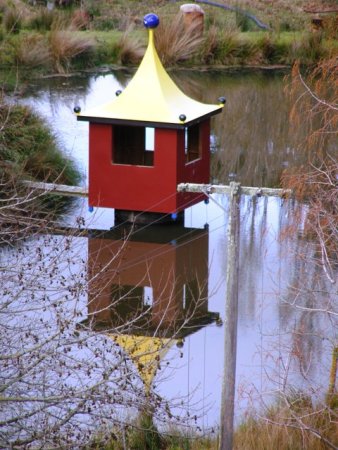
The boathouse is a work in progress. Showing typical ingenuity, Clive has used a concrete water tank as foundations for the structure. The roof is made from fibreglass matting coated with acrylic while the balls are ceramic.

The Iona Cross is distinctly monumental construction made by Clive, standing nearly two and a half metres tall. It is concrete and was poured flat before being moved to its location. By contrast, the Polynesian influenced vertical panel was boxed up and poured in its final location. These are just two of a series of installations surrounding his earth labyrinth which reference the ancestry of Clive and Nicki’s first grandchild.

Paloma Six

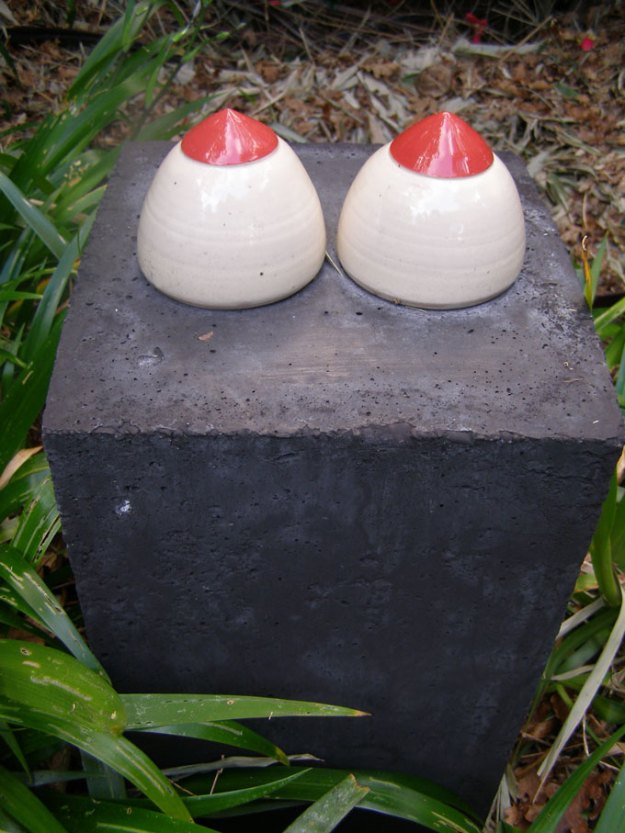
Clive is pleased with his recent constructions of simple concrete plinths. “I add a bit of oxide to colour the concrete and to stop it being that glaring white of fresh concrete. I really like the plinths. Sometimes a small vase or sculpture can get lost in a garden setting but the plinths make them stand out.”

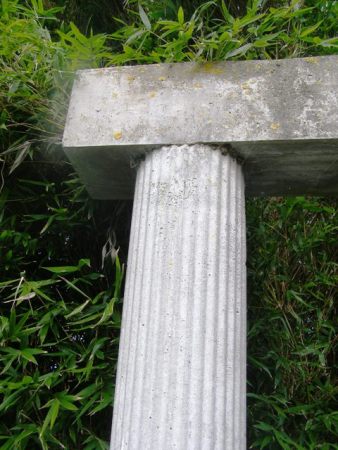
The ribbed pillars have a clear debt to ancient times but have been created using labour saving modern techniques. The mould was simply a product called baby iron (small profile corrugated iron) bent in a circle and filled with concrete. These have reinforcing rods down the centre and are boxed up and poured in their final location.

Paloma orange

Elsewhere in the garden, Clive has made extensive use of pillars constructed from terracotta field tiles. He first saw the technique used at Tupare in New Plymouth. He explains: “The pipes are irregular so I mortared them together before filling them with concrete. The mortar joins give structural strength. They didn’t do that at Tupare and many of their pipes had cracked and split.”

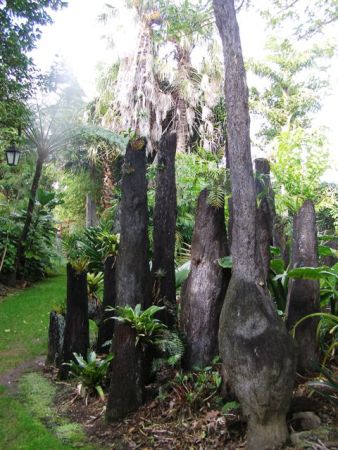
Not all construction is in concrete. Clive used ponga longs of irregular shapes and sizes to build a simple stumpery installation. The pongas vary from waist height to around 3 metres.

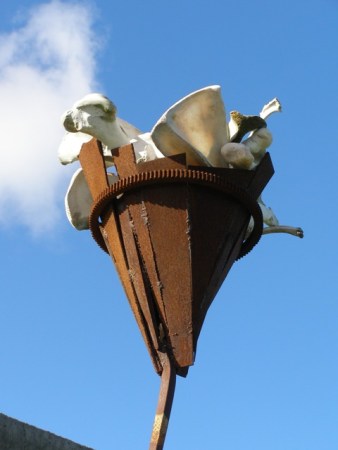
In his new Garden of Death, his friend, sculptor Steuart Welch, made the hanging crucibles which he calls Dracula pots. Clive has filled them with bleached animal skulls to complement the theme of the garden which is based around the social history of poisonous plants.

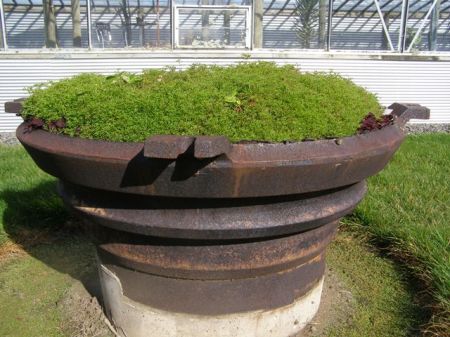
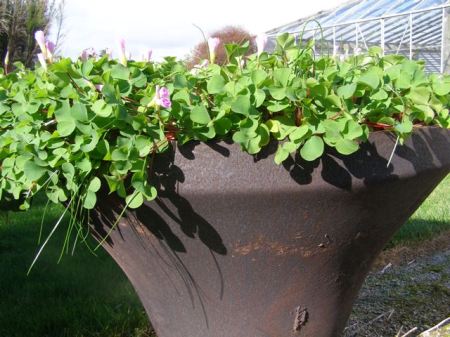
The attractive large planters came from a quarry stone crusher and, originally, the smooth sided bowl fitted inside the ribbed one, breaking large stones down to form road gravel. Being magnesium steel, they were of no scrap value but now contain large plantings of ornamental oxalis.

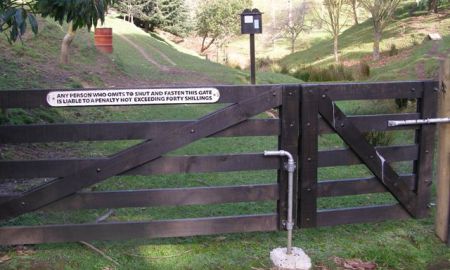
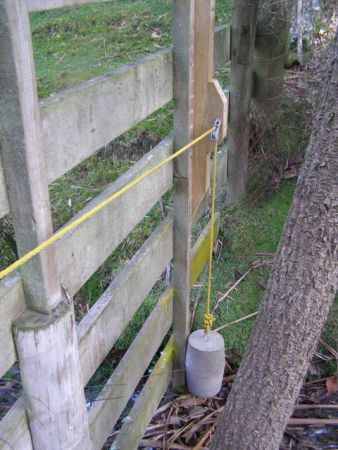
Clive is pleased with his simple solution for the side gate leading from the lower garden to the Matchless Arboretum. Because sheep graze beneath the trees, it is important that the gate be kept closed. A simple system of a counterweight pulls it shut behind visitors.

Paloma Gardens are open to the public all year round. For further information, check out their website: http://www.paloma.co.nz, email clive.nicki@paloma.co.nz or phone 06 342 7857 For my earlier story on Paloma, check Breaking the Mould of the Modern New Zealand Garden – the Dreams at Paloma.