Category Archives: Abbie’s column

Abbie’s newspaper columns

Relearning the old ways while getting to grips with new technology

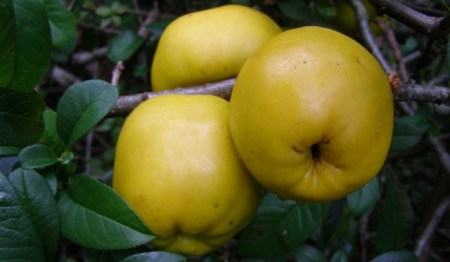
The chaenomeles - attractive and aromatic but not overly versatile when it comes to doing anything with them
The chaenomeles - attractive and aromatic but not overly versatile when it comes to doing anything with them

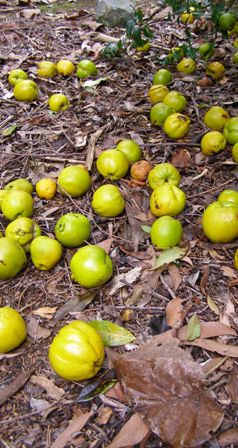
Feeling guilt at wasting the windfall chaenomeles

Feeling guilt at wasting the windfall chaenomeles

It is in the nature of Mark’s and my life that we receive a certain number of invitations to be guest speakers. Not that we are on the celebrity speaker circuit, I hasten to add. Nobody is offering to pay us $4000 to listen to our gems of wisdom. We might be a great deal more enthusiastic if they were. These days we decline most such invitations – it takes a great deal of time and effort to prepare a talk, quite aside from the travel time to go and deliver it. But I relented and accepted an invitation from outside the area to speak to a horticulturally inclined group this week. The reason was quite simple. I needed to learn how to put together a power point presentation and this would force the issue. Which it has done, but not without stress. A quick lesson from power point-savvy daughter at Christmas more or less equipped me to start. I put together a sequence of images on a theme of learning about summer gardens from England and the garden design debt to Moorish Spain. So far so good. We headed out to check that it all worked with a friend who regularly gives such talks. But there was a problem and it was a case of the semi sighted leading the nearly blind as we tried to solve it. We had to have another glass of wine instead and the next day, I returned to the problem of trying to fit photo images to screen size. Spending all day in front a computer screen is not the norm for me, so I tend to fluff around and multi task. There I am, laptop on power point stretching me beyond my technology skills, while starting to cook dinner and making fresh grape jelly when Mark asks: “What are you going to do with the passion fruit crop?

To be fair to Mark, his question was not unreasonable. He has cooked, skinned (I dislike cooked tomato skins) and frozen large quantities of home grown tomatoes. He has taken corn off the cob, blanched it and quick chilled it, and packed it in meal sized portions. He has been cleaning and drying beans. He consulted with me about how many tins of tomato we might buy throughout the winter and spring and how often we might eat corn. I suggested up to 70 servings of tomato (twice a week) and maybe 40 of corn. Having reached that target, he started worrying about what to do with the remainder. Meanwhile the avalanche of autumn produce continues. What to do with the many bucket loads of pears, a variety without keeping qualities and rather too blemished to appeal to others? And the grapes? Our tastes have matured to the point where we are no longer so desperate as to make homemade wine. We haven’t even started on the apples yet and the feijoas will be starting soon. The chaenomeles are falling. Fortunately the pumpkins and potatoes just need sorting and storing but there are other crops shouting for attention and basil and tarragon seem to be going to waste. There is such a lot of pressure in this self sufficiency drive.
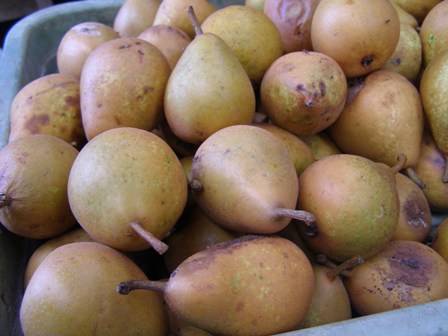
The crop of motley looking pears

The crop of motley looking pears

Back in the late seventies, the world clock of peace ticked, apparently inexorably, towards the midnight which would signal the onset of the feared nuclear holocaust, petrol rose dramatically in price and home interest rates were up to 24% for second mortgages. Along with others, we felt the drive to simplify life and to be less dependent on outside supplies. We bottled and dried and froze food, ate largely from our own garden and shunned all tinned and pre packaged options. I will even admit to doing macramé (it was the age of macramé, an aesthetic aberration that has probably bypassed younger generations). The knotted sisal rope holders I constructed for our stereo speakers were a tour de force. I made elaborate patchwork dresses from old fabric (called vintage these days) which I smocked and embroidered and sold to a local craft shop. Mark produced handsome woodturning and I bought him a book on how to make sandals from leather and old car tyres. The sandals never eventuated but we were children of the land. In modern parlance, our carbon footprint was very low indeed. So we are not without experience in this field of partial self sufficiency even if it has taken us thirty years to return to the practices.

But my goodness, hasn’t the Christchurch earthquake been a timely lesson for us all on considering how we might cope in a similar disaster? True, all Mark’s tomatoes and corn would defrost. Depending on the freezer for food storage means one is also dependent on electricity. But we are not going to build our daily lives around a worst case scenario and it takes even more time (and indeed expense) to preserve food by bottling.
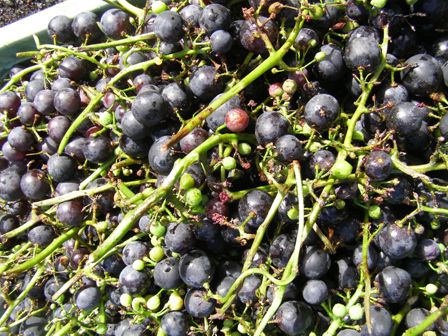
What to do with a surplus of grapes when home made wine does not appeal?

What to do with a surplus of grapes when home made wine does not appeal?

Interestingly, it is the time element that we had forgotten about. It takes a great deal of time both to grow food at home in sufficient volume to come anywhere near meeting one’s needs and then it takes even more time to prepare and store that food. If you don’t derive pleasure from doing it, the commitment is more likely to seem like an unnecessary burden. If you measure your time in dollar values, it is hugely more economical to simply hop in your car and go out to buy the food you require. But it is not the same. There is no way anyone could derive the same sense of satisfaction from unpacking supermarket bags and putting away packets and tins as one can from stowing away home grown food. Squirrel Nutkin Syndrome, I call it. The woodshed is full, the freezer is filling, and the pantry has a wide range of food options, even if it is a lifestyle choice which will not appeal to some. Mark also comments frequently that it takes a lot of land to produce a surplus of food and some of the extremely low estimates of how much area you need have him perplexed. And that is without even attempting to grow our own grains.

Should we suffer a natural disaster on a par with Christchurch, you can be sure of tomato and corn chowder here for about the first week. It may be cooked over an open fire but there should be plenty of it. However, the problem of what to do with the passion fruit harvest remains. As do the pears.
Family bonding in Canberra gardens and landscape

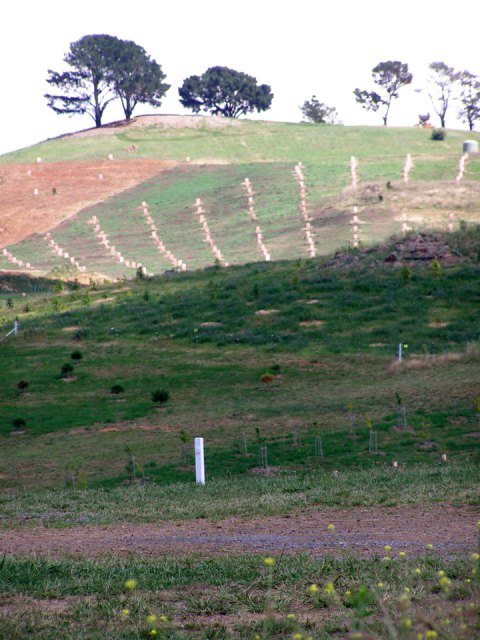
Not a lot to see yet - the national arboretum

Sometimes we parents just have to accept that we have lost our children to the western continent. With two daughters now across the Tasman, we are philosophical that at least they have not chosen to live in Perth (long haul flight) or further afield in the northern hemisphere. New South Wales and ACT are as easy to get to, and often cheaper, than the bottom of the South Island. We headed over for some family bonding last week. This was our first visit to Canberra in warmer months. Mark had been underwhelmed by his previous visit in winter (it is cold, very cold) but it was a great deal more charming at the end of an unusually wet summer.

Canberra is a city of wide boulevards and many trees. How we wish that New Zealanders would be so tolerant of trees. But Canberra is a designed city and the butt of many jokes in Australia, seen as dull and lacking in soul. Its designer was in fact an American, Walter Burley Griffin. While his Canberra creation may be scorned by non residents, his other talents apparently included introducing the world to the ubiquitous carport and the L-shaped floor plan for housing so he certainly left a legacy. His city plans for Australia’s capital included an arboretum and it is only now, seventy years after his death, that his vision is being realised with the implementation of a plan for 100 forests and 100 gardens. I am a bit suspicious of the future of 100 gardens which will require considerably more maintenance than the 100 forests. Pragmatism and economic issues may determine the future of that aspect of the plan but they are well on track with the forests.

An arboretum is a collection of woody plants, predominantly trees. It usually has a strong conservation and educative function and encompasses a wide array of different tree species with particular emphasis on those that are rare and endangered. Our best known arboretum in New Zealand is Eastwoodhill, just inland from Gisborne. The national arboretum in Canberra is a somewhat different vision, although they certainly acknowledge the guiding rules of arboreta. There were three principles governing tree selection. Varieties either had to be rare or endangered (such as Australia’s own iconic Wollemi pine), of ethno-botanical significance (not sure what that means), or symbolic in their countries of origin. That last criterion seems to have governed a fair number of selections, partly because overseas embassies have been encouraged to become involved. This would explain the plantings of varieties such as Ginkgo biloba, Parrotia persica, Cedrus libani (the cedar of Lebanon) and Acer saccharum (the sugar maple). In addition to the selection criteria, varieties had to be capable of surviving Canberra’s climate which can get up to 40 degrees in summer and drop to minus 10 in winter, along with being dry, very dry.

The impetus for the arboretum is worth noting, as this country struggles with the aftermath of the Christchurch earthquake. It was the devastating impact of the 2003 bushfires around Canberra. I remember them well because our daughter headed back after Christmas just as those fires were starting – a source of some angst to her parents back home as the reports of the fires licking at the outer suburbs and destroying the surrounded countryside featured on our news. I saw the aftermath some months later on a visit. Amongst other destruction, the fires took out the pine plantations which had been planted on the land originally earmarked by Walter Burley Griffin for the arboretum. The space was cleared and the need for a symbol of recovery from disaster led to the arboretum plans being put back on the table. This being Canberra and the seat of government, it was not to be a state arboretum. No, like most other Canberra institutions, it was designated a national arboretum from the start. The area is 250 hectares on the outskirts of the city. The first 65 forests have seen 30 000 trees planted.

It is easy to be cynical. Much of it is mass planting of single species in rows – described to me as a rather industrial approach. The cherry tree selected in conjunction with the Japanese ambassador is Prunus x yedoensis – 320 of them in fact, planted en masse. Some might think that a whole range of different flowering cherries might have been more interesting but it is, apparently, to be 100 forests of 100 different tree varieties (one type per forest). Who are we to argue? This is a grand vision and over time, as the trees gain in stature, it will be an impressive sight indeed.

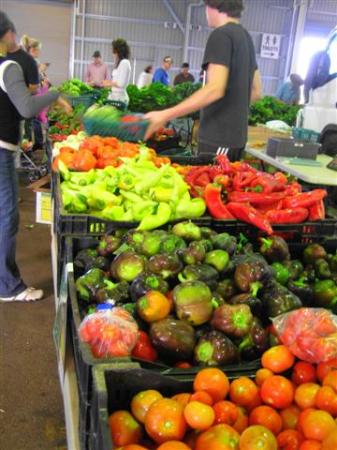
Simply the best farmers' market I have seen

Simply the best farmers' market I have seen

Our forbears in this country had the vision to plan public areas and plantings. That is what gave us our beloved Pukekura Park today. But we are not continuing with new plantings and new areas on any large scale. In this country, arboreta are commonly the work of dedicated private individuals. We appear to lack the will to continue to do public plantings of significant trees in any number for future generations.

While in Canberra, Daughter took me to the best ever farmers’ market I have seen. Huge, apparently quite loosely organised, enormously popular and fascinating. Daughter loves it for the unsurpassed, genuine chai latte sold at one stall and because, if she gets there early enough, there are usually backyard vendors with seasonal curiosities like fresh mulberries, loquats, her much-missed feijoas, and, on the Sunday we went, different varieties of fresh figs. I would shop there if I lived in Canberra.

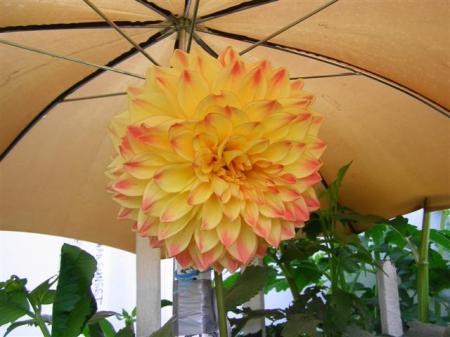
Protecting the dahlia blooms

Protecting the dahlia blooms

Whenever we are travelling, we also try and check out local open gardens, partly to establish international benchmarks of quality for comparison to our local festival gardens. Australia has adopted an open garden structure closely modelled on the Yellow Book scheme in the UK where selected gardens will open for charity one or two days of the year. We drove out to the ‘burbs to see one such garden and handed over our $A6 each. In the back garden there were only show dahlias – large quantities of beautifully tended dahlias, all in pots. I was particularly taken with the umbrellas erected over selected plants to protect their show quality blooms. Dahlias may be staging a bit of a comeback in the fashion stakes but we can’t get too excited over them so we were relieved to find more traditional mixed plantings at the front of the section. It was a nicely presented garden, not exciting, but served as a useful reminder how pleasant it is to be able to chat to the garden opener. In this case, he was both knowledgeable and genial.

Garden visiting in New South Wales will have to wait for a future column.

Learning to garden with shade – the woodland

Raised beds can be desirable, but not in tanalised timber

Raised beds can be desirable, but not in tanalised timber

When you start a new garden, especially on a blank canvas, it is hard to imagine dense shade and sheltered conditions. Fast forward some years and the picture changes dramatically. If you have planted trees and larger growing shrubs, your open, sunny conditions change gradually to the point where you realise the whole micro-climate has altered and the sun-lovers like roses and lavender are struggling. You either cut back or remove large plants to regain the earlier, open conditions or you change your style of gardening. Most larger, more mature gardens move naturally into woodland or shade gardening.

In their simplest form, woodlands are a natural occurrence – but not here. Our native forests are just that – forests. In their natural state, they can be near impenetrable and are more akin to cool climate jungles. I have seen the bluebell woods in flower in Scotland and they were enchanting. A carpet of blue, spread beneath comparatively small deciduous trees which were just breaking dormancy. I can’t recall what the trees were – chestnut, maybe, or sycamore, possibly oak – I was more charmed by the bulbs growing wild. I have only seen the flowering of the English snowdrops in photographs. A particularly memorable image showed a dense carpet of snowdrops beneath the graceful, slender trunks of the white barked birches. However, I can tell you that in general, British and European forests are quite open. You can walk through them without needing a slasher and tramping boots as you do in our forests. Robin Hood and his merry men could probably move through Sherwood Forest without having to keep to tracks. While there are conifers growing which are evergreen, the vast majority of other trees are deciduous. This means that light gets through in winter and early spring and that there is a seasonal carpet of leaf mulch below. In their predominantly dry summers, the shade inhibits the rampant growth we expect here.

But gardening is not about reproducing nature. It is about reinterpretation. Those natural woodlands, which are essentially a shade meadow garden full of wild flowers, peak for maybe two weeks of the year. We are not going to be happy with that in a home garden. England’s wonderful grand dame of gardening, Beth Chatto, has planted her woodland in a succession of spring flowering bulbs which extends the display but even so, by early summer, there was nothing left to see. I was still sufficiently inspired to return home and do the same in one small area. Here, I had to make sure there was no grass and the ground surface is bare soil and light leaf litter. And I can tell you that in a small triangular area about eight metres long and five metres at its widest, it took hundreds of bulbs – snowdrops (galanthus), Cyclamens coum and repandum, assorted dwarf narcissi, rhodohypoxis and lachenalias. The sheer volume of bulbs required rules it out for most gardeners.

The allure of the woodland garden path

The allure of the woodland garden path

Shade gardening is the option for extending display and keeping some definable form in a garden. With huge trees here, dating back to 1880, we have a lot of shade garden, usually referred to as woodland. The basic principles of gardening still apply – it is the variations in foliage, form, height and colour that give interest. Achieving it under a canopy of foliage is different to being out in the open. There are three obvious keys to remember.

Firstly, few plants are happy in dense shade. There is nothing else for it. You have to lift and limb – raise the canopy sufficiently high to allow filtered light below. The trunks of the trees are a feature in their own right and if you want to garden below, getting a four metre vertical clearance will allow space and light to give the plants a chance.

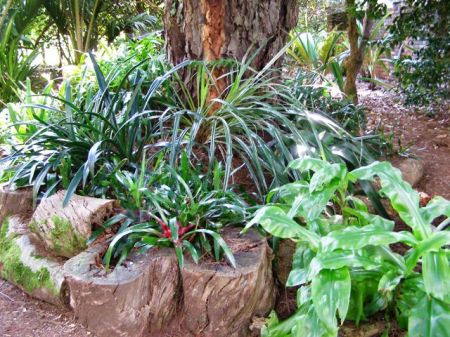
Secondly, there will be a great deal of root competition from established trees. In fact it can be damned difficult chiselling out a hole large enough to plant into and even then, there is little chance of many plants thriving when they are competing for space, nutrition and moisture. That is why many bulbs do so well – because they can cope with harsh conditions and little soil. Clivias, too, will foot it in this environment, as will some of the plectranthus, but many other shade plants such as hostas are never going to be happy and healthy. We get around this in some areas by building informal, raised beds and moving in soil and compost to get the plants established. Ponga lengths and fallen branches still look natural but spare me from the idea of tantalised timber. I don’t like the look of tantalised timber anywhere in a garden but it is even more incongruous in woodland. Casual and natural are the words to remember here.

Thirdly, woodlands are usually dry, a fact many people fail to realise. That is because when you have large trees, their massive root systems suck up the water, leaving little for smaller plants. Often the canopy of foliage and branches will deflect the rainfall away. You really do not want to be creating a garden where you have to water regularly so it is better to choose plants from the start which will take dry shade. Fortunately, the fact that they are growing in shade hugely reduces their water requirements (little evaporation from the sun) so even hostas, which are generally regarded as needing plenty of water, can thrive in dry shade once established.

You can manage flowers and colours for most of the year in a woodland garden - a tricyrtis or toad lily

You can manage flowers and colours for most of the year in a woodland garden - a tricyrtis or toad lily

I will return at a later date to plant options for shade or woodland gardening but here, we are strongly of the view that mass planting of herbaceous material in a shade garden is even duller than mass planting in a formal garden (where the structure and straight lines give form). Give us variety and mixed plantings. The aforementioned clivias are fantastic plants but you only want so much of their strappy foliage and predominantly orange flowers. Combine them with filmy ferns and the extravagance of the massive, split leaves of Monstera deliciosa (the fruit salad plant) and you have a combination with some zing.

It is possible to garden with flowers in woodland and to have colour for most of the year. And, a huge bonus for most, weed growth slows in the shade so you don’t have to be so vigilant on the weeding front. The invitation of a winding path into the woodland can be so much more mysterious and full of promise than the open, sunny section, but, like all forms of gardening, it does not just occur of its own accord.

You have to make it happen.

Summer meadow gardens (and why they don't work here)

Enchanted by the native orchids growing wild at The Garden House in Devon

Enchanted by the native orchids growing wild at The Garden House in Devon

Surely the two most romantic sounding gardening styles are meadow gardens and woodland gardening. Woodlands will have to wait because summer is for meadow gardens, though not without difficulty in our climate.

Meadow gardens are based on the attempt to re-create and manage the wildflower meadows and we don’t have these in abundance in this country. Generally, one seems to go to Western Australia to catch the blooming of the wildflowers and that, I am told, can be a hit and miss affair. Timing is critical and some seasons are much better than others. In New Zealand we have natural alpine meadows (the Mount Cook lily, gentians and the like) but in such difficult, inaccessible and vulnerable environments that they do not lend themselves to garden tourism. Countries with naturally occurring wildflower meadows share several things in common – a much harsher, drier climate, and a lack of intensive, pastoral farming. Intensive dairying and wildflower meadows are an oxymoron. And most such areas will have an abundance of annual native flowers which leap into growth en masse, usually triggered by seasonal rains. Our native flora is unique and fascinating but not rich in pretty flowers of the field. So, by definition, wildflowers in this country tend to be invasive weeds. The lupins of Central Otago and the perennial sweet peas of Marlborough are a case in point. As indeed are gorse, broom, Kelly thistles and ragwort, all of which can have a blooming season which is showy. Not for us, thank you, and more than one New Zealander has been shocked to see gorse used as a garden plant in the UK.

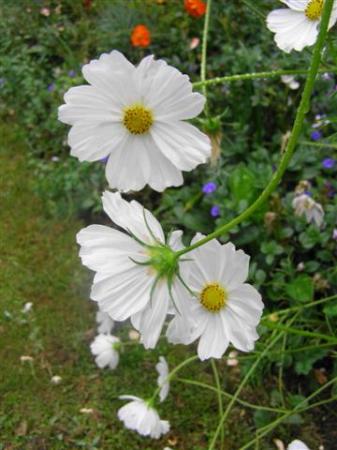
Simple flowers like this white cosmos look best in meadow-style gardening

Simple flowers like this white cosmos look best in meadow-style gardening

All our garden plants, of course, originated somewhere so plants such as the species cyclamen, the deciduous ground orchids like dactylorhiza and anacamptis, even the Black-eyed Susans, echinacea and cosmos are native wildflowers somewhere. Just not here. I have never seen the North American prairie gardens, nor the wildflowers of South Africa but it was exciting (believe it or not) to see the ground orchids that we treasure as choice garden plants growing wild in England and in Italy.

Having decided that naturalised wildflowers in this country are more often noxious weeds, how about the controlled alternative of the managed meadow garden? Bad news. All the characteristics which make Taranaki prime dairy country mitigate against meadow gardens. Our grasses grow too well, our soils are too fertile, on top of that we fertilise too heavily, our rains come too readily all year round and our temperatures are too even. The grasses will swamp out all but the most aggressive of the wildflowers. Gardeners right on the coast in the north and in the drier south in the Hawera to Waverley stretch may have more success because their conditions are a little harsher. But it is not just conditions that one needs to get right. Meadow gardens require a bit of an attitude shift, we now realise, and it is a theme that we keep returning to in discussions here. Weeds. Meadow gardens require a high tolerance level for weeds and that is a problem for most New Zealanders. We have an ingrained antipathy to them. The worst crime an open garden can commit is to have weeds. Whether this is a reflection of our farming background, of the DOC position (our weeds are all introduced plants) backed up by our local councils, our high tolerance level for the use of chemicals in gardening and agriculture (and indeed in conservation), or an innate value placed on tidy suburbia, we do not like weeds. Because meadow gardens rely on letting plants grow naturally, you can’t control weeds. Once you start intensive control and management, your meadow garden becomes a cottage garden, and that is a different kettle of fish altogether.

We may need to reconsider our antipathy to weeds. Mark recalls the late Peter Winter, one of our leading environmentalists locally, commenting that the riparian plantings being fostered so actively by our regional council and indeed by Fonterra, are a positive move but that we will have to accept that a certain amount of weed growth is inevitable. The riparian plantings are the ribbons of mixed plants being established along all waterways, fenced off from stock. Done properly, they will filter run-off from farm land and reduce the amount of nutrient being washed into waterways. But they are not going to be a healthy environment if farmers expect to keep them weed free which, for the vast majority, will mean the repeated use of chemical weed killers.

A field of flowers in its first season

A field of flowers in its first season

But back to meadow gardens. It is the very simplicity of the meadow garden that lends it so much charm but it takes a little more skill than just standing and broadcasting a meadow mix of seeds in early spring. Amongst other things, the birds will pick off a fair portion of the seed and the germinating plants unless you take precautions. Then there are strategies for managing a succession of flowers through the seasons from spring to autumn and to ensuring that the garden lasts for more than one year. If you are willing to kill out all the grasses and competing plants before you sow a very generous amount of seed, you can manage a field of flowers in the first year. By the second year, the grasses will have crept back and the weeds will also be germinating and seeding. Weaker performers in the mix will have been beaten out by the competition. It will be more akin to the wildflower environment and it will have rank and unkempt times of the year.

If you want to try a meadow, pick an area which is in full sun and with poor soil. Don’t feed it at all. You want the plants to flower and seed, not to make a lot of leafy growth so they need to be on the stressed side. At the end of the season, you mow the meadow (one man went to mow, went to mow the meadow…) and leave it all lying on the ground for two weeks to allow the seed to fall out. Then you rake it all up because you don’t want to fertilise the ground by letting the clippings rot down. And you live with the weeds which will also be colonizing the area. The meadow should come back into growth when triggered by seasonal change. That is the theory of it, more or less.

We would love to grow a meadow garden but each time we look at it again, we figure the climate and conditions which make it possible for us to grow lush and verdant gardens mitigate against the meadow concept. It is why we continue to work on naturalising selected plants in designated areas instead. It is not at all the same thing, but it is what we can manage here.

Wildlife in the garden – New Zealand style

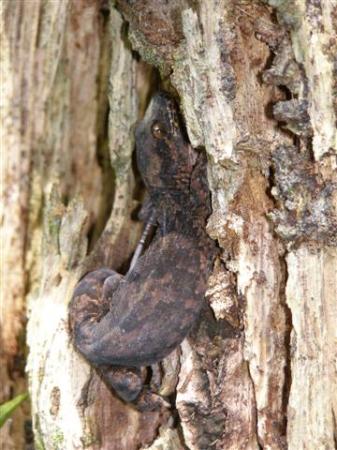
Spot the gecko - a rare sight in New Zealand

Spot the gecko - a rare sight in New Zealand

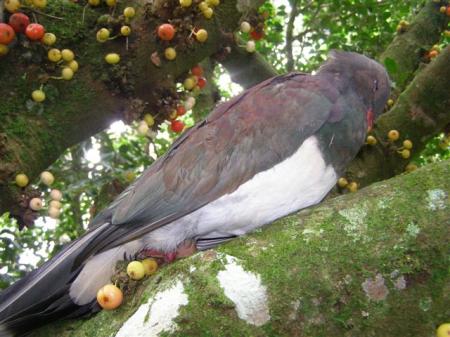
As we sat outside having our morning coffee last Sunday, Mark commented that he had counted five native wood pigeons in the gum tree. Now there is nothing unusual about one or two kereru around here but five is close to a crowd for these birds who do not make a practice of hanging out together. As we watched, another two or three flew in to join them, followed by more, and then some. And but wait there were still more. We ended up with fifteen of these large and cumbersome but beautiful birds in our gum tree. A convention, we decided. They must be having a convention of local kereru. These are not birds renowned for having great brains and clearly their concentration spans are of short duration because they soon decided that it was time to break for morning tea. They flew over, more or less as a flock, to sample the offerings on the karaka tree. A quick snack and it was time for a field trip to a nearby pine tree from where they gradually dispersed. It made for a memorable coffee break.

Our native wood pigeon or kereru in the Ficus antiarus

Our native wood pigeon or kereru in the Ficus antiarus

As far as we know, our kereru stick around the area all year. Give them enough to eat and there is not a lot of point in them moving on. If you do a search for plants to grow for kereru, most sites list native plants including puriri and miro and only give exotic or introduced plants as an afterthought. But, like most of our native birds, kereru are untroubled by political correctness and they browse widely. They are gloriously untroubled by whether the food is nasty privet berries or nikau seeds. All that matters is that they are herbivores so they eat berries, seeds, fruit, flowers and leaves. In late autumn they come in close to eat the apple leaves just before leaf drop at a time when the sugars are concentrated. They are very partial to guavas and, apparently, to plums. Mark has watched them eating the kawakawa (pepper tree) berries, they raid the karaka tree, the flowering cherries, kowhai blossom and a host of other food sources. Being large birds which tend to crash land rather than being light of wing and foot, they feed from trees and shrubs which can hold their weight. You don’t see these birds on the ground, so they are not going to feed from annuals or perennials.

The delight for Mark this week was to find his first ever live gecko in the garden. In fact he has only ever seen one dead one before and that was in his glasshouse. In the lizard family, New Zealand only has skinks and geckos – the former are relatively common but the latter are rarely sighted. This particular gecko was presumably trying to warm itself on the trunk of a very old pine tree. Now that we have our eye in for this extraordinarily well camouflaged creature, we have found it out sunbathing in the same spot each day since so it is presumably resident. It now has to get accustomed to Mark bringing every visitor to stare at this rare sight and to make admiring noises even if they can’t tell it apart from the pine bark.

We did a bit of a Google search on NZ geckos which appear to be devilishly difficult to research and photograph, complicated by the fact we have a large number of different species. Ours was indubitably a brown one and on the larger side, something similar to Hoplodactylus duvaucelii. But it is just as likely to have been one of the other 38 or so different types already recorded.

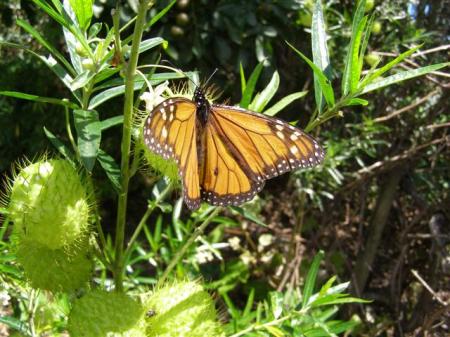
We are by no means alone in our dedication to assisting the procreation of monarch butterflies

We are by no means alone in our dedication to assisting the procreation of monarch butterflies

Monarch butterflies we have in abundance here. Judging by the search terms which bring people to our websites at this time of the year, others are equally enthralled by these ephemeral beauties. I keep seeing questions typed in to Google like: how many monarch caterpillars can a swan plant support (depends entirely on the size of your swan plant…) and how long does a caterpillar take to grow (about three weeks). Can a caterpillar chrysalis on something other than a swan plant was another much searched question. The answer to that is yes, definitely, and it pays to encourage them to do so by poking in some bushy twigs by the plant. Having them chrysalis on the swan plant itself can be a real problem if their very hungry younger siblings munch right down the bare stems and the defenceless chrysalis then falls off. At this time of the year, earlier generations have often hammered the swan plants for food and newer caterpillars are running short. You can finish growing caterpillars on sliced pumpkin but it is not a complete food so it is unsuitable for getting very little ones through their weeks of growing.

Swan plants grow readily from fresh seed and if you are even halfway serious about wanting monarchs in abundance next summer, sowing a row in your vegetable garden in very early spring is a good means of getting the plants to a well established grade for later season egg-laying butterflies. Swan plants are generally biennial (so last two years) but they don’t like heavy frosts. This year’s plants can recover to support the first of next season’s caterpillars with the early spring sowing as a back up for later generations in the season. However, you do have to keep the young plants netted to stop them being stripped while very small. Letting some annual flowers seed down in spots of the vegetable garden can also provide food for the butterflies.

Food for the butterflies - a rather garish cosmos

Food for the butterflies - a rather garish cosmos

They need single flowers with visible stamens such as cosmos, marigolds, zinnias, daisies and poppies. A visitor stood in one of Mark’s vegetable gardens recently and suggested that it was not so much a veg patch as a mixed cottage garden.

The final word on the monarchs this season comes from one of our neighbours with whom we have had a running joke over time about stealing our monarch butterflies. Send them home, we have said. All the monarchs in this area are ours. Added Mark recently: please stop taking pot shots at our wandering monarchs. Ah, said neighbour riposted, those are the very rare and highly prized lacewing or whistling monarchs – the sound of the wind blowing through the holes in their wings. What more could we say?