
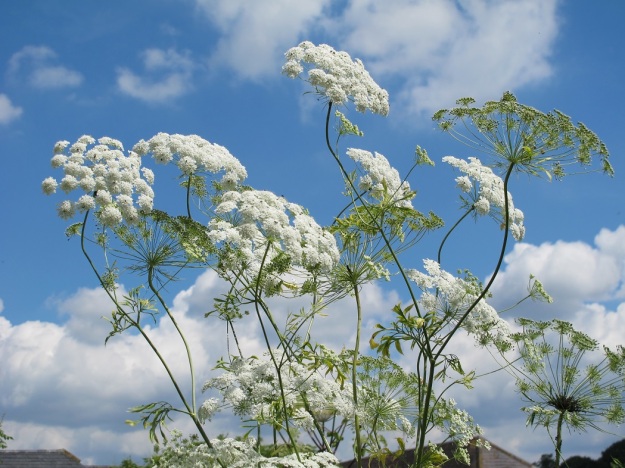
 I am having a love affair with umbelliferous plants. Poppies, daisies and umbellifers. It is the simplicity of form, I think, that appeals to me. And my favourite of these are the umbellifers for their ability to seemingly dance lightly in the space above other weightier plants.
There is a scarily technical, botanical description of what umbelliferous plants are on Wikipedia. They are mostly herbs – annuals, biennials or perennial, often aromatic. Typically, they have long stems often with very light, feathery foliage (though not always) and the flower heads are held above in flattish or gently mounded formation of a collection of lacy umbels. The flowers are much valued for their contribution to the garden eco-system because they attract beneficial insects. Many set seed very freely and will provide a source of food for seed-eating birds in autumn and winter.
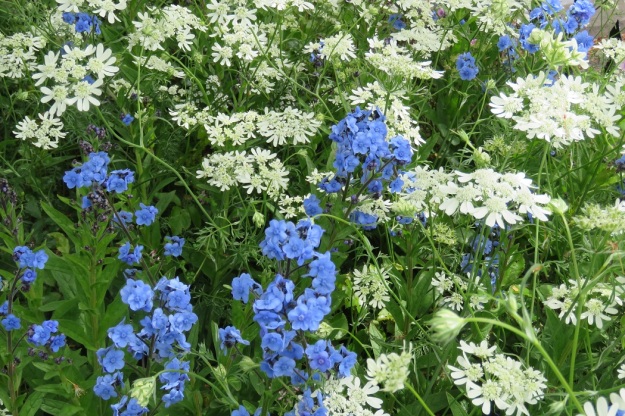
Orlaya with blue cynoglossum at the New Plymouth cemetery
Carrots are umbellifers, as are parsley, coriander, fennel and angelica, amongst many others. The common ornamental ones include the pretty Orlaya grandiflora in flower here now (it cuts well, I have just found, and combines prettily with pastel roses in a vase) and Ammi majus.
I first started noticing the use of umbellifers in English gardens back in 2009 and predicted then that they would become a fashion flower. I can report that they have maintained their popularity in England but have yet to become a hot ticket item in New Zealand, except for the orlaya and ammi.

As seen at RHS Wisley – my lily border does not have a water feature
My new long border of auratum lilies is destined to become my nod to a garden of white umbellifers. At this stage, I am still hoeing off germinating weeds to get it as weed-free as possible before I introduce plants which I expect to seed down season after season. I will use the pretty and wayward Orlaya grandiflora with coriander for the lower growing layer, Ammi majus and maybe carrot for the middle height and I am still debating about the tallest layer. Will angelica be too strong a grower, I wonder? The edible angelica. I don’t want plants that will choke out the auratum lilies that are the main stars of the border.
What is referred to as ‘cow parsley’ (botanically Anthriscus sylvestris) is a common wildflower in the UK, often seen on roadsides. So too is Queen Anne’s Lace or Daucus carota, commonly referred to as wild carrot (the version we grow to eat is a form of the same thing – D. carota ssp sativus). The one to fear that comes with frankly alarming warnings is the giant hogweed – Heracleum mantegazzianum. It is a common garden escape in the UK and is apparently in New Zealand though I can’t say I have ever seen it here. The problem lies in the sap which can harm the skin by making it extremely sensitive to sunlight, causing blistering, for long periods after contact – stretching out to years, even. Don’t be tempted by giant hogweed.

Pimpinella major ‘Rosea’ at Beth Chatto’s garden where I thought to photograph the plant label as well as the pretty, airy, dancing pink flower heads
Not all umbellifers are white. Despite it being a roadside weed where we live, I have planted some wild fennel in my new summer borders. I love the way it is so tall and graceful, silhouetted against the summer sky.

Purple flowers from purple carrots at Parham House
We were very taken by the purple carrot flowers we saw in the cutting gardens at Parham House. So taken with it that I looked it up. The heritage purple carrots that have been reintroduced to the seed range (carrots did not start off orange) are the ones that produce the purple flowers.

Angelica gigas – as popular with wasps as bees
Angelica gigas is another purple flowered umbellifer, in this case a biennial which bees adore.
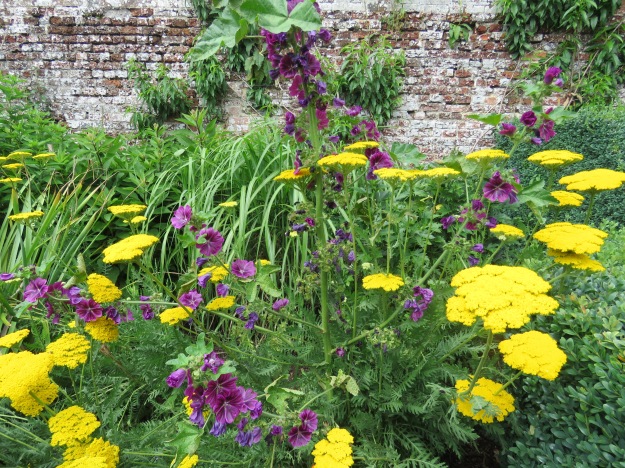
I have just planted a single plant of the yellow achillea, photographed here at Parham House
I had thought, based on flower form and habit, that achilleas were members of the umbellifer family. Botanically, they are not (as far as I can see) but in practical terms, they fulfil a similar garden role. Now that I have a hot, sunny, newly cultivated area, I am trying again with coloured achillea. I find them charming but they are not plants to co-exist in borders where they get overshadowed or lose all day sun.

Common fennel can look wonderful against the summer and autumn skies
 Meet ‘Jade Cascade’. It has an appealing name though, to be honest, there is nothing jade about it. It really is a plain, somewhat dull green though it has attractive long ribs running the length of the leaf. It does at least cascade, or maybe it fountains, from its central point. And it is simply a terrific and eye-catching performer in the garden.
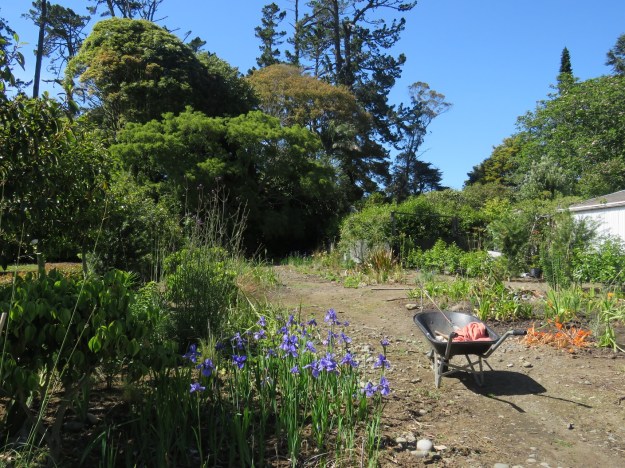


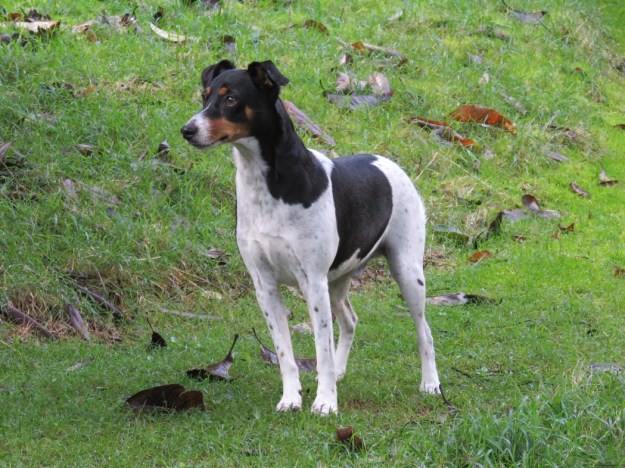 Behold our handsome Dudley. Or Dudders, to give him his cricketing name. I wrote about Dudley’s penchant for self-serve avocados two years ago in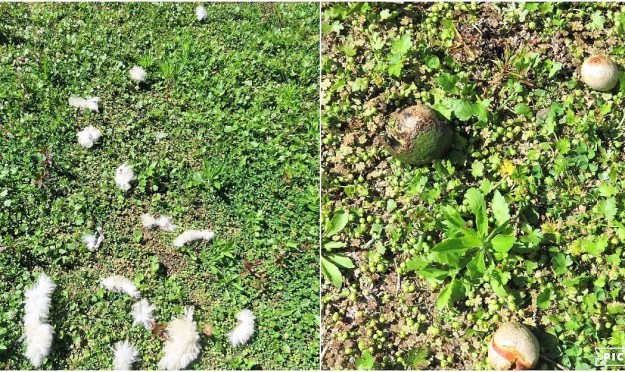
 Tikorangi The Jury Garden