
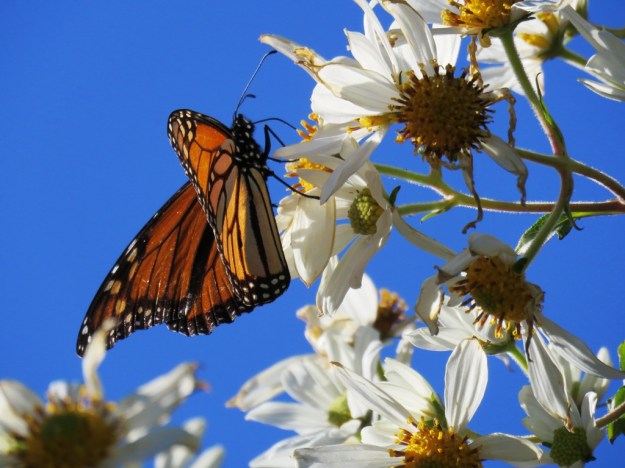
 I have a new camera and while I am still learning to use it, I doubt that I could have captured the monarchs on the montanoa with my old one, even before it decided to shuffle off the mortal coils and go where digital cameras go to die. I mentioned the Mexican tree daisy last week, asking for identification. Such are the wonders of the internet, it took less than 20 minutes for the botanical name to be supplied to me – Montanoa bipinnatifida. I am attempting to commit this to memory, although I keep getting sidetracked onto bipolar manatees which won’t do at all.
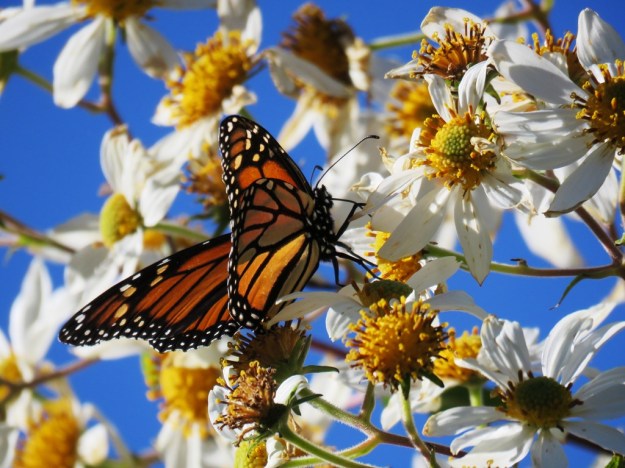 It was a comment left on this site that had me heading down to check out the montanoa on a sunny mid-winter’s day, to find it positively dancing with monarch butterflies. “It’s a natural food source for monarch butterflies, as it also comes from Mexico”, the reader said. Given that monarchs are recorded as self-introducing to this country around 1840 and generally produce two generations a year, that means at least 350 generations have passed since the Mexican connection so I think the montanoa is perhaps better described as being an “indigenous food source for monarch butterflies in Mexico”. But a source of winter nectar, it certainly is. It was a joy to see.
The felling of the Waitara riverside pohutukawa yesterday – the ones that we had fought so hard to save – followed by heavy rain today have thwarted my plans to complete the clean-up on the second block of large Kurume azaleas that I also mentioned last week. But as I hauled away multiple barrow-loads of prunings, it occurred to me that the spending of maybe two weeks’ sustained work to complete a task that nobody else (other than Mark) will even notice has been done, represents fairly high level gardening skills. For much has actually been done. It is greatly improved but there is little evidence to show that.
From the point of view of the gardener, the hard hack and slash approach may be more rewarding in the short term – you can see exactly what you have done and it is a quick result. But as far as the garden goes, a gentler technique which leaves the overall scene refined but visually similar, masking how much has been taken out, is a different skill set. There is “cutting back” and then there is what I have heard called “blind pruning” – which is cutting back without leaving a visible trail of destruction. It takes more time and skill but is worth the effort for intensively managed areas of the garden.
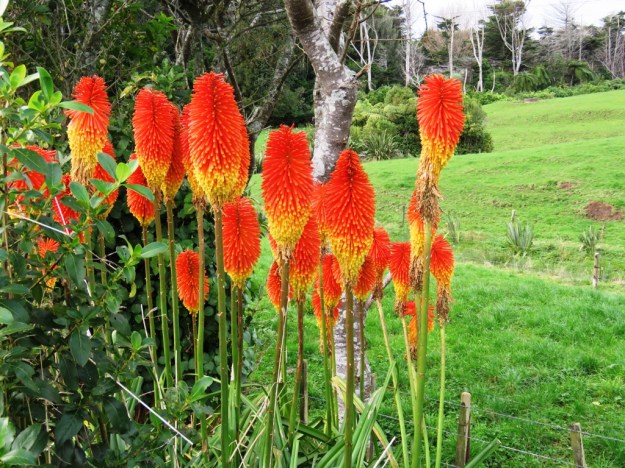 I was so discouraged when I left the scene of institutional and bureaucratic vandalism that was the Waitara pohutukawa that I had to take refuge in scenes of nature that are beyond the reach of the desecrators. I have been enjoying the sight of red hot pokers (kniphofia) on the road verges. Just an African plant that has adapted to its role as a roadside wild flower in New Zealand – a bright splash of colour in the gloom.
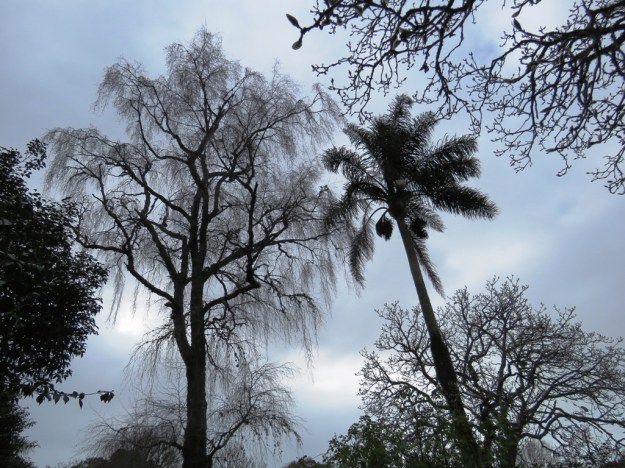 And at home I raised my eyes upwards to drink in the sights of our trees. We have many large trees here, evergreen and deciduous, native and introduced. While by no means the largest of our trees, this scene of magnolias, silver birch and Queen Palm (Syagrus romanzoffiana) soothed my soul.
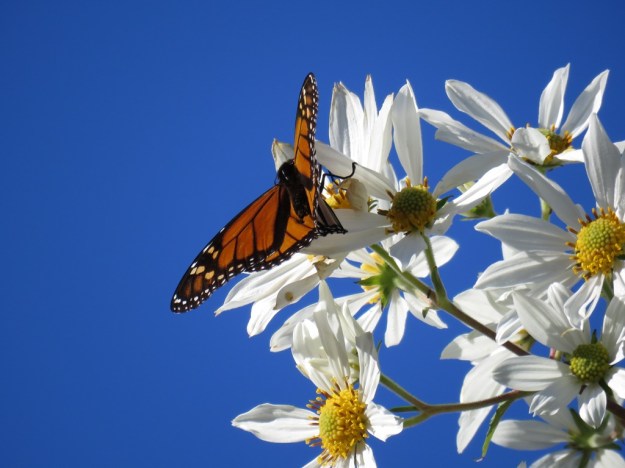
I admit I probably took eleventy thousand photos of the monarchs this week
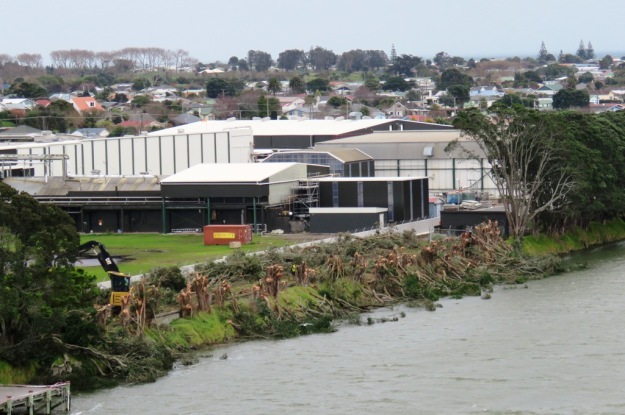
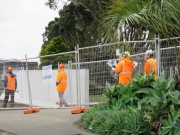
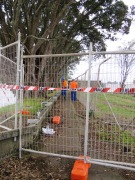
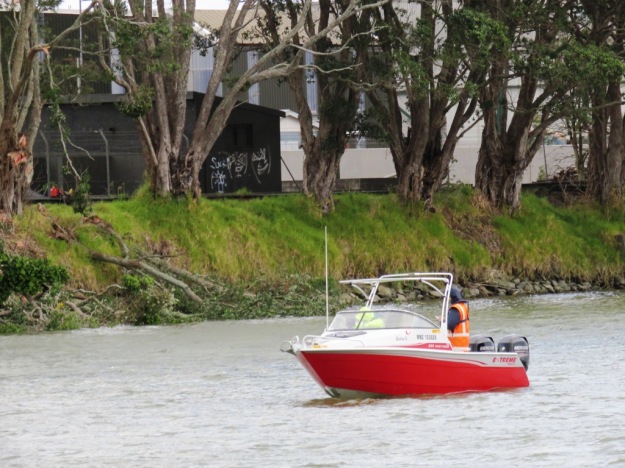
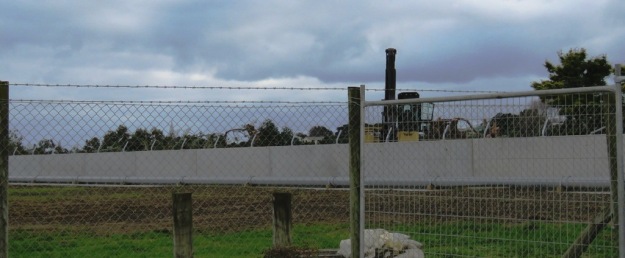 How anybody in their right mind could think that the hostile expanse of concrete flood wall, topped with barbed wire (it is doing double duty as a security wall for the meat packing works behind) was an appropriate form of town flood protection in this day and age is beyond comprehension. It looks like a prison wall. This is the face of Waitara in 2015. We regard it as simply shameful action by Taranaki Regional Council.
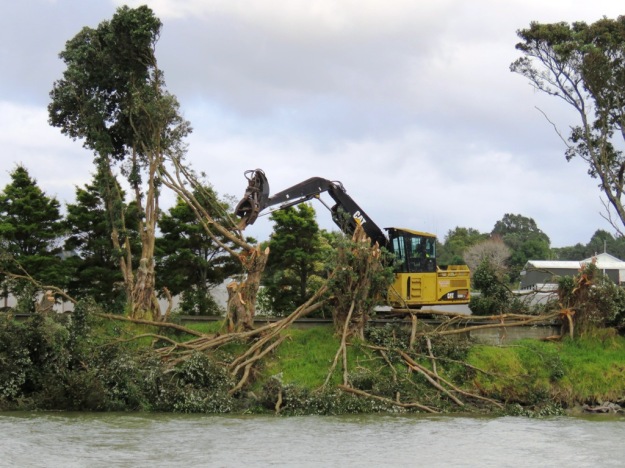 While the chainsaws worked at one end of the row, the digger driver proved that you don’t need chainsaws at the other end – the might of the machine means you can break apart the trees. There was no sign that the men on the site felt any sorrow at the unceremonious felling.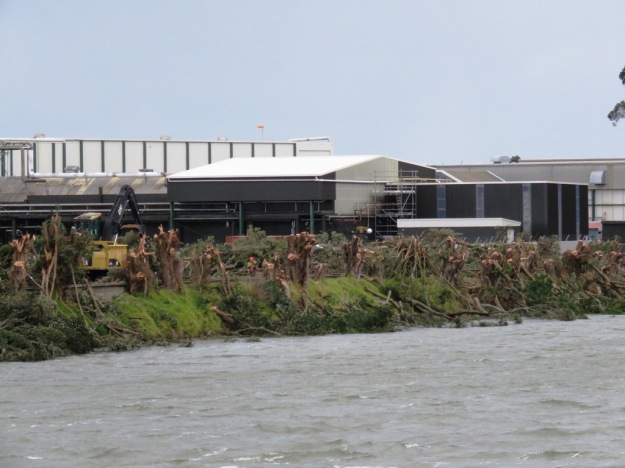

 Maybe it was our national cricket team playing in Yorkshire that brought this scene back to mind. I photographed it at Yorkshire Lavender near Terrington, about this time last year. I was greatly charmed at the time. It was set on top of a small hill with a big sky and big vistas. I admit I like cricket – well, I like it when our team is winning and they did win the test match a few weeks ago – but it was the large scale whimsy that I appreciated with this scene.


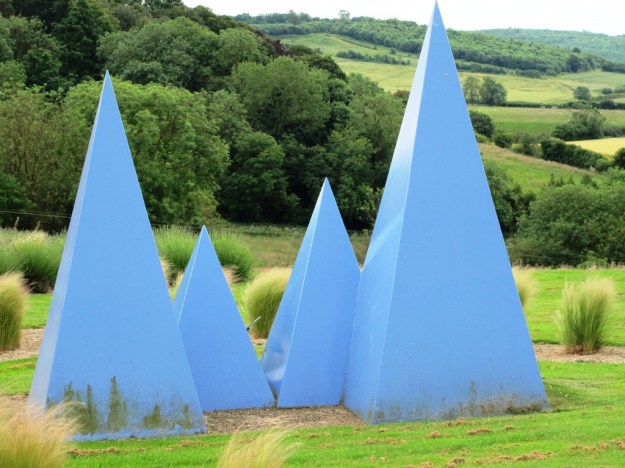
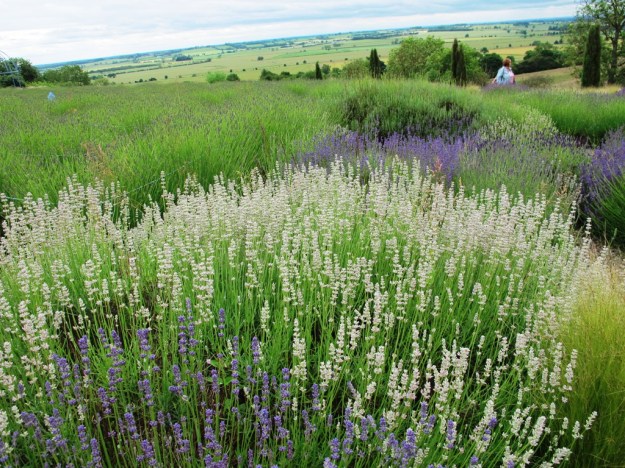 I like lavender. I really enjoy the open fields of lavender which are so evocative of a different climate. It is not a plant for our fertile conditions with high humidity and high rainfall all year round. I have just one plant left and it lurches on from year to year, clutching at the remnants of its life. I liked the way Yorkshire Lavender didn’t just keep to lavender but were extending into the New Perennial style as well with their mixed plantings and the mandatory grasses.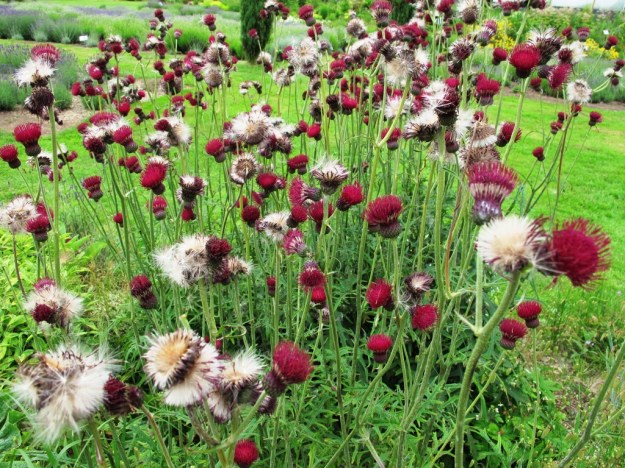



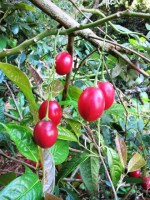
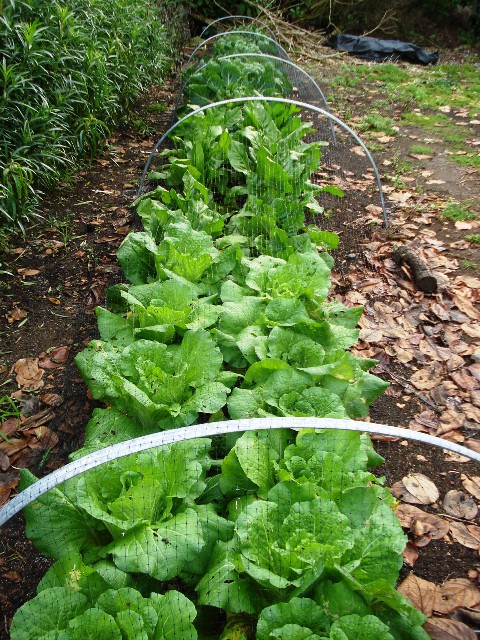


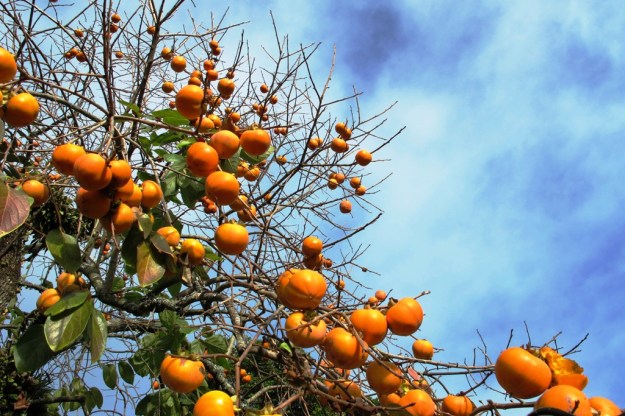 Persimmons. These are a glorious sight in autumn but more decorative than useful here. Ours is an old astringent variety – mouth-puckeringly so until it is super ripe and then I really only like the jelly-like centre segments. We don’t eat many of them. I tried buying the fruit of the non-astringent recent introductions, which can be eaten at the crisp stage like an apple. I was a little underwhelmed – I preferred apples.
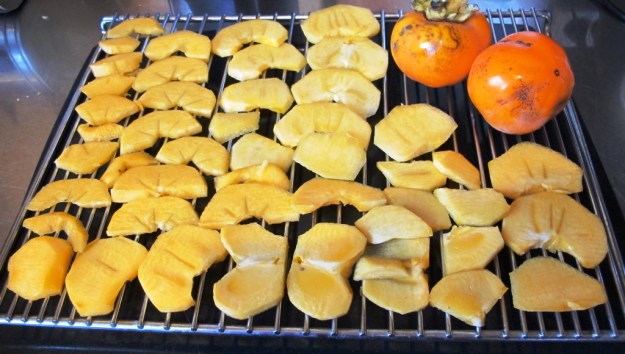 I recently read that persimmon fruit dry well and even the astringent types can be picked before fully ripe, sliced and dried and they will lose their astringency. Truly, we were very sceptical. But it works. It really does. The first batch I sliced, skin and all, and dried on a rack over our woodburner. It was a bit hot for them and the skin was a little tough. This second batch I used a sharp knife to remove the skin – which wasn’t difficult – and then sliced and put in the oven on fan bake at a very low temperature for several hours. They aren’t fully dried so I will store them in small packages in the deep freeze lest they go mouldy in our humid climate.
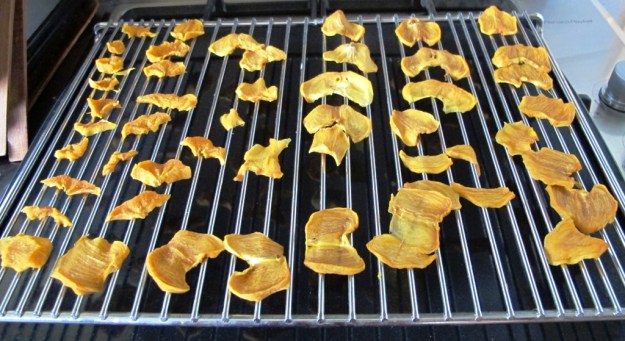 If you like dried fruit or eat muesli, they will make an excellent addition. I plan on using them as a substitute for dried apricots. They don’t taste the same but they will fill the same role. As with any dried food, they shrivel away to very little. I doubt that my forays into dried persimmons are going to make much of an inroad to our total crop – I won’t be drying hundreds of them and there is a large crop on the tree. But we are always interested in adding variety to our diet and dried persimmons take little effort to utilise a crop that we would otherwise waste.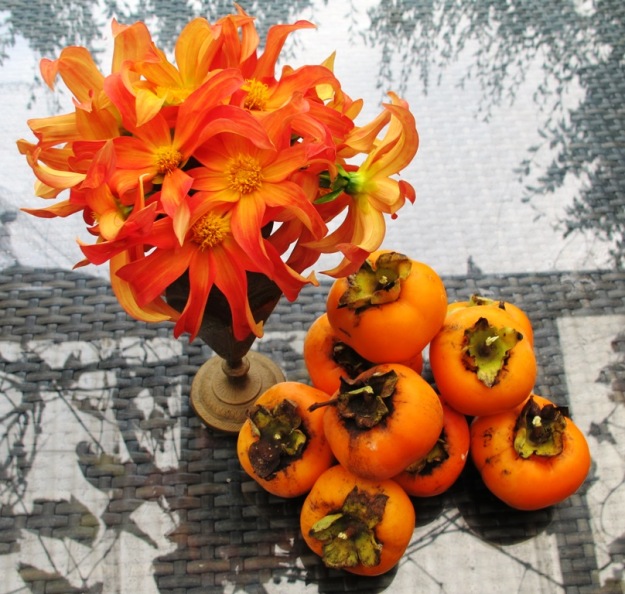
 Tikorangi The Jury Garden