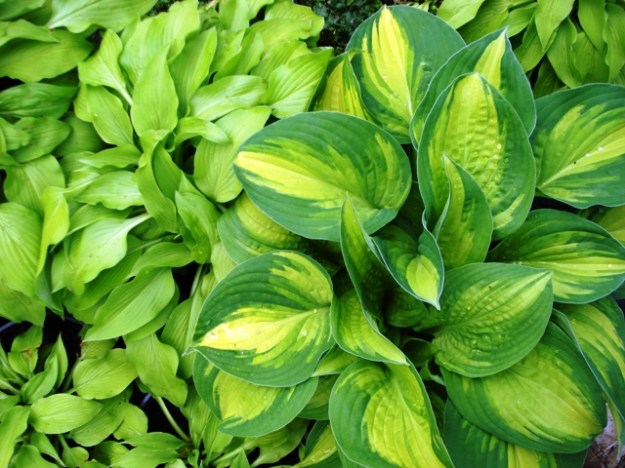
The hostas are all romping into growth. There is nothing quite like this for focussing the mind on slugs and snails.
We don’t have a big slug and snail problem here and we rarely resort to using bait. We can only conclude that we must have a struck a reasonable balance with the main natural predators – birds. We have a rich birdlife in our garden and think that eating slugs and snails which have been poisoned is not a good call for our feathered friends.
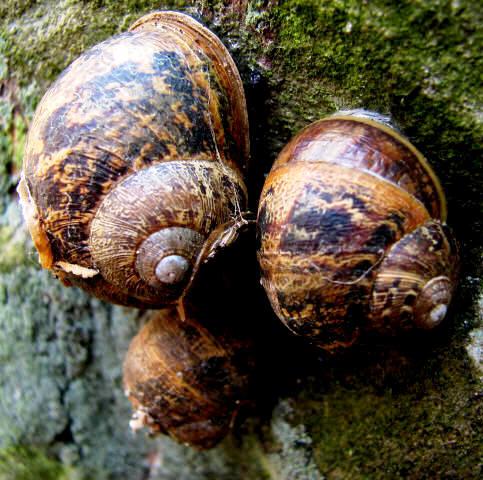
Where we see the slimy critters making inroads to something precious, we resort to discreet little bait stations – a bottle cap with two or three pellets beneath a paua shell. The roof keeps the bait dry so it lasts a lot longer. A small packet of bait lasts us for ages.
Mark has been railing for years against gardeners who broadcast slug bait as thickly as fertiliser. Baits have an attractant so you don’t need to layer them on so densely that you trip up passing targets. One bait placed at the base of a lettuce seedling is all that is required to kill the marauders.

The bait trap
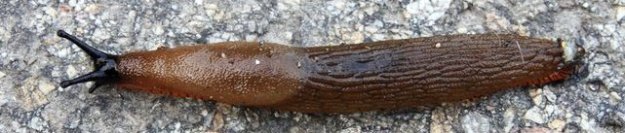
If, like us, you are reluctant to reach for the poisons as a routine solution, there are alternatives. The night time prowl with the torch can be effective though it may take a few forays to get the timing right. The snails don’t usually come out until a good hour or more after dark. The richest hunting nights are when there has been rain after a dry period. I squash all but the giant tiger slugs underfoot, which is a quick end for them. Others of more delicate dispositions drop them into a bucket of salted water where I imagine they die a slow and lingering death. Sentimentalists and, presumably, Buddhists release them in farther reaches or drop them over the fence to the neighbours so they live on causing damage. I am afraid that I think the only good garden slug or snail is a dead one (our native powelliphanta excluded).
As much of our problem slimy population was imported, it has always seemed a great pity to me that the early settlers who were so determined to bring food crops and plants to remind them of home, did not while away the hours of the long sea voyage ensuring that this vegetative material was free of the pests. It seems a missed opportunity and would have saved a lot of bother later. While we have a remarkable number of native slugs and snails, most of these feed on decaying material whereas the imported ones generally feed on fresh, green growth and do the damage.
I have not tried the beer can approach (I just don’t want cans of flat beer lying around my garden) but, as with the hollowed out orange half, these traps require you to do a morning round to dispose of any lurkers. There is nothing in the beer and the orange to kill them.
It is a myth that slimy critters will not crawl over rough and gritty surfaces. Insect expert Ruud Kleinpaste once showed a photo of a snail crawling over the sharp end of a razor blade. But they will take the line of least resistance so surrounding vulnerable plants in a thick enough ring of something less appealing can deflect them in another direction. However, you need a small mound rather than just a scattering of crushed egg shells, sawdust, rimu needles, sand, gravel or similar and you need it round each plant individually. It can certainly help with new plantings. Copper rings are reputed to work but it seems an awful lot of effort to go to, fashioning a copper bangle for each plant.
One eco friendly solution I have tried with success is generous amounts of cheap baker’s bran. Apparently slugs and snails find it irresistible. I don’t think the bran actually kills them, unless they gorge so much that it swells up inside and dehydrates them. I think it more likely they eat too much and then lie around in a comatose state making easy pickings for the early bird in the morn. All I can say is that it did work when I tried it on a patch of hostas that was getting slaughtered.
I have not tried the temptation approach suggested by BBC Gardeners’ World presenter, Monty Don. According to him, there is nothing slugs and snails like more than comfrey so he lays fresh comfrey leaves beside vulnerable plants. What he didn’t say is that you would have to replace the comfrey leaves every two days and you would need to follow up in the evening and deal to the revellers. I don’t think there is anything in the comfrey that kills them. It is merely an attractant (like the beer). I thought it seemed to be a case for not planting comfrey near vulnerable plants to reduce temptation.
In the end, we will never win the war on slugs and snails. It can only be managed and if you can get your garden to a balanced state of co-existence, you can target your efforts to areas of particular damage. If you are the type who carpets an area in slug bait (which then breaks down with moisture), just remember you are in fact carpeting your garden with a poison. It is better to try other ways of management if you can and save the slug bait as a last resort.
First published in the Waikato Times and reprinted here with their permission.
-39.042098
174.300314


 Tikorangi The Jury Garden