In the Garden – May 24, 2012

A fortnightly series first published in the Weekend Gardener and reproduced here with their permission.

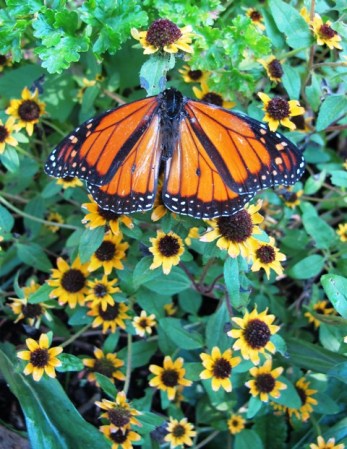
Sanvitalia procumbens planted for the monarch butterflies here

Sanvitalia procumbens planted for the monarch butterflies here

It has not been a good year for monarch butterflies. We put this down to the unusually cool, wet summer but find it worrying how just one season can almost wipe out the population. We don’t just grow one or two swan plants (usually Gomphocarpus fruticosus). We plant them in succession throughout the season, like green beans and sweet corn, to ensure continued supply because it is the end of season caterpillars we target so we can have them wintering over. Usually we will have monarchs visible in the garden at any time of the year, but they are a rare sight this season so it is not looking good for winter and the early flush in spring. It is not for want of food – there are untouched swan plants in abundance.

In order to provide plenty of food for the butterflies in autumn, Mark fills any spaces in the vegetable garden with nectar rich annuals. We don’t do a lot with annuals in the ornamental gardens beyond self sown pansies and love-in-the-mist (Nigella damascens), but the autumn vegetable garden resembles a meadow mix these days. The gem this year has been a miniature zinnia relative, Sanvitalia procumbens “Mandarin Orange” from Kings Seeds. While the flower colour could be a little cleaner, it is such a tidy, little filler plant it has been promoted out of the vegetable garden and into the rockery.

Winter food is also necessary to keep these monarch delights at home. The most successful plant we have is the yellow daphne (Edgeworthia papyrifera) which attracts them from a considerable distance. As a general rule, it is single flowers which are rich in available nectar. The fancier and fuller the bloom, the less likely it is to feed butterflies and nectar seeking birds like tui. There is plenty of information on http://www.monarch.org.nz if you wish to know more about encouraging butterflies in your garden.

Top tasks:

1) Mark is relocating the late season monarch caterpillars into the warmth of his glasshouse to give them a better chance of reaching maturity before the winter chill. Every caterpillar is precious this year.

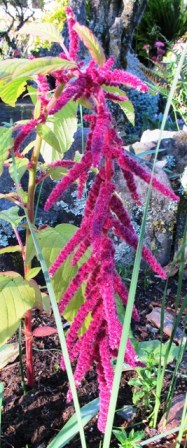
2) Cut off the Love Lies Bleeding (Amaranthus caudatus) in the rockery. We let these naturalise for autumn height and colour, but they set vast amounts of seed and there is a narrow line between naturalising and taking over.

Outdoor Classroom: guide to garden mulches

There are five good reasons to mulch your garden:
a) Mulches suppress weeds when laid to a depth of around 6cm (but the mulch itself needs to be free of weeds).

b) Mulches stop soils from drying out as quickly by slowing evaporation. However they should not be laid on ground which is already dry because they will act as a barrier to stop water soaking in easily when it rains.

c) Some mulches will feed the soil and add valuable carbon content.

d) Mulches protect your soil from wind, torrential rain and erosion and may slow the leaching out of goodness.

e) Most mulches make a garden look much more attractive and reduce dust.

ORGANIC MULCHES

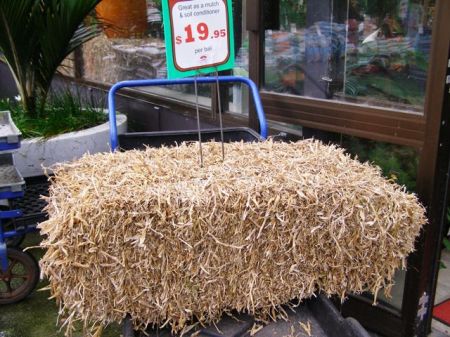
1) Pea straw is popular but when used in areas where peas are not grown commercially, it has a heavy carbon footprint in transporting it. It should be weed free. It adds carbon content to the soil but it is a myth that it fixes nitrogen (peas store the nitrogen in their roots but you are only buying the harvested tops of the plants). It is better in the edible garden, and great for strawberries, but not very aesthetic in the ornamental garden. A bale should cover about 6 sq metres. Water it well or the dry straw may blow away. Oat straw and barley straw are suitable substitutes.

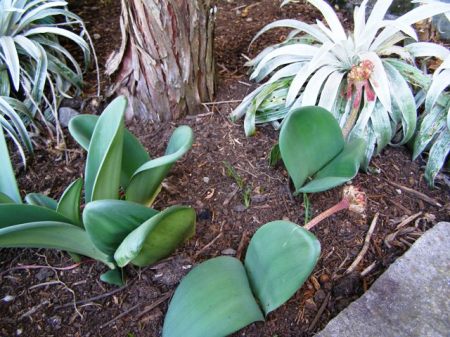
2) Composted bark is widely used and lasts a surprisingly long time. Compounds in the bark stop it rotting down quickly. It adds carbon over time, it should be free of weeds and it is visually discreet in the garden because it is dark brown. Buy pre-composted bark if you can – it does not rob the soil of nitrogen as it breaks down. You can buy small bags but it is cheaper in bulk. A cubic metre should cover about 15 square metres.

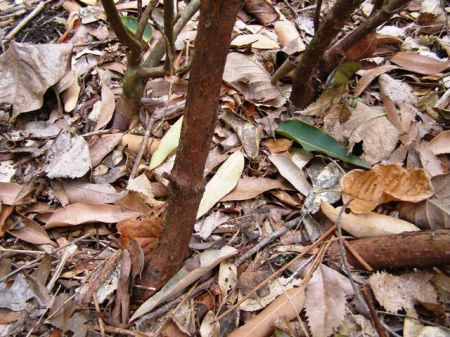
3) Leaf litter is readily available and free in autumn. You can either disperse the litter over the garden beds immediately or you can rake it into piles and let it start to decompose first. A leaf rake makes this task much easier than trying to use a garden rake. Leaf litter will enrich the soil but it may look a little untidy in some garden situations.

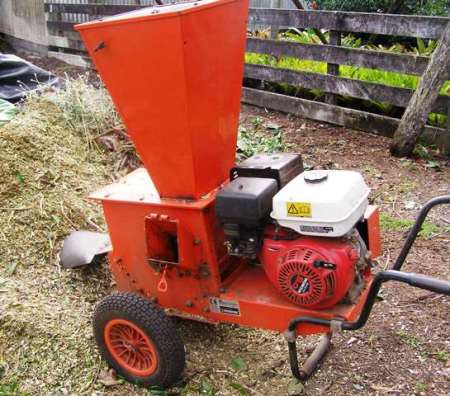
4) Wood chip, sawdust, and wood shavings are not composted so must be laid on top of the soil and never dug in until they have rotted. This is to avoid them depleting the soil of nitrogen as they break down. Sawdust or shavings must be from untreated timber (tanalised timber is toxic) and fresh sawdust can look garishly orange on the garden. We use the fine wood chip from our mulcher extensively, raking it out immediately to a layer of about 6cm.

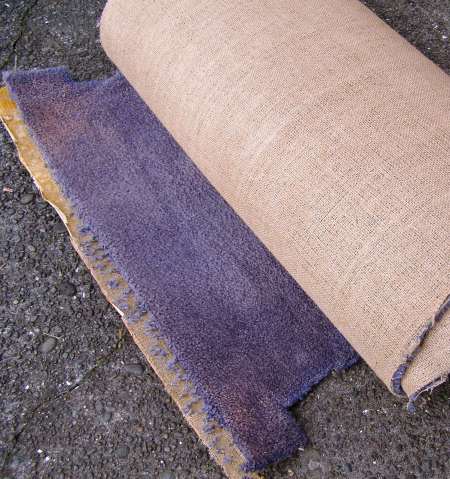
5) Old carpet must be natural fibre (generally wool), not synthetic. Test it with a flame – if it melts, it has synthetic fibres. Cutting with a Stanley knife is probably the easiest way to get manageable pieces. It may be best in the vegetable garden because it is not attractive. Lay it with the hessian backing side upwards and you can camouflage with leaf litter. Similarly, newspaper is not an attractive looking option, but it will work if you lay down a thick layer of maybe ten sheets at a time. Coloured pages are fine but avoid any glossy paper. It needs to be weighted down and covered with other garden litter to keep it moist. It represses weeds and adds carbon content.

6) Compost is our preferred option by a country mile but if you are using your own compost, you need to make sure it is as free of weed seeds as possible. Compost adds most of the nutrients the soil needs and is excellent laid as a mulch on top. Let the worms gradually incorporate it into the soil. It looks unobtrusive while nourishing and protecting the soils.

INORGANIC MULCHES

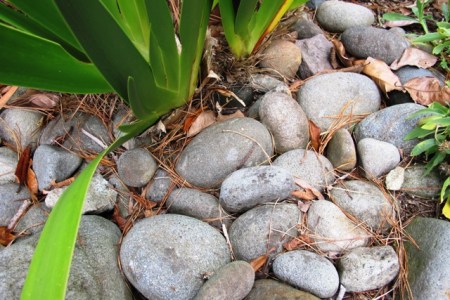
7) Stones are heavy to handle but can be visually effective in the right setting. They also store warmth for plants which prefer hotter conditions. They are best used with permanent plantings where the ground will not need to be cultivated (dug over) as you do not want to have to move the stones. Use a leaf blower to keep the build up of litter removed.

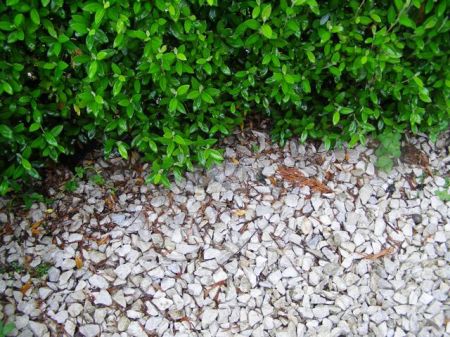
8) Limestone chip can be quite a stark white when first spread but this sometimes suits modern gardens. It is weedfree but it adds nothing to the soil. Once you have laid it on the garden, you will never get rid of it. Acid loving plants like rhododendrons and camellias will turn yellow because the alkaline lime will leach out. The same goes for crushed shell, which is also alkaline. The only way to keep these mulches clean and smart is to use a leaf blower to remove detritus.

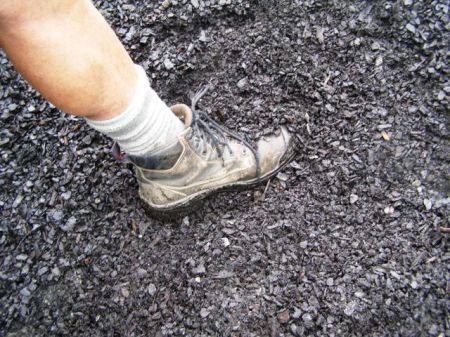
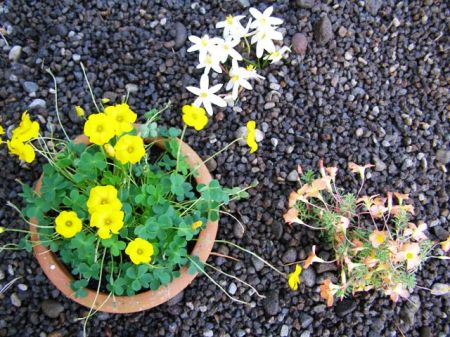
9) Fine gravel and scoria are similar options. Fine gravel is a traditional mulch for rockeries and alpine plants because it is free draining and a neutral material. It can look a little industrial or utility in other settings. Scoria will give a decidedly retro 1970s’ look.

10) Weedmat is a commercial product designed predominantly for nursery use. It suppresses weeds and allows rain to penetrate while preventing excess evaporation. It should be laid taut and secured with wire hoops. It has no aesthetic value at all and looks uniformly unattractive when used in home gardens. It is at least better than its precursor, black polythene, which should never be used as a mulch because it sours the soil. Weedmat is bought by the roll and widths vary but it should price out around $1.25 a square metre.

Tikorangi Diary, Friday 18 May, 2012

Latest posts: Friday 18 May, 2012.
A mere three new posts this week.

1) Cyclamen purpurascens – one of the most rewarding of the species cyclamen in our garden.

2) Differing shades and grades of organic purity in gardening. Like being a part-time vegetarian here.

3) Grow it yourself – aubergines (if you can – there are easier crops to grow and timing is everything).

Tikorangi Notes; Friday 18 May, 2012

Back in summer, I wrote about my battle with the water weeds. Now it is time to own up and say that when I reached the first of the ponds, I retired. Mark has persevered and has now reached the point where he has all the sludge now accumulated in the lower large pond. It has reached the point where he needs to hire the sludge pump to finish the job once and for all – or rather once in a decade or maybe slightly longer.

Narcissus bulbocodium citrinus "Pandora" - the first in flower this season

Narcissus bulbocodium citrinus “Pandora” – the first in flower this season

At least we are both back into the garden though it was pretty disappointing when the magic autumn weather staged an exit this week and the temperature dropped. Writing and publishing garden advice and thoughts every week is an exercise in keeping us focussed but it doesn’t always mean we get around to following our own advice. This can make us feel a bit of a fraud at times. The hellebores still need to be cut down (getting urgent), the major project in the rose garden has yet to be started and Mark’s vegetable garden is severely under producing at the moment – though we should be able to hold famine at bay with potatoes and dried beans. But at least we are enjoying the autumn flowering of the massive evergreen tree hydrangea is in flower, looking decidedly impressive (pictured above). The earliest of the narcissi, N. bulbocodium citrinus “Pandora” is coming into flower. Before we know it, June will be upon us and the magnolia buds will be fattening.

Plant Collector: Cyclamen purpurascens

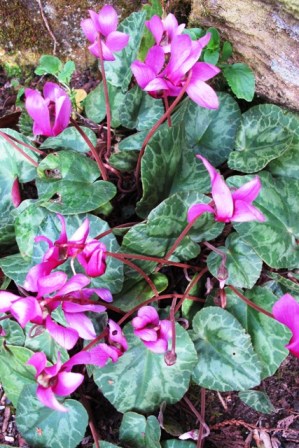
Cyclamen purpurascens seems to be in flower pretty well all year

Cyclamen purpurascens seems to be in flower pretty well all year

We are big fans of the species cyclamen and C. purpurascens is starring as a garden plant. Astoundingly, this patch in the rockery flowers almost twelve months of the year and doesn’t go dormant. Most of the species cyclamen are from Southern Europe through to North Africa and are therefore used to distinct wet and dry seasons and often poor, stony conditions. C. purpurascens has a far wider distribution into Northern Europe where it is more of a woodland plant, often found growing naturally in beach forests.

It appears that we are quite lucky that our form of this cyclamen is good, clean cerise colour as it is sometimes found more in muddy pink shades but like most species, the colour can vary across the spectrum of pinks and very occasionally turning up in white.

C. purpurascens has typical heart shaped leaves, dark green mottled with silvery white markings. It grows from a round, flat tuber as do other cyclamen. Given its wonderful performance as a garden plant over several years here, the only downside is that it sets very little seed. This will be why you don’t see it around much. The common C. hederafolium sets seed freely and naturalises readily if given the chance whereas we have to be vigilant to spot the occasional seed on C. purpurascens. If you can find it, give the tuber cool, moist growing conditions which are rich in humus. Moist does not mean permanently wet – which may rot out the tuber. We have it growing on the shady side of the rockery.

First published in the Waikato Times and reprinted here with their permission.

Differing shades of organic gardening (akin to the sliding scale of vegetarianism)

Anything but organic.....

Anything but organic…..

I see Prince Charles feels vindicated about organic gardening, pointing out that when he first started talking about it, he was the subject of much derision. There is no doubt that the prince is a very keen gardener and he has been a flag bearer for organic techniques in the ornamental garden as well as the kitchen garden. I just recall some discussion about him advocating talking to one’s plants which still seems perilously close to being flaky in my books.

But Prince Charles is absolutely right about home organics. In fact the chemical approach to weed and pest control is comparatively recent, dating back to about the 1950s, as is the routine use of manufactured fertiliser. It was the result of war technology. We’ve been getting steadily better but the intervening decades were not gardening’s finest hours and some pretty dodgy practices and attitudes linger on.

We never describe ourselves as organic gardeners because we are not. We do, however, follow many organic gardening practices because they make good sense in terms of gardening in harmony with nature and enhancing the environment. This is not true of all gardening, much of which has to do with imposing human will upon nature.

As a result of this, we spend a fair amount of time on a quest for reliable information. There is an awful lot of puffery around organics, from flaky thinking to fervent faith, but that does not mean the underpinning principles are wrong. It just means it is a little harder to decode some of it. We’ve still come up short on good information regarding nutritional density, but given time, I am sure we can find that out.

In the meantime, it may help readers to think of organic gardening running a similar line to vegetarian diets – there are a whole lot of points on the continuum where you can find your niche. Starting from one extreme, you have the old fashioned eater whose dinner plate is 50% meat (usually red), 35% spuds and the remainder in consolation green veg. This gardener sees nothing wrong with pouring on insecticides, fungicides and herbicides, along with chemical fertilisers. We won’t dwell too long on this 1960s model.

The realisation of heavy carbon footprints and lack of flavour in food which saw a return to seasonal eating, and then to eating locally produced foods may be analogous to the home gardeners who suddenly decide they must have raised vegetable beds on the quest for self sufficiency. It matters not that they are filling the beds with compost mix sourced from the garden centre, trucked considerable distance and packed in heavy plastic bags. Nor does it matter that any resulting produce will be extremely expensive. They have made a start and they claim it is organic because they are not using sprays. At this point, organics has more to do with what is being left out rather than a change to the way we garden and it tends to be the domain of the enthusiast who is not always particularly well informed or indeed experienced.

Move along to the partial vegetarian movement (which seems sometimes to extend to the genre of foraging and wild foods). We belong around here – two or three meals a week which are vegetarian and always seasonal using our own produce. Gardening organically at this point has much to do with sustainable practice wedded to pragmatism. We factor in issues such as plant and seed selection, plant heath, soil health, maintaining ecosystems, composting, mulching, and lawn management to avoid needing to spray or feed. But we want to be able to get crops of tomatoes through and we are yet to be convinced you can do that organically in our climate. We make relatively well informed choices in food and gardening.

Genuine vegetarians usually underpin their diet choice with philosophical beliefs. Many will eat dairy products and eggs, some even fish. But others will shun any dead animal products including cheeses made with animal rennet, even leather shoes. Being a certified organic gardener tends to come parallel at about this point. It is much more rigorous and prescriptive while offering the security of rules to follow.

At the far end of the spectrum are the vegans, probably matched in gardening by those who operate closed horticultural systems (with no external inputs) and biodynamics. While there is a tendency to accord these extremes the mantle of purity, the higher moral ground, in practice they are usually more faith based than science based. Neither a vegan diet nor a closed growing system is complete in the long term without supplements.

So organics is not a hard and fast set of rules, unless you are after accreditation. What is really interesting to us about Prince Charles is that he is serious about having a beautiful, traditional garden, all the while applying organic principles at every level, not just to his cauliflowers. It is looking increasingly like common sense these days. We just wish we could afford the prince’s eighteen garden staff to help us towards greater purity in gardening practice.

First published in the Waikato Times and reprinted here with their permission.