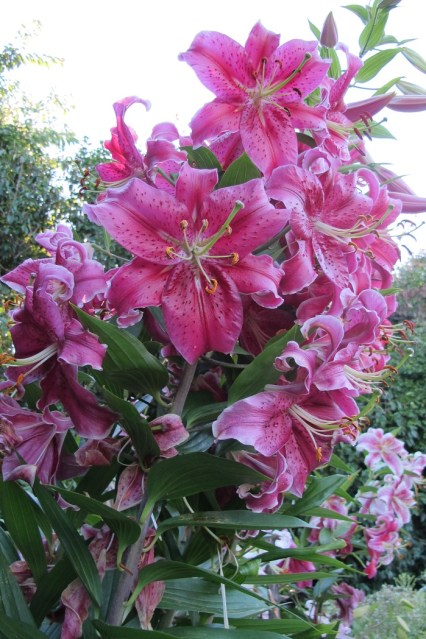
 As 2018 draws to a close, I decided that I do not have anything to say on new year gardening resolutions that I have not said before. At a personal level, I am resolved to finally complete the two gardening books that have been percolating in my head for several years. This is the first time I have stated that intention publicly. One is at the point of being ready to hand over to an external editor, the other is still in progress. More on them, I hope, as they near publication.
Then the latest posts from a Canadian gardener, Pat Webster, landed in my inbox, charting her garden through the year. I was a bit gobsmacked at four months of snow on the ground. It snowed here once. That is once in recorded history. I am not sure what I would do in a climate with months of snow. I guess one switches to indoor pursuits.
It is different here where we garden all year round and can expect flowers every day of the year. I have thousands of photographs so finding 12 different garden scenes representing a month each took a bit of effort. It would have been much easier had I just gone for flower close-ups but some readers may like to see the different contexts. Best viewed on a larger screen, of course…
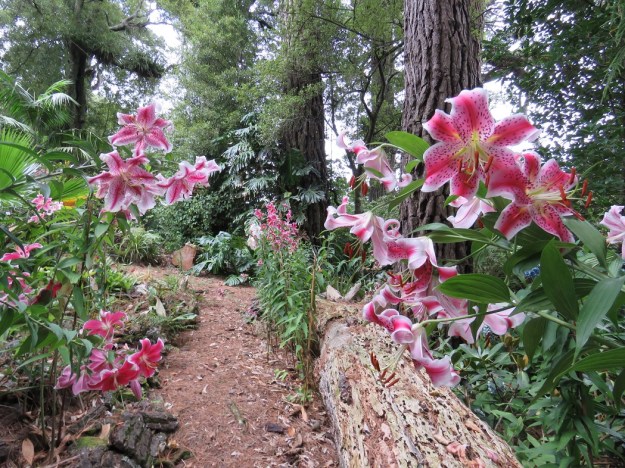 Firstly, January is for lilies. We like our lilies, a whole range of different types, but none more so than the golden Aurelians opening now, to be followed by the OTT auratums which we have in abundance. The new lily border should be a show-stopper this year after our concerted efforts to outwit Peter Rabbit and his extended family, but in the meantime, I give you the auratums in the woodland – planted maybe two decades ago and left entirely to their own devices in the time since.
 February is peak summer here, when we get the most settled and warmest weather. And the Scadoxus multiflorus ssp katherinae are just astounding in the same woodland area as the previous photo. We never planted anywhere near this number. Over the years, they have just gently seeded down and taken over an entire area, so happy are they in our conditions. There aren’t too many people around this country who have scadoxus naturalised in their garden.
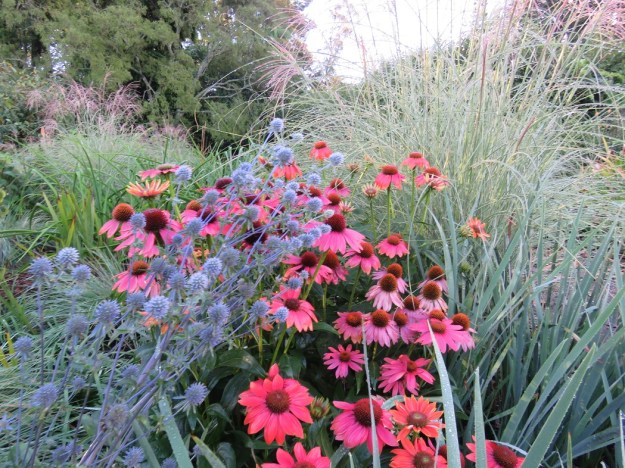 March is still summer here although the day length is shortening and the nights noticeably cooler. It used to be a very green time for us, because we have so much woodland garden and there is not a whole lot of high impact flowering in later summer woodland. We went to England three times to look at summer gardens and it is the sunny perennials that flower into this time. It has been really exciting putting in a large summer garden in full sun. I am extremely impressed by the echinaceas which flower from December to April and I have a very soft spot for the blue eryngium, even if I often need to put a stake in to hold them upright.
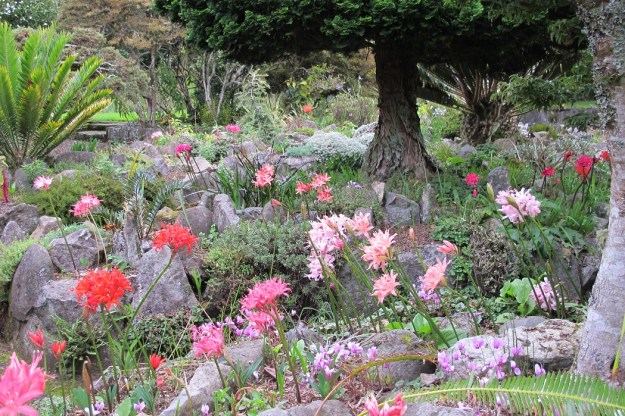 By April, we can no longer pretend that summer will go on forever. The flowering of the Nerine sarniensis hybrids, the Cyclamen hederafolium and other autumn bulbs in the rockery tell us that time waits for no gardener and early autumn is upon us. We have long spring and autumn seasons in our part of the country.
 May brings us the early camellias in bloom, in this case Camellia sasanqua ‘Crimson King’ at the mill wheel bird bath just out from the back door. So too do the months right through to early October bring us camellias, but with advent of camellia petal blight, it is the early flowers that are the showiest, most abundant and the most charming now, which mostly means the sasanquas and quite a few of the species.
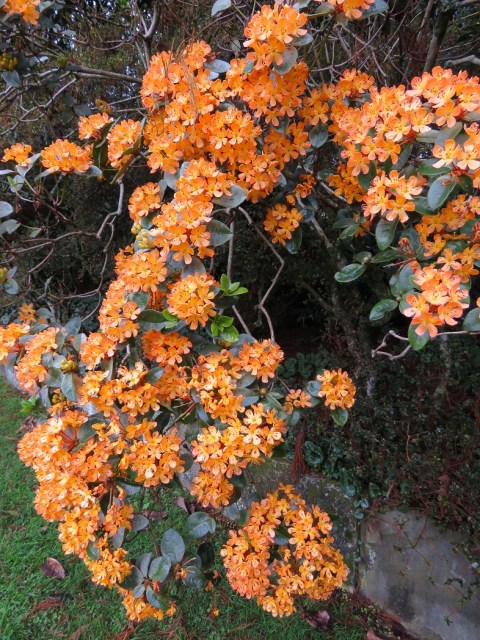 June is early winter here. Definitely winter. I could have chosen Mark’s Daphne ‘Perfume Princess’ which flowers on and on through the winter months, but instead I picked Vireya Rhododendron macgregoriae. This particular plant has a special history for us and, unusually for a vireya, it flowers like clockwork every June and July. Most of this plant genus are less predictable in their flowering times, despite their trigger being day length, not temperature. As a result, we have vireyas flowering twelve months of the year, though we do have to place them in frost-free locations on account of them being subtropical.
 July is our bleakest, coldest month. But there is light ahead. July brings us snowdrops and by the end of the month, we have the earliest blooms opening on both the deciduous magnolias and the early michelias. Nothing shouts spring more than the earliest spring blooms. Mark would like some galanthus varieties that flowered later in the season as well and he has tried all that are available, but none of them compete with Galanthus ‘S. Arnott’ for showy and reliable performance and the ability to naturalise in his bulb meadows that are a long-term project.
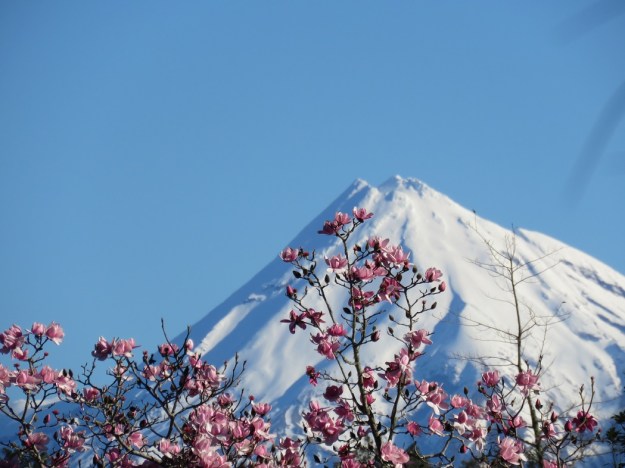
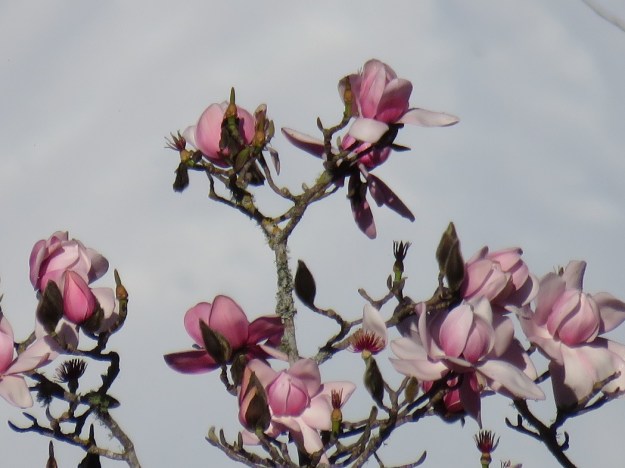 August – yes there is a lot of snow on our Mount Taranaki. All the better to frame our Magnolia campbellii. There is well over 30km between the maunga (as we call the mountain) and our tree but each year I get out with my camera to close up the gap, as viewed from the path down to the park.
 I gave September to the prunus, the flowering cherries. It is probably the campanulatas that are the showiest and they flower in August and I had already allocated that month to magnolias. But we grow quite a range of flowering cherries and this one is down in our wild North Garden, an area that we find particularly charming at this time of the year.
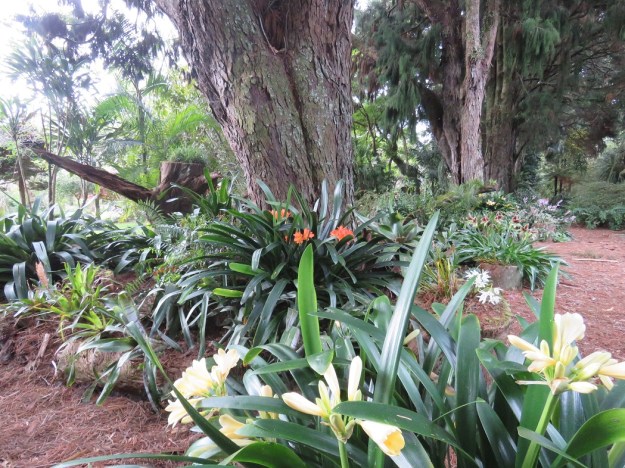 October is mid spring. And for October, I chose the clivias yellow, orange and red, seen here with Hippeastrum papilio and dendrobium orchids in the Rimu Avenue. As I selected photos, I realised I was leaning to what we might call our backbone flowering plants – the ones we have a-plenty. Not all of them. I had to skip the azaleas, the michelias, the campanulatas and the hydrangeas owing to my self-imposed restrictions of one per month.
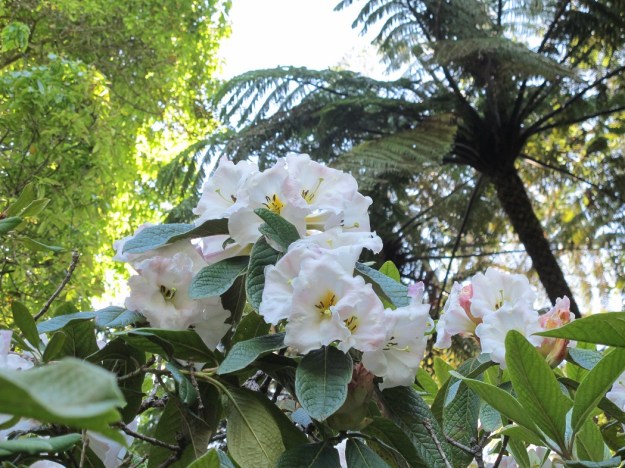 November brings us peak nuttallii and maddenii rhododendrons. The rhododendrons start in August, sometimes the first blooms as early as July, and flower well into December. But the beautiful nuttallis and maddeniis peak in November and are a source of great delight.
 Finally, December is marked by the Higo iris down in the meadow in our park. What prettier way to end the calendar year? And gardening being what gardening is, we start the cycle again with a new year. Best wishes to all readers for a happy and rewarding 2019.

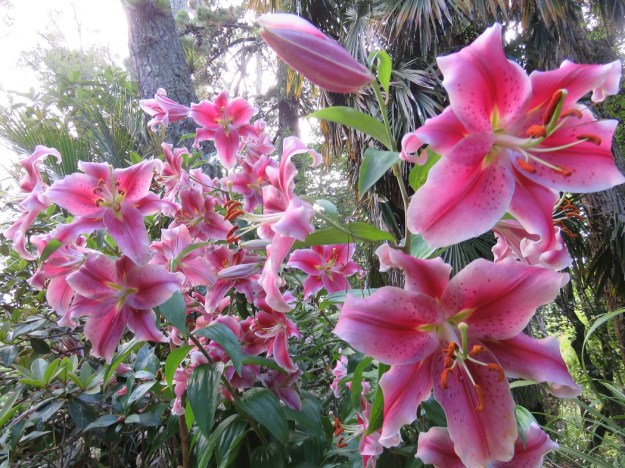 Auratum lily time is a delight, a joy even. Showy, over the top, flamboyant but glorious. And we are just entering these weeks of glory.
 We grow lilies in the better lit areas of woodland. They can get somewhat stretched reaching for the light so need more staking when not in full sun. I am rounding them up to limit the areas where we have them growing in order to make that seasonal staking task easier. But they certainly light up the woodland margins.
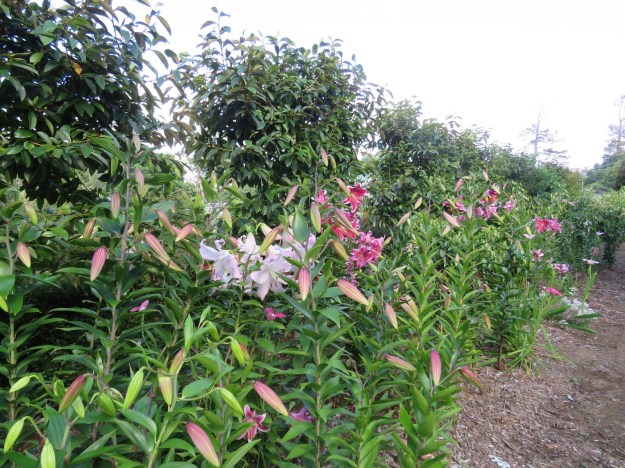 The new lily border has just opened its earliest flowers. These are the result of a determined and sustained effort to beat the pesky rabbits in spring. Last year, it was about even stevens with the rabbits taking close to half of them. This year, we are almost at 100% reaching for the sky. Blood and bone works as a deterrent. So much promise of lilies to open in the next week. You will just have to imagine the glory of a border getting on towards fifty square metres of auratum lilies. The fragrance matches the blooms – strong, sweet and almost overpowering. None of this would have been possible or affordable were it not for Mark who is skilled both in pollinating good parent plants and then raising the seed to planting-out grade. Nor indeed were it not for my efforts in getting the planting out done on this new border. Being full sun, there is not much staking required in this area.
 Almost all of ours are unnamed hybrids raised by father and son – first Felix and now Mark. Felix named a few that we used to sell but they are pretty mixed in the garden now. All are outward facing, not upward facing. That was one of the breeding aims. Upward facing lilies act as leaf and debris catchers and weather-mark badly.
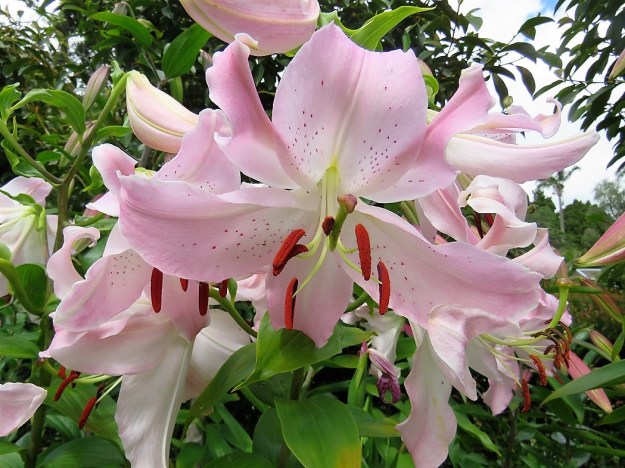 Of them all, I think these soft, marshmallow pink ones of Mark’s raising may be my favourite. Or it could be another one in a few days’ time.
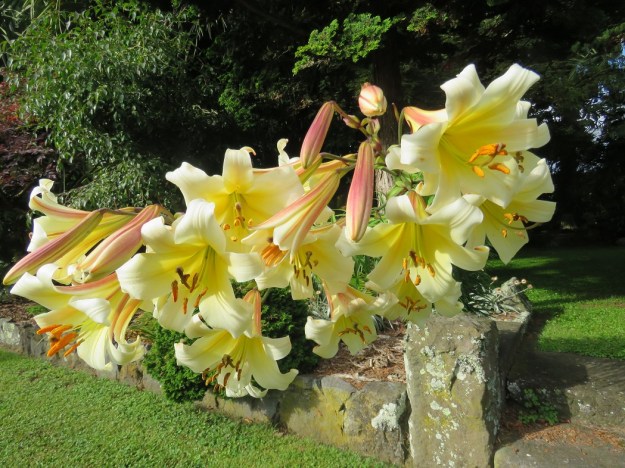 Finally, just in case there are any lily experts reading this: I assumed these trumpet lilies elsewhere in the garden are an unusual, honey-coloured L. regale. Mark assumed they were Aurelians, based on their finer foliage. Neither of us know where they came from so at this stage, we are assuming they are chance seedlings. They are very beautiful and I will move them to a prime spot in full sun but if anybody has more knowledge about lilies than we have, please tell us your theory on their likely classification.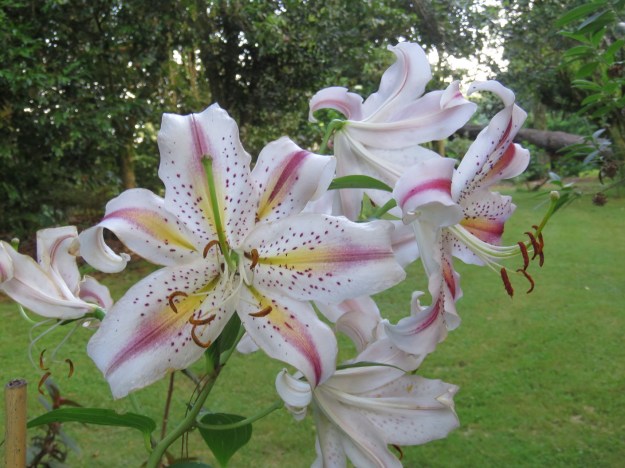

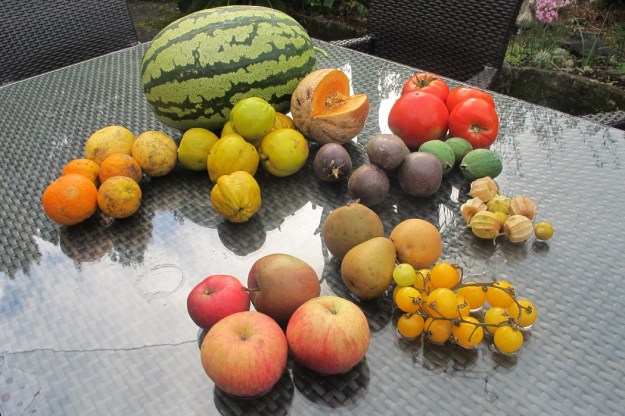
 That got me thinking. Do we eat twenty-five different fruit and veg week in and week out? The recommended daily intake of five plus is no issue, but that is servings of fruit and veg, not different types. We are large consumers of fresh fruit and vegetables but do we reach twenty-five different ones? When I say we eat a lot, we are maybe 90% vegetarian these days. Mark starts his day with avocado on toast, I have fresh fruit and muesli. Lunch is always a fresh fruit salad with five or six different fruits and Greek yoghurt. Dinner includes a fresh salad, a cooked green vegetable and a vegetable and carbs-based dish that contains protein. We can eat like this because we produce most of our own food, though I use the word ‘we’ in the royal sense. Mark grows the food crops. Were we buying all our food, I can’t imagine that the range of fruit and veg we eat would be anything near its current level. I blench at the thought of traversing the supermarket fresh produce section for the weekly shop and trying to select twenty-five different options. I mean, how many more of those resusable mesh produce bags would I need? (Answer: another nineteen).
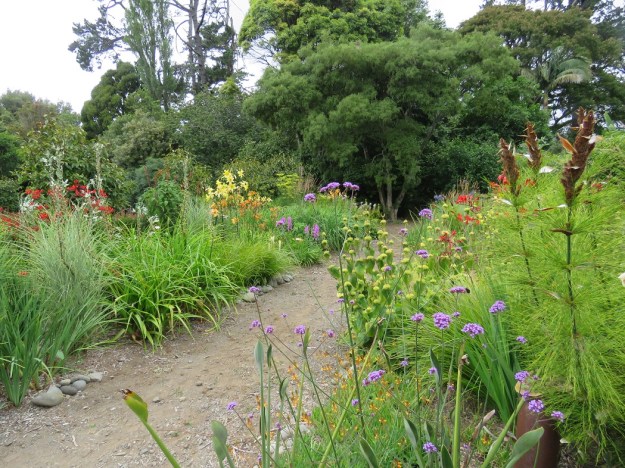
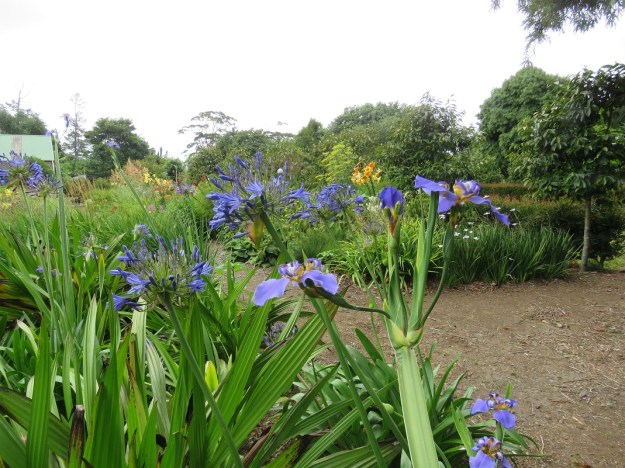 Gardening is usually a gentle activity in emotional terms. We may feel irritation, pleasure, satisfaction, disappointment or similar feelings. The feeling of sheer panic is probably largely limited to those gardening to deadlines with either an opening date for the public or a garden-based event. Occasionally, I feel real joy. I wrote about the
 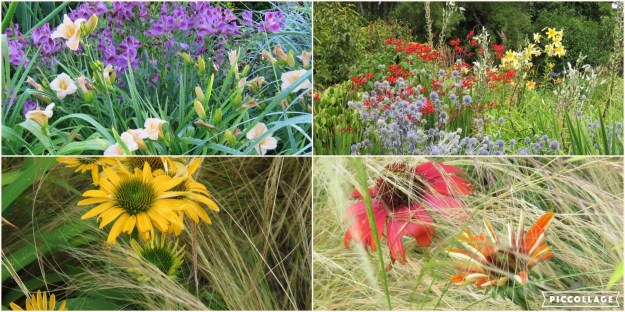 A decade on and I looked at my herbaceous borders this week, and my heart sang. “Yessss!” I thought. “We do actually have a summer garden at last.” A colleague and friend visited this week and was suitably gobsmacked. “When you said you wanted to do herbaceous borders,” he said, “I thought …” I can’t remember what he said he thought but it was along the ‘yeah nah. Unlikely. They’ll learn. It’ll never happen,’ sort of thing. It was very affirming to impress a professional colleague of similar experience level to us. These borders are now at what I call the ‘tweaking stage’. Altering the bits that don’t quite work. Were I more high-falutin’, I would describe this as ‘editing’ (the current term) or maybe fine tuning. But every day, these borders bring me great personal pleasure.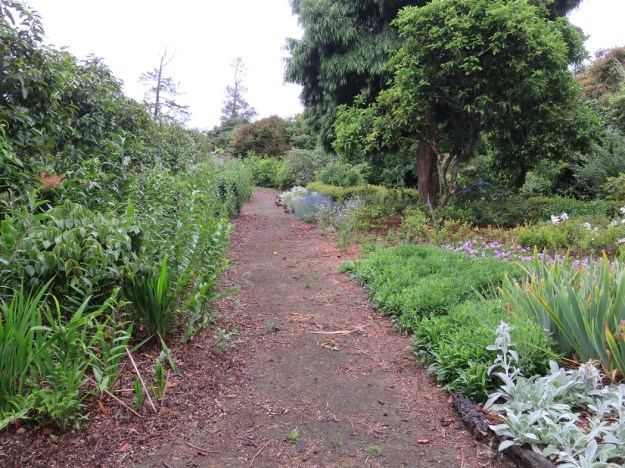
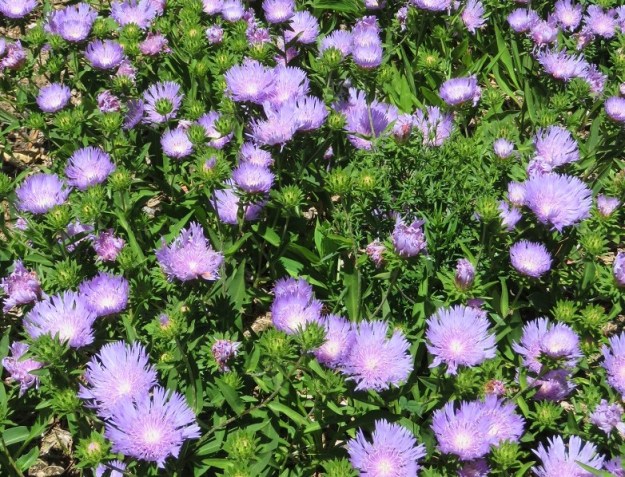
 Many of us covet those gorgeous big blue-lilac alliums that are seen widely in UK gardens. I was a bit shocked to find they usually treat them like tulips – disposable, one-season wonders. But then I looked at some bulb catalogues there and they are cheap as chips to buy. If we are paying anything up to $15 a bulb here, we are not going to be treating them as annuals. I decided this spring that the easy to grow blue brodiaeas – particularly Brodiaea ‘Queen Fabiola’ (also known as a tritelia) are not bad substitutes for we poor, colonial gardeners. I am drifting these bulbs along one side and very pretty they looked in spring with the white iberis. And they are perennial, not one-season wonders.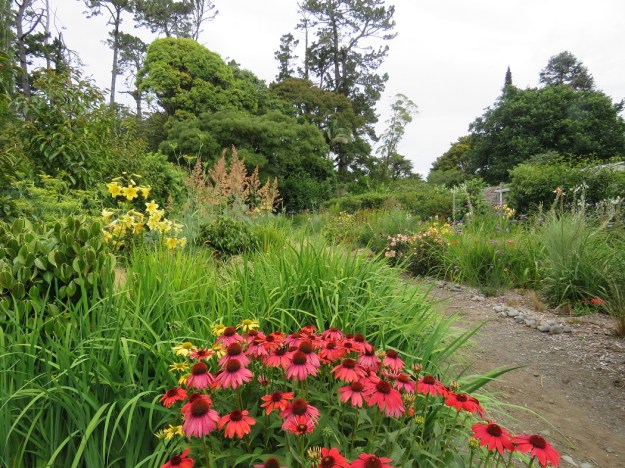
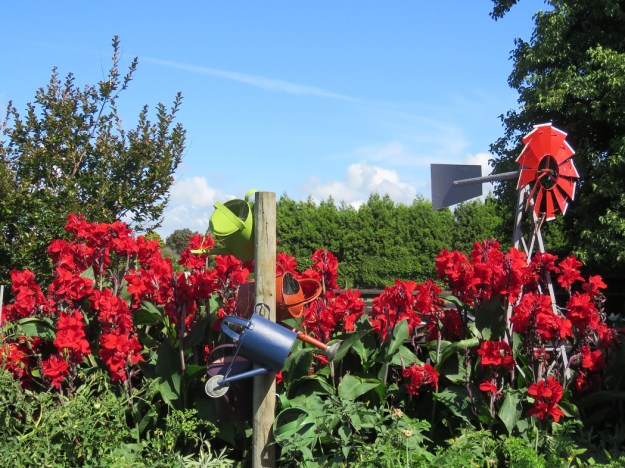 But the fact that I don’t want to grow them myself does not stop me from seeing their merits elsewhere. Down the road, so to speak – as in maybe 5km and a couple of road changes down the road – is a fine patch of red cannas that I admired all last summer each time I passed. They are very… bold. And undeniably cheerful. When passing in a car, they are bright enough to catch my eye every time and they do appear to have a long season in flower. Pat, who owns these, offered me some when I stopped to photograph them yesterday, but I declined. I get my pleasure from looking at them in her garden.
 If you are going to grow them, my advice would be to plant them in blocks of a single colour for maximum effect. I did not realise until I looked them up to get their species name that they are edible. My cursory study of them indicated that it is the tubers you eat, not the flowers. They are Canna indica, not lilies at all, but that is probably no surprise. Their widespread natural habitat takes in large parts of South and Central America, stretching up into the southern states of USA.
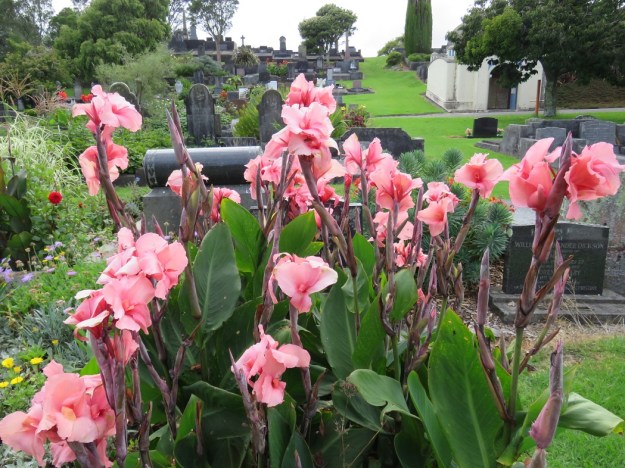 Cannas are a mainstay of the summer plantings at the Te Henui cemetery. Mercifully, Cemetery Sue who leads the team of volunteers who tend those gardens, has kept the colours separate.
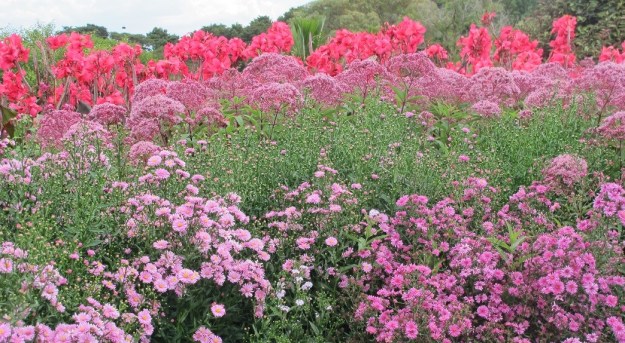 Auckland Regional Botanic Gardens also uses big plantings of cannas in their summer herbaceous displays. Some of these are better than others. The symphony in pink was, I thought, charming on the day. The garish stripes in primary colours, not so much.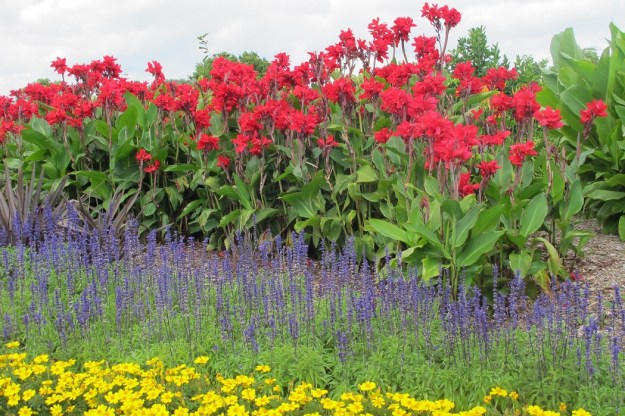
 Tikorangi The Jury Garden