
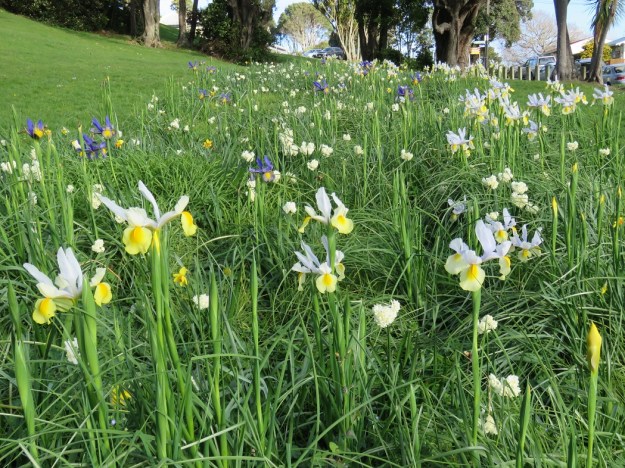
The bulb meadow on Marsland Hill
I headed back to see the bulb meadow in town that I wrote about a fortnight ago to see how it was evolving. My friend Susan had told me that this and another beside the race course opposite New Plymouth Boys High School had both been planted by Fiesta Bulbs about four years ago. The first year, she said, they were absolutely glorious. The second year, there was so little flowering that she thought ‘well that was a one season wonder’. But now they are at least staging some repeat blooming .

Where purple meets yellow – I really don’t like those murky brown tones

The clear blue that was also used is my preference
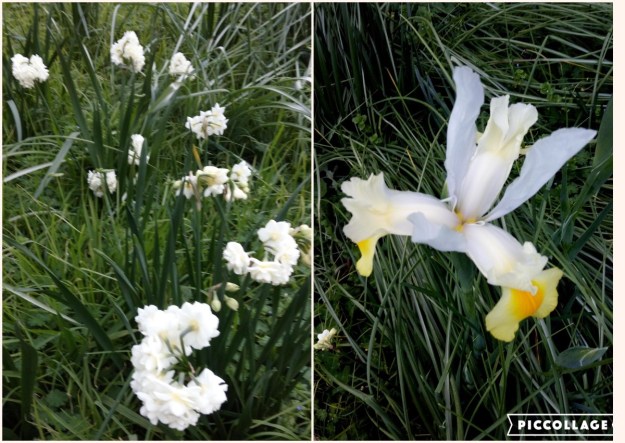
The Marsland Hill planting is being carried by the Dutch iris. They are simply splendid and I think I need more of these easy-care bulbs to carry some of our own larger scale meadow plantings. I still particularly dislike the purple and yellow variety with the brown tones (sorry, pcsecretary who left a comment disagreeing with this assessment but at least I found out that you should be able to source it from Fiesta Bulbs, if you live in NZ) but there was also a clearer blue one being used and the pastel variety didn’t look so anaemic with many more of it in flower. So a big ups to the Dutch iris.

Too much leafage! Poor light conditions but you can see what I mean in the planting by the racecourse
But the daffodils – too much leafage. This was even more the case on the racecourse plantings where fewer Dutch iris were used. This is why Mark has never been a daffy fan when it comes to garden plants. Dwarf narcissi – yes, in abundance. Big full-on daffodils, no. The foliage swamps them and the flower heads are too heavy to hold up well in the spring wind and rain.
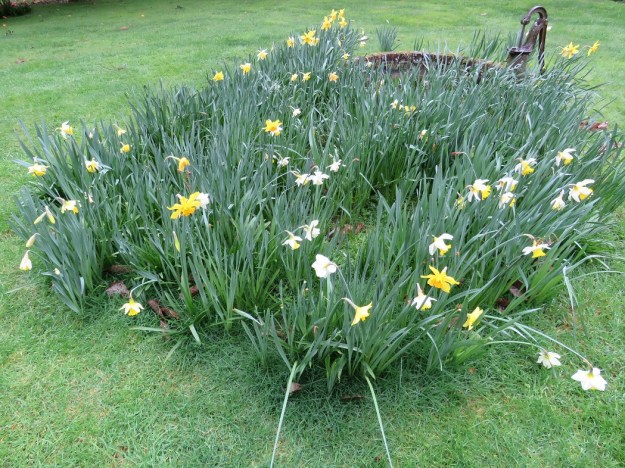
Pretty enough at home but still too high a ratio of foliage to flower. And the outer blooms all fall over in the weather.
I came home and looked at my patch on the back lawn and thought yes, there is too much foliage there for the number of flowers. And I don’t think the ratio of blooms to leafage is going to get better.
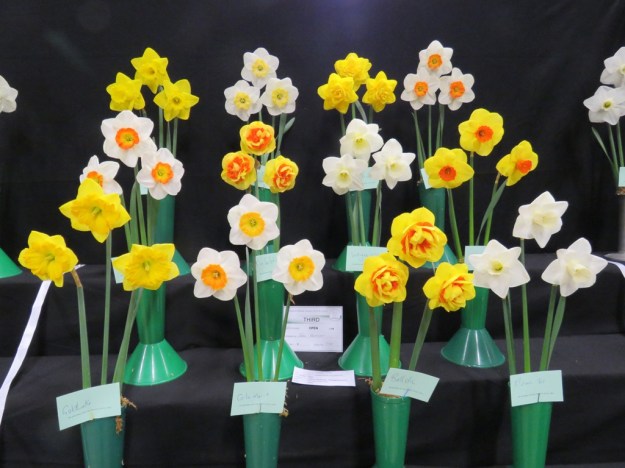
Big daffs are best as show blooms and cut flowers
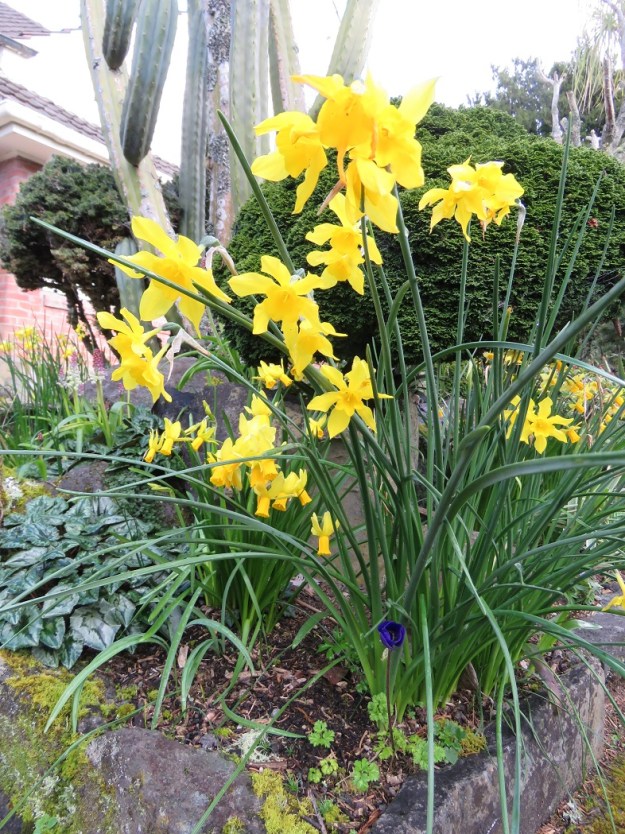
Narcissus x odorus never drowns in its foliage but its season in bloom is brief
The big daffodils are better as show blooms and cut flowers. But as meadow plants, not so much. I looked again at the narcissi we are growing at home. Narcissus x odorus (N. jonquilla x N. pseudonarcissus) is gorgeous, fragrant, does not have a lot of foliage to drown in but its flowering season is brief. ‘Tête-à-tête’ (I assume it is meant to have the French accents) is a great performer which keeps on blooming well even when left undisturbed for many years – most narcissi respond brilliantly to being lifted, divided and replanted but stop flowering as they get congested. Ditto ‘Twilight’ and most of the cyclamineus types we grow. Bulbocodiums are not so good for meadows because you can’t pick the foliage from grass when it is coming through.
I rather think that meadows may be better with alternative bulbs like ixias, strong growing lachenalias, sparaxis and tritonias. And Dutch iris. Daffs are not compulsory.

Maybe a N. pseudonarcissus hybrid rather than a straight species selection
A Facebook friend posted a photo of her double daffodil which was most likely a form of the wild N. pseudonarcissus. I asked Mark if this one flowering in woodland conditions here was too. He didn’t know on that one but directed me down to the old orchard area established by his great grandmother, where the old classic is growing. Okay, there weren’t many flowers but that patch has been there, undisturbed, for anything up to 140 years, which is quite amazing really. It is the common old double that is often found growing wild alongside snowflakes (leucojums) on the sites of original early settler cottages. N. pseudonarcissus is a wild daffodil throughout the UK and Europe, more commonly single but the double has long been prized as a garden plant. It has the same problem of the weight of the head dragging the flower down but at least this one has some personal history for us.
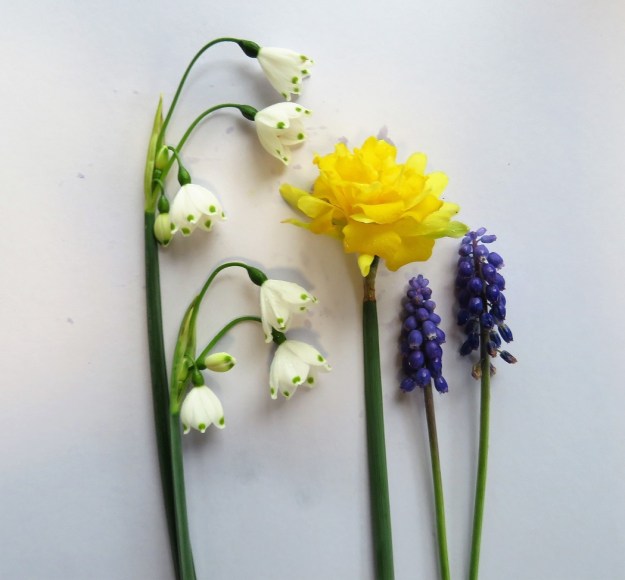
Great grandmother’s flowers – snowflake (leucojum, not snowdrop), double daffodil (wild N. pseudonarcissus) and grape hyacinth (muscari, not bluebell)
The upshot of all this is that it is entirely understandable that, in this day and age, Council would contract a commercial bulb supplier to come in and plant a designated area. But if you want to establish a bulb meadow at home that has greater longevity, there is no substitute for spending some time observing and researching. And shun selections that are best as cut flowers – unless they are Dutch iris which seem to be able to fill both roles.


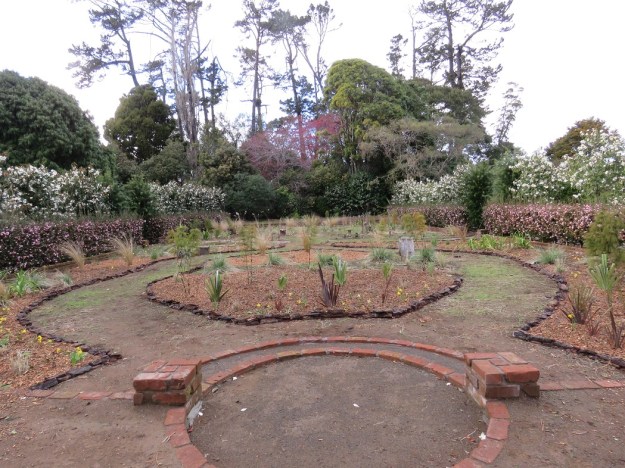
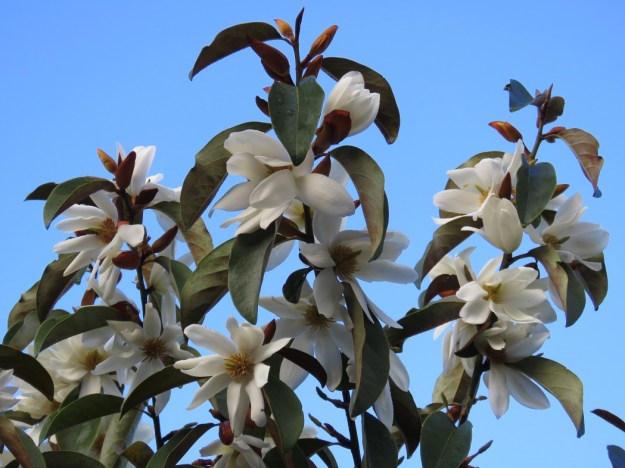
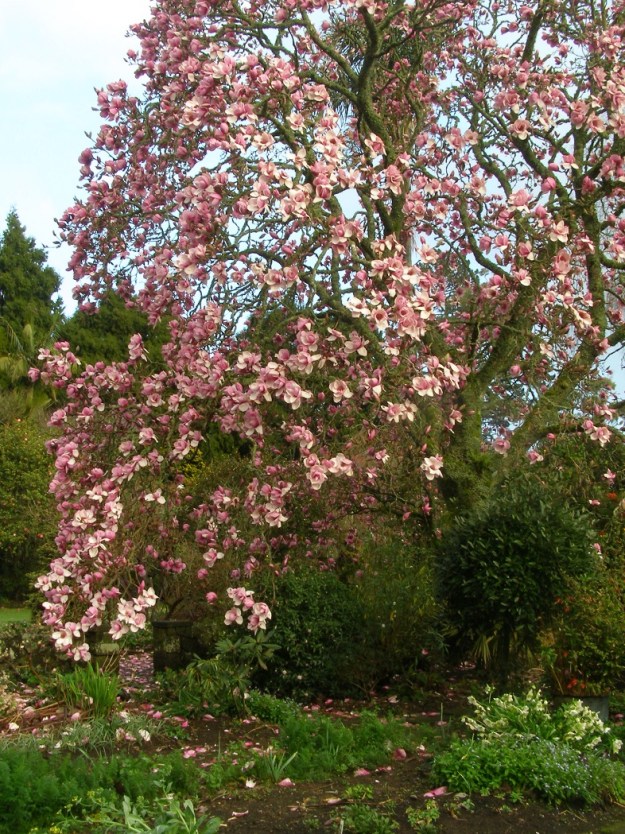
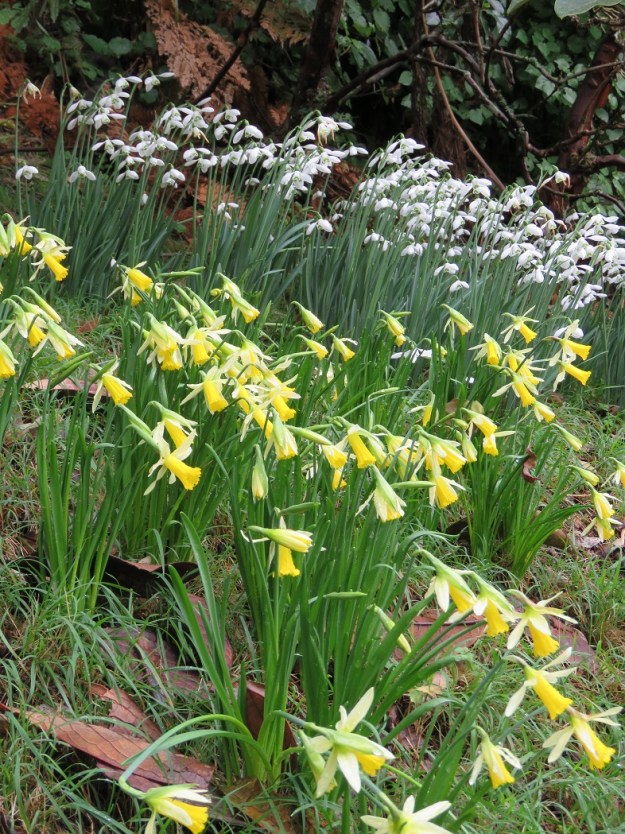
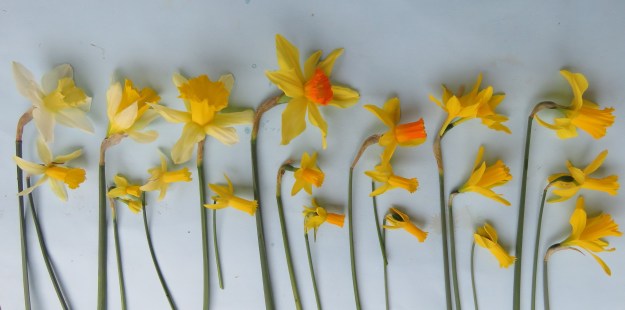 The snowdrop season is all but over already. It is charming but brief. The narcissi, however, have a longer season, at least in part because we can grow a much wider range of species and hybrids. Yesterday felt like a winter’s day – the last gasp of winter, I hope – so I headed out to pick one each of the many different varieties in flower. We don’t grow many of the larger ones at all, preferring the charm of the littlies, the dwarf ones. Bigger may be better when it comes to magnolias – at least in our eyes – but daintiness wins with the narcissi. Most of these are named varieties though Mark is also raising cyclamineus seedlings to build up numbers for planting out and to get some seedling variation within them. The cyclamineus are the ones where the petal skirt sweeps back, sometimes completely reflexed, giving them a slightly startled appearance. He was intending to plant many of these down in the park but hadn’t got around to it so offered them to me for the new grass garden.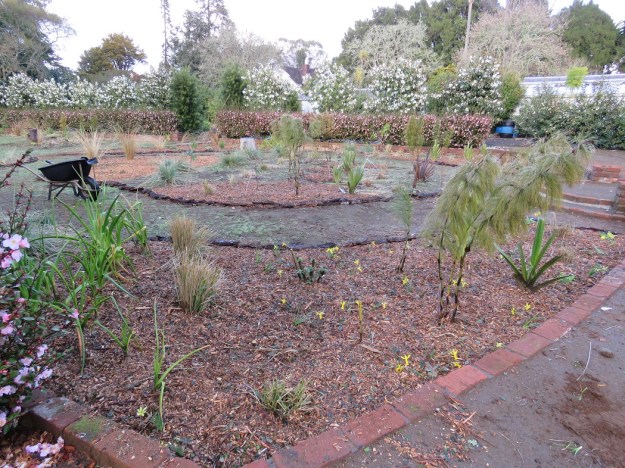

 The paperwhite narcissi are gorgeous and deliciously fragrant but they aren’t exactly mass flowering in comparison the amount of foliage. I think they may be interplanted with other varieties that will come into bloom later which is good planning. But if that is the case, the paperwhites could have been concentrated in maybe four separate clumps with others planted between. It would give more visual oomph.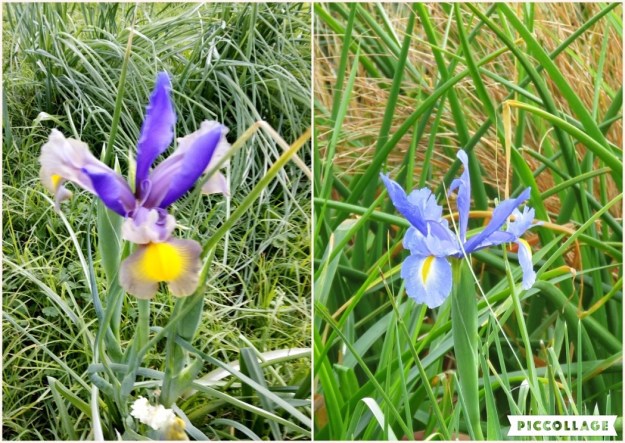
 I feel I am learning constantly so I enjoy analysing what I think works and doesn’t when it comes to plantings. And while this planting was sufficiently delightful to make me stop and turn the car around, I think it would have worked better with concentrated patches of paperwhite narcissi interplanted with purer blue Dutch iris. Now I am going to have to go back in the next few weeks to see what comes into bloom next and how it changes through the spring. I will take my good camera with me. And I do hope that rogue flower pickers leave it alone so we can all enjoy it.



 Tikorangi The Jury Garden