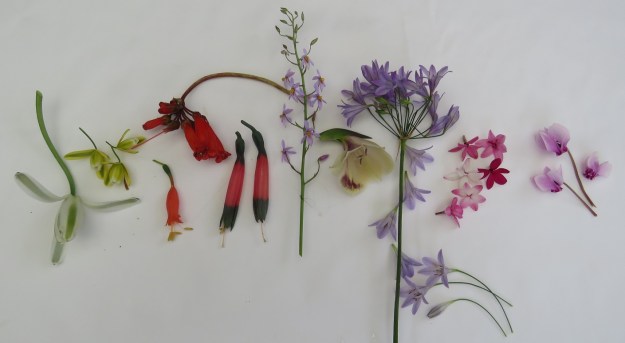
 “Good thing we are not drying out too much,” Mark observed wryly as we faced another day of rain. This is a variant on his usual “Good news! The drought has broken”. While technically summer, our very wet spring continues. I entertained myself by doing a bit of a stocktake of bulbs in flower in mid-December and assembling one of my flower boards.
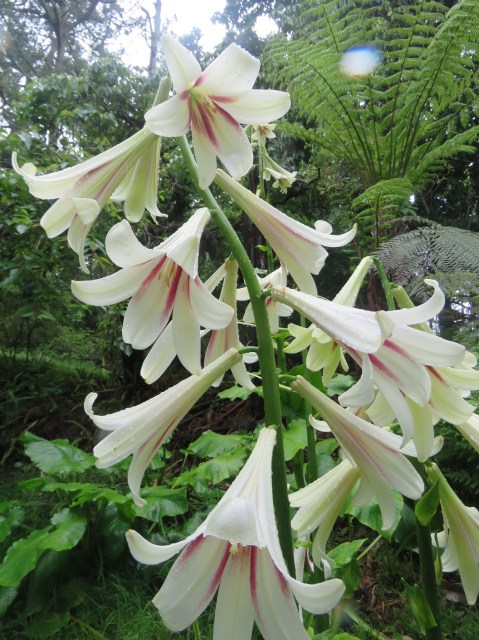
Cardiocrinum giganteum
December is not notable for peak bulb season. Not at all. Though if you add in corms and tubers, the census would include such things as irises and dahlias, some of which are in flower now. In the big growers, the Cardiocrinum giganteum plants are very handsome indeed and have finally naturalised themselves, gently seeding down. We respect their wishes and generally accommodate them where they grow. It is, after all, reputed to be a seven year wait to get the flowering spike and they are pretty undemanding during that time. The flower spikes are three or four metres tall with large, fragrant trumpets so it is worth the wait.
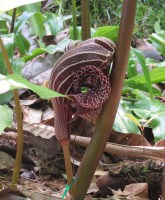
Arisaema dahaiense

Arisaema candidissimum
I write about the Arisaema dahaiense every year which is an indication that it has settled in well here and it keeps reappearing. The same cannot be said for all arisaema species. It is a very curious bloom indeed. Also opening its first blooms this week is the prettier A. candidissum – the summer white, often with soft pink striping.
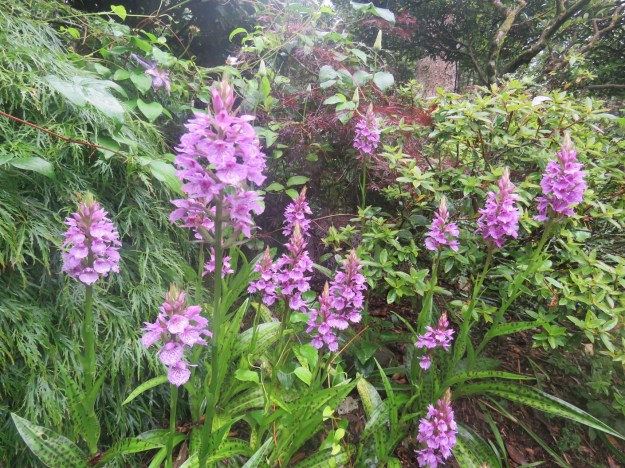
Dactylorhiza maculata
Less well known in this country (though common enough in its homelands of northern Europe and the UK) is the ground orchid Dactylorhiza maculata, which is very charming, undemanding and flowers well until the heat of summer knocks it back.

Lilium martagon
It hasn’t been so easy to get Lilium martagon established. I think it wants a colder, drier winter and probably a drier summer than we can offer it so it has been satisfying to get it growing well in one area of the garden. January will bring us the OTT auratum lilies in abundance, but at the moment it is the pretty charm of the martagons that brings us pleasure.
And so to the smaller flowered bulbs.
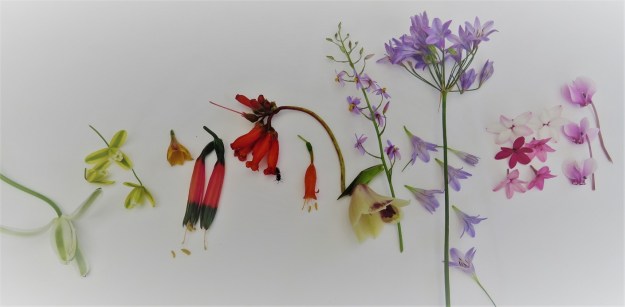 From left to right, we have two albucas (more shortly), Habranthus probably andersonii, Phaedranassa cinerea, Gesneria cardinalis, Stenomesson miniatum, Cyanella capensis, Gladiolus papilio, Tritelia laxa may be ‘Queen Fabiola’, the trusty and undemanding rhodohypoxis and, just to confound, the first blooms on Cyclamen hederafolium – that harbinger of autumn. Inevitably, I have since found additional bulbs in flower that I failed to add to this collection but they can remain absent from this roll call. I have written up most of those photographed over the years – hence the blue links. I gathered the cyanella seed some years ago and raised it in pots before replanting more extensively in the rockery where it is now a charming haze of blue over a long period, without threatening the wellbeing of other bulbs.
The tritelia – we used to think it was a brodiaea – is an American wildflower bulb, though named for the queen of Belgium, which is curious. We had assorted pots of it kicking around the nursery for years until I gathered them all up and tucked them in around the garden. This year, they are looking particularly pretty and are probably our dominant flowering bulb at this time.
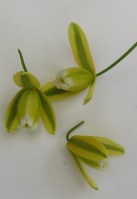
Not A. canadensis as we and many other gardeners thought
About the albucas … help! We have always known the smaller yellow albuca as A. canadensis and it has long been Mark’s favoured example of the folly of allowing the first name bestowed upon a plant to remain in perpetuity, even when it is inaccurate and a mistake. Canadensis means it comes from Canada but it doesn’t. Albucas are another South African genus. Now it appears that it is not Albuca canadensis at all but is more likely to be A. flaccida instead. We are by no means alone in having had it under the wrong name, but we certainly perpetuated the error by selling it under that name in times gone by.
The bigger growing white with green stripes is more of a mystery. Indeed, I am sure we thought it was an ornithogalum for a while so maybe it is one of the varieties that has been transferred from that genus to the other. It could be that it is A. nelsonii but equally there are other albuca species that look similar. If anybody is able to assist us with unravelling its identification, that would be helpful. It may be a matter of knowing which albuca species we have in this country. In our conditions, it is evergreen and has a very large bulb with papery covering, generally flowering early to mid-summer.
Big picture gardening looks great in photographs and can please the eye. Bulbs more often give the small picture detail which delights the curious gardener and adds many more layers of interest.

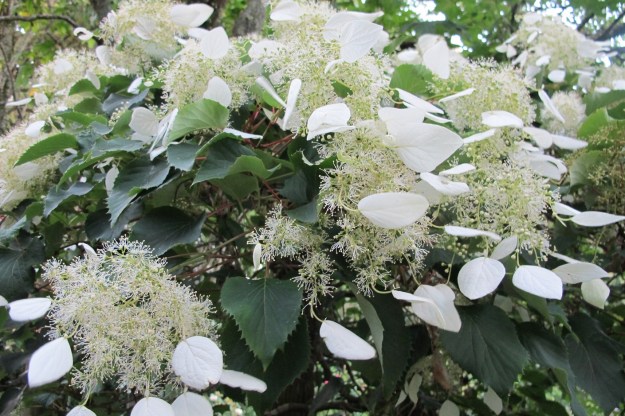 Yes, Schizophragma hydrangeoides looks like a climbing hydrangea but it is not the common climber which is Hydrangea petiolaris. This one comes from Japan and we prefer it to the usual form despite its difficult name. It is a close relative and a member of the same family but one step further back on the plant hierarchy from species to genus to family. Planted side by side, the schizophragma (pronounced skitsofragma or shyzofragma, whichever you prefer) is more floriferous and has significantly larger flower heads which seem to dance on the vine. This may be because its larger, winged petals (technically bracts, not petals) are held singly whereas H. petiolaris has its smaller bracts grouped in four, like a little flower all on its own. The schizophrama is self-clinging and relatively slow growing so it doesn’t take over and swamp neighbouring plants. It needs something to climb up, however. If left to ramble at ground level, it doesn’t seem to flower though it does layer its way along so you can get more plants from it by this strategy.
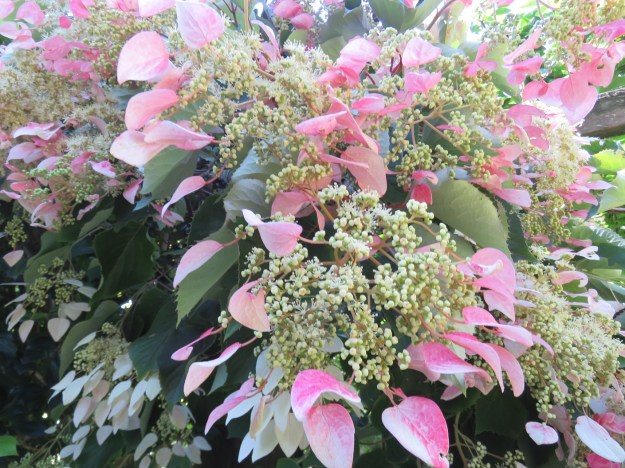 The pink form is even more unusual. This fact was often not appreciated in the days when we used to sell plants. I recall too many customers who were at best ABP – Anything But Pink, at worst IOBW – I Only Buy White (flowers). Such self-imposed rules can certainly limit appreciation.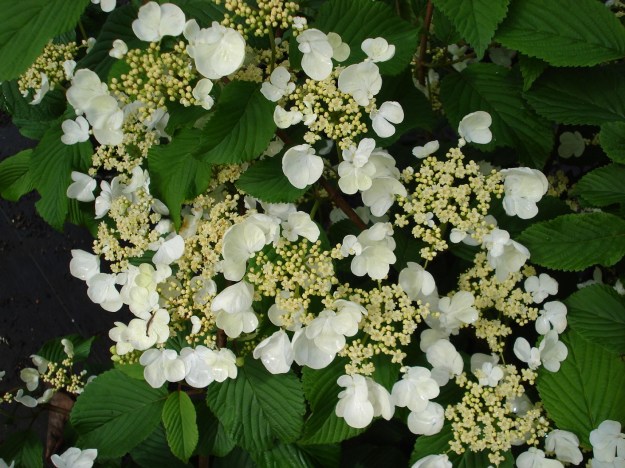

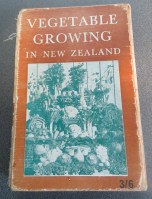 The biochemist and the synthetic organic chemist were more amused than anything else. They could not see any reason why gin should be more efficacious than any other form of alcohol. But none of us really wanted to sacrifice the Christmas gin to carry out field trials. Mark recalled the routine use of kerosene for weed control on carrots in his father’s day. When we arrived home, he found me the reference in the McPherson book, “Vegetable Growing in New Zealand”. It is so old, it doesn’t even have a date on it but the publisher was Whitcombe and Tombs Limited and it is a few decades or more since I have seen that name.
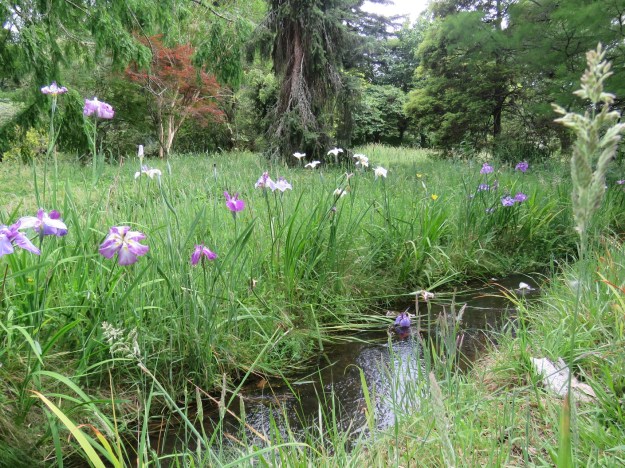
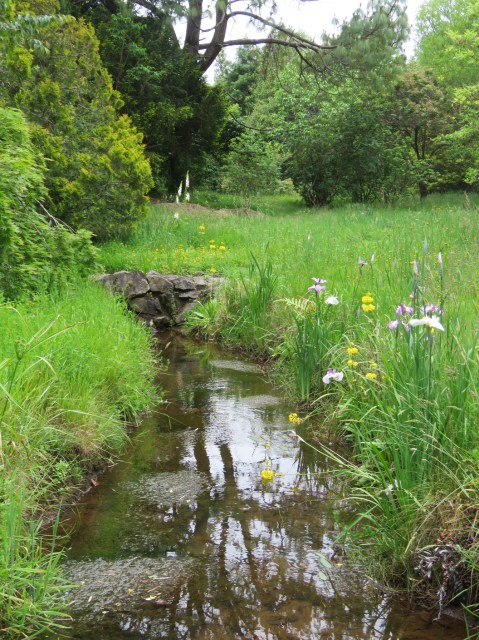


 December was memorable last year. Finally, we achieved the water meadow effect we have been striving for in our park. This was thanks to the iris and to our learning how to manage long grass in ways other than cutting it.
 There are anything up to 300 different species of iris but the one that comes to mind most frequently is the bearded iris. These are ephemeral delights in our climate with its high rainfall, high humidity and fertile soils, so a joy in bloom in October but over all too soon. The so-called Dutch iris flower earlier in spring. These are hybrids of 3 lesser known species, often somewhat derided, seen as a little vulgar even, but they can look charming enough in the right setting and are easy to grow.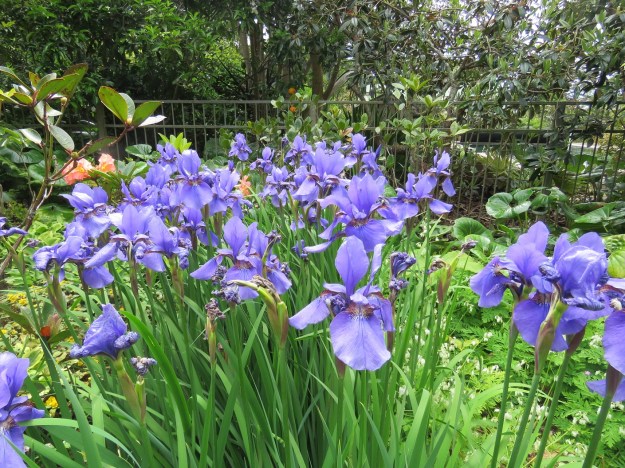
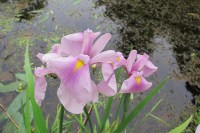 In early spring this year, I spent a few muddy days down by our stream,
 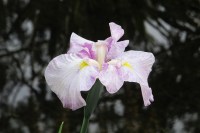 potential to grow and we didn’t think that establishing mats of flag iris all the way to the ocean was a good reflection on us. In digging them out, I can tell you the dense mat they form is not unlike wild ginger. I replaced them with a mix of Higos and sibiricans which may spread by seed but don’t form the choking, solid mats.
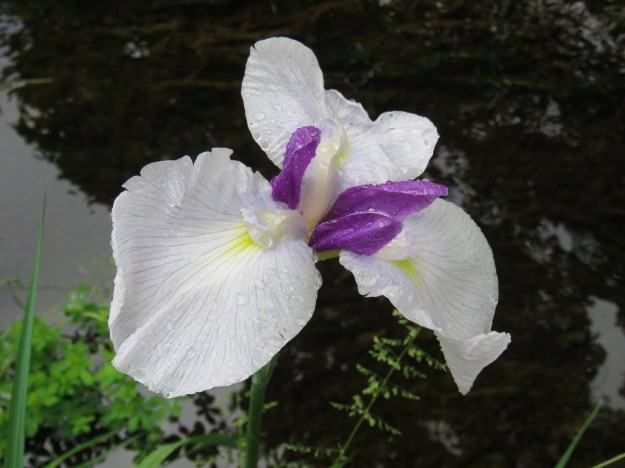
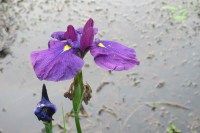 Every time the Higos bloom, we think most kindly of Auckland plantsman, Terry Hatch. Years ago, he gave Mark a tray of germinating seedlings which were reputedly from wild gathered seed. Mark had tried growing Higos earlier but without success. They are not a species, but a group of Japanese iris bred extensively over 500 years in the quest for the single perfect bloom to bring indoors, in that wonderful
 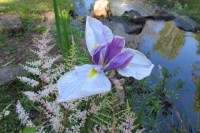 pared-back style perfected in Japan. The requirements of a garden plant are very different and those highly refined hybrids did not perform. The seedlings from Terry – about 700 of them in the end – gave us a huge range in colour, size and style and they have settled in most satisfyingly by the stream. By this I mean they are performing very well year after year, with no attention at all but without any indication of becoming a weed. I tried some in a perennial border and they grew and flowered well, but their leaves are very long and tend to swamp other plants in the months before they go dormant.
 What we love about the water iris is the contribution they make to a softer-edged, naturalistic style of gardening which we increasingly favour. A return to a more romantic garden style. It took my breath away last December. I am looking forward to a repeat this month.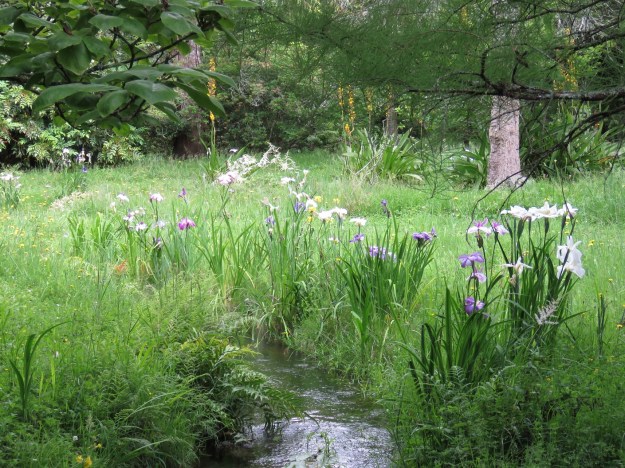
 First published in the December issue of New Zealand Gardener and reprinted here with their permission.
  Tikorangi The Jury Garden