Tag Archives: Abbie Jury

All the reds

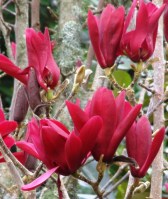
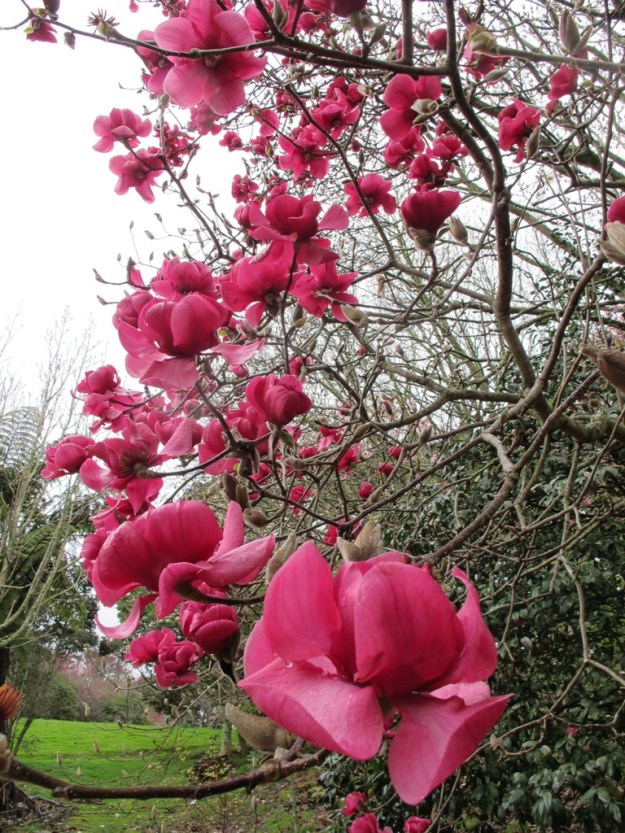
Magnolia 'Felix Jury'

Magnolia ‘Felix Jury’

August belongs to the red magnolias here. They start flowering in July for us but peak this month with September leaning more to the pinks, whites and yellows. While others may delight in one or two red magnolias, we get them en masse. For every named variety, there are many sister seedlings that will never be released but keep on growing and flowering each year. Magnolia trees just get bigger and better as the years go by so the annual display keeps on getting more spectacular.
Magnolia liliiflora 'Nigra'

Magnolia liliiflora ‘Nigra’

When Felix Jury, transferred the pollen of Magnolia ‘Lanarth’ onto Magnolia liliiflora ‘Nigra’ in the early 1960s, I doubt very much that he contemplated a significant breakthrough in the international world of magnolias which would bring fame – though not fortune. He just wanted to see if he could get to large red flowers. Lanarth (technically M. campbellii var. mollicomata ‘Lanarth’) has lovely flower form and at its best is a magnificent purple on a handsome tree. M. liliiflora ‘Nigra’ can have good red colour but with small flowers on a shrubby, spreading plant, it is not showy.
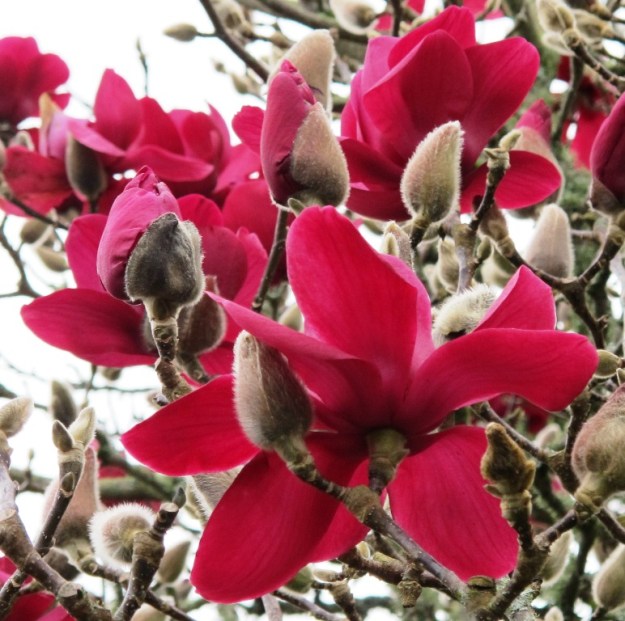
Magnolia 'Vulcan'

Magnolia ‘Vulcan’

The best of the progeny he named Magnolia ‘Vulcan’ and for the next decades, it stood proudly on its own as a major step along the way to red magnolias. Sure, it is not a pure red and the later season flowers fade out to a somewhat murky purple. There is always room for improvement but Felix laid the foundations for what is following now and he showed that a determined, self-taught, hobby plantsman at the bottom of the world could make a major contribution to the international magnolia scene.
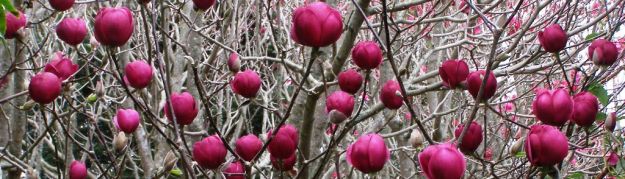
Magnolia 'Black Tulip'

Magnolia ‘Black Tulip’

Magnolia 'Burgundy Star'

Magnolia ‘Burgundy Star’

It is perhaps not widely recognised in this country that New Zealand has led the way with red magnolias Our spring display is arguably the best in the world. For reasons yet to be determined, we get deeper and stronger colours here, certainly than in the UK and Europe. There, they are accustomed to white, pink and now yellow magnolias, but the impact of the red types that are now relatively common here never fails to stun international visitors who come in spring. Felix Jury paved the way with Vulcan. His youngest son, Mark – the man to whom I have been married for more decades than we like to tally – continued building on this foundation, as has fellow Taranaki magnolia breeder, Vance Hooper.

Mark’s quest is a pure red magnolia, losing the purple tones that dog the earlier hybrids. He is getting very close – not quite there yet, but close enough to think that it is achievable. Like his father before him, Mark prefers large flowers with solid colour both inside and outside the petals (technically tepals).
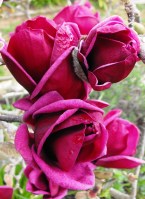
Magnolia 'Genie'

Magnolia ‘Genie’

Vance Hooper is going down a slightly different track and shows a liking for bicoloured flowers. In magnolias this often means a paler inner petal. He is also actively selecting for smaller growing trees which are floriferous over a long period of time, often with smaller flowers. His best known red cultivar to date is Magnolia Genie but he too has a whole range of red seedlings under observation and a number of other named varieties already released.

Felix named one purple – Apollo – and one into the red tones, Vulcan. Mark has named only three reds so far – Black Tulip, Burgundy Star and Felix Jury. Of these, Burgundy Star is arguably the reddest but it is the one he named for his father that brings us greatest pleasure. As a juvenile plant, it started off with OTT giant pink blooms but as it matured, the colour deepened and we now get enormous red flowers – though I admit they fade out to pink. This magnolia represents what Felix himself was trying to get to – a rich coloured, very large bloom of the Iolanthe-type.

It is a source of quiet satisfaction to us that Felix lived long enough to see his son achieve this outcome and it was for this reason that Mark named it for his father. We were most gratified to learn that it has been given an Award of Garden Merit by Britain’s Royal Horticultural Society.

I have never forgotten the customer who came in to buy a magnolia some years ago. She didn’t want a red one, was sick of seeing them – too common, she declared. No, she wanted a white one. I think I remained steadfastly polite but as our forest of colour blooms each August, I rememer her blissful ignorance.

First published in the August issue of New Zealand Gardener.
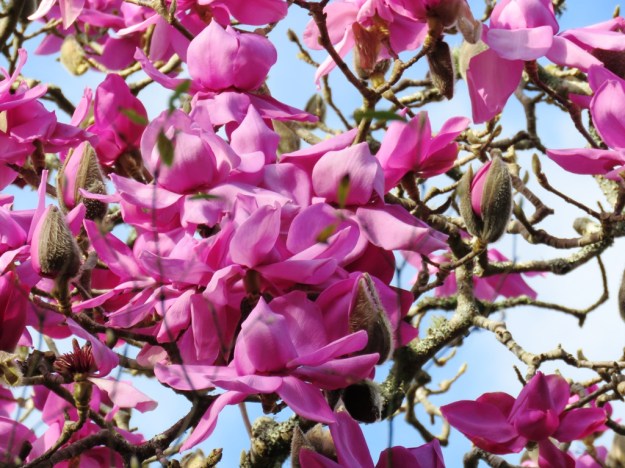
'Lanarth" is in full flower and looking particularly fine this week

‘Lanarth” is in full flower and looking particularly fine this week
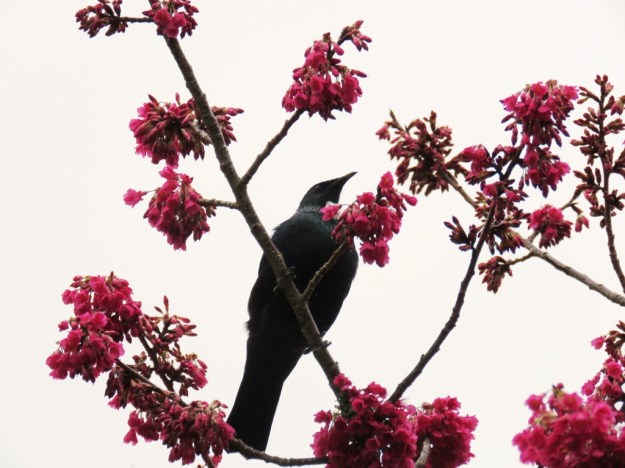
Tui, kereru and korimako

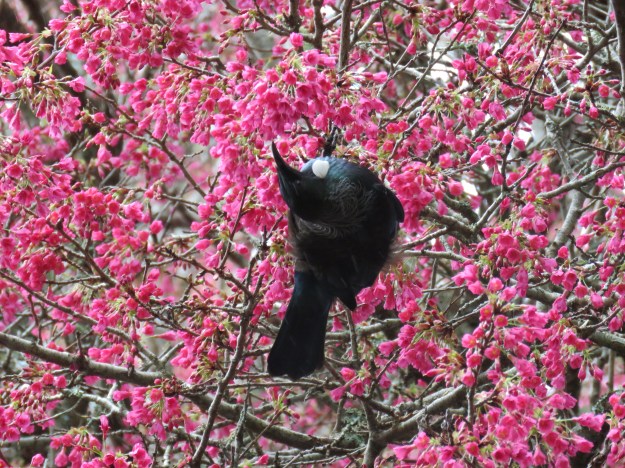
Tui in the cherry tree

Tui in the cherry tree

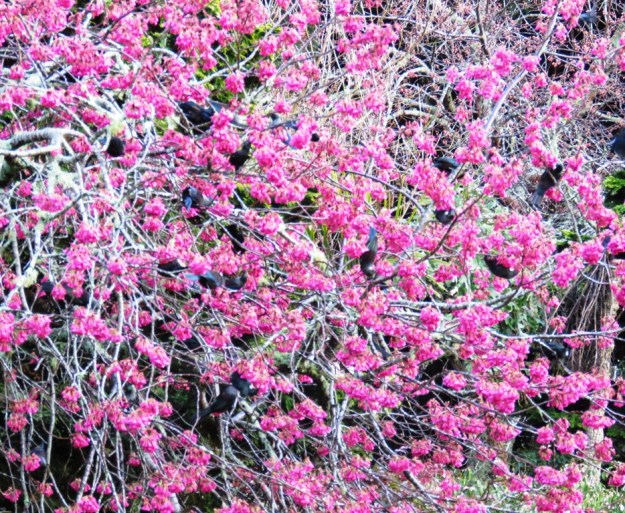
It is the time of the year when I spend a great deal of time trying to get the perfect images of the scores of tui we have feeding in the Prunus campanulata. Because we have a number of trees, the birds migrate between them but never sit still long enough for us to count.
Too many to count. All the black shadows are tui.

Too many to count. All the black shadows are tui.

These early flowering cherry trees from Taiwan get a mixed reception in New Zealand. There is no doubt that our native birds find them hugely appealing. In an environment filled with food sources, it is the campanulatas to which they head en masse. But, and it is a huge but, most campanulatas set prodigious amounts of seed and because these form as little cherries, tasty to our fruit-eating native birds, they are spread far and wide. Indeed, seedling cherries are one of the worst weeds we have in our own garden and it takes constant management to stop the spread. So bad is it that the councils further north have banned seeding campanulata varieties and some folk would like to see total eradication across the country.

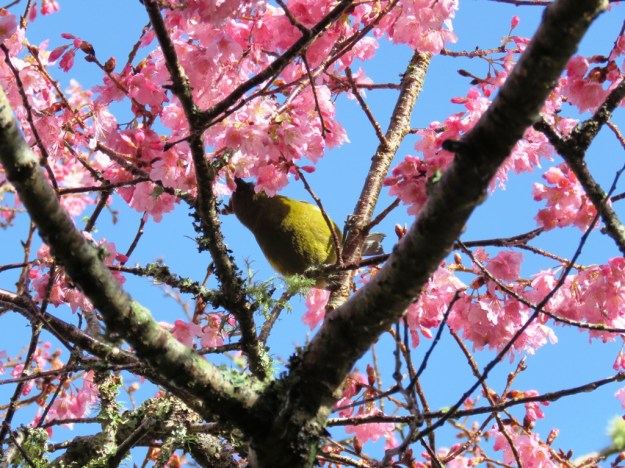
Shy korimako in Prunus Pink Clouds. It was soon banished by the bullying tui

Shy korimako in Prunus Pink Clouds. It was soon banished by the bullying tui

We would be very sorry to see all campanulatas banned but certainly the future lies in sterile selections. Sterility means that they don’t set seed so they won’t spread but we get to keep the mass blooming and the tui – and indeed korimako, our shy bellbirds – get to keep their favourite food source. Pink Clouds and Mimosa are both sterile varieties which date back to the work Felix Jury did on them, but the sugar pink colour is often less favoured to the cerises and reds. Unfortunately, the good compact growing, dark flowered variety named for Felix by Duncan and Davies – Prunus Felix Jury – is not sterile.

Acrobatic tui in a campanulata that is sterile but much too large for most gardens

Acrobatic tui in a campanulata that is sterile but much too large for most gardens

We have a sterile cerise red which is a great performer but at over 12 metres tall and 10 metres wide, it is far too large for domestic gardens. But there is hope. Mark has identified one which is sterile, has good colour and does not look as if it will get anywhere near as large.

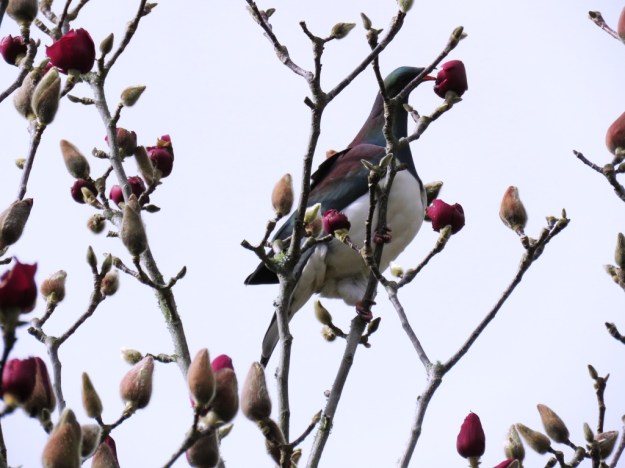
Kereru feasting on Magnolia Vulcan buds

Kereru feasting on Magnolia Vulcan buds

“Now look ‘ere, Mr and Mrs Kereru, we need to have words about this latest taste treat you have found. This just won’t do at all. There is plenty of other food here for you but magnolia buds are off limits, especially the first flowers opening on Magnolia Vulcan.”

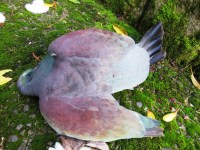
Poor kereru died after flying into a window

Poor kereru died after flying into a window

I would make jokes about Mr and Mrs Kereru dicing with death on this latest escapade, but some sensitive soul would take me seriously. Kereru are our large native wood pigeon and were a valued food source for Maori in times past. But they are very slow breeders and are suffering from habitat loss so are now totally protected. 056There has been a bit of a scandal recently about kereru being served as part of a traditional feast – did the Parliamentarians know they were eating kereru? – so it is poor form to even make jokes about eating them. Besides, even when a beautiful plump specimen died before my eyes after flying into one of our house windows, we could not bring ourselves to try cooking it. Instead we bought window decals from Bird Rescue to try and prevent such a thing happening again.
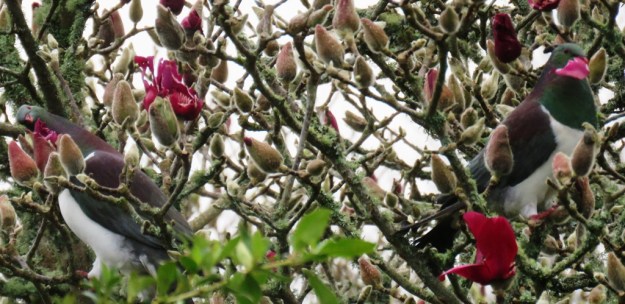
Apparently Vulcan scores highly on the kereru taste test

Apparently Vulcan scores highly on the kereru taste test

Tikorangi Notes: August 4, 2015. Spring flowers, Franchi seeds, a new spade and the Magnolia and the Cross

Narcissus Peeping Tom in golden light

Narcissus Peeping Tom in golden light

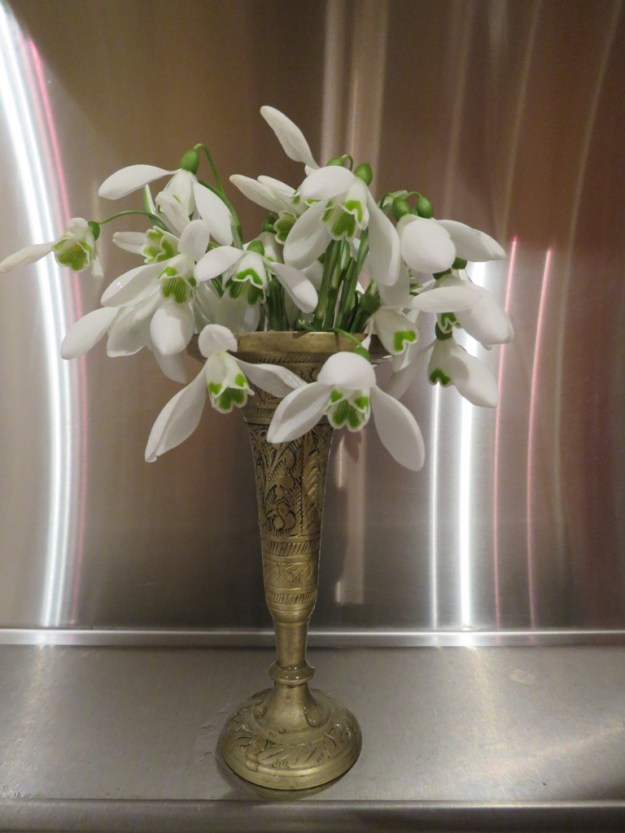
With heavy rain forecast over the next few days, I picked some of the spring bulbs. The light was fading as I brought them indoors,  but I like the stainless steel backdrop of the splashback to our stove and I had fun photographing the flowers both in the general background light of the kitchen and in the shafts of golden light, which, believe or not, emanate from the spotlights on the range hood above. If you are on Facebook, there is a fuller album of them on our Facebook garden page. 

Galanthus S Arnott in silver light

Galanthus S Arnott in silver light

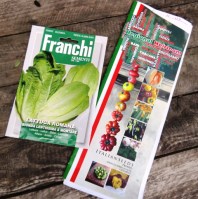
033The new Franchi seeds catalogue arrived in the mail last week. If you haven’t met this brand before, you can find them on line at http://www.italianseedspronto.co.nz/ (that is the address for New Zealand mail order only). There is an interesting range of heirloom and traditional Italian varieties. They are expensive when compared to some other brands on the market, but you get a hugely generous amount of seed per packet. Given the sparse number of seeds in the packets of some other brands, this is something of a surprise. Mark is a particular fan of the packets of mixed lettuce varieties which he sows in succession to keep supply going, so he is more than happy to get a generous quantity of seed. There is a good variety of different lettuces in these mixed packets too, which mature at different rates and add interest to salads now that we have moved on from just Iceberg or Buttercrunch.

001 (2)I was positively excited to buy my very own spade recently, and what a lovely spade. It is a Joseph Bentley border spade with a handsome oak handle so it must be imported from the UK. A border spade is both smaller and narrower than a conventional spade and I find the lighter weight makes it easier to use – a pleasure, even. There are cheaper spades around – I think I paid somewhere between $70 and $80 for this one at Palmers Garden Centre – but I have not found a spade I like more. I expect it to last as long as I do. Mark kindly oiled the handle again before use, using linseed oil. And he sharpened it for me. I sometimes wonder whether the current fashion for no-dig gardening and the desire by some to avoid the effort of digging is related to blunt spades. A sharp spade makes digging so much easier but I can’t recall seeing the advice offered widely that you need to sharpen your new spade before use and then to keep an edge on it from time to time. If you are wondering how to do this, I see I published a little article on this very topic some time ago.

The Magnolia and the Cross

The Magnolia and the Cross

Having referenced the Magnolia and the Maunga and the Magnolia and the Wellsite  recently, I now offer you the Magnolia and the Cross. This is M. campbellii again, but in the grounds of St John’s Church in Waitara where I spotted it when we attended a funeral recently. Even if one is not of a religious persuasion, the cross is a very strong symbol.

The cordylines on Devon St and Devon Rd

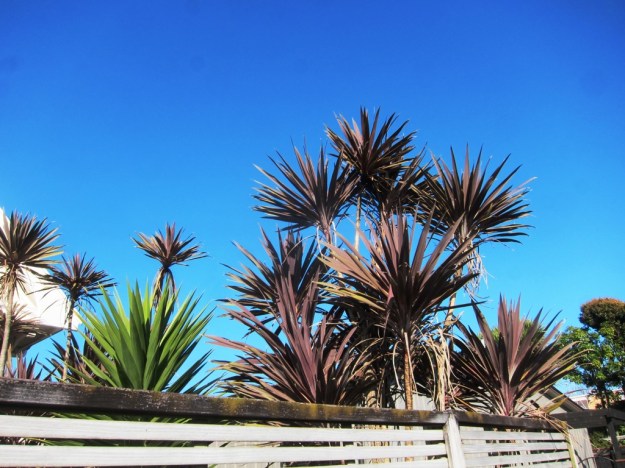
I went to town last Saturday on one of those glorious winter days we get here with its blue as blue sky and nary a breath of wind. When I say I “went to town”, I mean the small provincial city of New Plymouth which is about 24km from where we live. One of its claims to fame is the phenomenally long main street, called Devon Street. The first settler boats to arrive sailed from the English port of Plymouth, drawing on folk from South Devon and northern Cornwall in search of a better life. When Devon Street leaves the city limits, it becomes Devon Road and stretches out a great deal further along what has now become state highway. And on Saturday, I noticed just how many cordylines there are planted along the way.

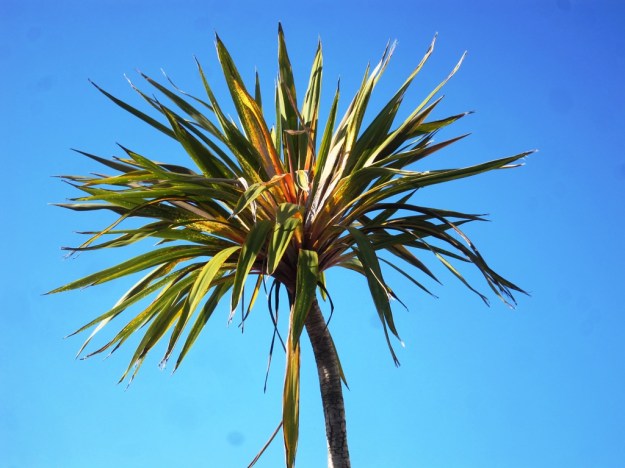
Cordyline australis is by far the most common variety where we live and despite the ‘australis’ part of its name, it is a native tree of New Zealand. Local parlance still has these trees referred to often as ‘cabbage trees’ although the Maori name of Ti kouka (with macrons over the i and the o but I am not sure where macrons are on this keyboard) is increasingly widely used. Botanically, they are cordylines.

Cordyline australis 'Purpurea'

Cordyline australis ‘Purpurea’

It was the purple version – Cordyline australis ‘Purpurea’ that caught my eye in a garden first. This is just a natural variant on the more common green form. The modern trend is to favour yuccas over cordylines as garden plants but I prefer our native plant. However, as we all know, the falling leaves play havoc with lawnmowers and too often the machine can come off second best. I have read several times recently of folk gathering the leaves, drying them out and using them as fire starters which seems a resourceful activity to me.
039 - CopyCertainly for those who crave perfection in their garden plants, our native cordylines can develop a motheaten appearance. Caterpillar damage from a native moth – Epiphryne verriculata – is typical in this country whereas the cordylines I have seen overseas, particularly in the UK where they are a prized plant, keep cleaner foliage.
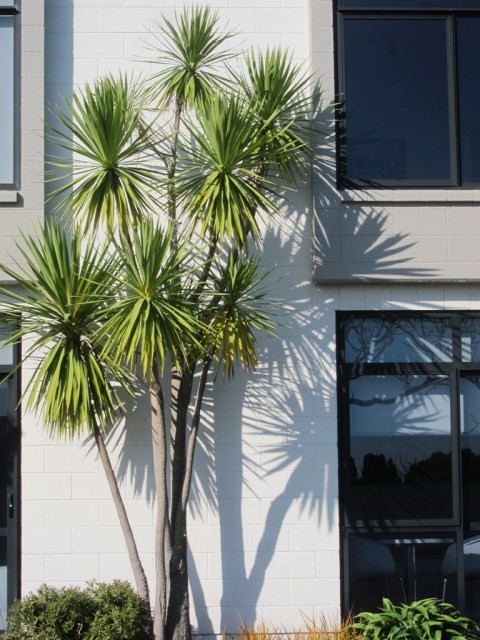
Cordyline australis outside Devon Hotel

Cordyline australis outside Devon Hotel

Along the road a little were cordylines planted outside the Devon Hotel, casting shadows on the plain wall behind. They were as sophisticated as any imported plant genus would be. They are also remarkably practical as an amenity plant because the multi trunks can be thinned as required without harming the plant.
053 - CopyHeading out of town, I stopped by the recent planting of an avenue of cordylines leading up to the golf club. You may notice it is an informal avenue which seems a wise decision given that this is not a plant that is particularly cooperative when it comes to straitjacketing it into precision formation. It is much too individual and unpredictable to achieve rigid conformity.
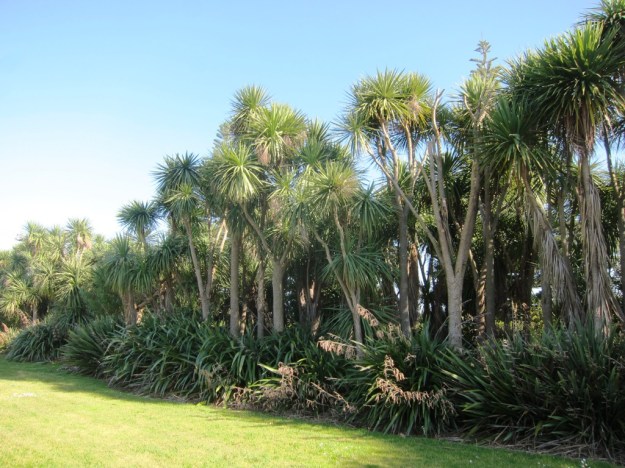
062 - CopyThe established block beside the airport turnoff has been there for a fair time now. They were both eye-catching and appropriate when first planted and I think they are maturing well. The planting beneath is our native flax or phormium.
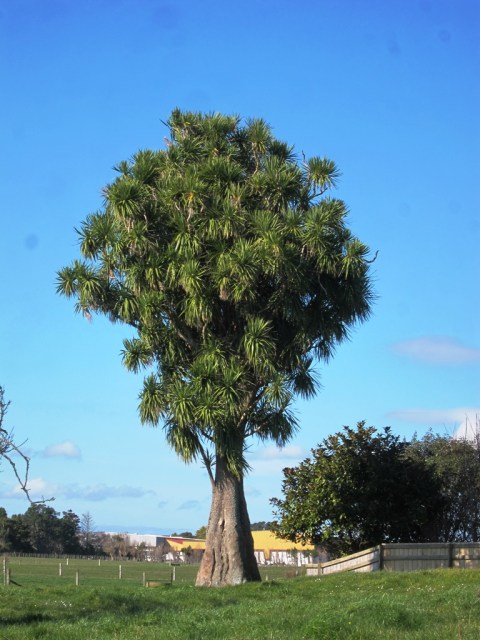
Cordyline australis at a grand old age near Waitara

Cordyline australis at a grand old age near Waitara

The crown of glory must surely go to this solitary specimen standing alone in a paddock near Waitara. It will be many decades old – at least 60 years and quite likely more. It takes a long time for Cordyline australis to reach this stature and what a magnificent plant it is.
031 - Copy
I have used my image of the tui feeding from the mandarin tree with the sunburst Cordyline australis “Albertii” before and it is in our garden, not Devon Road but I remain amazed that I ever caught this little scene on camera.

Earlier stories I have written on cordylines include:
A step by step guide to propagating cordylines
The blue flowered Australian Cordyline stricta
The pink flowered Australian Cordyline petiolaris
The travesty of claiming that Cordyline Burgundy is distinctively different to our Cordyline Red Fountain
002 - Copy
Finally, these Cordyline australis ‘Alberti’ are not on Devon Road and I felt sure I had shown them before but I cannot find where. They are on the main road through Eltham. The sunburst effect made me laugh on the day and they still make me smile.

Garden lore: July 20, 2015 Petal blight, white camellia hedges and winter pruning

“One has a lot, an endless lot, to learn when one sets out to be a gardener.”

Vita Sackville-West, A Joy of Gardening (1958)

078

Petal blight

Petal blight

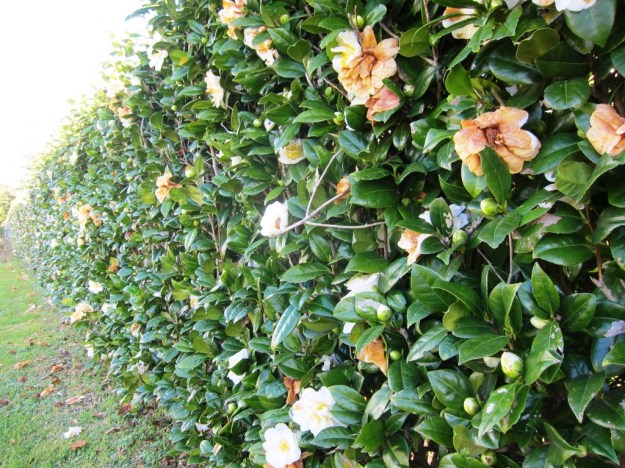
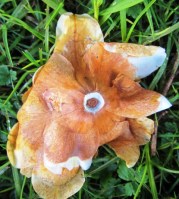
After writing about Winter Whites last week, referencing the ubiquitous white camellia hedges, of course I noticed this hedge on my way to town. My eye was drawn to the composition of brown and white flowers. It is a japonica camellia, though which one I am not sure. Closer examination revealed a bad case of petal blight, even this early in the season. There are two main giveaway signs. The first is the brown flowers hanging on to the bush. Most modern camellias are what is called self-grooming. They are bred to drop their spent blooms but those affected by petal blight hang on. The blighters. The second sign is shown by turning over a brown bloom and removing the calyx that holds the petals together. There is the tell-tale white ring of death – fungal spores. There is no remedy. You either live with it or you remove the plants.
076

I have never been a fan of japonica camellias for hedging. The foliage can go a bit yellow in full sun and both leaves and blooms are too big. Smaller leafed camellias, seen in the sasanquas, some of the species and the hybrids look much better. Miniature single flowers usually fall cleanly and disintegrate quickly, avoiding the sludgy brown effect below.

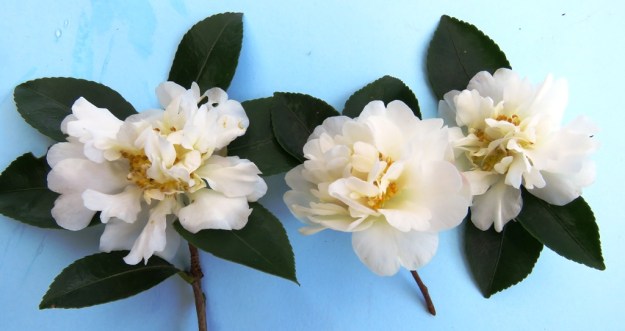
Camellia transnokoensis

Camellia transnokoensis

While our C. transnokoensis hedge needs to thicken up yet, we are charmed by its floral display. The sasanqua ‘Silver Dollar’ is also an excellent hedging choice. While the small flowers are nothing special viewed close-up, it is one of the first sasanquas to bloom for us and one of the last so it has exceptionally long season allied to compact growth and small leaves which are a good, dark green.

Camellia sasanqua Silver Dollar - an excellent hedging option

Camellia sasanqua Silver Dollar – an excellent hedging option 

While some claim that sasanquas can get petal blight, we haven’t seen it on our plants. And although the single flowered species and hybrids are not necessarily resistant, most set large numbers of flowers but each bloom only lasts a few days so they fall before blight takes hold.

On another topic, winter is pruning time. I did the wisterias on Friday. This is one plant family I recommend removing totally if you are not willing to prune them. They have dangerous proclivities. Most of the roses are done and I have started on the hydrangeas. Those in colder climates may be better to wait another month before tackling the last two because pruning encourages new growth which is vulnerable to frosts. The pruning guides I did several years ago as part of my Outdoor Classroom series give step by step instructions if you are not sure where to start – wisteria, hydrangeas, roses.