Tag Archives: English garden style

Found it!

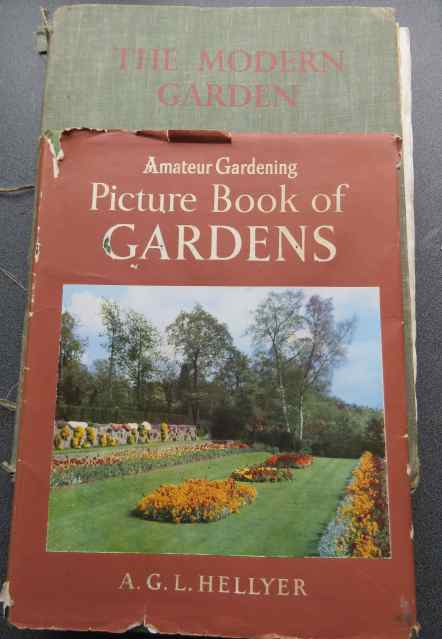
The title and cover photo on the lower book does not do it justice at all – see the next photo. I would bet the publisher chose the cover photo, not the author.

When we moved into our home, it still contained Mark’s parents’ belongings. I knew I had seen a book which clearly inspired the garden here but it has taken me years to find it again. It wasn’t until I took apart all the bookshelves to dust each book individually and to try and get a more helpful categorisation by subject that it turned up again.

When Mark’s parents built their dream house here around 1950, neither had travelled overseas. The house draws largely on English style but with bigger windows. They started on the garden as soon as the house was built and I realised when we moved into the house that we could work out which books inspired these passionate gardeners across the world.

The Picture Book of Gardens by A.G.L. Hellyer is comprises full page photographs in black and white. The gardens are very much what I describe as English manor house style – spacious, but not grand historic gardens, beautifully tended and exceptionally flowery and pretty. The inscription inside the cover had me puzzled. Along with the date of publication, it placed this book as 1956, by which point the garden here was well on the way to being designed and executed. It is likely this book was more an affirmation that they were on track.

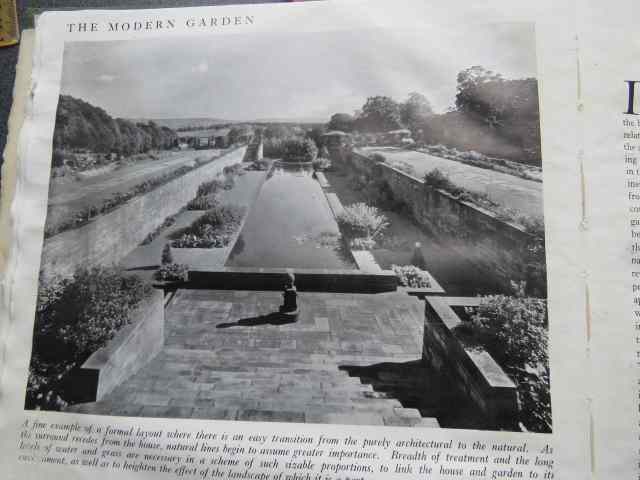
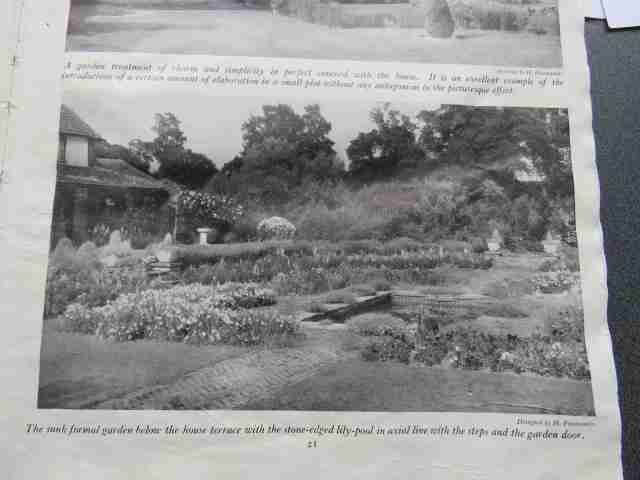
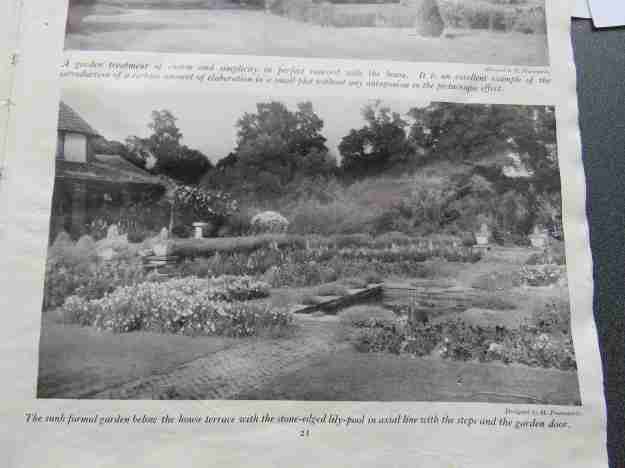
I think it was the earlier book, The Modern Garden by G. C. Taylor, B.Sc., that helped them refine their visions. First published in 1936, Felix and Mimosa’s copy was the fourth revision dated 1949 and is clearly extremely well thumbed. There I found the inspiration for our sunken garden.
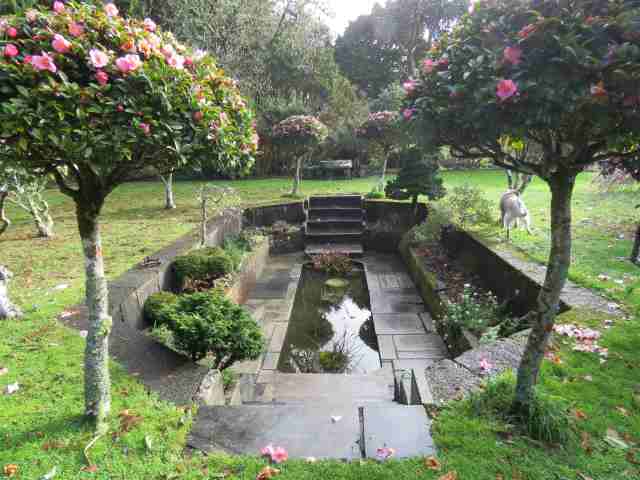
Our sunken garden as it was last week. It is starker than it used to be but the growing conditions have changed dramatically as the huge rimu trees have explanded their root systems through the whole area. We could not keep the borders looking lush and flowery with all the root competition binding the soil and soaking up all the water.
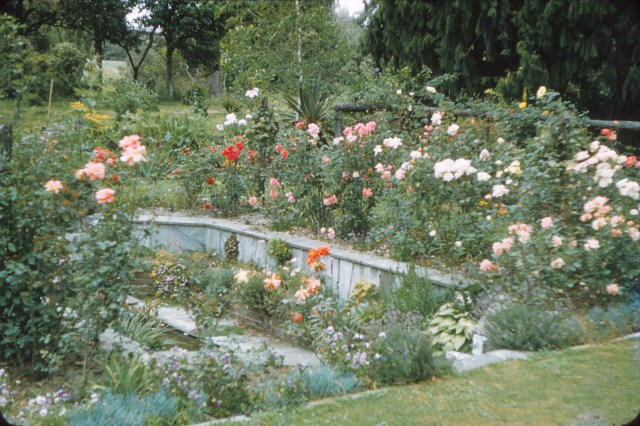
The sunken garden in Mimosa’s day. Probably 1960s.
Our sunken garden is much deeper than is commonly seen – and oft mistaken as a former swimming pool. But I think it bears a debt to this photograph, albeit scaled down to a much smaller space.
Maybe with a touch of this if you look at Mimosa’s rose garden.

When the title says ‘The Modern Garden’, it clearly means modern in terms of post WW1 and the demise of enormous estate gardens that didn’t survive all the young gardeners heading off as canon fodder to the war. So, we are talking modern in terms of Vita Sackville-West of Sissinghurst, Gertrude Jekyll, Lawrence Johnston and other great English garden leaders of the era between the world wars.
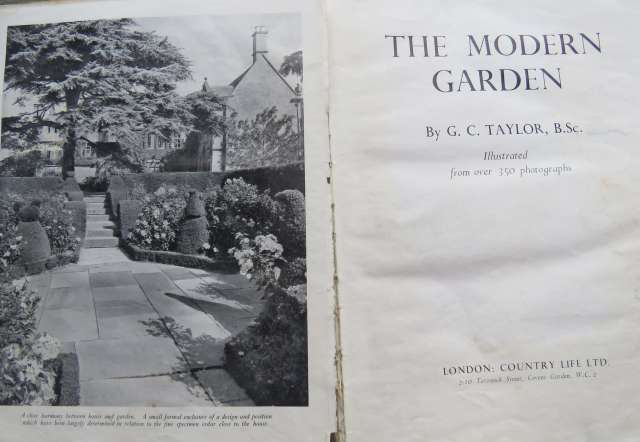
I have no idea who G. C. Taylor, B.Sc. was but this remains a very practical book. The more than 350 photographs may be smallish and in black and white but they are thoughtfully recorded and well composed with captions full of helpful advice. The author might have been slightly surprised had he known that he guided, from afar, a garden with a clear debt to his 1940 advice and inspiration that has lasted down seven decades. It is quite simply, one of the best gardening books I have seen.
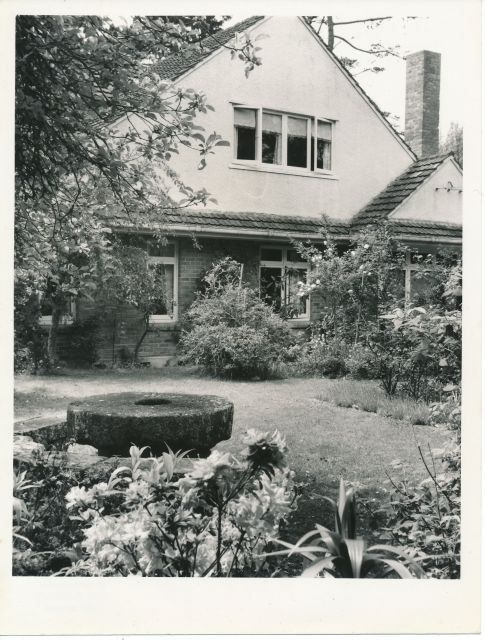
This is from 1961, about 10 years after Felix and Mimosa built the house. It is understandable that they were looking at English books for gardening inspiration. The had already built in a style that would not be out of place in either of the aforementioned gardening books.

There is very little in gardening that is new. Innovation lies more in reinterpreting the old than in coming up with a brilliant, original idea on one’s own. It has all been done before somewhere, sometime. Much of the advice in this book, especially when it comes to design, balance, and execution is still relevant today.
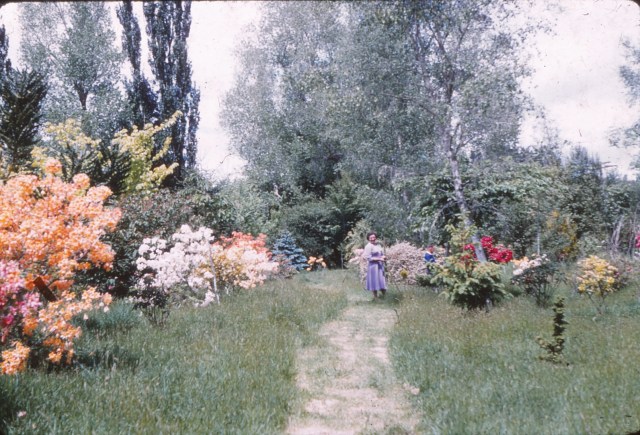
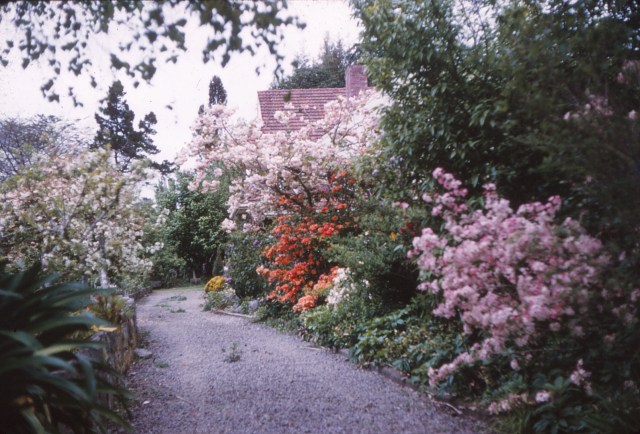
Both of Mark’s parents embraced the pretty, flowery look
Mimosa labelled this photograph ‘My little driveway’.

Garden style

Sissinghurst of course - the inspiration for many, many gardens in NZ. Too many.

Sissinghurst of course – the inspiration for many, many gardens in NZ. Too many.

Truly, it is difficult to be original in the garden. Oh, there can be the odd touch of whimsy or indication of flair but generally it has all been done before. Somewhere. The skills lie in how you put the ideas together and manage it all. It is a bit optimistic, grandiose even, to consider that you can come up with some brilliant concept that nobody has thought of before. But that is all right. We are all in the same boat.

We had a small British gardening tour through last week. Not all garden tours are equal by any means and we particularly enjoyed this one. They were both knowledgeable and enthusiastic, giving us as much stimulation as we hope we gave to them. We have a huge debt to British gardening traditions in this country.

I have looked at Italian gardens but they are more about design, space and hard landscaping (and wealth) than gardening as we know it here. The plant interest is minimal. But should an Italian stonemason want to enter your life, do not turn him away. There is a history of magnificent stonework in that culture.

More about wealth, power and lifestyle than plants - the Alhambra in Spain

More about wealth, power and lifestyle than plants – the Alhambra in Spain

Southern Europe has a pretty difficult climate. If it is not hot and dry then it is cold and dry. So the historic gardens of Spain and Portugal that I have seen were also about wealth and power. Their hallmark is magnificent hard landscaping and good design but they too, are light on plants.

Japanese gardening is one that exists in something akin to a bubble all of its own. It is deeply steeped in symbolism, tradition and contemplation. I admit I have not been to Japan so I don’t know much about the modern gardening trends, but from afar it appears that the old traditions remain dominant. They seem to be relatively immune to the eclectic cobbling together of ideas from around the world that most of us do.

We have drawn upon Asia for the tropical gardens, so fashionable at the moment. I wrote about the hotel-style gardening in the middle of last year.

I understand our preoccupation with lawns and the high value placed on the dreaded “kerb appeal”, in real estate speak, have a debt to USA but those are questionable contributions to our gardening heritage here.

In fact, large parts of the world do not garden at a domestic level as we do. In some cases it is lack of physical space – or any outdoor, private space at all in heavily populated areas. In other cases, the conditions are just too hard. If your ground is set like concrete and it is alternately too hot and then too cold to be outside, the motivation must flag.

If you look at Britain, you can see a gardening ethos that is very close to our own. It is probably no accident that while their conditions are nowhere near as easy as ours, nevertheless it is a relatively mild climate. Being islands, the sea has a tempering effect and they lack the extremes of temperature and near absence of rain that many other countries experience. Many of the great and intrepid plant hunters originated from Britain and they have always put a high priority on plants – new plants, varied plants, plant combinations, entire collections of a single plant genus. Gardens are expected to have a high level of plant interest, not just grand design. Even what we would regard as the great gardens of last century (the likes of Great Dixter, Sissinghurst and Hidcote) are still essentially domestic gardens in their origin. These are less a statement of power and wealth and more an example of gardening obsession.

Meadow gardening and a return to a more natural style is evident in UK gardens, less so here.

Meadow gardening and a return to a more natural style is evident in UK gardens, less so here.

So it is curious that we have only adopted a few key garden styles from that country – notably cottage gardening, mixed borders and the Sissinghurst garden rooms’ genre. We have been very slow on the uptake when it comes to what is now called the New Perennials Movement and just as slow on the dialogue they have been having in recent years about a return to a more naturalistic style of gardening. When I say slow on the uptake, I mean I have not seen anything at all in our gardening media and few of the colleagues I have talked to even know what these mean.

Yet I have heard it described by UK garden expert Carol Klein, as “the most influential garden movement in Britain in the last 15 years”. Mind you, the term New Perennials Movement, appears to be of recent usage only and it brings together the apparently disparate threads of naturalistic, meadow, grasses and prairie gardening that we noticed on our last visit there in 2009. Much of it was still seen as pretty avant garde then. Maybe it has bedded in better now.

069 (2)In the meantime, “The New English Garden” by Tim Richardson, published by Frances Lincoln, is more than a coffee table book. The sumptuous photographs and presentation are complemented by an intelligent and discerning text. Perhaps the problem is that we New Zealanders are still visiting only the most famous gardens and the existence of a whole new style has so far bypassed us. We are heading back this June to have a closer look.

First published in the Waikato Times and reprinted here with their permission.