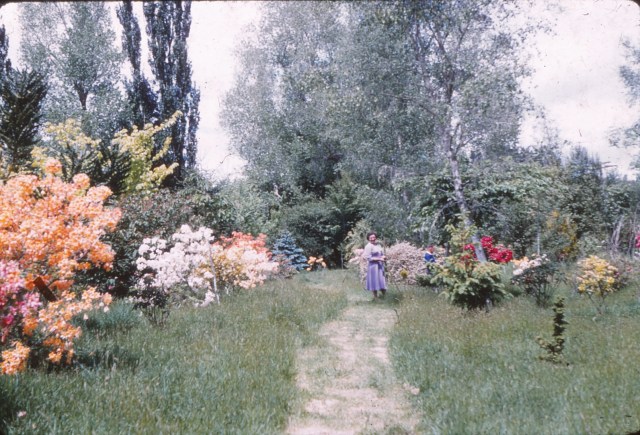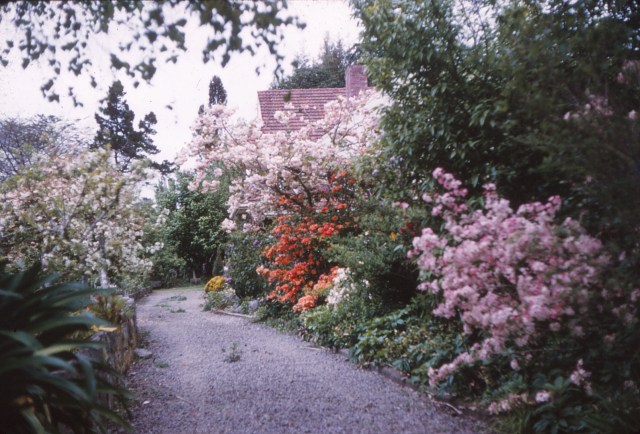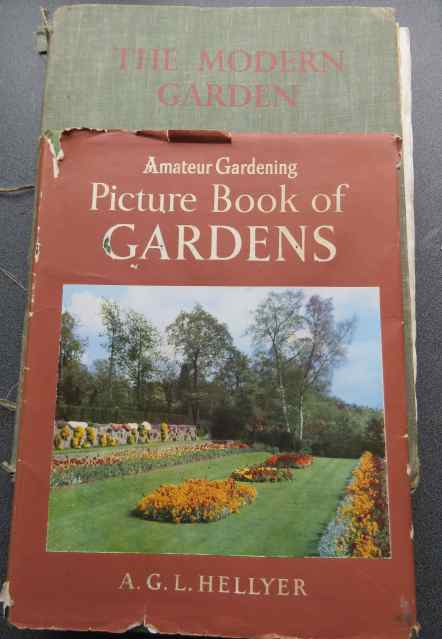
When we moved into our home, it still contained Mark’s parents’ belongings. I knew I had seen a book which clearly inspired the garden here but it has taken me years to find it again. It wasn’t until I took apart all the bookshelves to dust each book individually and to try and get a more helpful categorisation by subject that it turned up again.
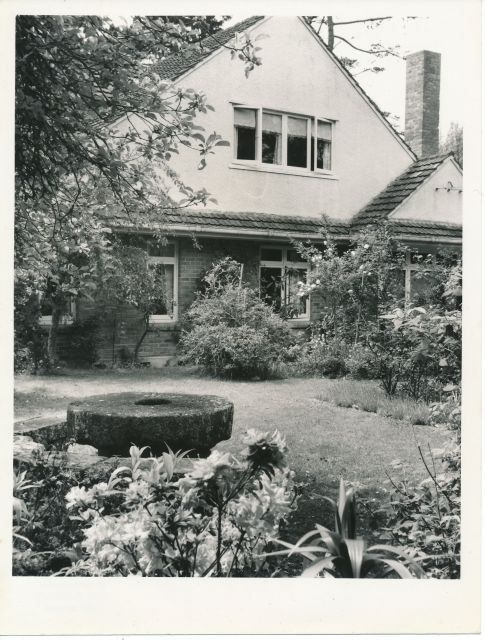
When Mark’s parents built their dream house here around 1950, neither had travelled overseas. The house draws largely on English style but with bigger windows. They started on the garden as soon as the house was built and I realised when we moved into the house that we could work out which books inspired these passionate gardeners across the world.

The Picture Book of Gardens by A.G.L. Hellyer is comprises full page photographs in black and white. The gardens are very much what I describe as English manor house style – spacious, but not grand historic gardens, beautifully tended and exceptionally flowery and pretty. The inscription inside the cover had me puzzled. Along with the date of publication, it placed this book as 1956, by which point the garden here was well on the way to being designed and executed. It is likely this book was more an affirmation that they were on track.
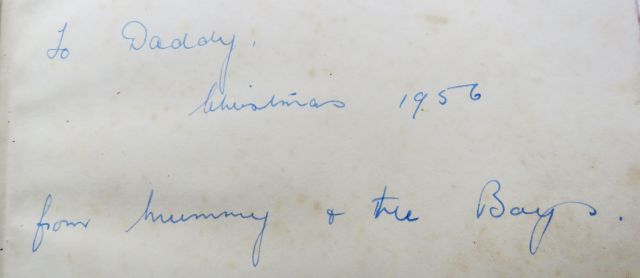
I think it was the earlier book, The Modern Garden by G. C. Taylor, B.Sc., that helped them refine their visions. First published in 1936, Felix and Mimosa’s copy was the fourth revision dated 1949 and is clearly extremely well thumbed. There I found the inspiration for our sunken garden.
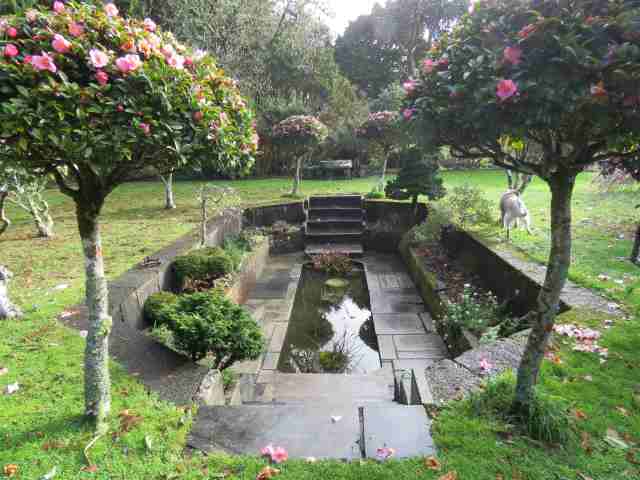
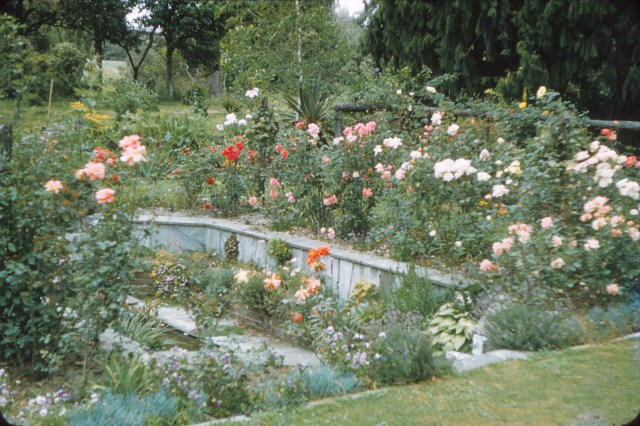
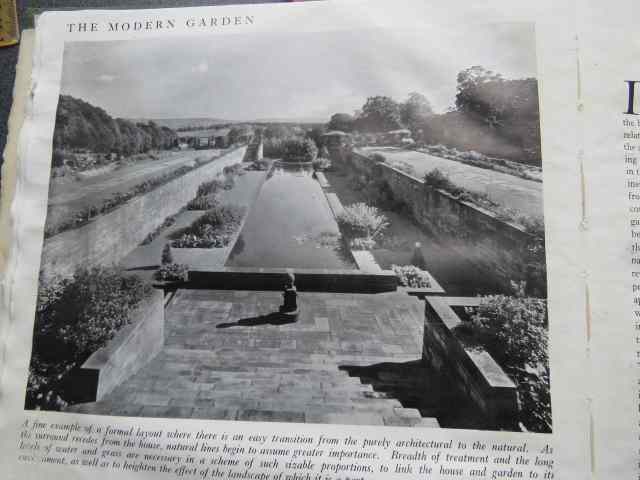
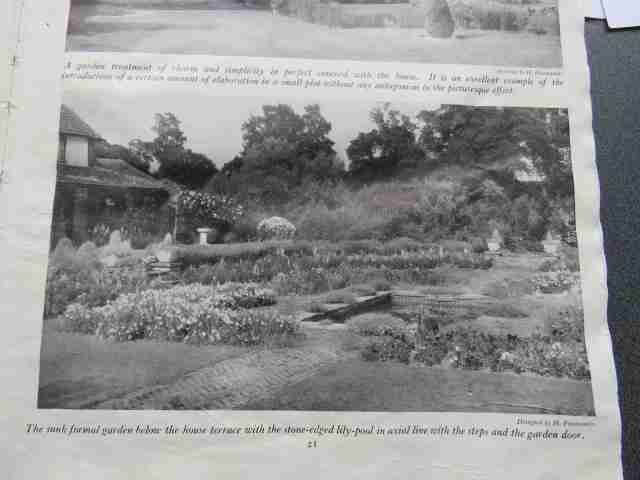
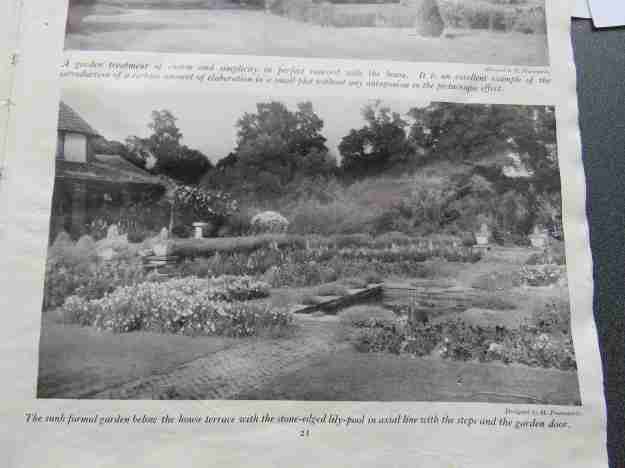
When the title says ‘The Modern Garden’, it clearly means modern in terms of post WW1 and the demise of enormous estate gardens that didn’t survive all the young gardeners heading off as canon fodder to the war. So, we are talking modern in terms of Vita Sackville-West of Sissinghurst, Gertrude Jekyll, Lawrence Johnston and other great English garden leaders of the era between the world wars.
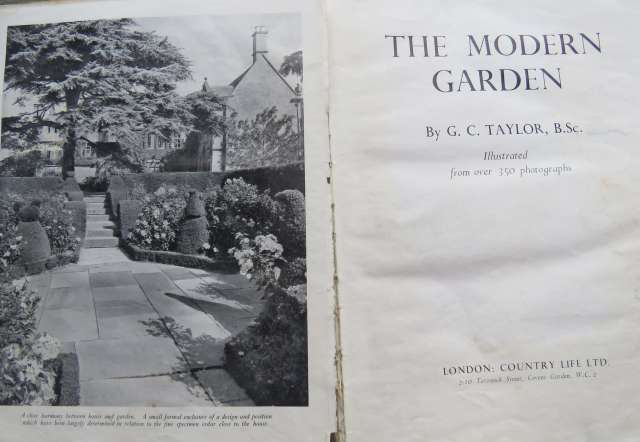
I have no idea who G. C. Taylor, B.Sc. was but this remains a very practical book. The more than 350 photographs may be smallish and in black and white but they are thoughtfully recorded and well composed with captions full of helpful advice. The author might have been slightly surprised had he known that he guided, from afar, a garden with a clear debt to his 1940 advice and inspiration that has lasted down seven decades. It is quite simply, one of the best gardening books I have seen.
There is very little in gardening that is new. Innovation lies more in reinterpreting the old than in coming up with a brilliant, original idea on one’s own. It has all been done before somewhere, sometime. Much of the advice in this book, especially when it comes to design, balance, and execution is still relevant today.