Tag Archives: gardening

Tikorangi Notes: Friday 29 April, 2011

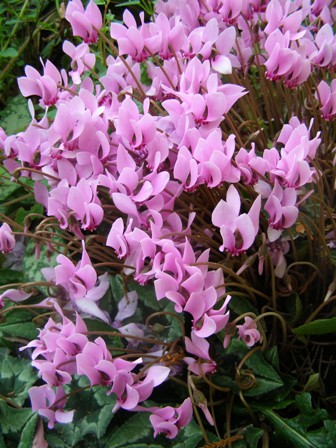
A somewhat over the top performance from just one Cyclamen hederafolium tuber, albeit a large and well established one

A somewhat over the top performance from just one Cyclamen hederafolium tuber, albeit a large and well established one

Latest posts: Friday April 29, 2011.
1) The voluptuous splendour of Vireya rhododendron Rio Rita in Plant Collector this week.
2) Garden tasks for the week including autumn pruning and getting garlic in early.
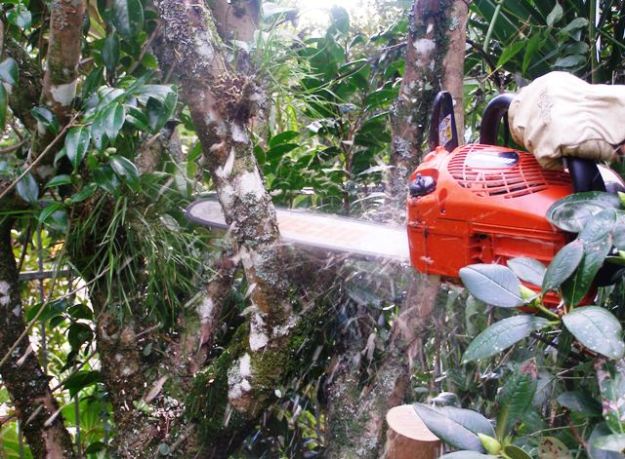
3) Outdoor Classroom this week looks at hard pruning large, scruffy camellia bushes.

Tikorangi Notes: Sunday, May 1, 2011
Another weather bomb last week (as we seem to call extreme weather events these days) had people drawing comparisons to the infamous Cyclone Bola of 23 years ago (I can date Bola because it coincided with the birth of our son) but it was not of that magnitude here. Still, tearing winds for two days blew over pretty well every plant in the nursery, snapped a large branch off a prunus which blocked half the road (surprising how long it took for anybody to tell us that our vegetation was a traffic hazard!), snapped a large branch from one of our old man pine trees and generally dislodged anything that was loose. A friend down the coast tells me it wrecked about 20 trees in his garden so we are guessing it was worse elsewhere. Now we are into clean up mode but calm, clear weather has returned. There is not a lot of autumn colour remaining after the winds, but the Cyclamen hederafolium continue to flower. This particular tuber is undeniably large but its production of blooms is so excessive that we have been making jokes about it being on steroids. There is no human intervention, however. It is just hellbent on outdoing every other cyclamen in the garden.

In the garden this week: Friday April 29, 2011

Prunus serrula would have been better kept to a single leader when it was a young plant

Prunus serrula would have been better kept to a single leader when it was a young plant

• Get any spring bulbs planted without delay. They need to be growing now to give you the anticipated display later.

• Rhubarb is a clumping perennial and benefits from being lifted and divided. It is a gross feeder and likes really well cultivated soil. So double dig the area (dig, then dig again) and add plenty of compost before replanting big divisions.

• Broad beans can be planted now for harvest in spring. Picked when young and tender, they are truly tasty. If they get away on you and go old and tough, dry them. They are also known as fava beans and are delicious when soaked, skinned and used in bean dishes or added to falafel.

• A reminder to get your strawberry runners planted without delay so they can get established and build enough strength to start cropping on cue in spring.

• It is only tradition that says garlic should be planted on the shortest day of the year. We have had good success planting considerably earlier, in May. The plants are stronger and better able to withstand the very wet early spring weather we can get here when temperatures are still cold. If you are going to plant your garlic early (and long keeping brown onions can be done at the same time), prepare the ground now. Dig it over well, adding plenty of compost and maybe some animal manure. Then leave it to sit for a few weeks before planting. These crops need excellent drainage, but they do better when the soil has settled a little rather than being freshly fluffed up.

• It is good pruning and shaping time on woody trees and shrubs (though best done when the overhead branches are not showering you in water). A good pruning job is when it is not clear by looking at the plant where you have been, despite the mountain of branches on the path beside you. Rather than hacking the entire bush, being selective about which branches you remove or shorten and cutting flush to the main stems makes a big difference. However, there are times when drastic action is required – such as the shabby camellia in Outdoor Classroom this week.

• Most trees are best kept to a single leader – one trunk. Where a trunk is forked near the base, it is a structural weakness in the tree which can lead to it eventually splitting apart. The earlier this is done to a tree, the easier it is to train what remains to a good shape.

Renovating old camellia plants: step-by-step

1) Camellia sasanqua “Sparkling Burgundy” has had quite a bit of work done on it over the years to thin the branch structure and to lift the lower levels to allow light below. This has made a feature of the size and age of the plant which is now more of a small tree than a shrub.

2) However, this camellia has little in its favour. The top layers of foliage are not in good health and look scruffy and full of dead wood. We will rejuvenate it by cutting it back very hard to bare wood. This is best done any time from through winter until early spring.

3) The plant is virused which affects its vigour. Virus in camellias is not always bad. It is what gives variegated leaves and two tone flowers. However, if you then use the cutting tools on a healthy camellia, you will transfer the virus. It pays to disinfect saws and secateurs immediately after finishing the affected plant. You can do this by simply dipping in a bucket containing diluted bleach.

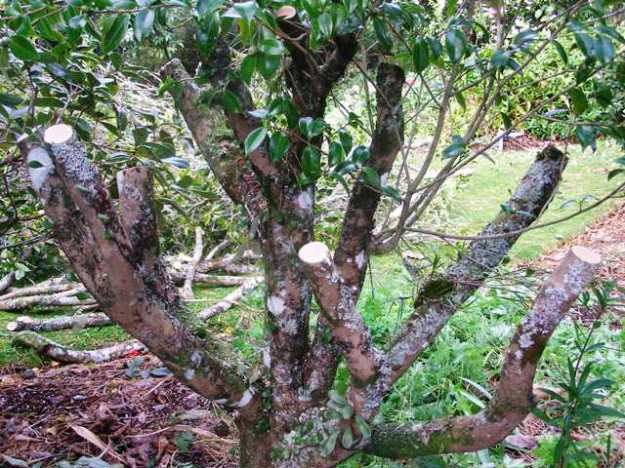
4) Cut back to whatever level you wish. Most camellias will resprout and come again even when cut off at ground level, but we want a bushy shrub about 1.5 metres high by summer so we are leaving bare woody stems around that height, cut a little lower at the sides than the centre. If you leave some of the old trunks, you keep a strong structure and shape for the bush. If you cut off at the ground, you will be starting over with a carpet of fresh shoots which may not give a good long term shape.

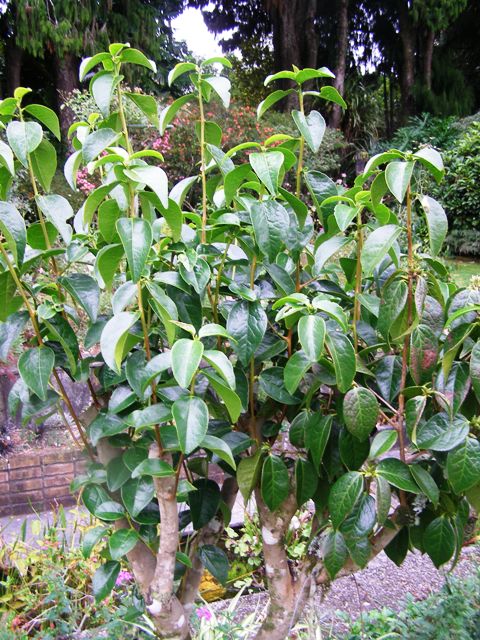
5) This Camellia yuhsienensis was cut back early last spring to completely bare stems with not a single leaf remaining. Such ruthless cutting forced dormant leaf buds into life and it is now a bushy little shrub although we won’t get as many flowers as usual for another year.

Tikorangi Notes: Monday April 25, 2011

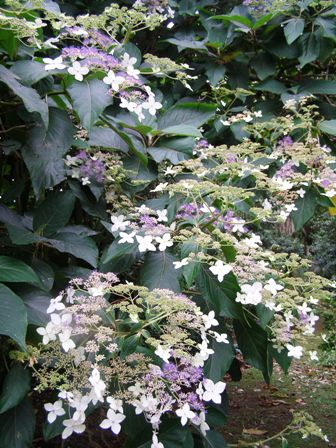
Tree hydrangea of uncertain classification

Tree hydrangea of uncertain classification


This wonderful tree hydrangea is a sight to behold down our avenue gardens this week. I say tree because the plant is now about five metres high. The flowers are enormous – fully 45cm across each individual head but most things about this plant lean to the large. It is an unknown species (though currently classified in the aspera group, despite bearing little resemblance to most asperas) and fully evergreen. In NZ, it is commonly referred to as the Monkey Bridge hydrangea, collected in China. It is brittle, tender and very large – not suited to all gardens – but what an unusual delight in flower.

Tikorangi Notes: Saturday 23 April, 2011

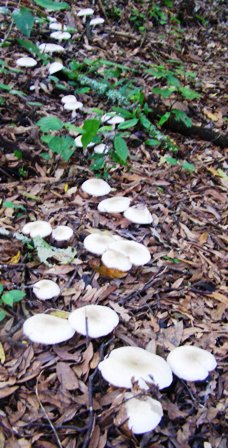
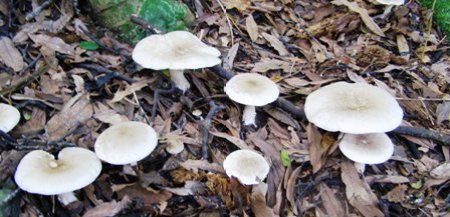
Our identified woodland mushroom in a fairy path

Our identified woodland mushroom in a fairy path

Latest posts:

1) Paradise Found in New South Wales– or our attempts to find gardens to visit around Sydney from bats at the Bot Gardens to Bob Cherry’s dreams in Kulnura.

2) Plant Collector this week looks at two tidy, compact evergreen shrubs with berries: Ilex cornuta “Burfoodii” and Raphiolepsis indica “Enchantress”.

3) Garden tasks for the week as autumn marches on inexorably. Still, we have only had one really cold day so far.

Tikorangi Notes: Saturday 23 April, 2011 When it comes to wild fungi in New Zealand, we are terribly conservative. Generally it is only the field mushroom that is harvested for eating, although the magic mushroom used to attract experimental youth in search of a free hallucinogenic experience. Possibly it still does, but there are a host of other wild mushrooms that go untouched. I have bought the up to date publications on fungi found here, but it appears that nobody has done the work on which forms are edible. I am not so keen on doing the experimental taste test. Apparently the basket fungi, puffballs and elephant ear fungi are all perfectly safe to eat, but I want a definitive tome to tell me which are safe and delicious before I get adventurous. With death caps also common, the gap between fatal and edible seems a little too small to me. And we can’t even get an identification on this woodland fungi from our books. Cascading down through our tawa bush, these mushrooms are currently abundant and growing, not so much in a fairy ring, but more akin to a fairy path.