Tag Archives: Mark and Abbie Jury

Postcards of Melbourne

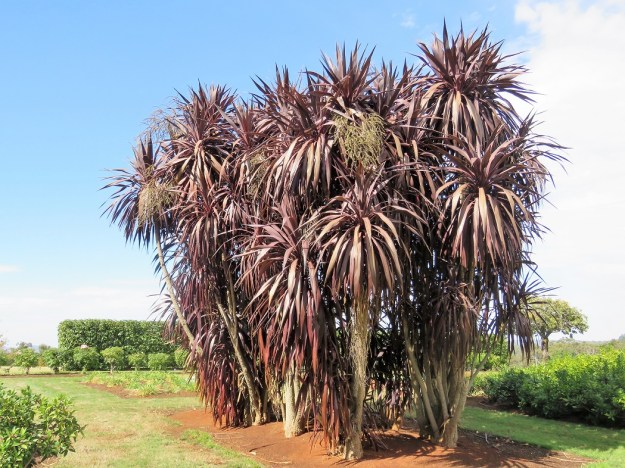
Cordyline Burgundy Spire

How handsome is Cordyline ‘Burgundy Spire’, seen here in the trial grounds of Anthony Tesselaar Plants in Sylvan, near Melbourne? It isn’t one of ours, though we would be happy if it was. The breeder is fellow New Zealander, Geoff Jewel. It is just a shame they never look like this in New Zealand, on account of our native moth, Epiphryne verriculata. We always have chewed and holey foliage which is the nature of the plant in its homeland; still handsome and eye-catching but as a garden plant, it would be nice to have cleaner foliage.
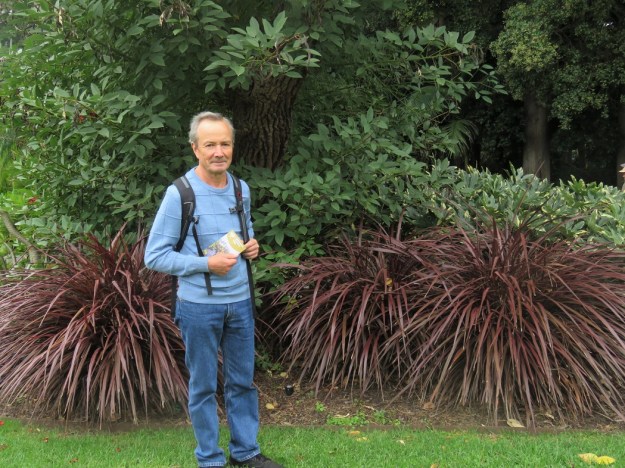
Mark Jury and Cordyline Red Fountain

However, I can add to the occasional series of Mark Posing Beside Jury Plants Around the World – this time Cordyline Red Fountain at Melbourne Botanic Gardens. This plant was a joint effort between Mark and his father Felix, and was the first highly successful commercial plant that generated an actual income back to the breeders. Phormium ‘Yellow Wave’ still continues to be grown widely around the world but Felix never received a single cent for that one. Ditto Mark’s Camellia ‘Fairy Blush’. While it is awfully nice to be told by Australian, French and Belgian growers what a wonderful plant that camellia is and how many they sell each year, it would have been nicer had they been paying a royalty.
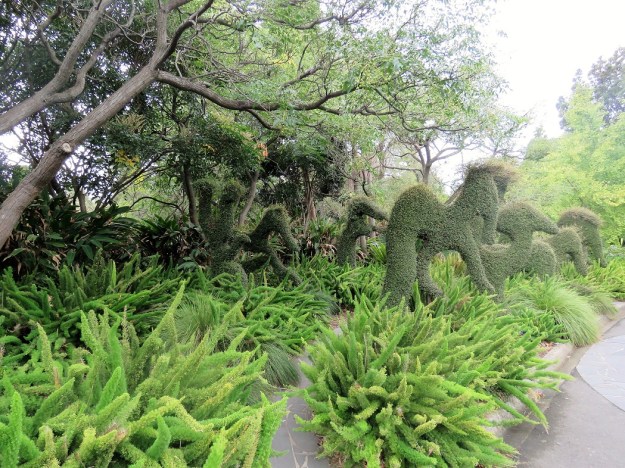
Muehlenbeckia complexa

While at the aforementioned Botanic Gardens, we were somewhat charmed by these free-form animal figures created in Muehlenbeckia complexa, another New Zealand native. As the plant is generally a scrambling groundcover, I am guessing they must have trained it up over wire frames. I have forgotten the name of the fern that is used as groundcover. We have it in our garden and usually refer to it as the asparagus fern but I think the common asparagus fern that can be distinctly weedy is something entirely different. This one is rather too slow growing to threaten weed status.

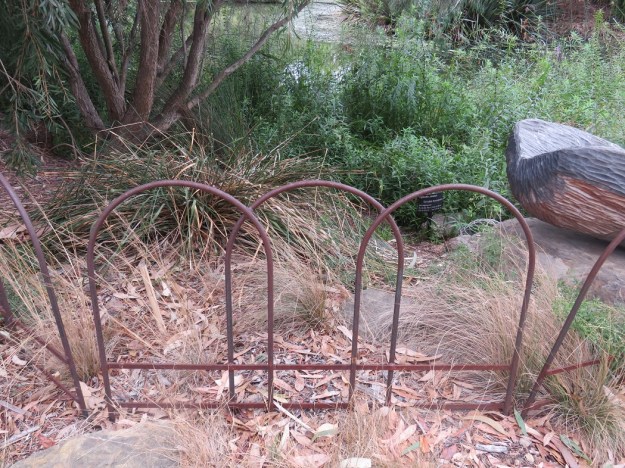
Plant supports from metal

I photographed these permanent metal plant supports to add to my ideas file. In this case, ideas to keep Our Lloyd busy, should he ever run out of work to do here. This scenario seems unlikely, but there are times when some durable, attractive plant supports would be very helpful. I like gently rusting metal because it melds harmoniously with plants. I have always wanted to live in a house with Gothic arched windows. This seems an entirely unlikely event on account of Gothic arched windows never really catching on in New Zealand wooden villas and bungalows of yore and the fact that we have no plans to move house if we can possibly avoid it. But my ambition now is to have some Gothic arched plant supports, at least. As I have become more interested in managing summer perennials, the need for plant supports is becoming more pressing.

Golden bougainvillea

I would be tempted to buy a golden bougainvillea if I ever came across one for sale, though they are such monster plants, with fierce thorns, that they are very difficult to place in the garden. I first saw this colour on the Greek island of Kalymnos many years ago and I can’t recall seeing one since. Purple a-plenty, magenta, pure red, even white but the yellow and orange shades are nowhere near as ubiquitous. I was charmed to find one just down the road from where we were staying in Carlton North.
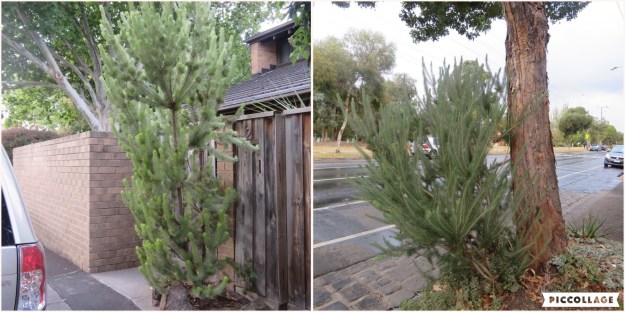
I interpreted these two scenes as what happens when city dwellers plant their Christmas trees on the road verge, although the right hand photo is not a conifer but more likely an Australian native. They amused me, though they have that look of potential vegetable time bombs.
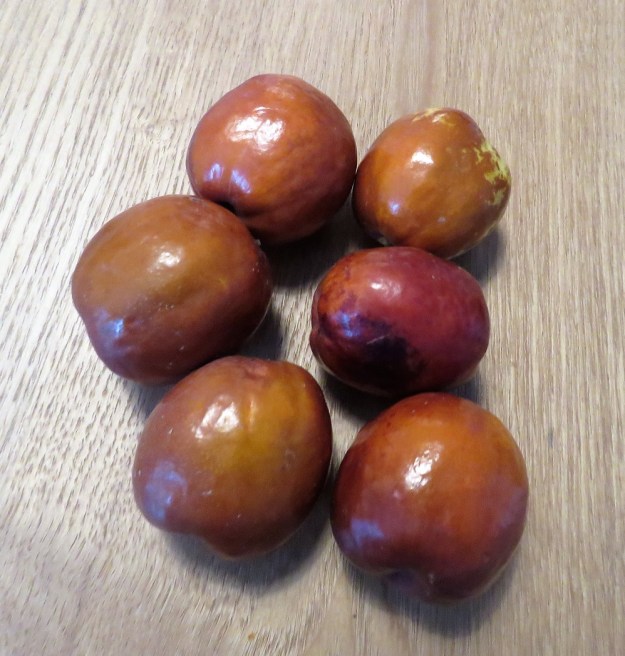
Ziziphus jujuba

Chinese red dates! Botanically Ziziphus jujuba. I have only ever tried these dried and packaged before, and that was many years ago, but our daughter found these at the Sunday markets. They are about the size of a large crabapple and taste like a date-y apple but without the crispness of the latter fruit. I have never seen them sold fresh in New Zealand.

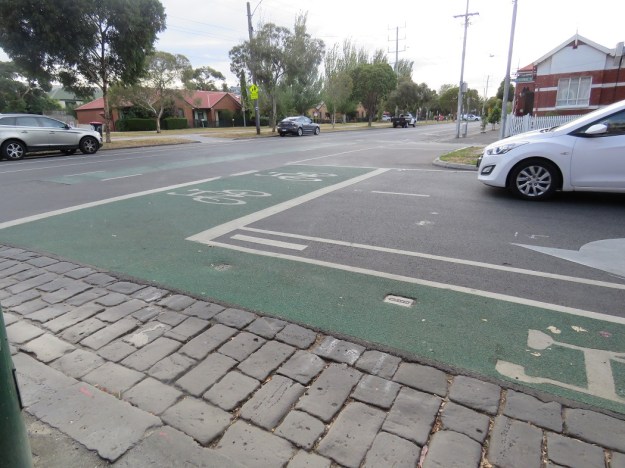
Bicycle friendly

Melbourne is not a city I know, having only been there twice before on brief visits. But we were very taken with the focus on infrastructure and design to make it bicycle friendly. Our son lives there and does not have a car so we were relieved to see that he is living in a city which prioritises safe cycling, even when it may inconvenience car drivers. Our apartment looked out over a protected cycleway and we were amazed at how many people moved along quickly on two wheels. Imagine the alternative of each of those cyclists sitting in a car – often just the one per car. In NZ, cyclists are fighting hard for some rights and accommodation in cities but too often car drivers see them as moving targets and act aggressively towards them on a point of principle. And god forbid that we should put in urban cycleways at the expense of a few carparks. Let alone give cyclists priority at intersections to make it safer for them.  In  our country with sprawling cities, low population density and poor to non-existent public transport, the private car rules supreme and even there, New Zealanders favour big sports utility vehicles (urban tractors, as they are sometimes called) and people movers with four wheel drive, even when they will never leave the sealed roads. We have much to learn and there are better ways of doing things than forever listening to the howling demands of incensed vehicle owners.
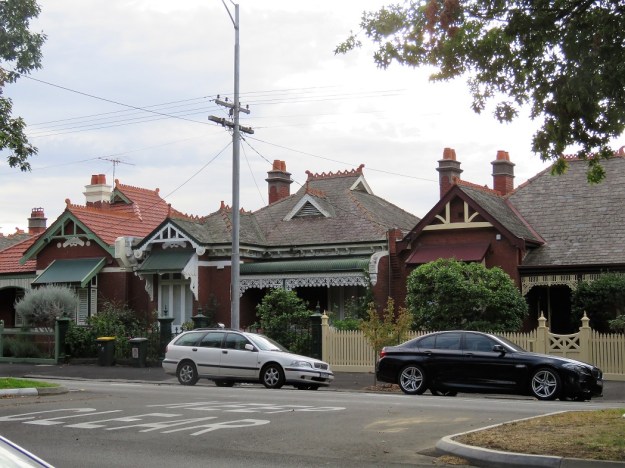
From the start, Melbourne was built with reasonably high density housing and sufficient money to add ornamentation in abundance to its domestic housing. It is very charming that so much of this has been retained. But – and it is a big but – what is with the graffiti, Melbourne? Graffiti everywhere. The only place we have ever seen graffiti to rival it is alongside the rail lines as we left Paris. Our son suggested it is part of the edgy urban feel Melbourne cultivates but we were not convinced.

A visit to Cloudehill Gardens

A touch of whimsy to welcome at the entrance – yes or no? 

We first visited Cloudehill Gardens about 20 years ago when it was still very much one man’s garden. Jeremy Francis took over the property in 1992 so it would still have been very new when we saw it. While there were plants and established trees from its earlier time as a nursery, there was no garden when he started. In the time since, it has matured to one of the flagship gardens of the Dandenong area, about an hour out of Melbourne. It is a large garden, created in the Arts and Crafts style with, the publicity tells me, twenty different garden rooms.

Very arts and craftsy in style 

The design may be very Hidcote/Sissinghurst, but the perennial plantings reflect the fashions of the new millenium 

While it appears that the originator, Jeremy Francis, is still on the scene, day to day management has transferred to The Diggers’ Club, which is a membership organisation unique to Australia. The upshot of this is that there is a now a retail outlet and a good café/restaurant (though the wasp infestation drove us indoors to eat), a focus on events and attractions and ‘adding interest’ to the garden. This means it has facilities and infrastructure but the trade-off is that the deeply personal touch of a single owner is no longer as evident. I found some of the novelty sculptures and touches were a little jarring in a garden where the underpinning hard landscaping is of exceptional quality. But a garden being run as a commercial entity has to strive to be all things to all people. It is now branded with the ubiquitous but rarely accurate strap-line of “a garden for all seasons’.

Not, I think, Cloudehill’s finest moment but it is hard for a garden to be all things to all people

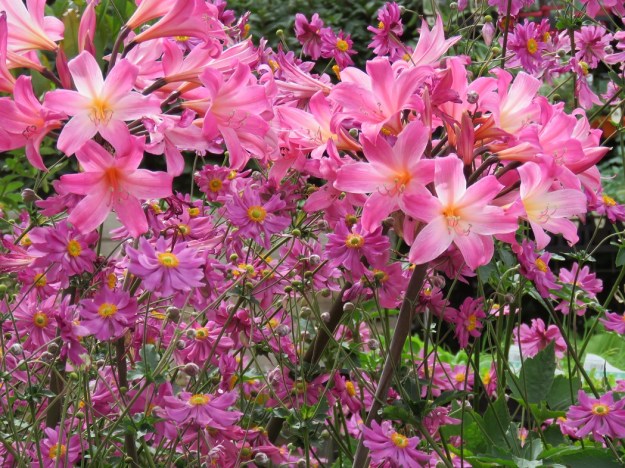
Colour-toned belladonnas and Japanese anemones for an early autumn welcome

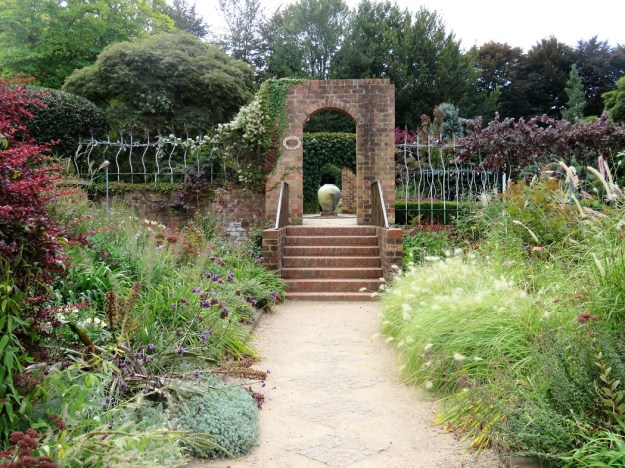
I have never seen a garden that can peak for twelve months of the year and at the end of a long, hot, dry Australian summer, it was not at its peak but there was still plenty of interest along the way. When I review my photographs, I see that I kept focusing on the high quality of most of the garden structures. Attention to detail, again and again. I really appreciate that. There is a timelessness to good structure that carries a garden well through the years, even though the plantings may change with the times.

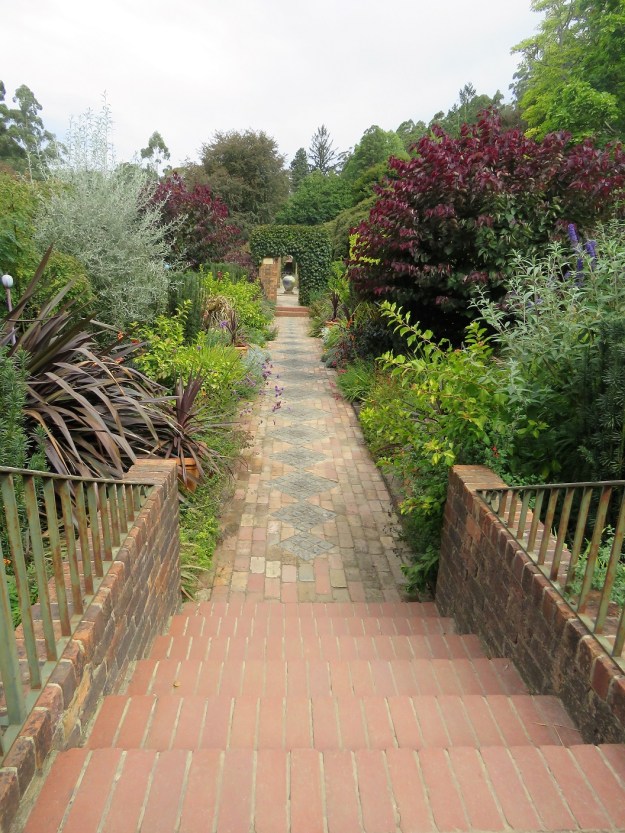
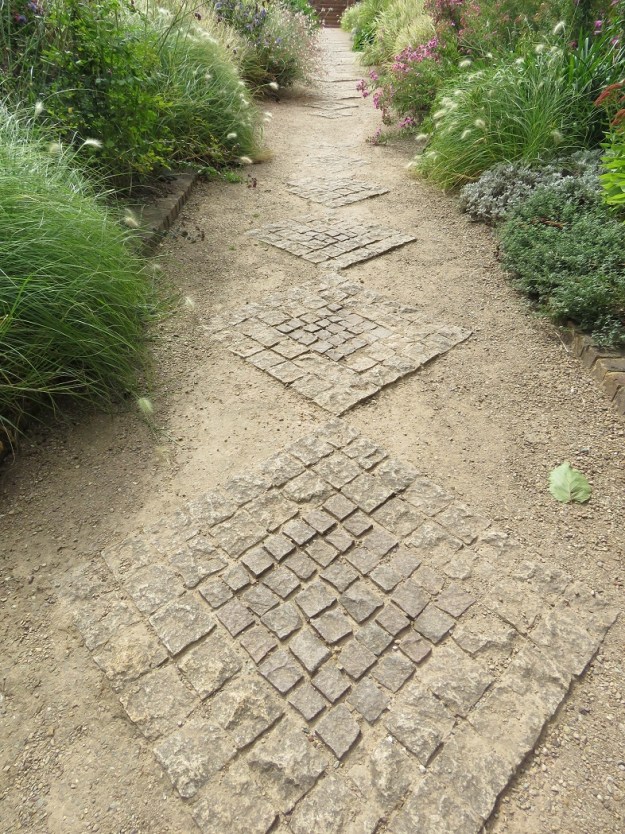
I liked the cobbles set in the path, as an example of understated detail, though I am guessing the fill has washed away, leaving them as something of a trip hazard. It was the only maintenance flaw that I recall in a garden where the overall management was of a very high calibre.

Attention to detail – look at the staging of this feature pot 

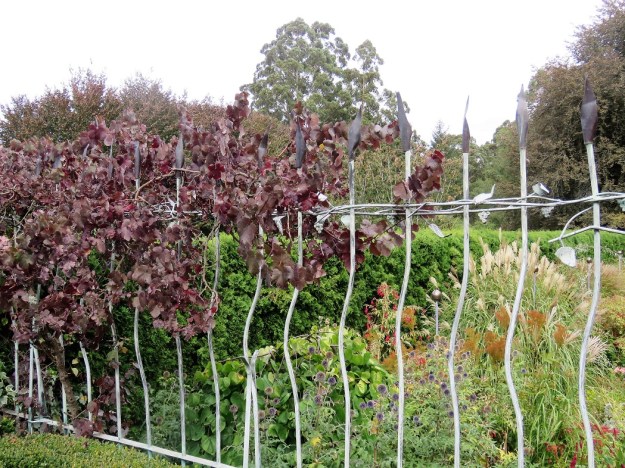
The hand-crafted wrought iron fence that separated gardens took my fancy as a personalised, modern take on an old craft.

Detail again – look at the beautiful end to this balustrade. And unless I am mistaken, that is a Marlborough rock daisy from New Zealand, Pachystegia insignis, nestled into an Australian garden that is modelled on English design.

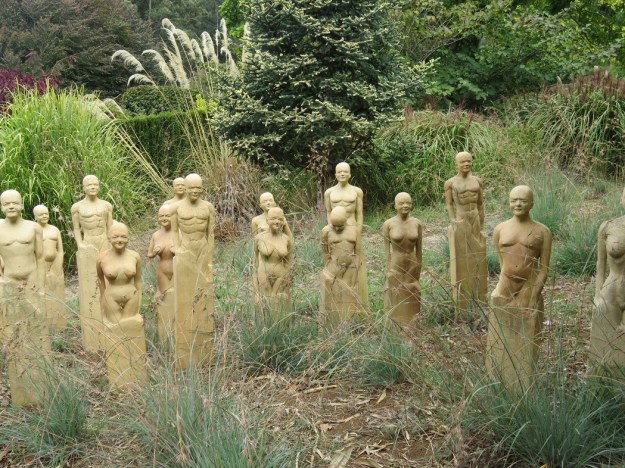
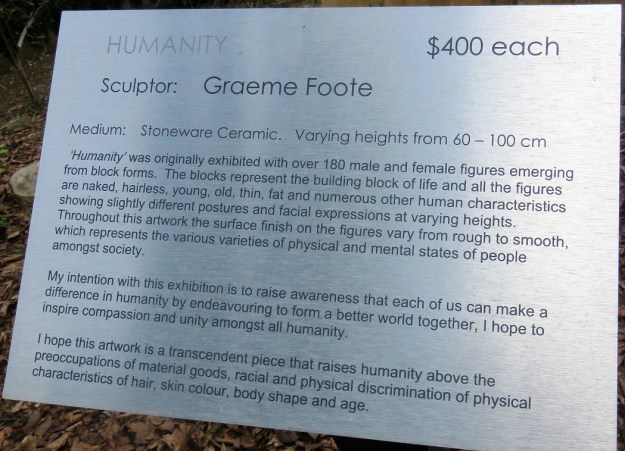
I blog. I do not instagram. This may be the reason why I forgot to photograph my lunch but as far as I recall, it was very pleasant. What I did photograph was an installation of figures created by sculptor, Graeme Foote. These I really did like, especially in their setting here. I could find a home for some of these figures. While the individual price seems very reasonable at a mere $400 each, the trouble is that we would need at least 10 to make a statement.  Plus packing and freight across the Tasman. Sometimes we have to be content with memories and photographs.

A day at the Melbourne Flower Show

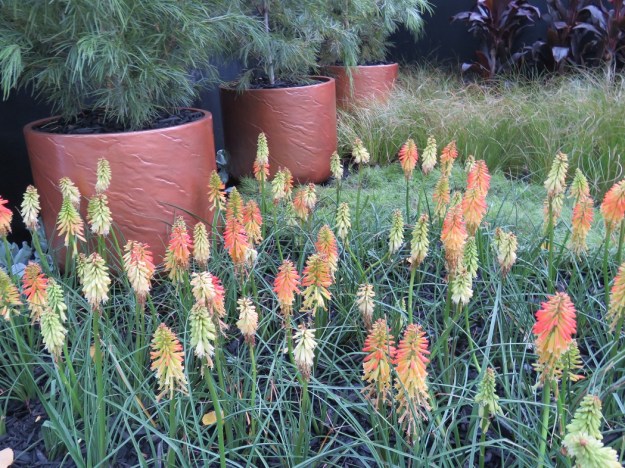
Lots of lovely kniphofia featured which may be a reflection of the time of year for the show

I admire the skills it takes to get massed displays of tulips flowering in autumn (which will be to do with times of refrigeration and removal from the cold to controlled growing conditions). But I prefer the kniphofia.

We went to the Melbourne Flower Show last week. Never been before. There are reasons why we have never felt the desire to time one of our UK trips for the Chelsea Show. We are gardeners, first and foremost. Put us in a real-life garden and we are in our element. Flower shows are a whole different genre and it takes some effort to switch focus and orientate oneself to the small, staged gardens that are the centrepiece of such events. Added to that, we are not good shoppers and the retail outlets take up the lion’s share of display space. Clearly, we can’t buy plants in Australia to bring home or we might have taken more notice of the plant stands. But we are adaptable people and had a most pleasant day in the 27 degrees (Celsius) of an early autumn day in Melbourne. Though when the temperature plummeted to about 12 degrees max two days later, we were glad we went on the Thursday and not the Saturday.

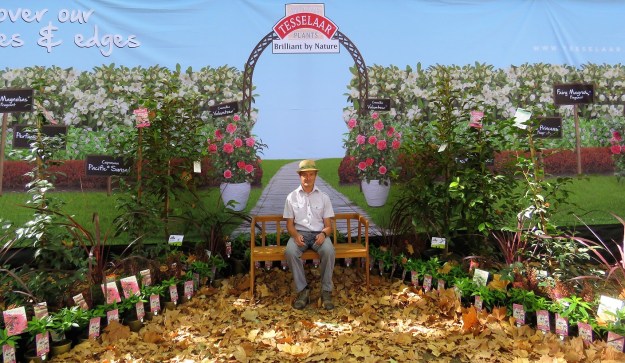
We were not above some pride in what I called the Mark Jury Wall of Fame on the outside of the Media Centre. And Mark was sufficiently gratified to pose for my photos. All the plants except the coprosma are his breeding. Admittedly the Media Centre is organised and run by our agents, Anthony Tesselaar Plants, but it did feel a bit like having a prime position at the show. Sometimes, it is easy to lose sight of the bigger picture when we are immersed in our garden at home and New Zealanders rarely like to hail one of their own, lest that person get a swollen head, so it was pretty interesting to find his standing in Australia is greater than at home.

‘When flower shows get judgemental’

Our adult children were with us and I was greatly amused when the eldest shared her photo to Facebook with the caption: ‘When flower shows get judgemental’. These ‘Achievable Gardens’ were largely modest affairs and indeed very achievable, for the most part.

Definitely achievable

I failed to take notes but I am pretty sure this was the winner in the Achievable Gardens section

The show gardens were a mixed bag. It is hard to be genuinely original in a small, tightly constrained space and there were the usual cute cottage gardens, stylish courtyard gardens, outdoor living rooms, a rill (of course a rill), living walls and the like.

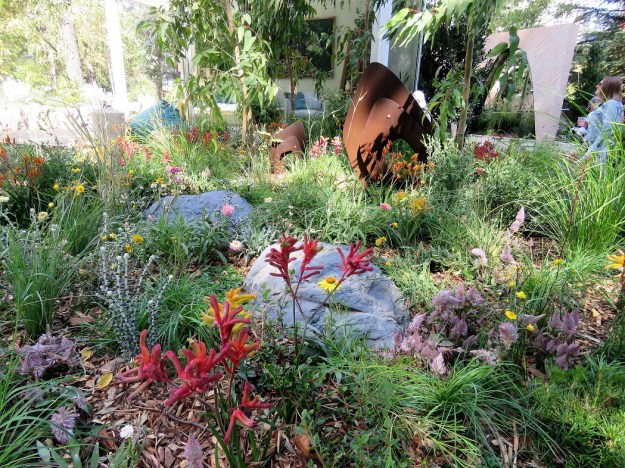
We particularly liked this informal, wildflower garden by Ben Hutchinson but the judges did not rate it as highly as we did. Very glaring light conditions so the photograph does not do it justice.

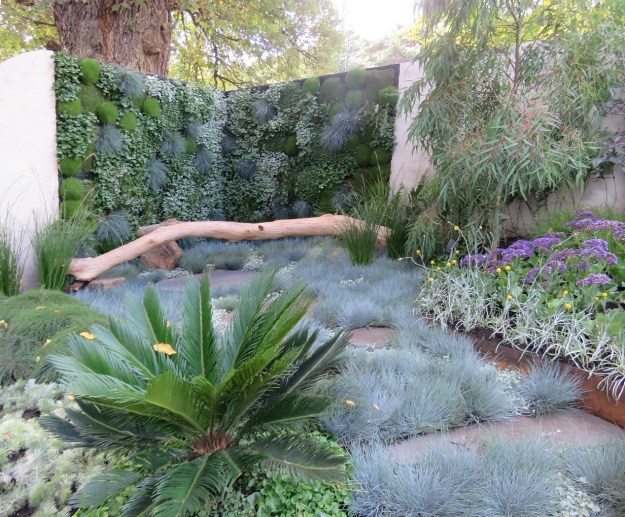
I liked the use of blue festuca grass rather than the more cliched black ophiopogon (mondo grass) between the pavers in this immaculate garden

I have to admit that at the time we didn’t analyse what trends we could pick and it is only reviewing my photos and writing that has had me turn my attention to that. It is a different country, a city with a different climate to ours (much hotter and drier than us in summer), early autumn and we are not particularly familiar with the plants favoured in Australia. Also, these are temporary show gardens so most start from the base of defining the area with hard landscaping.

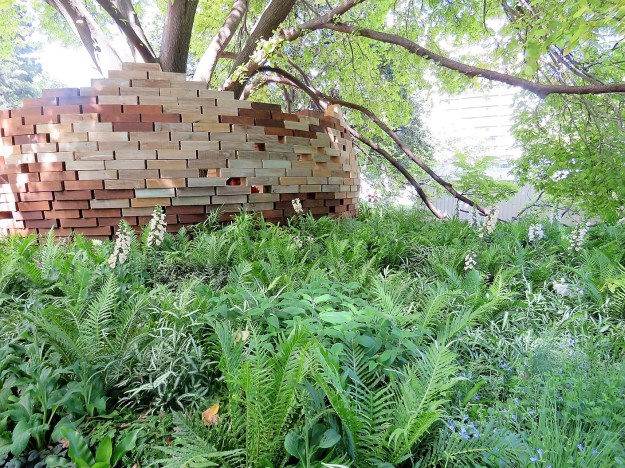
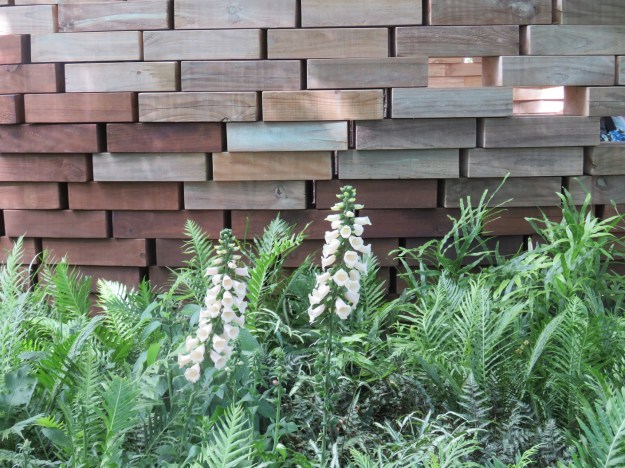
Look at the lovely detail in the wooden beehive-like construction. I failed to record the designer and the programme did not help me determine that afterwards. 

But overall, I think I could declare that minimalist, hard-edged form and simplistic plantings can be consigned to the dustbin of history. I can’t recall much, if anything of potagers, either. Flowers. Most of the gardens used flowers and colour and a relatively wide plant palette, often with Australian native plants featuring large. Overall, naturalistic plantings which make an ecological contribution. We, of course, are quite happy with this trend. It fits with our own gardening philosophy.


The Best in Show was beautifully executed with a lot going on and every detail attended to with care and skill. I could see why it won. My photos don’t do justice to the exquisite management of colour.  The light was very harsh. It was also a big budget installation, but in the end, that is what these flower shows are all about.

Overall winner – and deservedly so

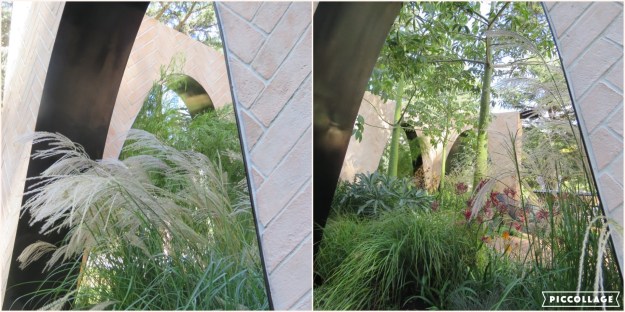
Framing views

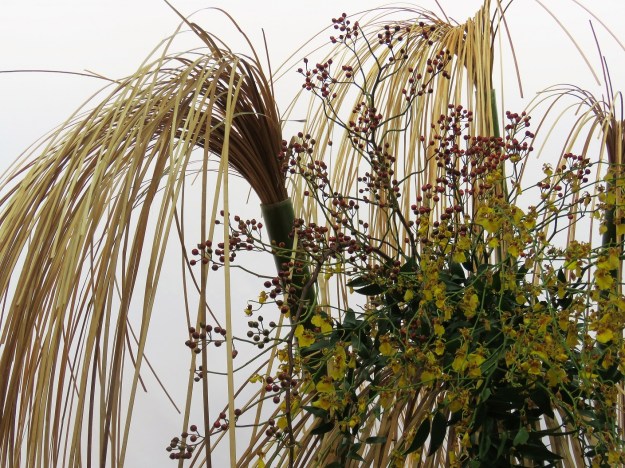
We only passed through the Great Hall but I went back to photograph the ikebana. I am not into floral art at all and have never taken any interest in the refined skills, balance and allusions of ikebana. But visually, I appreciated the simplicity of the large examples on display.

As regular readers will know, we are not big on garden ornamentation and decoration, but these bark birds of prey were striking, if natural styling is your preference.

More from Melbourne to come. A visit to the Dandenongs and Cloudehill Gardens, the Melbourne Art Gallery and Botanical Gardens.


Back from a near death experience – an obscure fig


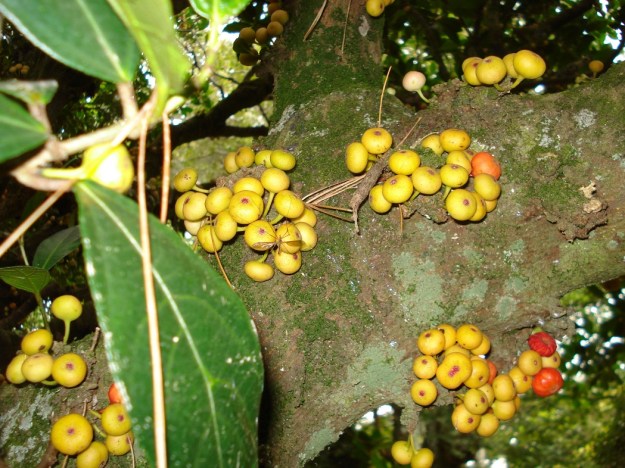
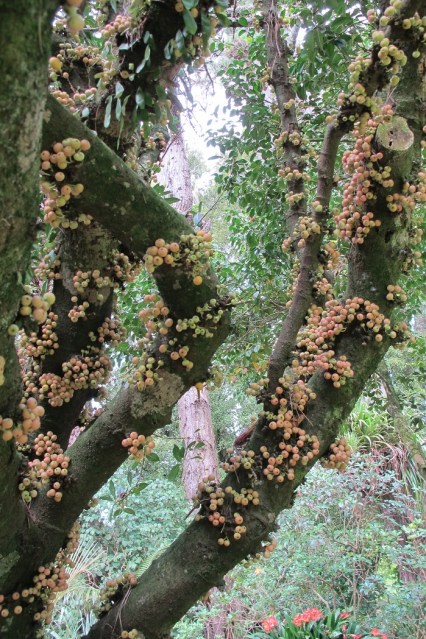
Very curious fruit on Ficus antiarus

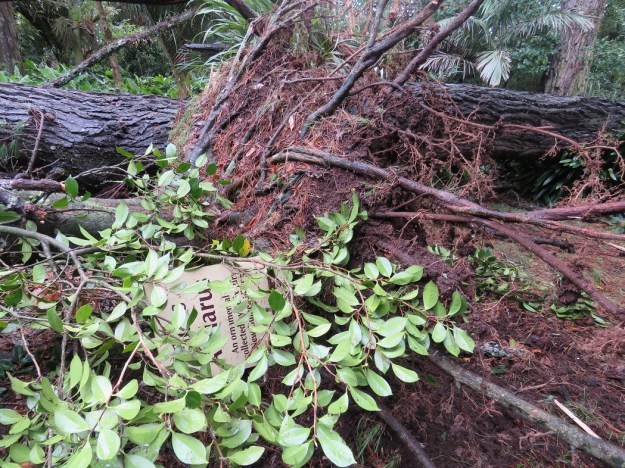
The most asked about plant in our garden was Ficus antiarus. I say was because the small tree became collateral damage when a massive pine tree fell over last April. We feared for its long-term survival as all that remained in the ground were some of the longest roots.

Brought down by an enormous falling pine last April. That is the root system, uprooted. 

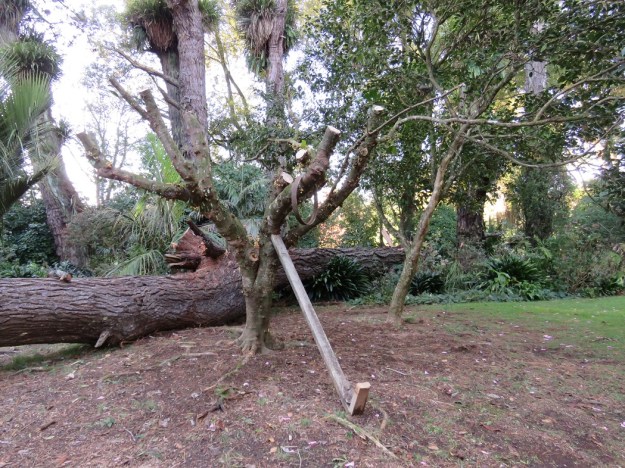
It took a couple of weeks to clear the area sufficiently to have room to move and then Mark and Lloyd levered up what remained and installed a prop to hold it more or less upright. Mark took a chainsaw to it to remove most of the canopy and the broken branches. He pruned to keep the shape while reducing the stress on the tree by reducing the smaller branches and much of the foliage. Too much leafy growth would mean increased loss of moisture and we hoped it would put its energy into re-establishing the root system over winter. We crossed our fingers.

levered more or less upright, pruned by chainsaw and propped in place last April

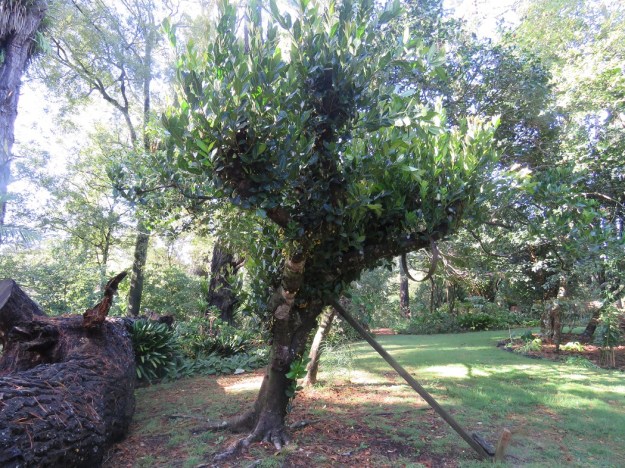
Behold the fresh leafy growth now. It is a sight to behold. It set no fruit this year but we didn’t expect it to after such a shock. It appears that it will live on for another few decades. I asked Mark how long the prop would need to remain in place and all he said was that he had no idea so I guess he hasn’t thought about that yet.

Ten months later and we are delighted by all the fresh growth

Mark’s father Felix brought Ficus antiarus back from his one and only intrepid plant-hunting trip – to the highlands of New Guinea in 1957. He thought that in the cooler temperatures of the areas with altitude that he might find interesting plants that would survive back here. He didn’t bring a big haul back but the ficus, Schefflera septulosa and Vireya rhododendron macgregoriae have all stood the test of time.

The ficus has mid to dark green leaves with an interesting rasping texture – not unlike green sandpaper. It is evergreen, unlike most eating figs. What is most remarkable about it is the generous set of tiny figs growing out of bare wood. They start out cream, ageing through orange to red. Birds don’t strip the tree so the fruit must not be very inviting to them. I have nibbled the odd red fruit and they have a faint figgy flavour but not enough to make them an addition to the diet. We just like it as a curiosity at the end of the Avenue Garden.

Before it was knocked down – we are now optimistic it will return to this state.

Covering the ground – our free mulching options

Oh look! I made a little display board.

Mulching is what enables us to maintain our garden to the standard we want, particularly keeping the new herbaceous plantings free of invasive weeds. Being economical gardeners, we don’t ever buy mulch in but rely on the resources we have here. I laid our main options out to photograph them.

Gravel mulch

Mulching with gravel at Wisley

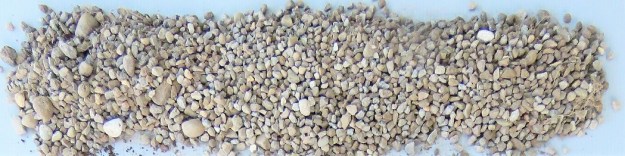
I have seen gravel used at the RHS Wisley Gardens, particularly in the Piet Oudolf borders and the Missouri Meadow. In its favour, it is weed-free and it makes a good seed bed in that managed meadow where seeding down is encouraged. However, it is heavy to handle, expensive and, in a situation with herbaceous plants which need digging and dividing, it is inevitable that a fair amount of it will end up in the soil even if you make efforts to scrape it to the side. I am reluctant to use it and that is a pity because we have a small mountain range of it retrieved from the capillary beds when we dismantled them. Maybe 10 cubic metres of it and that is a lot.

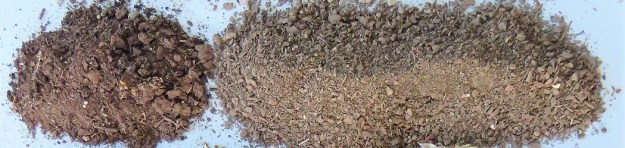
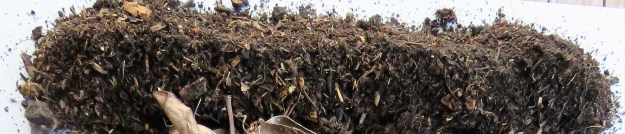
Granulated pine bark is a stable mulch and a neutral dark brown. I doubt that it comes cheap if you are buying it for this purpose. Not only do we have a small mountain range of gravel, we also have what is referred to here as ‘the bark slug’. When we ran the nursery, everything was potted into granulated bark and Mark decreed that the bark was not to be re-used when plants were being re-potted. His position was that the bark potting mix was one of the cheaper inputs overall (he didn’t pay the bills; I was often somewhat shocked at how much the bark bill came to each month at around $750 a truck-load) and that using fresh bark cut down on weed contamination and disease issues. All the used bark went out to the bark heap and as the heap grew, it seemed to take on a life of its own and creep out like a sand slug.

Granulated pine bark – after at least a decade and fresh, but dry

We don’t re-use the old bark as a garden mulch any longer because of the fertiliser bubbles within it. We always used Nutricote as a fertiliser for commercial plants and very good it is too. But, and it is a huge but, the coating on the fertiliser granules remains long after the actual fertiliser has been used. Mark initially rejected the use of the waste bark on paths and gardens because his eye zoomed in immediately to the fertiliser bubble casings within it. Now we are even more concerned that it does not appear to be biodegradable and we don’t want to be spreading a non-biodegradable product through the environment.

This is not a problem that you will have if you buy in bark chip because it won’t have fertiliser added (and not all fertiliser comes with a coating). To the right, is fresh(ish) bark that we still use as a potting mix. To the left is what it looks like after more than a decade in our bark heap. Despite being an organic product, pine bark does not decompose readily.

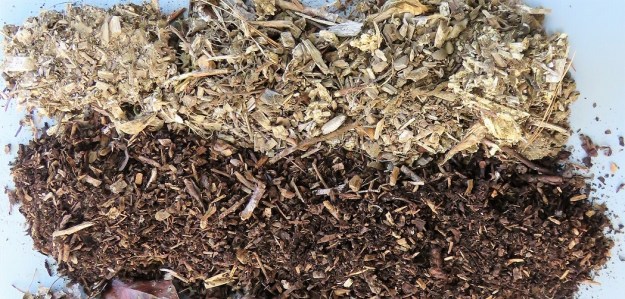
Commercial chipping at the top, our home chipper below

Next is the woodchip mulch after nearly two years on the garden. It is not my favourite mulch but we were given a large truckload of freshly mulched copper beech branches and leaves and I needed to cover a few hundred square metres of newly planted garden. Beggars can’t be choosers. It was put through a commercial mulcher and is much coarser than we get out of our domestic mulcher machine. It is very light to handle and forms a crust across the surface, discouraging weed growth. I just don’t like the colour – it is pale creamy yellow when it goes on – and because it is so coarse, it takes a long time to mellow out to something more neutral. And I don’t like the coarseness. It looks… utility, which indeed it is.

Our home-generated woodchip, being of a finer texture, discolours far more quickly and is less dominant visually. But it takes a lot of prunings to generate much quantity.

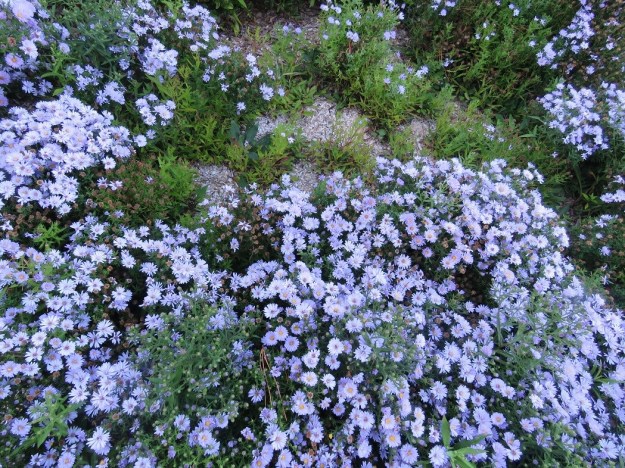
Evidence of nitrogen robbing at the top – plants are sparser and showing a yellow tinge while others have thrived

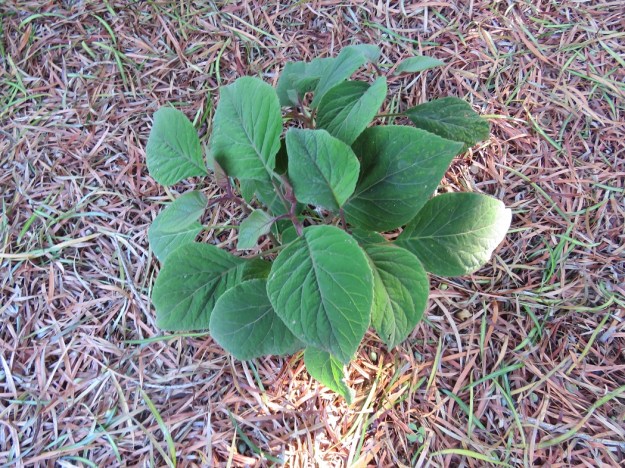
The advice with woodchip is to be careful to lay it on the top because it robs the soil of nitrogen as it decomposes if it is incorporated into the soil. Behold an example. I did the initial planting of this aster and laid mulch. I must have gone back into the area to add some more plants. Clearly, I was not sufficiently careful to scrape the mulch to one side and some of it was dug in when planting. The somewhat bare area and yellowish tinge to the plants are signs of nitrogen deficiency. I keep telling myself to get out and scatter a bit of blood and bone on the affected plants to combat this but we do not generally add fertiliser to our garden so I haven’t got around to it yet.

Leaf litter mulch

Smaller leaves look tidier

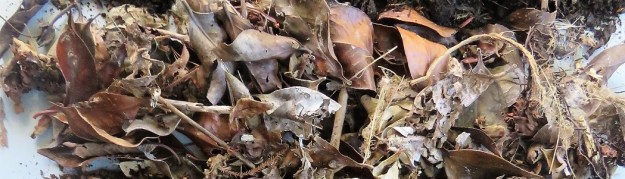
Next up is leaf litter – natural, free, nutritious, enabling a healthy soil ecosystem but untidy for small, tightly maintained areas. The birds will scratch amongst it (which is a sign of a richer soil environment because they are looking for food) and it often needs raking back into place until it builds a good under-layer. I like leaf litter mulch visually but where I am using it is in larger, more naturalistic spaces. It would not be my first choice for small, confined areas. Though the smaller your leaves, the tidier they will appear.

Compost is king

And finally compost – our preferred mulch by a country mile. Because our soils are so friable, we generally add compost as a mulch rather than digging it in around the roots of the plants. The worms will do the work and incorporate it over time. We often choose to put the woodchip and leaf litter through the composting process first. Compost is light to handle, natural in appearance and makes a major contribution to soil and plant health. We make a lot of compost here, putting it through a process that heats up sufficiently to kill off many nasties but even so, we try and avoid putting seed heads and invasive plants on the compost heaps. The problem is that even though we have compost mounds that are turned by tractor, we don’t make enough to compost to meet our mulching needs which is why we sometimes have to go to alternative options.

Our gravel mountain (with a pretty apricot foxglove seeding into it)

Upon reflection, I may have to turn to the gravel mountain to mulch the new grass garden that I plan to plant this autumn. It is about 450 square metres and laying an 8cm mulch across that area is going to take a lot of whatever I use. At least this is a planting that I do not anticipate having to do frequent digging and dividing.