
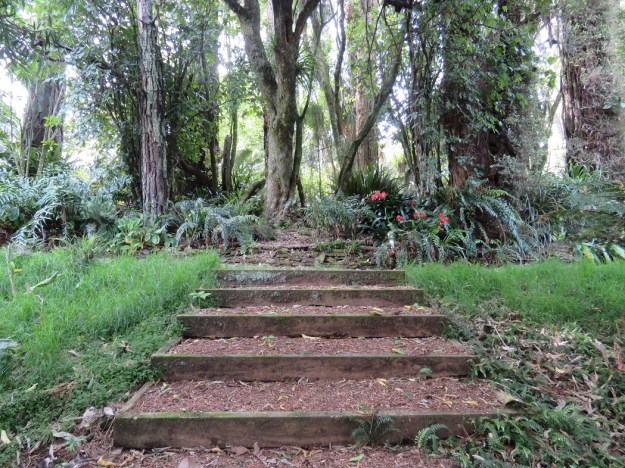
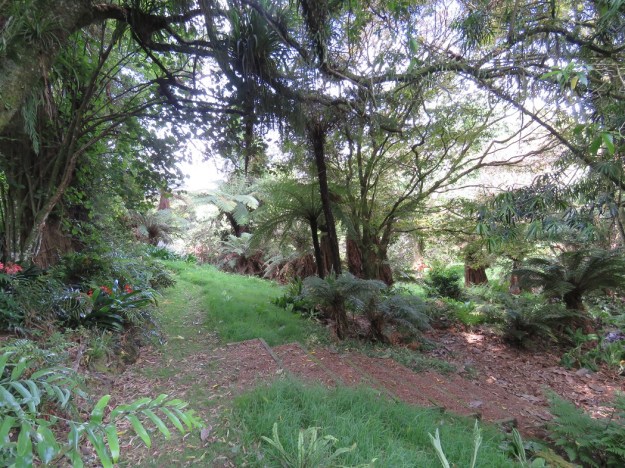
One of the access paths linking the park to the avenue gardens
When you garden on a town section, boundaries are usually clearly defined, most often by fences or hedges. Some lucky gardeners are in a situation where they can visually *borrow* a wider view of the neighbours or maybe some bush or landscape to draw the eye out from the rigidly confined boundary. More often, the situation imposes limitations that mean the garden has to be inward looking and confined to its allotted space. Some people like that sense of a contained space, accentuating it further with tall fences. Whether you see that as security and privacy or self-imprisonment depends on the individual.
It is different when you garden in the country and that clear definition of an end point is arbitrarily imposed on a larger landscape. Or not, as the case may be.
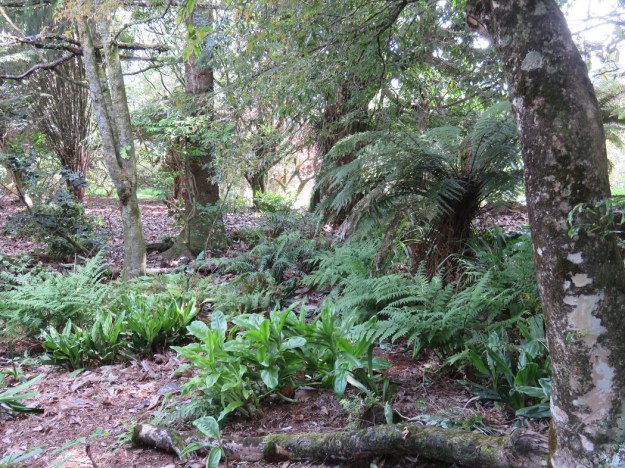
Scadoxus to the right, calanthe orchids to the left along with self-sown ferns and tree ferns – subtropical woodland, I guess
I had never really thought about what Mark was doing in one area where our avenue gardens meet the area we call the park. I had vaguely noticed that he was drifting down the hill with some plantings of pretty choice material like some of the interesting arisaemas, calanthe orchids and scadoxus, but in a casual, naturalistic manner. We were in that area together recently when he commented that he was attempting to blur the line between highly cultivated garden and wilder areas, to transition seamlessly. It was like a penny dropping for me. Of course that is what he was doing.
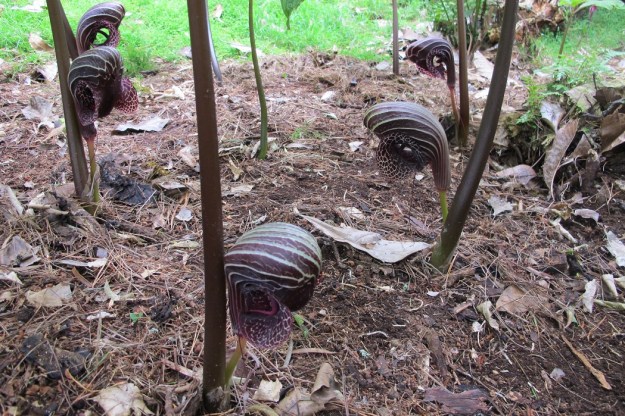
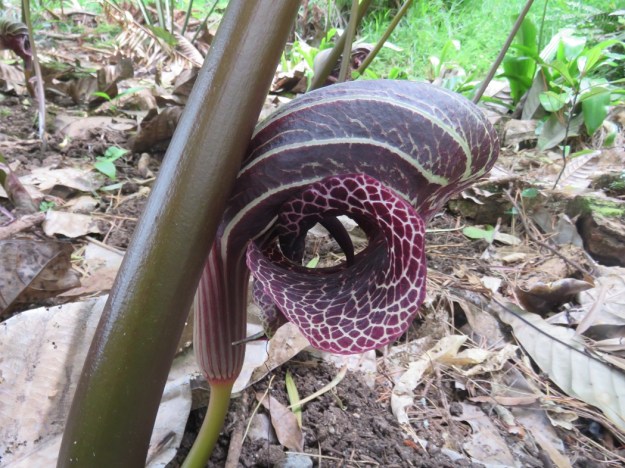
Arisaema dahaiense!
This inspired me to get into that area where I have never done anything before, bar the occasional quick tidy-up. It was a perfect place for a few clivia plants. I am trying to rehome the last of the clivias red, orange and yellow that had been potted up by the last of our nursery staff and that must have been back in 2011. They are amazingly resilient plants. Some were in very small planter bags and all that has happened in the intervening years is that the pots have been moved out of the former nursery area and beneath trees. They have not been fed, let alone nurtured and loved but still they are green (some more greenish than dark green), many are flowering and seeding. Enough is enough, I thought. These need to planted out.
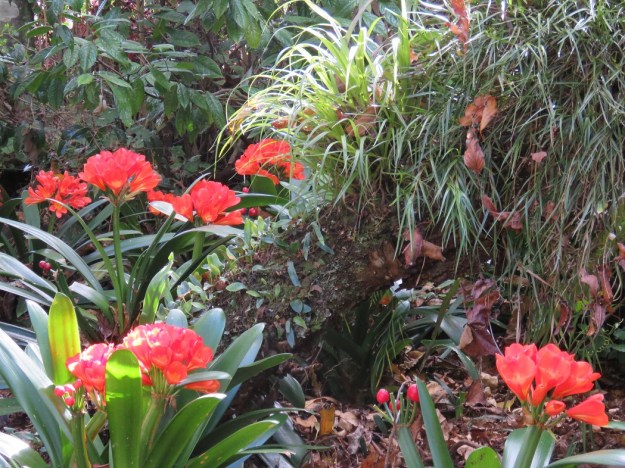
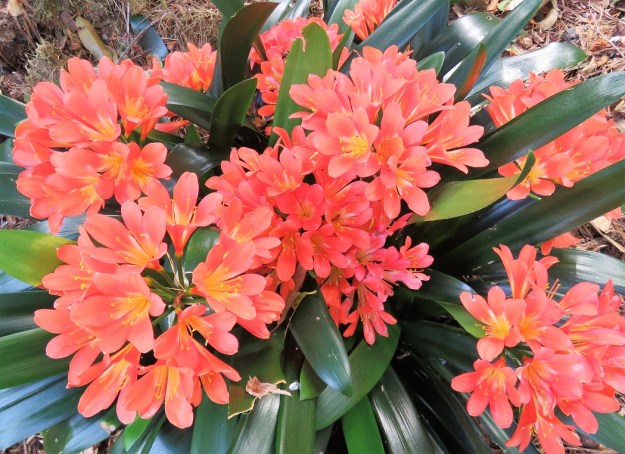 Having seen the occasional garden that suffers from the ABC syndrome (another bloody clivia, mass planted), I have been trying to drift them through the shaded areas, mostly areas that are loosely maintained at best. It takes longer to plan a drift than a mass planting and drifting a couple of hundred clivia plants without making them a mass takes a while.
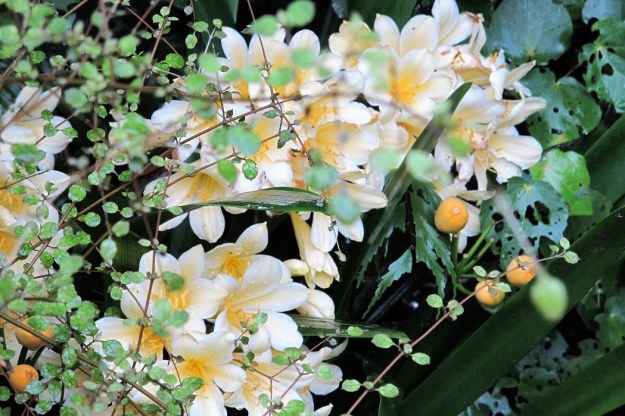
Yellow seeds from last year’s flowering, visible here, will flower yellow.
Not for us all the yellows in one area, oranges in another and reds elsewhere. There is nothing wrong with that. I have seen it done and it is what I describe as the ‘landscaper look’, usually done with plants that have been purchased and are identically matched, being the same clone. It is just not our style. We prefer a looser look, using seedling raised plants so there is subtle variation, the mix of colours being more suggestive of the gentle hand of Nature enabling plants to seed down in situ. Which they will do over time – we have clivia seedlings popping up around the garden but to leave it all to Nature will take longer than we have left. We are just hurrying the process along by a decade or two when we use established plants.
If you are going to raise your own seed, it pays to start off with the best parents. This means selecting the ones that flower well every year and have the best flower heads of the type you want. For showy garden plants, we want ones with fuller heads rather than too many with the hanging bells. The red clivia seed will eventually bloom orange and red; yellow clivias come from yellow seeds. True. I am not sure what colour seeds the peach ones have (we only have a few in the new peach shades) and we don’t have any of the green and white clivias in the garden yet.
When I think about it, blurring the lines are the tool we use to get to a seamless transition between different garden spaces. The soft transitions within the garden are all part of refining our thinking about how important it has become to us, personally, that we garden confidently with a strong sense of place, as referenced in this piece I wrote in March last year.
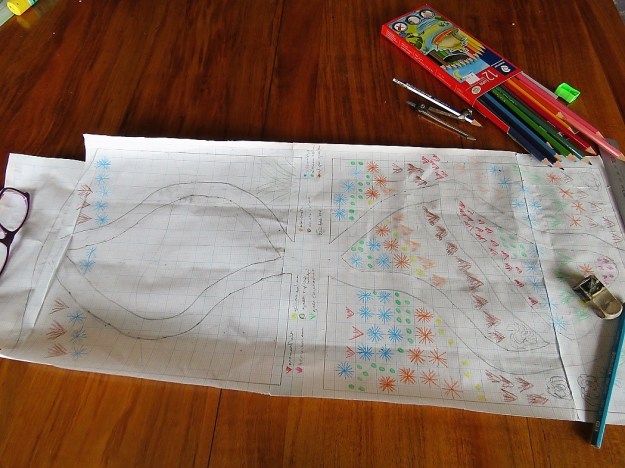 Mark has been laughing at me and calling me Gertrude. This is a reference to Gertrude Jekyll so I will take it as a compliment. It is all on account of my working on a planting plan. On graph paper, with coloured pencils.
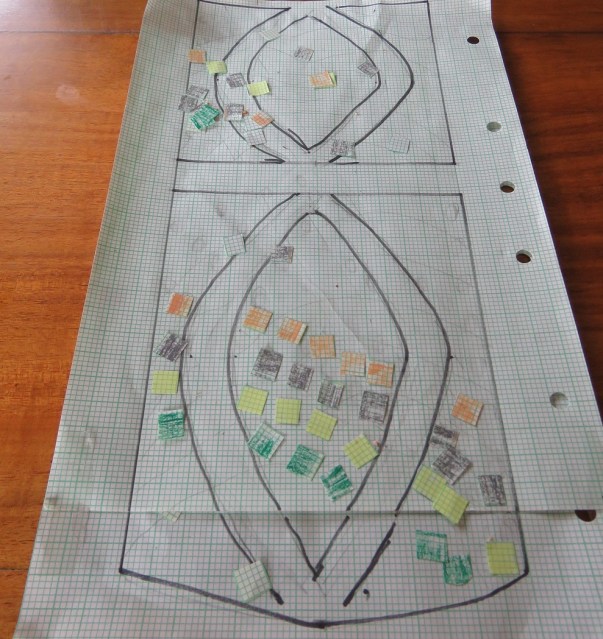

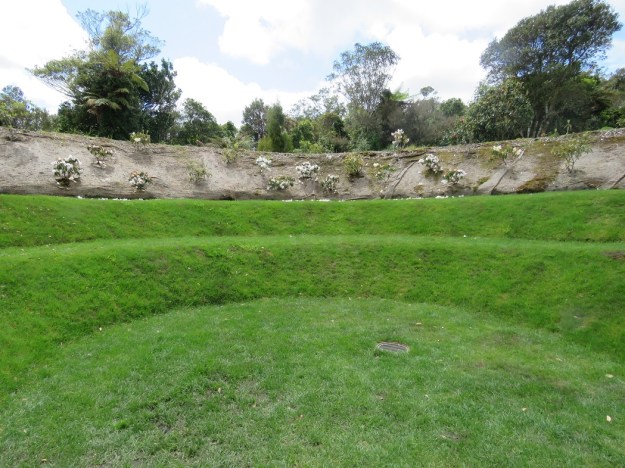

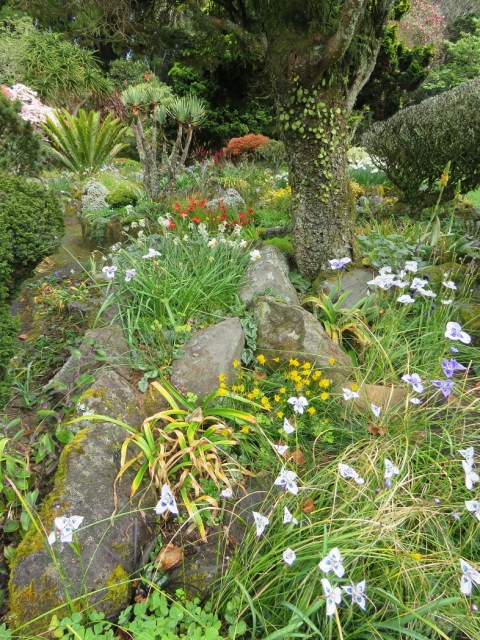
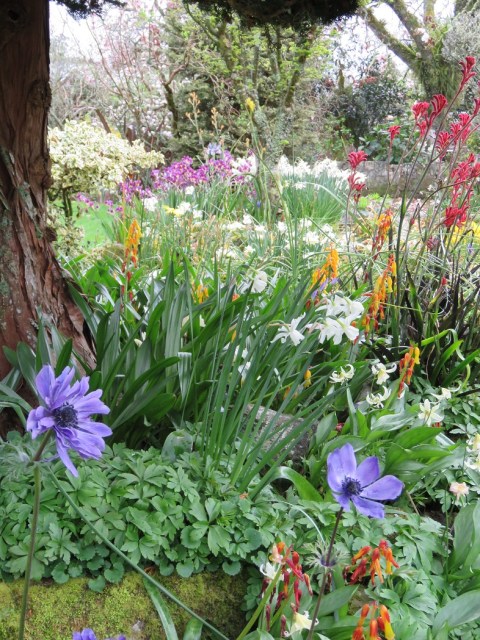 At ground level, the construction of the island rockery beds varies from ankle height to knee height to thigh height – sometimes all in the same island bed. The paths have also been lowered which accentuates the garden elevations. Truth be told, the lowering of the paths was probably in part to get soil to fill the raised beds but it is a detail that is less obvious from above.
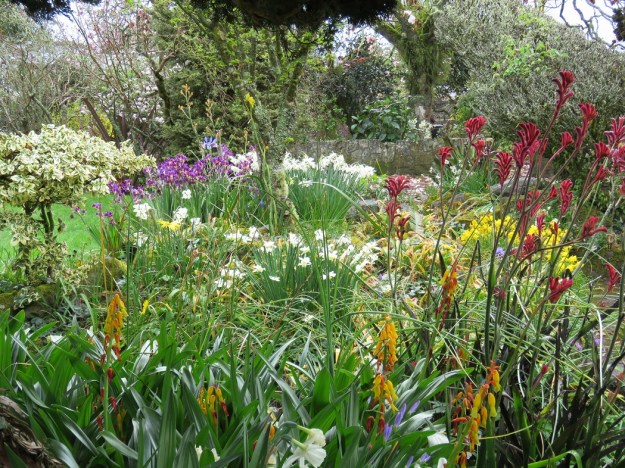 Yesterday, on a grey day, I looked at some of the views within the rockery and was delighted that it was like an Impressionist meadow, albeit in miniature.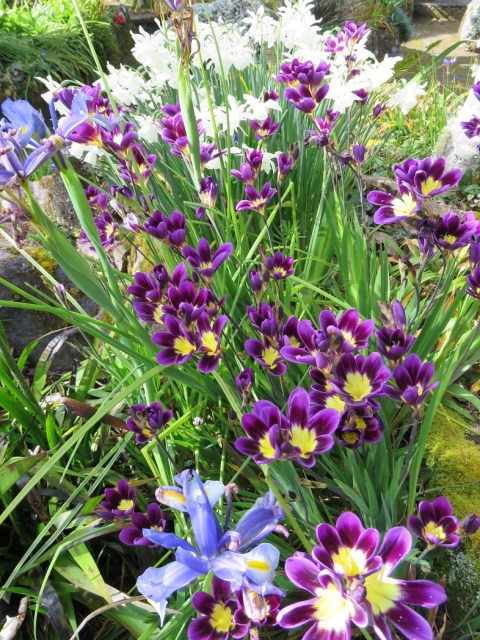

 At the end of March this year, I wrote about
 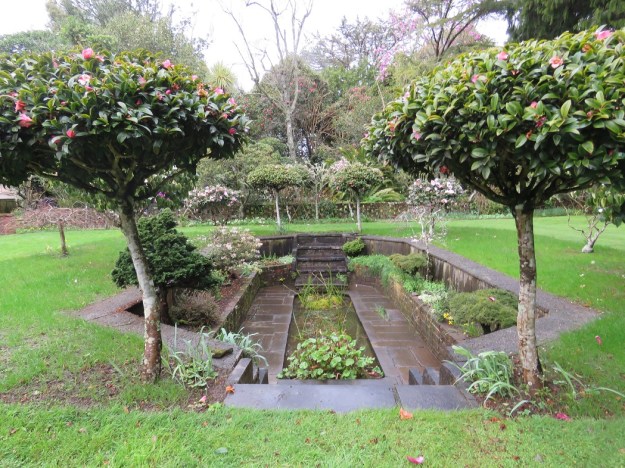 Sometimes there are unforeseen consequences. And we did not forsee this one. Clearly, the cultivated garden borders that were there before soaked up a lot of water. As soon as we cleared them and levelled the ground, the sunken garden started flooding. It is the lack of vegetation, we thought. When we get heavy rain, it is turning the soil to a smooth surfaced, muddy area that sheds the water immediately rather than absorbing it. When the grass grows, it will be better. But no.
 We get heavy rains here, torrential at times. I usually observe that in a climate with relatively high sunshine hours and a relatively high rainfall of 150cm, it means that the rain tends to be heavy and then the skies clear and the sun comes out. We also have excellent drainage; surface water is absorbed within twenty minutes of the rain stopping. But this does not solve the sunken garden problem. The pond is filling with mud, the goldfish are unhappy and the little raised gardens which are in the sunken area are full of treasures that are threatened by the sodden soil.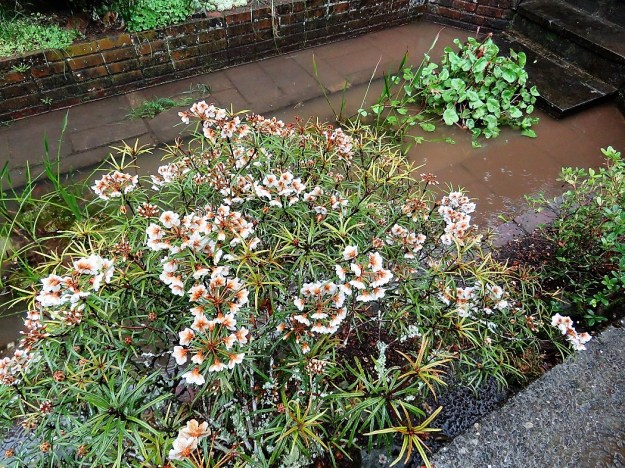
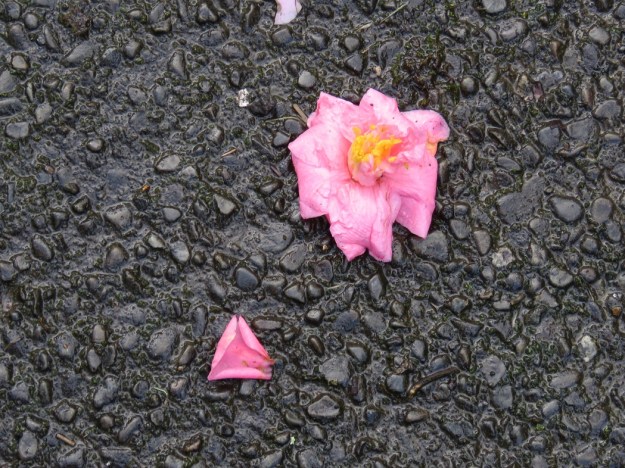
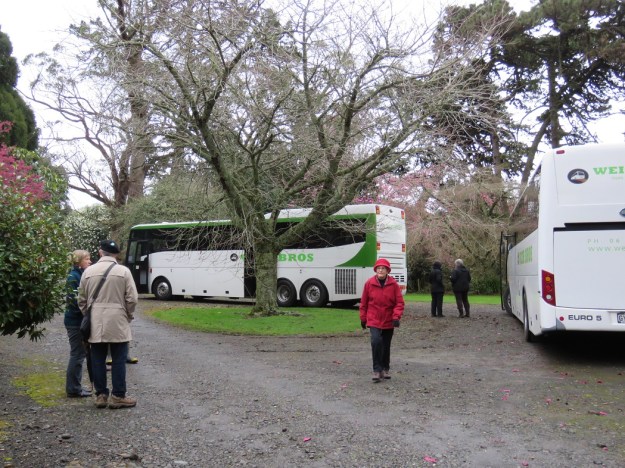 We hosted the Camellia Society conference tour last Monday, the first big group we have allowed in to the garden since we closed five years ago. There is a long-standing connection between the Jurys and the Camellia Society, even though neither Mark nor I are active members, so we wanted to honour that history. It takes quite a lot of work to host a large group and we were somewhat out of practice but it all comes back again.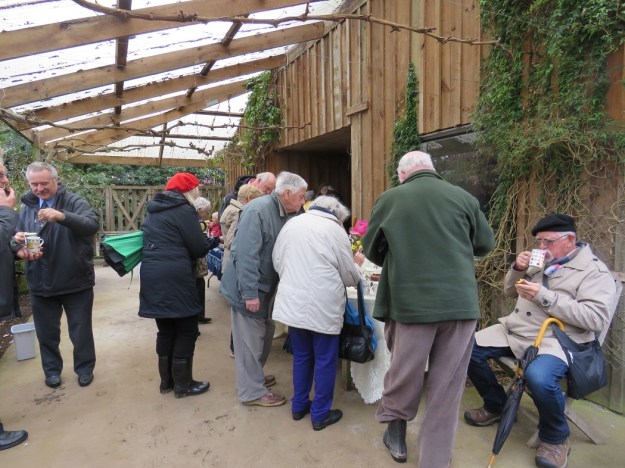

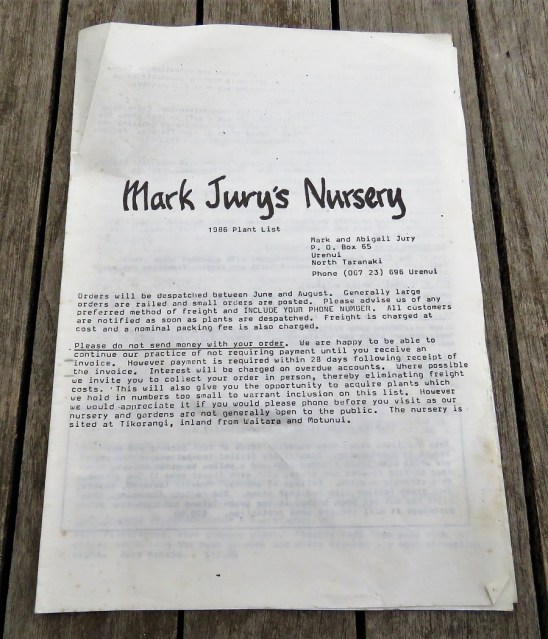
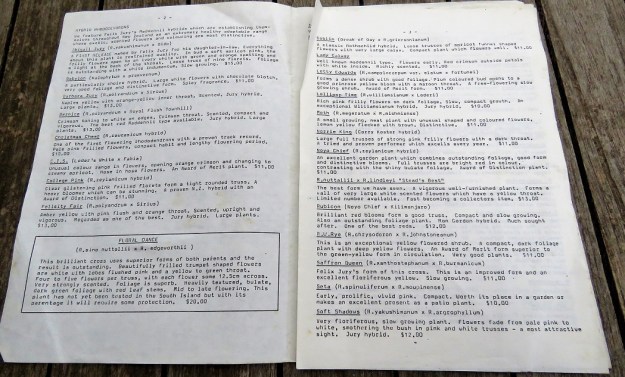 Mark’s father was stationed in the garden, Mark in the nursery and I stood at the ready to welcome people and head them round the garden first. Picture me, flapping my hands ineffectually, trying to split the group as they poured off the coaches and out of the cars, determined to get to the nursery first. We were inundated. For the next hour or so, Mark ran from side of the nursery to the other, frantically hand writing labels. Older NZ readers will know Bill Robinson from Tikitere Nursery who graciously circulated, recommending plants left, right and centre. At the same time a new gardener who shall remain nameless (he went on to establish a large garden that made up in scope what it lacked in detail), whose bank balance was considerably larger than his knowledge, strutted around in very large chequered trousers cut from the same cloth as the finish flag at a race track, big-noting in his determination to buy what everybody else was buying but in multiples. Mark’s sister-in-law and I took the money in a single plastic icecream container. It was the days before eftpos so it was all cash and cheques.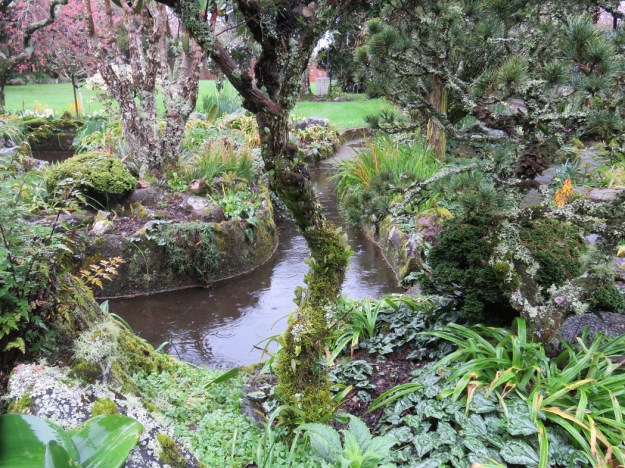





 The stand of flowering cherries in full bloom drew the crowds and proved yet again that humans like colour and blooms, preferably in abundance. It is a locally bred hybrid, a cross between the wild cherry Prunus avium and Prunus campanulata, named ‘Yvonne Matthies’. I have no idea if it is available in NZ and, of more importance, whether it is sterile or not. I imagine with all their bats and birds in Australia, they are not so keen on potential weed cherries that are spread by birds.
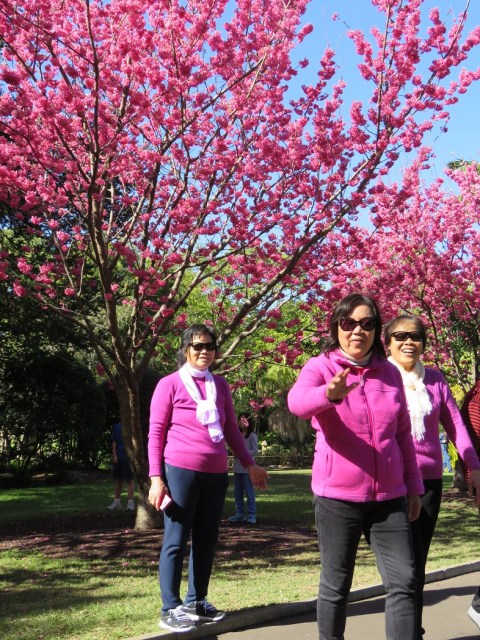 I particularly appreciated the tour group with the three women who, by pure chance, toned so perfectly with the blossom. They were equally delighted and took many (many, many) photos.
 Finally, the sign in each toilet cubicle spoke volumes about the sheer number of overseas visitors these gardens must attract. Toilet etiquette and requirements vary throughout the world. A Twitter friend was more worried by the fact that the roll of toilet paper is depicted round the wrong way. it should be unrolling from the top, not from underneath. That is all I will say on this matter.
