Tag Archives: Mark and Abbie Jury

Summer iris

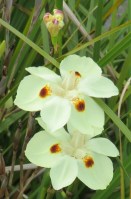
Dietes grandiflora

Dietes grandiflora

It took me a while to warm to Dietes grandiflora but now I love the pretty butterfly-like blooms that we get all summer. We have a large patch of it but as overhead shade grew, the incidence of flowers decreased year by year. It wasn’t until a big chunk of it was moved to a sunny spot – left to sit upon the ground, in fact, and never even planted – that I realised its flowering potential was much greater than we had been seeing in recent times.

Dark colocasia with dietes

Dark colocasia with dietes

Last summer, I looked at the somewhat neglected and misdirected state of the gardens around our swimming pool. Unlike most pool owners that I see, we did not locate ours in a prime garden position and turn it into a landscape feature. We knew from past experience that we would never maintain a pristine pool twelve months of the year and we did not want it in full view. Instead we found a side-line position which was still convenient and sunny but largely out of sight. In these circumstances, there is not much point in planting for year round appeal. We only want it looking good over summer. I removed all the bulbs and spring flowering material and opted for a combination of a dark-leafed ornamental taro (black colocasia) in combination with Dietes grandiflora. As I write this, it is too early to claim huge success but it is looking promising and will be easy to maintain. ***

Dietes bicolor

Dietes bicolor

There is nothing quite like becoming a staple of amenity landscapers to remove the mystique of a plant. And indeed I photographed the pale yellow Dietes bicolor in a shopping centre carpark where it grows in the harshest of conditions – windswept, foot trampled, bashed by cars, hot, dry and left to its own devices. And still it flowers for many months on end. We don’t have it in our garden, but I wouldn’t turn it away. Grown in slightly kinder conditions, I am guessing it may flower more prolifically and an annual groom of spent foliage would keep it looking tidier. It may be that D. bicolor is favoured in such plantings over its prettier relative, D. grandiflora, because it is more compact at about two thirds the height.

Cypella coelestris

Neomarica caerulea

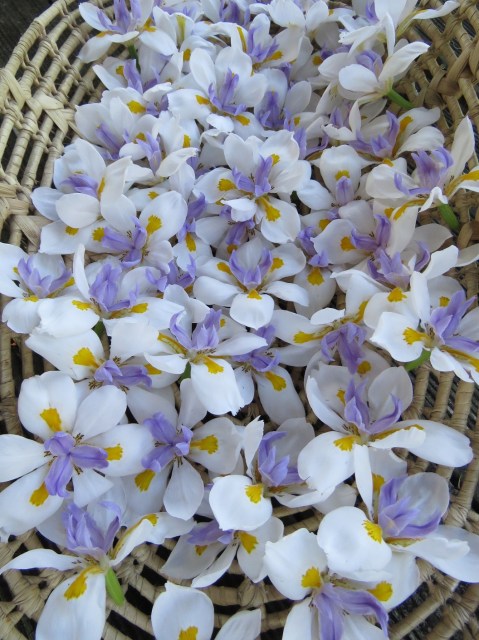
Mark was sure the showy, tall iris that we have also planted by our swimming pool was a dietes. But no. When I went to look it up, I found there are only six different dietes. Five are from southern and eastern Africa and, oddly enough, one from Lord Howe Island. The  pool iris is very tall – stems maybe two metres high at times and generally capable of holding themselves up. I spend a bit of time on hot summer days floating around the pool on a lilo and those pretty flowers waving above me are a delight. Some detective work initially had me thinking it was a Cypella coelestris which comes from Brazil, Uruguay and Argentina. But it appears I was wrong, too, and it is in fact a Neomarica caerulea – the walking iris – from Central and South America.  It is pretty international, the iris family. After spending some time analysing photographs on line and looking at descriptions, it was a reader who gave me the simplest way to tell them apart. The cypella grows from a bulb and the neomarica from a rhizome. I rushed straight out to look and, sure enough, rhizomes. In my defence, they are closely related, along with the trimezia.

Each flower on the neomarica only lasts a day, but it continues to flower down the stem, a trait that can be seen in other irises and iris relatives. In our conditions, the neomarica is not fully deciduous, though it dies back to a neat clump of foliage through winter.

Tigridia pavona

Tigridia pavonia

A net search tells me that a number of American sites describe the cypella as being like a blue tigridia. We grow a fair number of Tigridia pavonia and all I can say is ‘oh really?’ To me, it is indubitably iris with its three upright blade petals and its fall of three sepals. While the tigridias are also members of the iris family, they are not as obviously iris-like. Maybe renaming them is just somebody’s idea of a marketing ploy to sell a plant which is not so well known.

Tigridias, however, share similar characteristics to both dietes and neomarica in that they are summer flowering, each bloom only lasting a day but continuing to open fresh flowers from the same stem, so easy to grow that they might be deemed to have weed potential and somewhat loose in form. Tidy gardeners may describe them as scruffy and they don’t fit so comfortably into a tightly maintained small space. But for those who like a certain summer abandon with lots of flowers, these are delightfully casual options for the summer garden.

abbie005

*** Postscript

Current update on the colocasia and dietes planting is that the former is doing brilliantly and out-competing the latter entirely on height. It may take another season to see if the dietes is able to rise to the required height to get enough sun to bloom.

First published in the January issue of New Zealand Gardener and reprinted here with their permission. 

Things that fall from above

img_3371

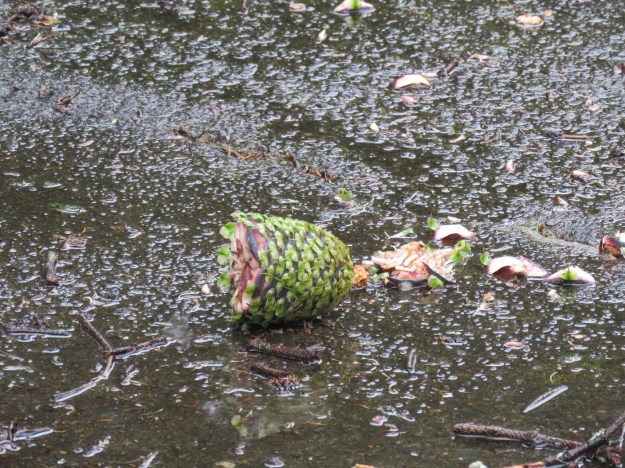
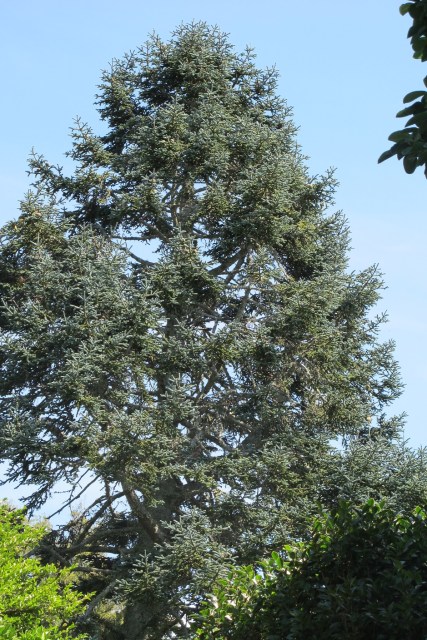
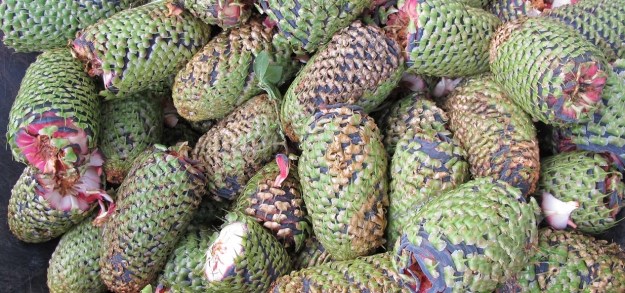
Mark is feeling anxious. At this time of the year, the very large Abies procera ‘Glauca’ just out from our back door is dropping its cones. Very large cones they are, and prolific too. We know not to park the car beneath the tree lest the panel work get dented. However, one falling cone almost took Mark out yesterday, hitting the ground mere centimetres in front of where he was walking at the time. The tree was planted by his father who relocated it from the rockery in front of the house when it was clear that in fact it was neither very slow-growing nor a dwarf specimen as he had thought. Unfortunately, the site he chose is less than ideal, being close to the house and immediately beside the driveway.

Abies procera 'Glauca'

Abies procera ‘Glauca’

I doubt that should a cone land upon the head of a passing human, it would do major damage but it would not be a pleasant experience. And at the back of my mind, I recall a story some years ago of a poor woman in an Auckland park being killed by a falling seed cone – from a palm tree, I think. That is seriously bad luck.

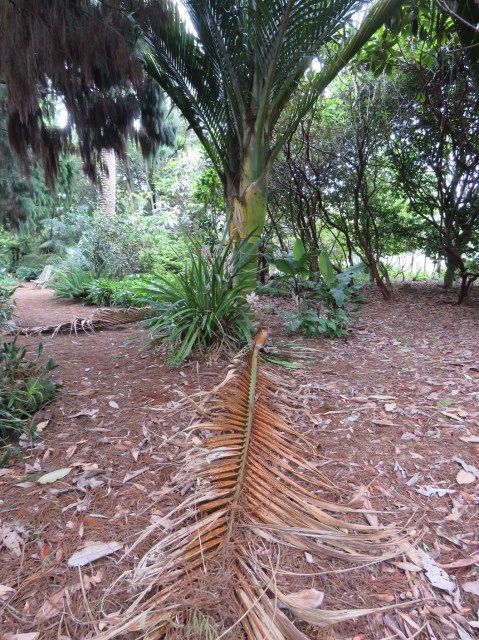
img_3325While on the subject of falling plant material – and leaving aside our elderly Pinus radiata and eucalyptus which have been known to fall from time to time – the fronds from assorted palms can be fairly major. The photo is of a nikau palm, breaking off close to the ground so any damage is minimal. But the falling fronds from our Queen palms (Syagrus romanzoffiana) can wreak some havoc, breaking entire branches from the shrubs beneath them. When you look up, they don’t look worrying, but when they fall, they are often a good 4 metres in length and the curved pod of the leaf – still technically a petiole, I think – is as heavy and solid as wood. They could serious damage to a car beneath or indeed rip the spouting off the side of your house if you have it planted close by.

Queen palm (Syagrus romanzoffiana)

Queen palm (Syagrus romanzoffiana)

When it became all the rage to plant palm trees in Auckland in the 1990s, we couldn’t help but think that many folk did not realise how large they can grow and how much damage mature falling fronds can then cause.

Hindsight is a wonderful thing and as gardeners, we tend to make our big planting mistakes early in our years. These can certainly come back to haunt us, or indeed subsequent property owners, many years down the track. At least our Queen palms are in locations where falling fronds are not a huge issue but we have learned not to plant any special trees or shrubs beneath them. The alternative is to only grow plants up to 2 or 3 metres in height and that simply would not do at all for us.

Many Abies procera cones

Many Abies procera cones

About a meadow. An update.

The new meadow look in our park - long grass and mown paths

The new meadow look in our park – long grass and mown paths

Wildflower meadows sound so delightfully romantic and evocative. And they can be in practice, but there is not just one way of achieving this.

When we talk about ‘wildflowers’ in New Zealand gardening, we are not talking about our own native wildflowers. They are native to somewhere but not here. Most people think of mixes of cornflowers, simple poppies, nigella, cosmos, maybe Queen Anne’s lace and the like. What are sold as wildflowers here are generally a mix of flowering annuals, though not the highly-bred ones that are used for potted colour and bedding plants. You can call it gardening because it is generally necessary to cultivate the soil, eliminate at least some of weed regrowth which will swamp the chosen annuals, plant the seeds and water them in. Merely broadcasting them on poor ground is rarely successful. These sowings of mixed annuals are usually disappointing in the second year because the influx of weeds and grass will swamp out most of the plants that have managed to seed down and the effect is very different. So it is gardening with annual flowering plants in its simplest form with next to no hard landscaping. It is also best suited to drier climates without the strong grass growth we get here and not prone to torrential downpours which will flatten these gentle, elongated plants. Charming though areas of mixed annuals sown in this way can be, it is not for us. And I would describe it as gardening with annuals, not a wildflower meadow or a wildflower garden.

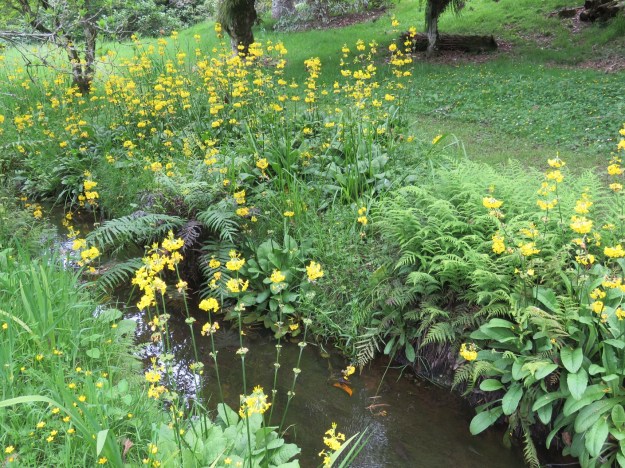
Lots of Primula helodoxa in our meadow at this time of year

Lots of Primula helodoxa in our meadow at this time of year

Our interest starts with meadows now. This presupposes a heavy presence of grass and many plants that are deemed weeds in more cultivated areas. Why meadows? Four reasons:

  • Meadows make a hugely greater contribution to natural ecosystems than mown grass. They provide food for bees, butterflies and other insects while offering cover to the smaller creatures of the natural world.
  • We are seriously discussing and experimenting with techniques of lower input gardening where possible. Mark has become increasingly concerned at our heavy reliance on the internal combustion engine to maintain our garden – the lawnmower, weed-eater, leaf blower, hedge trimmer, rotary hoe and more. We have already phased out most spraying and fertiliser use – preferring to use our own compost – so the run-off from our property will be neither toxic nor high in nitrogen. Next up was to consider ways to significantly reduce our usage of petrol powered engines.
  • We are mindful that we have a large garden managed by just three of us. Because we have no plans to retire off the property, we need to ensure that we can maintain the garden to the standard we want into the future as we age. This is another reason for finding ways that are more sustainable in the long term.
  • We like the simplicity of meadows, the romanticism and the natural feel. We wanted to see if we could manage it in our garden.
Higo iris and primula are looking pretty this week

Higo iris and primula are looking pretty this week

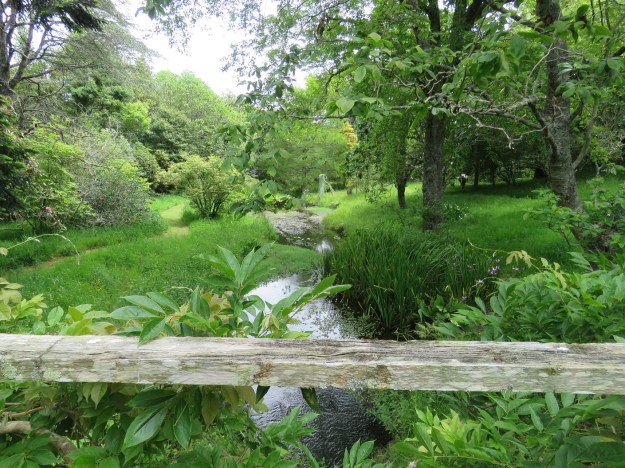
We closed the garden to the public three years ago and immediately started experimenting in the area we call the park. With its variable terrain and a stream flowing through, this area was originally planted by Mark’s father, solely in trees and shrubs, and it covers about 4 acres. A small flock of sheep kept the grass down and most weeds at bay. When we bought the Rolls Royce of lawnmowers (a Walker mower) that could cope with all the steep slopes, we banished the sheep, removed the fencing and started mowing the park on a regular basis. The areas that couldn’t be mown were kept down with the weed-eater. Finally, Mark could start some underplanting.

img_3130Now we have long grass with mown paths through it. After three years, there is increasing diversity in the plants moving in. Many are commonly seen as weeds and the whole debate about weeds needs more attention another time. Not just buttercups, daisies and dandelions, though we have those in abundance. We also have Herb Robert moving in (Geranium robertianum), clover pink and clover white, foxgloves, self-heal (Prunella vulgaris), Mark’s stinking billy-goat weed (a stachys), montbretia and more. I am not keen on the docks or thistles, so I try and dig those out. Mark is particularly pleased that we had a lot more brown top in the existing grass mix than he had thought because it has beautiful silky seedheads that wave in the lightest of breezes.
To these ‘volunteers’ (or genuine wildflowers that have made their way of their own accord), we add our own enhancements – primulas beside the stream, along with a range of other marginal plants and irises. Even sarracenia and a few orchids (the dactylorhiza orchids work though most of the disas died out). The Higo iris are coming into bloom and what a delight they are. In autumn and spring we have bulbs and we no longer have to worry about mowing off the foliage too early.

The placing of mown paths throughout has been successful, giving a contrast between the walking areas and the natural meadow, though it helps to have Mark’s good visual instinct to get the form of the paths sorted from early on so that they meander gracefully. At my request, these were widened to be two mower widths across – a single width looked a bit mean and perfunctory.

The Walker mower

The Walker mower

New sickle bar mower

New sickle bar mower

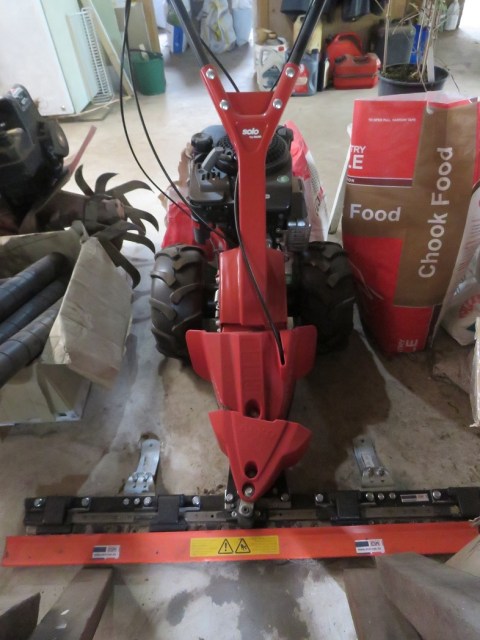
We mow everything once a year in autumn and I have to admit this involved the purchase of a new internal combustion engine – the sickle bar mower. The lovely ride-on Walker was never designed for the mowing of the meadow, being better on grass that is kept consistently shorter. The sickle bar emulates the motion of an old-fashioned sickle and is designed to cope with this sort of situation. We do not follow the British wisdom of removing all the hay to keep fertility low. It is not practical in our situation and our meadow is a year-round affair because of our mild climate where plants keep growing even through winter.

Going into our fourth year, we are saying ‘so far, so good’. It is not for everyone, but we love the look. If we are still continuing the park as a managed meadow in another five years, we will then be willing to announce that it has been successful for us. The mid-term report is that we have achieved a meadow and it is certainly meeting our four reasons for starting the experiment.

A treasured memory - our second daughter in a dry climate flowery meadow in the Nelson area around 1994

A treasured memory – our second daughter in a dry climate flowery field in the Nelson area around 1994

Postscript: Ken Thompson in The Sceptical Gardener writes about real meadows and I quote just a brief excerpt there: “it actually is a meadow in the sense of an area of perennial grass and wildflowers, managed by annual cutting.” He goes on to discuss what he calls the ‘annual meadow’ – drifts of annuals. “The problem is that ‘annual meadows’, whatever they are, are not meadows; they don’t look like meadows, and nor are they managed by meadows.”

He draws on a British garden writer and TV presenter about poppies. “Nigel Colborn reports that a visitor to his garden asked why his meadow had not wild poppies in it. Nigel had to explain, kindly and tactfully I’m sure, that no meadow since the dawn of time has had poppies in it, and that poppies belong in cornfields.”

Thompson also has an interesting chapter about the common lore that wildflowers do better in areas of low fertility. This is a book to put on Christmas present lists, as I said in my review earlier.

Tikorangi Notes – of earthquakes, tree ferns and a meadow experiment

I think the Americans will like our sino nuttallii rhododendrons in bloom (and we won't mention their new president)

I think the Americans will like our sino nuttallii rhododendrons in bloom (and we won’t mention their new president)

It has been a discombobulating week. For overseas readers, I should explain it started with another major earthquake. Despite the quake being centred on the east coast of the South Island (we are the west coast of the North Island), it was the worst one Mark and I have ever felt. And I say that as inhabitants of what are sometimes called the shaky isles where we have all been raised with advice and practice at school on how to behave in an earthquake. Even here, the rocking ground was enough to significantly drop the water level in the swimming pool and to have the water sloshing out of the upstairs toilet cistern. Fortunately, after the Christchurch earthquakes, we had secured our tall pieces of furniture and bookcases.

Further south the damage has been huge and the enormity of this event is still being revealed. It is major and will take years to repair – damaged townships and settlements but also the main trunk road and rail services are completely out of commission and it is difficult to see how and when repairs will be possible. Being a sparsely populated area of this country, there is very little in the way of alternative routes available. Our hearts go out to the people so badly affected.

Closer to home, we have been sprucing up for a small American tour due on Wednesday. This is the first tour we have accepted since we closed the garden three years ago and there is nothing like knowing you will be hosting an overseas group to focus one’s eyes differently. We will not be raising the topic of their recent presidential elections (I think there may be a huge gap – a chasm, even – between how much of the world views that event and how it is seen internally by too many in the USA, so best avoided).

New shoot on black mamaku

New shoot on black mamaku

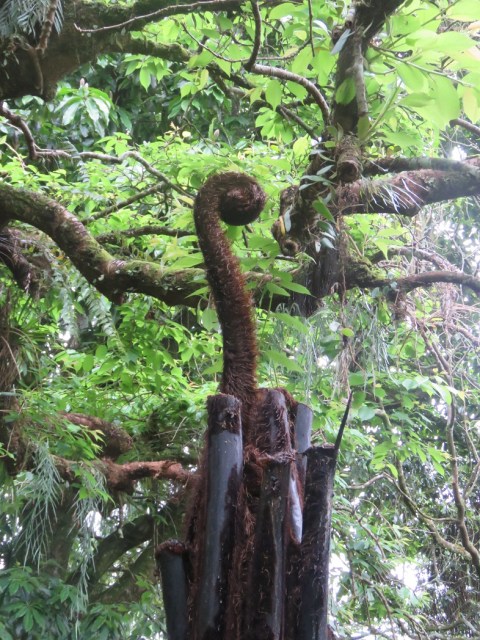
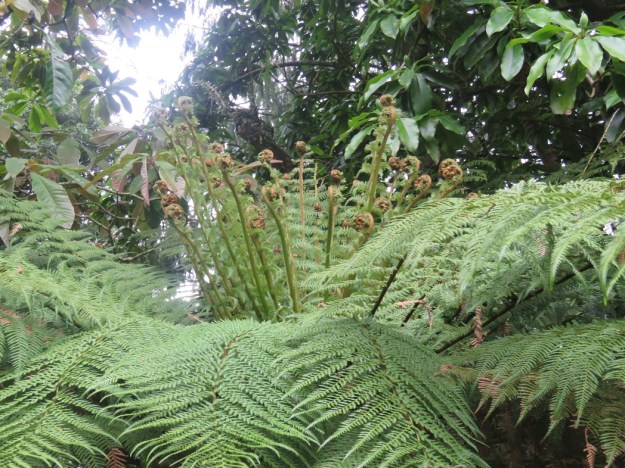
I expect they will notice our tree ferns. Here they just seed down and we cut them out (eventually) if they are in the wrong place. I cut all the fronds off the wheki (Dicksonia squarrosa) and the black mamaku (Cyathea medullaris) in preparation for the chainsaw. I have no intention of ever learning to use the chainsaw myself. It terrifies me. It is one job I leave for the men in my life. The new shoots on the denuded trunks are wonderfully decorative – icons, even, of New Zealand design. We also have plenty silver ferns (Cyathea dealbata) popping up around the place.

I think it is a wheki (Dicksonia squarrosa)

I think it is a wheki (Dicksonia squarrosa)

While tree ferns, or pongas as we call them here (pronounced ‘punga’) are closely associated with New Zealand, the most common form grown with care – bordering on reverence, almost – in Europe and the UK is actually an Australian native, Dicksonia antarctica. Visitors from the northern hemisphere are usually in awe of them occurring naturally here and being seen as expendable when they pop up in the wrong place.

Tomorrow morning on Radio Live’s Home and Garden Show, Tony Murrell and I will be discussing meadow gardens. **** Given that these discussions take place between 6.30 and 7.00 in the morning, it is always something of a surprise to me when people comment that they listen. But it is quite liberating to be chatting that early because it gives a certain freedom in these extended conversations which both Tony and I enjoy a great deal. If you are interested in listening later, the link gets posted on both Radio Live’s Facebook page and, I think, their website. Last week we were talking about Piet Oudolf and the new perennials style.

Buttercups and daisies - weeds or a meadow?

Buttercups and daisies – weeds or a meadow?

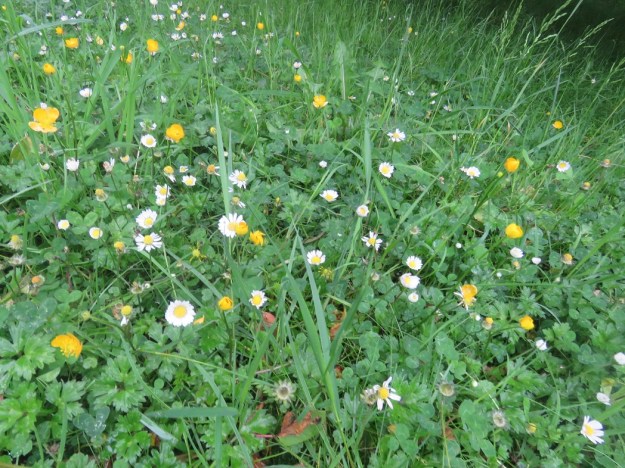
We are into our fourth spring season of experimenting with letting much of the park develop into a meadow. At this stage, our meadow is a mix of naturally occurring plants with the addition of bulbs, irises and primulas, managed with minimal intervention.  It is a challenging process in terms of how we view weeds. Certainly it is looking very pretty at the moment with carpets of buttercups and daisies and even the dandelions look colourful. I am okay with some pink Herb Robert getting away, also monarda (bergamot or bee balm) but I draw the line at docks. Mark’s particular hate is the plant he refers to as ‘stinking billy goat weed’ but the internet does not appear to agree with him on the name. Also, it is not to be confused with horny goat weed or blue billygoat weed. He is right that it is a stachys and a stinky stachys at that. It is the smell that he hates so we are generally pulling it out. I did a search and the photos seem to correlate with Stachys macrantha. If that is correct, it is a great deal more appreciated overseas than in our park. Maybe a reader can enlighten me whether S. macrantha has a pungent odour when disturbed?

A wheki which still has its old foliage undisturbed

A wheki which still has its old foliage undisturbed

*** Update: No discussion on meadows this morning on Radio Live, due to circumstances beyond everybody’s control. Instead I discussed outdoor furniture with Hamish Dodd. Meadows with Tony Murrell next Sunday at 6.35am.

Hosta Time


Hostas planted with Ranunculus cortusifolius, Chatham Island forget-me-not and meconopsis

Hostas planted with Ranunculus cortusifolius, Chatham Island forget-me-not and meconopsis

November sees hostas looking their very best. We used to grow hostas when we were still running the nursery. From memory, it was in the vicinity of four or five thousand every year, year in and year out, across maybe 35 different varieties. There is not much we don’t know about propagating and growing this plant family in containers. We always sold plants raised by division – not from tissue culture – and earned a reputation for a large and luscious grade.

Growing plants in a garden is different and now that we are gardening full time, we have taken a great deal more interest in their long term performance. Not all hostas are equal. Nor are they quite the low maintenance plant that is often claimed. Once the ground around them starts to compact, it is not uncommon to suddenly realise that a well-established clump has reached the point where it is getting smaller not larger. Smaller clumps which are not thriving may disappear altogether, even though they are in the recommended humus-rich shade. They like cultivated soil and will do better if given better conditions, especially the touchier varieties.

One of Mark's reliable blue seedling hostas

One of Mark’s reliable blue seedling hostas

The one exception has been a run of big blue hostas that Mark raised from seed. These are still handsome, large and fine after maybe two decades with absolutely no attention at all. The same cannot be said of all varieties. Alas, a number of the fancy newer ones are better in pots than the garden.

There is no doubt that hostas are a highly desirable dish on the smorgasbord of slug and snail food. I have seen plants eaten away to almost nothing, particularly in UK gardens where they seem to have a much worse problem than here, though I have been told Auckland snails may rival them. Should I therefore whisper that we don’t seem to have a big problem here? We so rarely use snail bait that neither of us can ever remember where the packet may be. Instead, we have reached an accord with the birds and they carry out constant pest patrols to keep the critters at bay. But if you are resorting to baits, remember that they are a poison, not a fertiliser. You only need two or three pellets per plant and more is not better. If you are not a slug bait fan, I did try the technique of baker’s bran and found that worked. Circle the plant generously with bran. I don’t think it actually kills the slugs and snails but they find it so irresistible they can’t stop eating it. Once in the gut, it swells and they lie around in a bloated fashion til the morning when the birds find them. Think of it as adding protein and fibre to the ornithological diet rather than subjecting them to toxins.

Softer leaves are more vulnerable to critter damage, so if you have an issue, go for the varieties with tough, almost leathery leaves.

Hosta Jade Cascade

Hosta Jade Cascade

When it comes to locating them in the garden, it will be no surprise that we go for mix and match. Hostas love similar conditions to clivias, ferns, some of the primulas, meconopsis, Chatham Island forget-me-not and other plants which we use in damper, cooler situations of semi shade. They are not so keen on deep shade and will turn all green if they don’t get sufficient light. Gardeners in colder climates have more leeway in terms of sunnier positions but the yellows and pale variegations burn in the summer sun here.

OLYMPUS DIGITAL CAMERAMany gardeners seem to prefer to group their hostas together in a hosta bed. It is not compulsory to plant them this way but if you prefer this look, I will repeat my advice given often to customers back in the days. Don’t be wooed into buying only the showy, variegated ones and bunging them all in together. It is the plainer hostas in single colours, and the variety in leaf form, shape and size that set off the fancy ones and avoid a mishmash. One fancy one to at least three plainer ones is my rule of thumb. These days, our preference lies with the solid coloured ones rather than variegated varieties.

Hands-on gardeners know that big clumps of hostas can be dug and divided in the same way as any other perennial plant. In terms of timing, it is best to do this in winter or early spring in our climate.

Running a mailorder business taught me never to take anything for granted. Hostas are deciduous, a fact that eluded one customer. “I am not happy with my order,” she wrote. “It looks as if there has been a rabbit in the box, eating the foliage. Or if they are deciduous, I don’t want them.”

It is the fresh foliage in spring that is the highlight for this plant family and some varieties will follow up with a showy floral display in shades of white, blue or, most commonly, lilac-purple shades in summer.

Hosta Regal Splendour (front) and Fragrant Blue

Hosta Regal Splendour (front) and Fragrant Blue

First published in the November issue of New Zealand Gardener and reprinted here with their permission.