 Watching Meng gather bamboo shoots and strip them down on site, amongst our giant bamboo was an illuminating cultural experience at home.
We have dabbled with gathering them in the past, making the assumption – based on more common vegetables – that the younger, smaller shoots would be the most desirable and tender to eat, rejecting anything over 30cm. We carefully dug the shoots out and brought them up to the house to prepare.
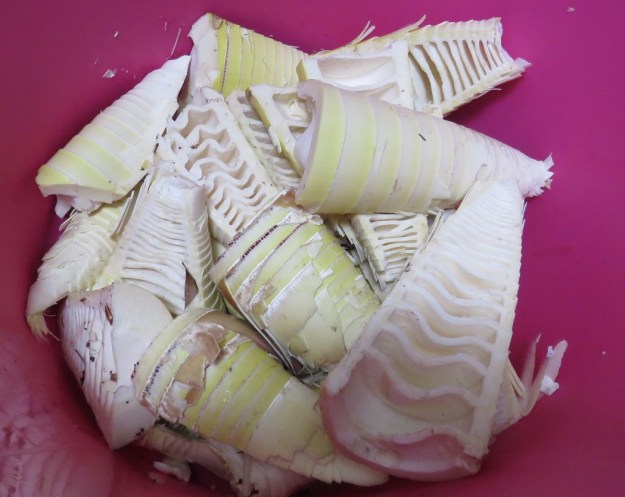
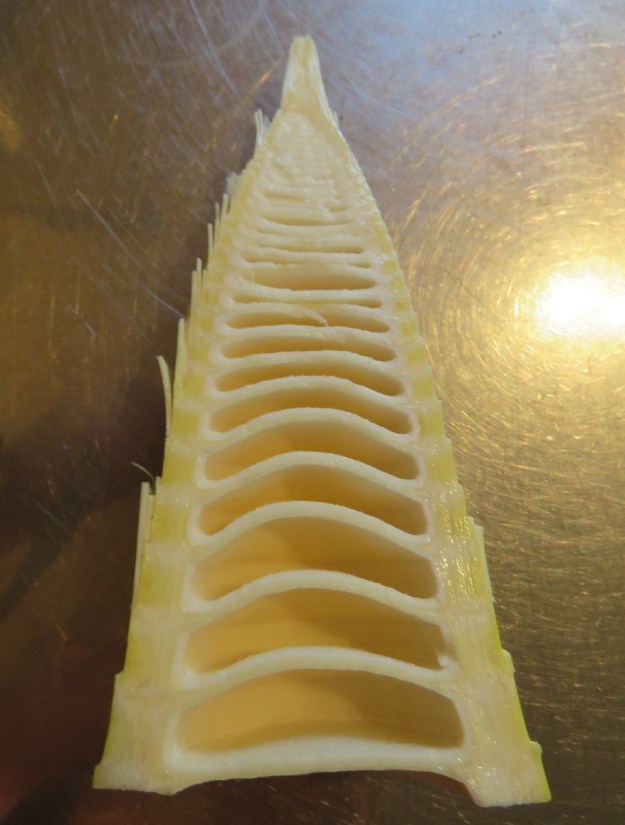
Just the lattice tip is prepared for eating
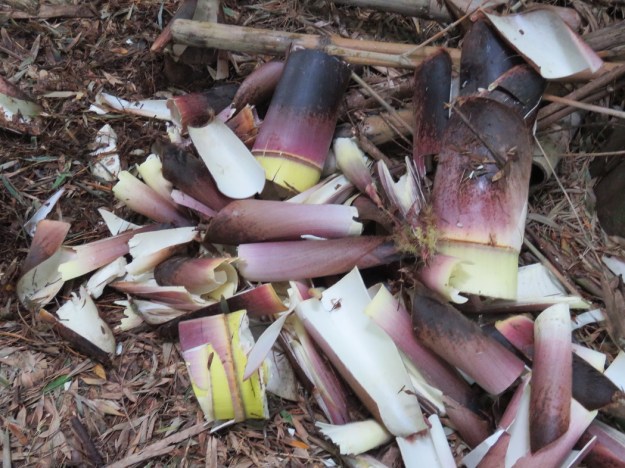
The husk was stripped off in situ and left to break down
Meng is a local resident now, but from north eastern China. She grew up harvesting bamboo shoots and she was not here to muck around. She rejected my small tender shoots – “too small” and selected only larger ones, most of which she kicked over with her boots. I tried kicking over with my gardening shoes and it is harder than it looks but Meng made light work of it. The tallest shoots she was harvesting were up to maybe a metre and she sliced off the top 30cm with a very sharp, heavy knife. She then stripped down the shoots, cutting off the hard, outer husks with a confident display of knife-work that would match any chef, leaving the offcuts to rot down in the bamboo grove. She was only after the tips where the inner lattice-work has developed. That, I assume, is why she rejected my small shoots – because the proportion of lattice at the tip is too small. 
Meng brings these tips to the boil and leaves them steeping in the water overnight. Then she leaves them to dry and will either freeze them, dehydrate them or, I assume, use them fresh. Her partner tells me they are going to try pickling some too, which sounded interesting.
The steeping in water is important. In the past I have followed internet instructions and brought them to the boil in at least two changes of water which presumably achieves the same end. Raw bamboo shoots are bitter and contain some level of cyanide.
It is time I gathered my paltry few and prepared them for future use. Meng’s harvest is much larger than we require for our needs. I feel that serving up a meal of homemade tofu from homegrown soy beans with fresh bamboo shoots may be a pinnacle of virtue signalling. I admit that I do not find bamboo shoots particularly exciting as a taste treat but they add variety and texture.
Mostly, I was entranced by the sight of Meng in our bamboo grove carrying out an efficient harvest. 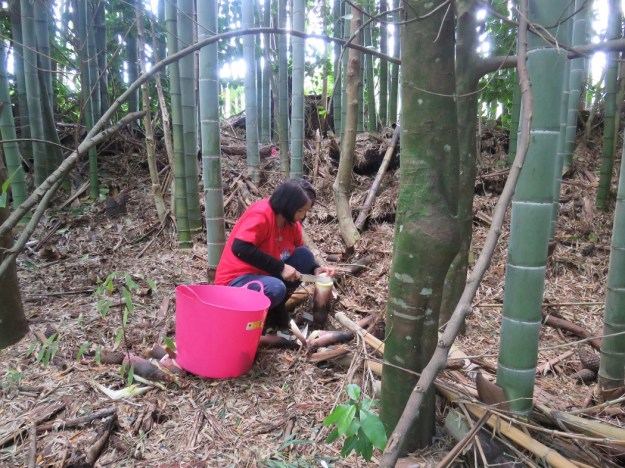
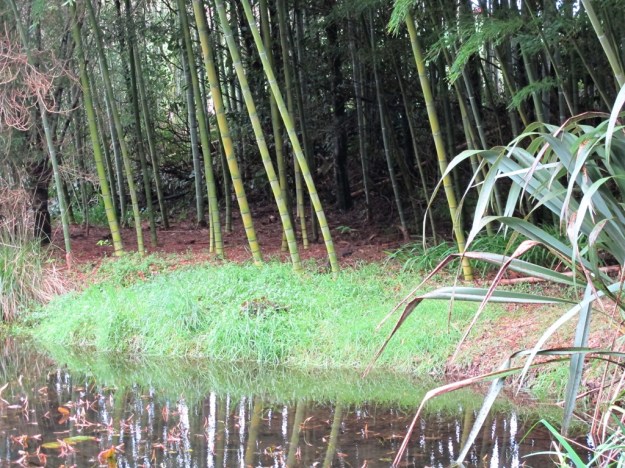
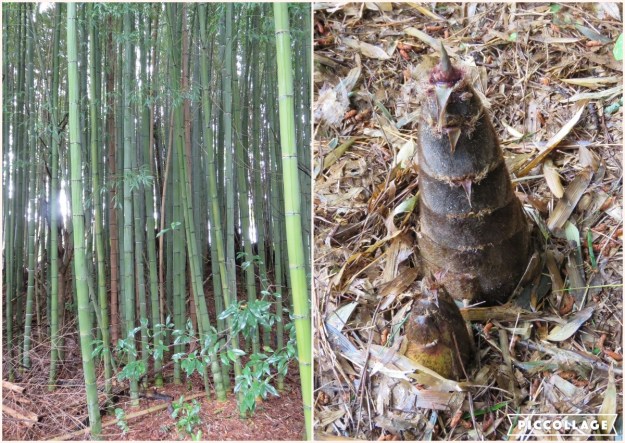 Our stands of giant bamboo are a never-ending source of disappointment to us. That is because they are enduring proof that the cargo cult does not work. The cargo cult is that school of thought that says “build it and they will come”. We often see it espoused in this tourist backwater where we live. Build a café/gondola/light rail/cruise ship terminal/tourist hub (strike out any which do not apply) and visitors will arrive. Well no panda bears have arrived here, is all I can say. I even checked that they eat Phyllostachys edulis – it is not their favourite bamboo but they will eat it.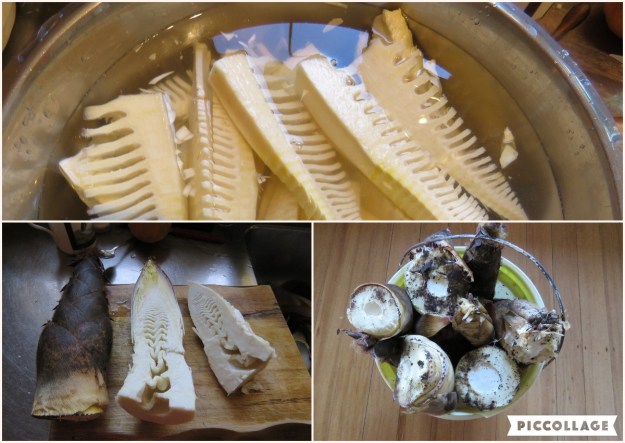
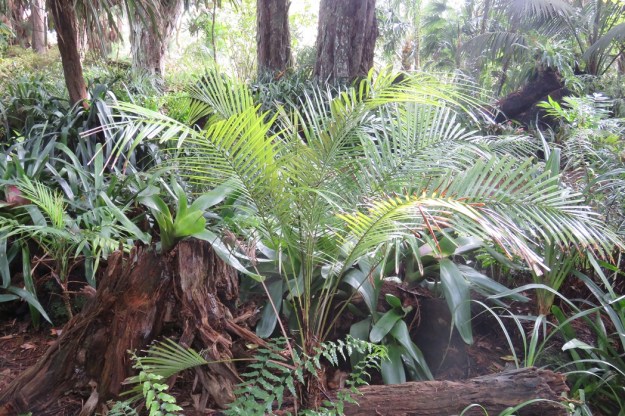 In the meantime, it is The Challenge of the Lytocaryum weddellianum. This is a very pretty little, feathery palm from Brazil, a close relative of the coconut palm but small. It is sometimes referred to as the wedding palm (presumably because it is favoured in pots as green decoration at wedding receptions?). There are a reasonable number of them sitting out in the nursery that Mark bought as baby plants years ago. It is doing particularly well in the subtropical gardens beneath the rimu trees.
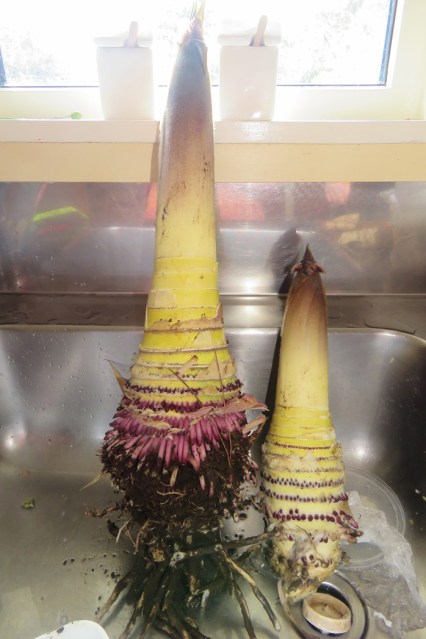
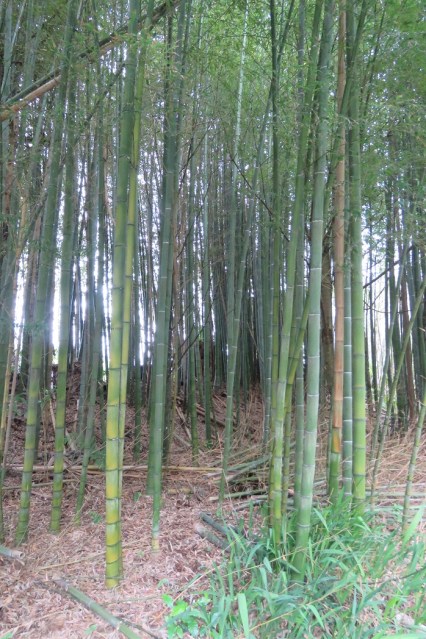 We have a relatively large forest of a giant bamboo – in this case Phyllostachys edulis. The neighbour wishes it was not on the boundary and we are trying to be vigilant this spring and doing a weekly round of jumping the fence to grub out the new shoots that insist on popping up in the farm next door. It is a handsome bamboo and of some use as cut lengths in the garden. It is also edible. Sadly, panda bears have not arrived to take advantage of the food source (further proof that the cargo cult does not work) but I am having another go at cooking the fresh shoots this year. To be honest, the bamboo shoots that you buy in tins taste more of the brine than anything else. And even fresh, they are more textural and a carrier of other flavours (as tofu is) than a taste treat in their own right. But they add variety to our diet and I can see a use for them in stirfries. “Please bring me some bamboo shoots for dinner,” I asked the other night. And he did. The big one is past cooking stage. The trick seems to be to harvest them just as they come through the ground and to prepare the white sections that are below the surface. I shall slice some, blanch them quickly in boiling water and then freeze them to see if we use them later in the year. The first batch I poached gently in stock before adding to the dinner that night and they were pleasant, if not life-changing.
 The deciduous magnolia season is over, bar
  Now it is bluebell time. It appears that ours are all Spanish bluebells or hybrids. The pink and white variants are a bit of a giveaway. Ken Thompson in
  Bluebell Woods
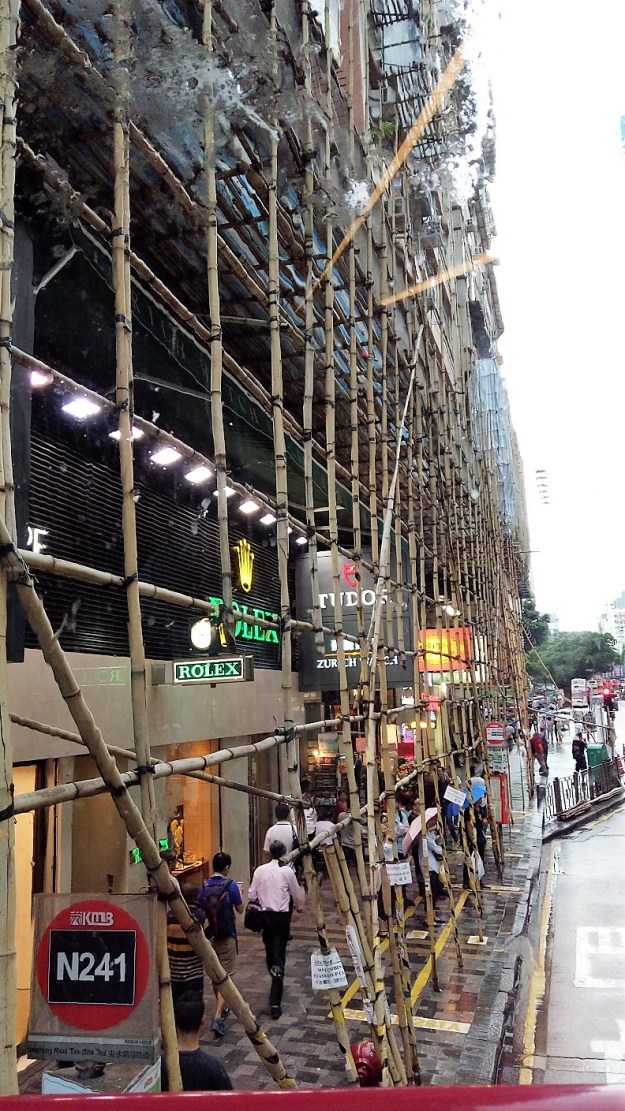
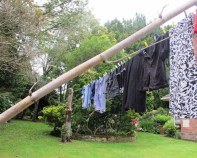 ot sufficiently inspiring to ensure that they became a dietary staple. It is, however, a useful source of very long and remarkably stable poles. One is a prop for the washing line. Mark uses it to build shelter frames for his bananas and even to make super long handles for the rake he uses to clean out our ponds. Inspired by our awe of bamboo scaffolding in Hong Kong, seen on high-rise buildings, he threatens to construct our own scaffolding but I think it is all talk.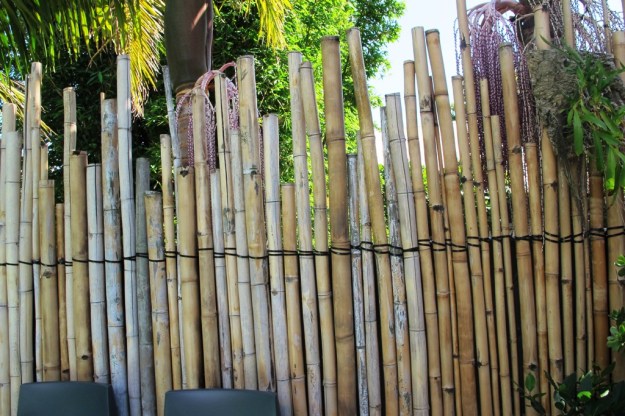
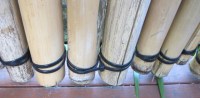

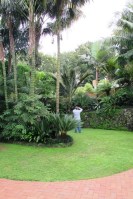 Also seen at Heroic was this crafted bamboo gate in a Mount Eden garden, which was beautifully executed and appropriate to the restrained, immaculately maintained sub-tropical back garden. This is located in the heart of a densely populated urban area but the garden gives no hint of that. The gate has clearly been coated, presumably both to prolong its life but also to stop the weathering process and preserve the smart, new appearance. Sealing the bamboo will also stop the growth of lichens.
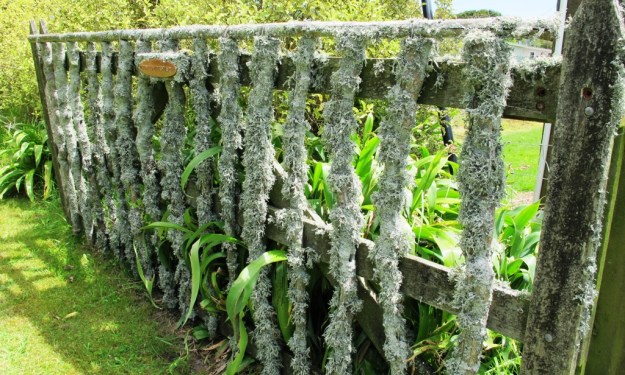 At the other end of the sophistication scale, I photographed these two bamboo gates in an Okato garden last spring. These have been added on to existing gate frames in a garden where many different bamboos are grown, and then left to weather over many years. You can see the high humidity environment and clean atmosphere in our coastal Taranaki that encourages such abundant lichen growth. As long as the bamboo is kept off the ground, it can last a surprisingly long time.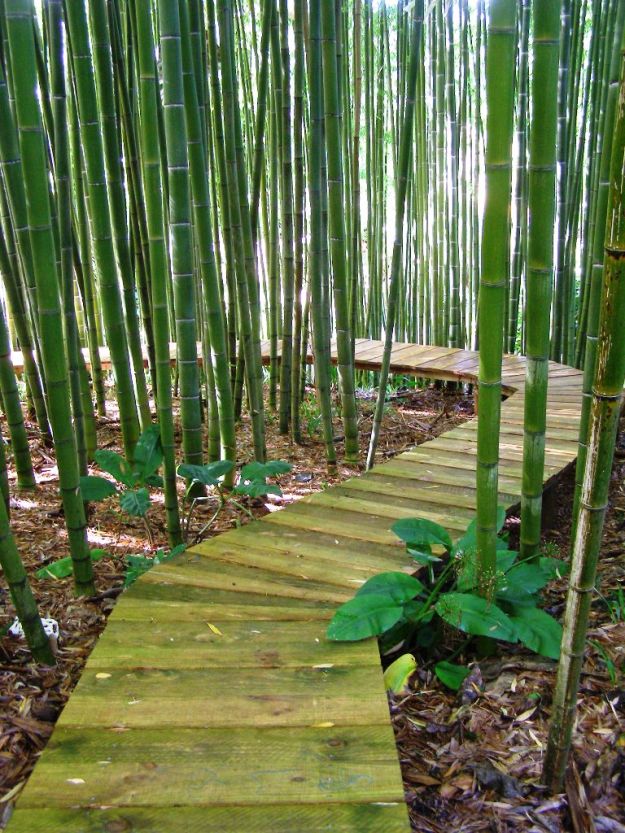
 Tikorangi The Jury Garden