Tag Archives: Tikorangi: The Jury garden

Tikorangi Notes: Monday April 25, 2011

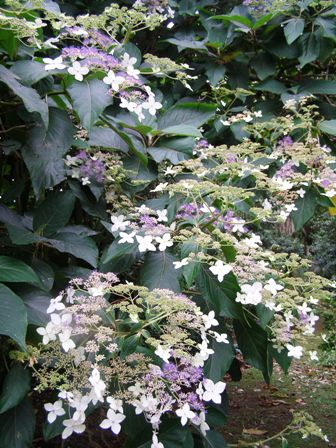
Tree hydrangea of uncertain classification

Tree hydrangea of uncertain classification


This wonderful tree hydrangea is a sight to behold down our avenue gardens this week. I say tree because the plant is now about five metres high. The flowers are enormous – fully 45cm across each individual head but most things about this plant lean to the large. It is an unknown species (though currently classified in the aspera group, despite bearing little resemblance to most asperas) and fully evergreen. In NZ, it is commonly referred to as the Monkey Bridge hydrangea, collected in China. It is brittle, tender and very large – not suited to all gardens – but what an unusual delight in flower.

Tikorangi Notes: Saturday 23 April, 2011

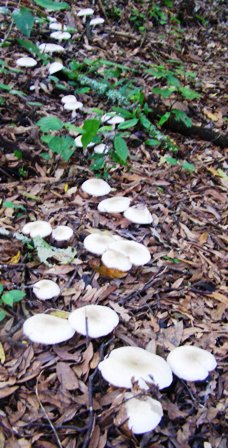
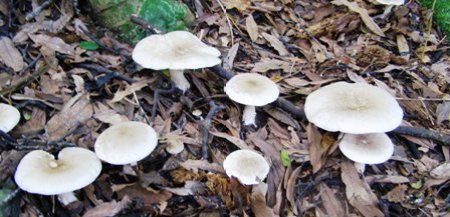
Our identified woodland mushroom in a fairy path

Our identified woodland mushroom in a fairy path

Latest posts:

1) Paradise Found in New South Wales– or our attempts to find gardens to visit around Sydney from bats at the Bot Gardens to Bob Cherry’s dreams in Kulnura.

2) Plant Collector this week looks at two tidy, compact evergreen shrubs with berries: Ilex cornuta “Burfoodii” and Raphiolepsis indica “Enchantress”.

3) Garden tasks for the week as autumn marches on inexorably. Still, we have only had one really cold day so far.

Tikorangi Notes: Saturday 23 April, 2011 When it comes to wild fungi in New Zealand, we are terribly conservative. Generally it is only the field mushroom that is harvested for eating, although the magic mushroom used to attract experimental youth in search of a free hallucinogenic experience. Possibly it still does, but there are a host of other wild mushrooms that go untouched. I have bought the up to date publications on fungi found here, but it appears that nobody has done the work on which forms are edible. I am not so keen on doing the experimental taste test. Apparently the basket fungi, puffballs and elephant ear fungi are all perfectly safe to eat, but I want a definitive tome to tell me which are safe and delicious before I get adventurous. With death caps also common, the gap between fatal and edible seems a little too small to me. And we can’t even get an identification on this woodland fungi from our books. Cascading down through our tawa bush, these mushrooms are currently abundant and growing, not so much in a fairy ring, but more akin to a fairy path.

In the Garden this week: Saturday 23 April, 2011

• I was wrong. The first wintery blast did not wait for Easter but arrived last Monday morning. Fortunately we should not stay cold for a while yet, but it was a good reminder to make the most of remaining mild autumn weather in the garden. Nothing saps gardening motivation faster than cold, wet conditions.

• Easter should signal the time to be out doing the autumn clean up. Tell yourself that you are working off the extra calories consumed by most of us at this time. Remove spent crops in the vegetable garden and do a weeding round. If you don’t need to use all the area for winter and spring crops, either sow down bare areas in a green crop or at least mulch it to keep the invading weeds at bay.

• Silver beet is a rewarding vegetable to grow for those who are willing to eat it (and apparently some people like it) because you can continue harvesting repeatedly from the same plants. It is also hardy so makes a good winter stand-by. It is best to put in small plants this late in the season. There is not a lot of growing time left before winter.

• In the ornamental garden, the time for autumn feeding is over in colder, inland areas and fast running out in milder parts. The idea of feeding now is to allow the plant to take up the goodness before growth slows down or stops during winter. There is no point in feeding dormant plants.

• Last gasp, too, for perennial cuttings this season. After this, perennials need to be increased by division, not cuttings.

• Slugs and snails are undeterred by the cold. Watch for signs of them around emerging spring bulbs and set up bait stations if need be. We often use a low-sided plastic bottle top such as those from milk containers with a paua shell covering it to stop the bait from dissolving.

• Wrench plants which you intend to move to another site. Wrenching involves making straight cuts down two sides of the plant’s roots now, following up with cutting the other sides in two or three weeks’ time. This reduces the stress on the plant but is only necessary for well established plants which have been in the ground for some time (as in more than a year or two). Plan to take as large a mass of roots as you can physically manage.

• If you have not yet given hedges a tidy up trim, don’t delay on it. Trimming forces a new flush of growth and you don’t want it so fresh and tender that the first hint of frost will burn it off.

Tikorangi Notes: Friday 15 April, 2010
Latest posts: Friday 15 April, 2010:

1) Plant Collector this week is about Rhopalostylis sapida, better known to New Zealanders as the nikau palm – in this case the Pitt Island version of same. The Pitts are one of our more remote islands and the nikau is the world’s southernmost palm tree – and one of great beauty.

2) Garden tasks for the week with particular reference to autumn treatment for hellebores and a note about kang kong (which is an Asian green veg as opposed to a misprint of a giant ape).

3) Outdoor Classroom this week is the second instalment on garden mulches. We look at options which are usually available free but what you save in dollars across the counter, you will likely spend on your time assembling these options.

Tikorangi Notes: Friday 15 April, 2010
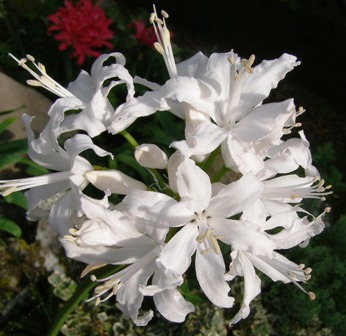
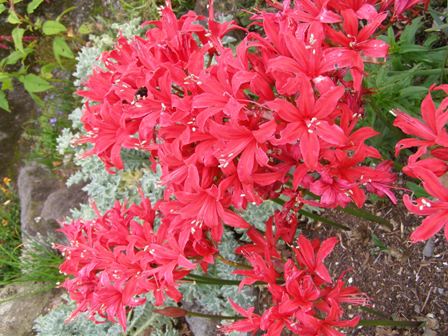
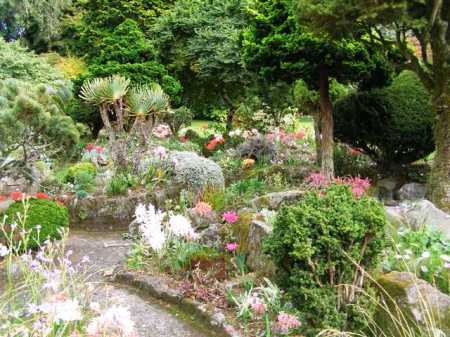
Our magic run of autumn weather continues. Dead calm days (always appreciated in a windy climate), mild daytime temperatures in the early 20s (Celsius) and cool nights. Rain is forecast, which is good because all my recent efforts on dividing perennials and relocating shrubs need watering in. Our avenue gardens consist of five parallel borders around 50m in length (each). I have finished three borders plus the one across the end. Just two to go so, realistically, I may have finished in another fortnight. In the meantime, the rockery continues to please. Nerines have a good long flowering season and they continue to look splendid. While we grow some of the species, it is the sarniensis hybrids which are the showstoppers. I will forgive them their foliage which hangs on until late spring, looking ever tattier. Our autumn flowering would be so much the poorer without them.

The rockery in autumn

The rockery in autumn

Plant Collector: Rhopalostylis sapida

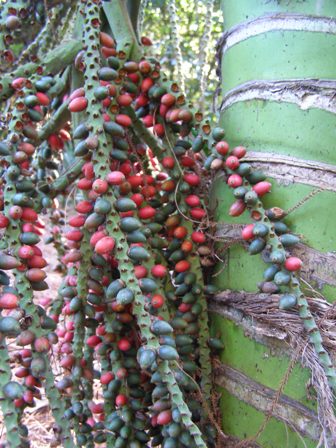
The ripening seed on the Pitt Island nikau palm

The ripening seed on the Pitt Island nikau palm

The botanical name for this native plant does not trip off the tongue easily. It is much easier to refer to it as a nikau palm. And yes, it is indeed a palm. In fact it is the world’s southernmost palm. This form is even more south eastern than most, as it is from Pitt Island. Nikaus are often regarded as very slow growing but it is curious fact that the variation that is endemic to the Chatham Islands (which includes Pitt) is much faster growing and sets viable seed years earlier than the mainland form. They are hardy throughout most of New Zealand (except for deep inland or alpine areas) but not widely seen internationally because they don’t like extremes of heat, dry conditions or the cloaking of cold, dry arctic air which is very different to the chilly air movement that we get with wintery blasts.

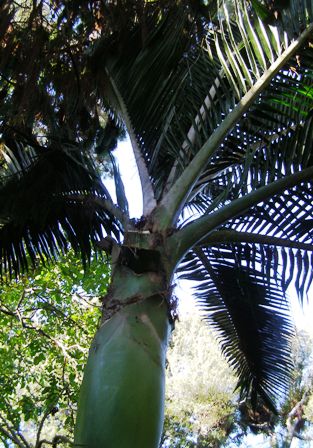
The handsome crown of the nikau palm

The handsome crown of the nikau palm

Nikaus are exceptionally handsome plants but they get large. This plant is already around eight metres to the top of its crown and the arching fronds are about four metres long. It will keep growing and get larger. In the juvenile stage, the unfurling fronds wrap around the whole plant and the shape is reminiscent of an old fashioned shaving brush or feather duster but that hardly does justice to these handsome plants. We find that they seed down very readily throughout our garden and we just dig out those plants in inappropriate places. They are not the easiest plant to transplant as they get larger. Their roots go straight down and you have dig well below the base plate to extricate them without damage. The seed turning red is a sign that it is ripe.