

• Down in Kakaramea, the self-styled Angelina Jolies of the chicken world (that is Jacq and Mich Dwyer of Te Rata) are pleased that their now pampered chickies are starting to lay again. These are 10 rescue birds – hence the Angelina reference – poor featherless things when adopted, who now live in the lap of luxury and fortunately know how to show their appreciation. Jacq reports that Mich has planted three types of potatoes so far. She splits the bags with neighbour Emma who reciprocates later in the season when they plant the next crop. Jacq has enclosed her rose garden in an electric fence as a temporary measure to keep out the marauding possums which are capable of taking off every new shoot overnight.
• Te Popo gardeners, Lorri and Bruce Ellis have been making paths safe. First up, the attractive but dangerously slippery brick path from the back door had to be lifted. Lorri says the gravel may not look quite as pleasing aesthetically but it is at least safe. In a damp climate, anything that becomes slippery when moss grows is a hazard – Lorri notes that they have also learned that large river stone steps are very treacherous. With a very steep section linking the bottom of their dell to a bridge constructed from wharf piles, Bruce has had to use a plastic product recommended for cattle races and also recently installed on the track from the car park at Dawson Falls to Wilkes Pool. The material is laid down, secured and then the cavities are filled with fine stones and gravel. Lorri is pleased with the result. She says it is hardly visible but your feet feel very secure and it stops the surface from scouring out when it rains.
• At Havenview Vegetable Garden, Maree Rowe is fed up with the rain but at least she has managed to get her Jerusalem artichokes and yacon dug up and the best tubers replanted. I had to look up yacon – a starchy root vegetable prized in the Andes. I had mentally placed it as Japanese but that of course is the daikon which is something radish-y, not to be confused with a brand of heat pump. The yacon sounds more interesting. Maree’s garden is to be featured in the Weekend Gardener soon as part of the lead-in to this year’s festival. She just wishes her potager had more to show but it is at least weed-free and tidy and by the time the actual event arrives, the seeds should be sprouting in abundance.
• In Hawera at Puketarata, Jennifer Horner has been worried about her lawns and about getting the timing right for doing work on them so they look improved by the end of October. She was disconcerted to see the tops of her pohutakawas down the driveway get tickled up by frost this year but they will be flushing with new growth shortly. Apparently Hawera received a doozy of a frost this year which more northerly gardeners escaped entirely.
• At La Rosaleda in New Plymouth, Collen Peri is a great deal more relaxed about opening this year now that she knows what to expect. She has done her first round of fertilising – mostly blood and bone and Bioboost, following up with a mulch of Grunt. None of her plants should feel hard done by after that lot. She says she is a novice when it comes to her little vegetable patch but she does like to grow strawberries and cherry tomatoes for her little fellow Will to pick and her Moneymaker tomatoes astonished her last year with their ability to thrive and crop despite complete neglect. This spring will be an exciting one for Coleen at her iris patch which is located away from her garden. She bought a large (very large, actually) collection of bearded irises from a mail order nursery closing down and this spring, she will get to see the whole range in flower.
 1) This tree aloe (Aloe thraskii) is in the wrong place and has been for at least fifteen years. Large plants can be moved, but this involves taking a large enough root ball to support the top. It is best carried out between late autumn and early spring so that the plant has a chance to settle in and put out new roots before summer.
 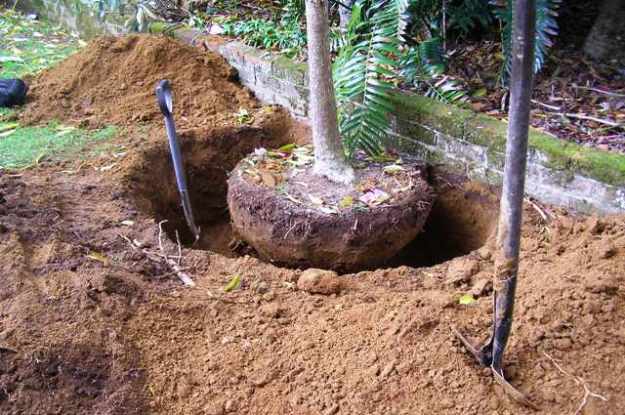 2) A large trench needs to be dug out, wide enough for you to stand in. This trench is around 60cm deep. Dig it with straight sides to start with. It allows you to look at the plant’s roots and to get access right underneath the plant. Keep it well out from the plant because you can make the root ball smaller but you can’t make it larger again.
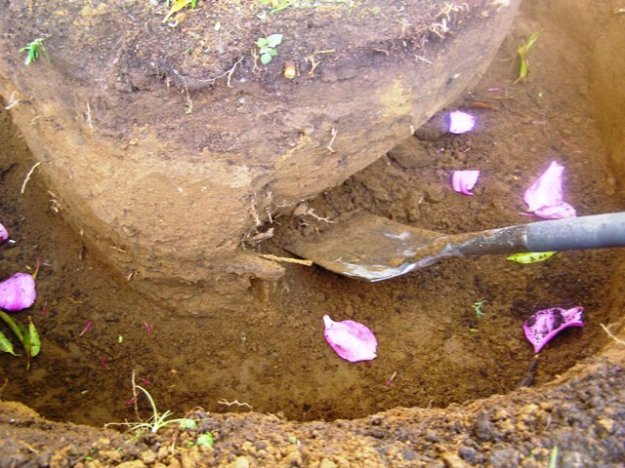 3) Standing inside the trench, start digging to excavate right underneath the plant. We wanted to keep the root ball relatively whole to act as an anchor because this plant is very top heavy. Gradually reduce the size of the clump, removing excess dirt, keeping a close eye on the root system. If it has a huge root system, you don’t want to be cutting into it too much. If it has a smaller root system, you can reduce it to a size that is more easily managed. We were surprised at how small the root system was on this plant and they were mainly on the surface.
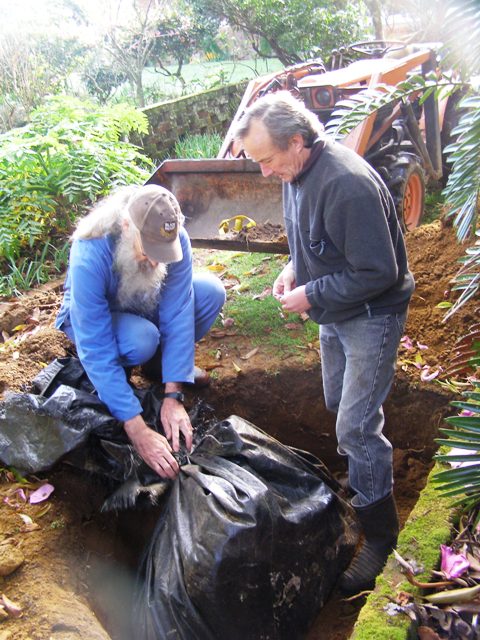 4) Get some heavy plastic, sacking or old weedmat underneath the plant. Do this by rocking the plant to one side and getting the wrapping right underneath it. This usually requires more than one person. Do not let the roots dry out at any stage. With very big plants, the plant can be raised out of the hole by tilting it to one side and backfilling that side. Then rock the plant back and put dirt in on the other side. Repeat the process until you have raised the plant to the level where you can lever it out of the hole more easily. We moved this plant on the front bucket of our baby tractor. You may need to do it by trailer.
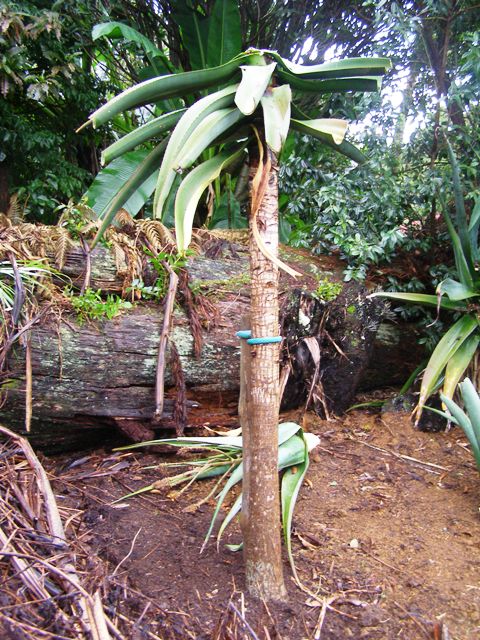 5) In this process, we had an accident and the heavy top was knocked out so we were forced to cut the the poor aloe back but there is no reason why it should not recover. Get the planting level as close as possible to where was. Measure the depth of the root ball and the depth of the hole before planting by placing a board across the hole and measuring from that. Put the stake or stakes in before the plant so that you do not cause more damage to the roots by driving the stakes through them later. We have gone for one very strong stake and a flexible tie.
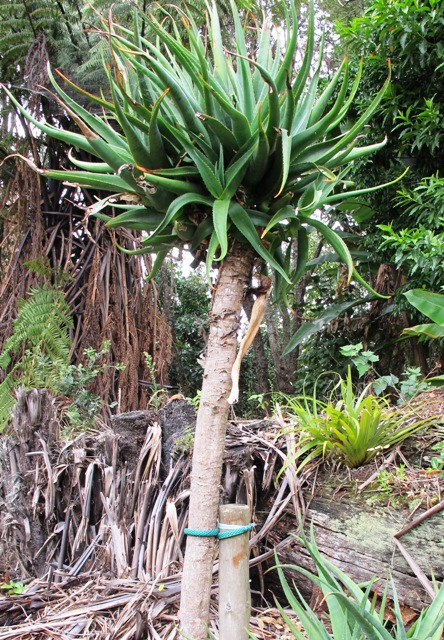 6) Two years later and the plant is recovering well although the foliage has yet to reach its former spread. It should now be safe to remove the stake.

 Tikorangi The Jury Garden