

The first time I realised there was a problem with our flag irises was when Mark intervened to pull a photo from a House and Garden feature on our garden a few years ago. It was a view similar to that above. “It’s a weed,” he said. “It is embarrassing to be shown with a weed.” It has taken a while, but this week, I have dug out the last of it.
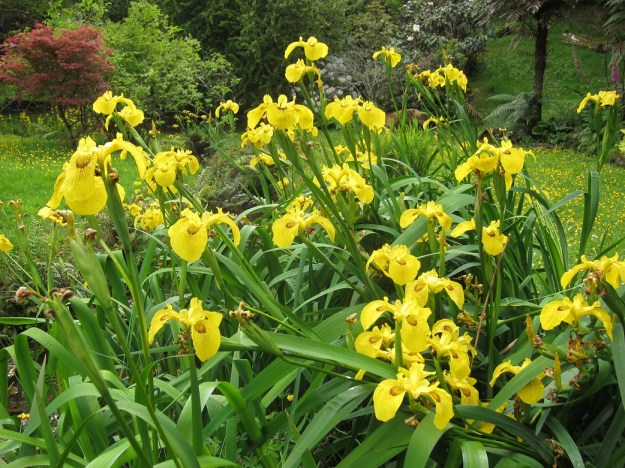
The offending flag iris
The problem with Iris pseudacorus is its resilient and invasive ways. It can survive in water, even in salt water, beside water, on water as a floating mat of rhizomes and even just on heavy soils and flood-prone areas. It is also poisonous to both humans and stock so is not controlled by animals. It is on most New Zealand weed lists and some regional councils require active management to control its spread.

Behold the offending rhizomes
Our flag irises have never set much seed, though all the descriptions say that seeding is a problem. We would have acted faster, had we seen threatening seed set. But the rhizomes, the rhizomes! They are sign enough of an issue. They form a dense mat both on and just under the surface. It reminded me of digging out wild ginger with their ability to form a solid barrier, choking out other growth. It was heavy, muddy work digging them out and prising stray rhizomes from farthest reaches with me, precariously balanced. I did not want to end up in the stream at this time of the year.
We had them planted by running water; the upper reaches of the Waiau Stream flows through our park. It was clear that floods or any disturbance of the rhizomes could cause some to wash downstream and from there, populate the countryside. It would not have been an issue had they been by a self-contained pond with no means of escape.
True, we grow Primula helodoxa and that is sometimes flagged as a weed issue by waterways but we dead head it. It is the seeding that is problematic with that plant.

Iris sibirica

Lovely Higo irises

and Louisiana iris
Fortunately there are alternatives to the flag iris which do not seem to be a weed problem and are arguably considerably prettier. Iris sibirica, the Higos and the Louisianas are all happy in similar conditions and give us a League of Nations in our park – Northern Europe and Siberia, Japan and USA. We just happened to have plants of all hanging about waiting to be planted. So while the three patches of flag irises are now muddy and apparently bare, in a few months’ time, they may even be flowering again in hues other than yellow.
 We are enjoying the water meadow effect we are achieving in that area of the garden.
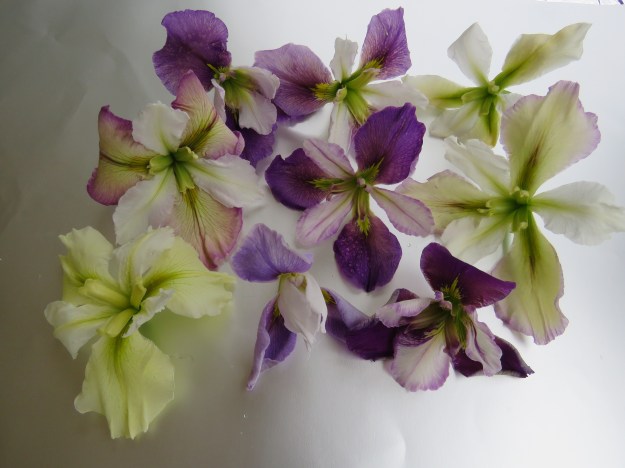
More Louisianas that Mark has been raising to plant out
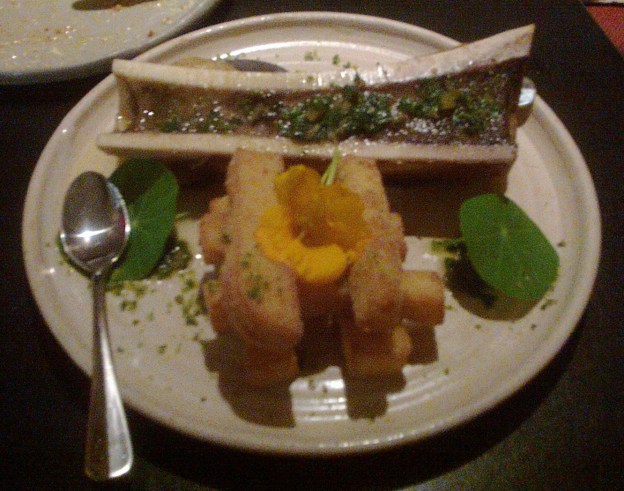 Their menu describes the dish as “Brussel sprouts** with almond tarator and zhoug”. I had to google both tarator (usually a yoghurt, cucumber and walnut based sauce) and zhoug (hot green spice paste of Yemeni origin). From memory the sprouts were not boiled or even steamed. They may have been lightly roasted.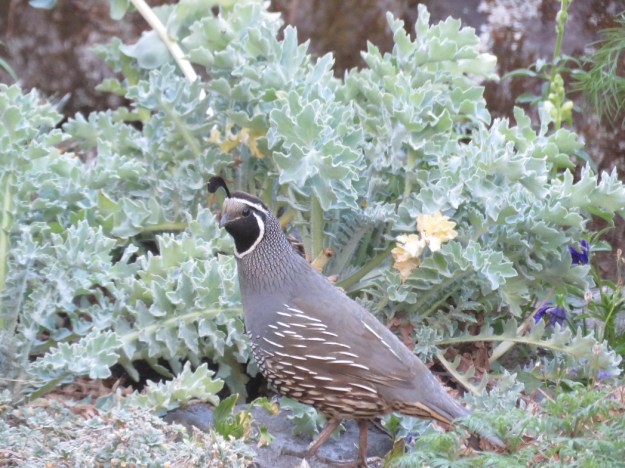
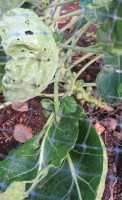 Alas, my plans to attempt some re-creation of this taste treat at home this season have been thwarted by our resident Californian quail. We are very fond of these charming birds which are slowly increasing in number but have no intention of consuming either the birds themselves or their lovely speckled eggs. When you have watched Mama and Papa Quail herding their young, which resemble fluffy little bumblebees, around the garden, the thought of putting them on the dinner plate is unimaginable. But it was a close-run thing when a mob of them found a way into the protective cloche Mark has placed over this season’s crop of Brussels sprouts. The crop was decimated and the few we have salvaged are poor, shredded examples of this vegetable.
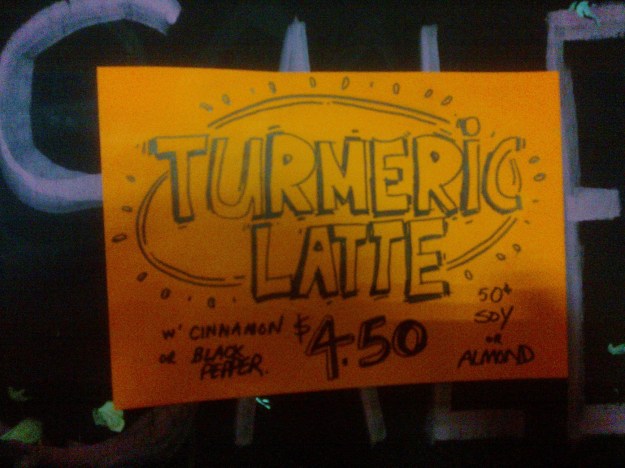 I give you the ultimate example of Bondi hipsterdom in Sydney.
 And the somewhat quaint example of hipsterdom in Canberra. No, I do not think pulling out the stained, blue woolly hat that my late mother in law used to adorn her teapot will achieve the desired level of hipsterdom when I lack the gluten-free friands as accompaniments.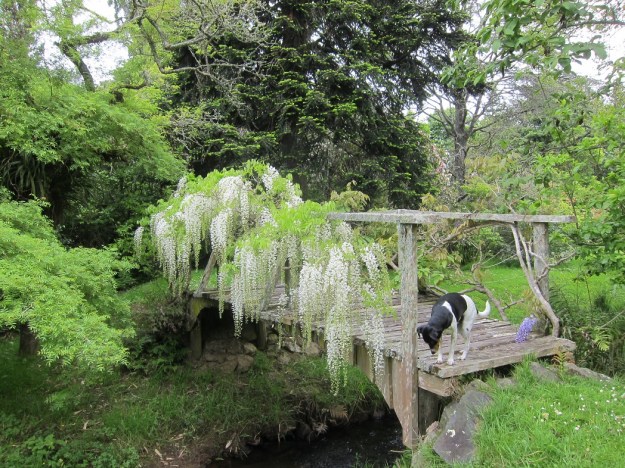
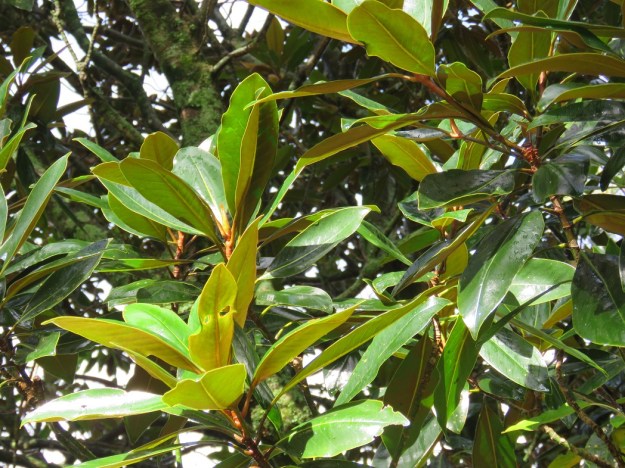 Any potentially large tree planted in the wrong place is going to be high maintenance. Vegetable time bombs, we call them. I see it with Magnolia grandiflora “Little Gem” in urban gardens more than any other plant I can think of. Aforementioned “Little Gem” is only little by comparison with something that might equally be called “Extremely Giant Gem”. It is not a dwarf tree. Plant it in a confined space – I know of a twin row of five or six aside lining a very narrow driveway in town – and it will either be high maintenance on an ongoing basis to keep it confined or an expensive removal job when it becomes a major problem.


 Not an earthquake. A falling dead tree. Pinus radiata often drops all its side branches when it dies, before keeling over or, in this case, snapping a third of the way up. This is good because the side branches can cause even more damage when a tree falls although it can and does clip other trees as it falls. As falling trees of at least 135 years of age go, this was on the minor end. The trunk broke in three as it fell, with the longest length (about nine metres) rolling over to a final location which is not bad at all, though it did initially land on a garden bed.
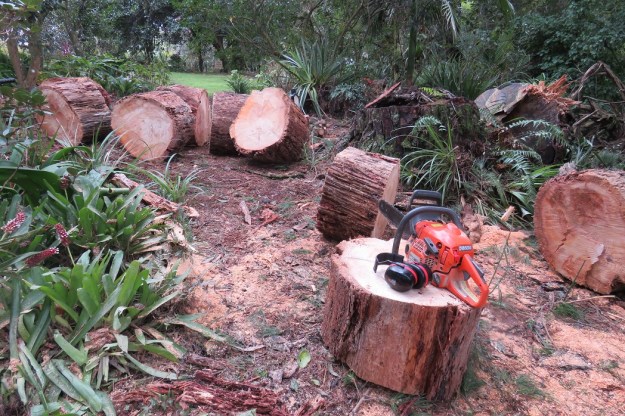 On Monday, we started clearing the paths. Surprisingly, there is quite a bit of good firewood in the centre of the trunk and by the end of the day, the pile of split wood in the shed was growing satisfactorily. There is nothing quite like the Squirrel Nutkin feel of seeing the firewood for 2017 already stacked and drying.
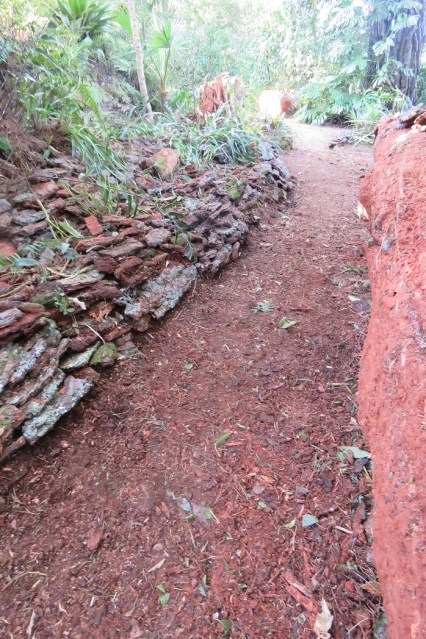 The longer lengths will remain in situ and we will garden around them. It is just a
 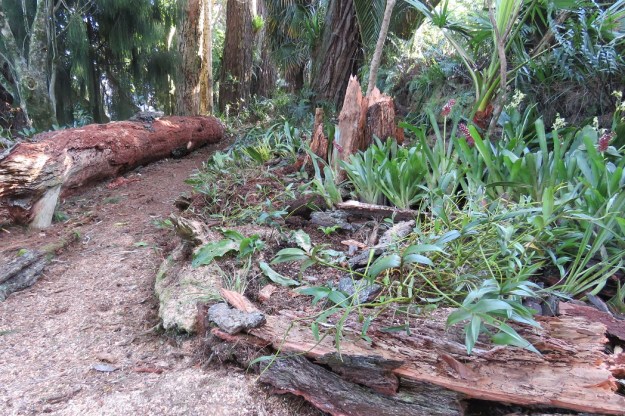 It is a lot easier to garden with nature, rather than in constant battle to keep it under control. By Tuesday, it looked like this. We are fine with that. It will settle down again over the next month or two and look as if it has always been like that.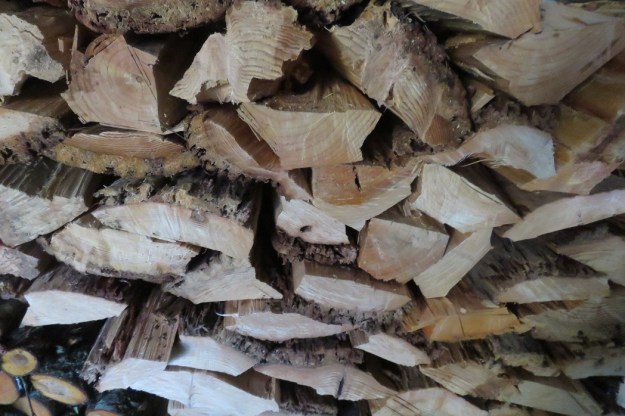
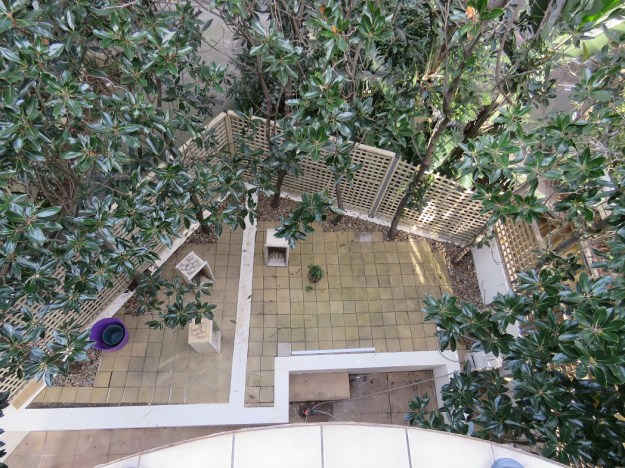 Magnolia grandiflora ‘Little Gem’.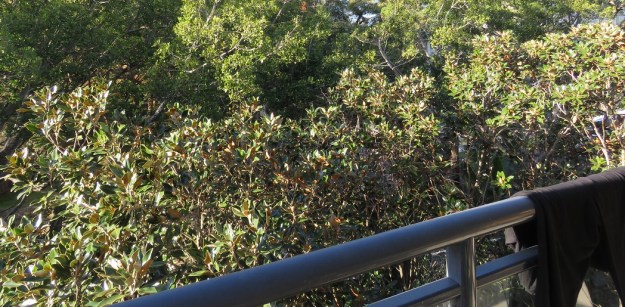
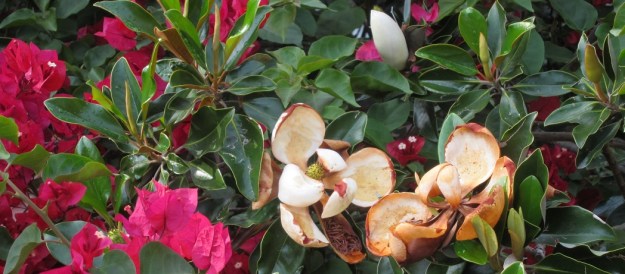 Just be warned if you are planting this handsome but ubiquitous tree in a small space. Also, do not expect a glorious floral display from the evergreen grandiflora magnolias, such as you get from deciduous magnolias and members of the evergreen michelia family. The grandiflora flowers are individually showy but short-lived and generally few in number at any time. The
 Tikorangi The Jury Garden