Tag Archives: Abbie Jury

Plants that do not know their place – high maintenance culprits

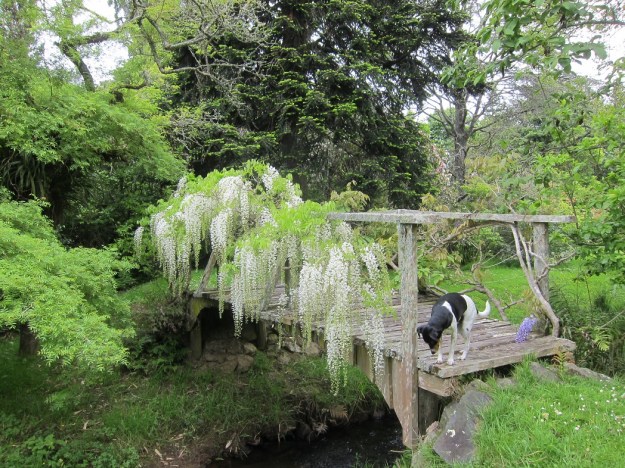
Dudley on the bridge amidst 'Snow Showers'

Dudley on the bridge amidst ‘Snow Showers’

You will never see me advocating enthusiastically for low maintenance gardening. It is not our style. But I do think some plants need to know their place in life. Some clamour for way more attention than they deserve. We have been thinking about plants that are unjustifiably high maintenance. First to go here were almost all plants that require chemical intervention (spraying) to keep them looking good – or even alive. Goodbye underperforming roses and badly thrip-infested rhododendrons. These might be great in other climates, but here? No. Next in the spotlight are some of the other high maintenance plant options.

Who doesn’t love wisteria? But unless you are willing to give them the attention they require, they are best admired in somebody else’s garden. More than any other plant I can think of, they cannot just be planted and left. Miss a prune and it only takes one season for them to crack the spouting – I know this from experience. They also put out runners that R U N considerable distances. What is more, if you prune them incorrectly, they don’t flower which really defeats the purpose of growing them.

We dug three wisteria out this winter. Two were not flowering well enough to justify keeping them (not enough light, I think). The third was running amok in a wild area and threatening world domination. We have still kept about seven plants, including two on our bridge which are great performers but I am meticulous about pruning them both in summer and winter. Even so, they can join hands in the middle, trying to block passage through.

Climbing roses are another plant that I personally think are best admired in somebody else’s garden. I once planted ‘Albertine’ over an arch in the vegetable garden. It looked lovely in flower but then it produced many long whips covered in fierce thorns. Not only were they waving away waiting to ensnare anyone who walked down the path, pruning was a Major Mission. When it took me the better part of a day to prune it and tie it in, I decided that the rewards did not justify the effort. The advice often seen in English media about letting climbing roses scramble through trees and not worrying about pruning them at all does not translate to our gardening conditions. Any rose that strong is more likely to collapse the host tree, or swamp it at least. We are trialling some semi-thornless pillar roses but rampant, thorny climbers – no thanks.
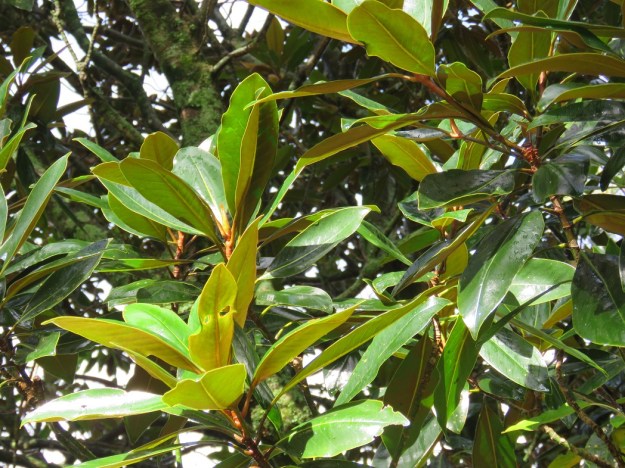
magnolia-little-gemAny potentially large tree planted in the wrong place is going to be high maintenance. Vegetable time bombs, we call them. I see it with Magnolia grandiflora “Little Gem” in urban gardens more than any other plant I can think of. Aforementioned “Little Gem” is only little by comparison with something that might equally be called “Extremely Giant Gem”. It is not a dwarf tree. Plant it in a confined space – I know of a twin row of five or six aside lining a very narrow driveway in town – and it will either be high maintenance on an ongoing basis to keep it confined or an expensive removal job when it becomes a major problem.

Clipped hedges can give great definition in a garden – green walls, really. But I rate any hedge that needs trimming more than once or twice a year as high maintenance. While some people are quite happy to trim hedges frequently to keep sharp-edged definition, I see that activity as being like vacuuming the house. There is nothing creative about such a repetitious activity. To me, hedges are   utility tools, a background, not the centre of attention so they shouldn’t be demanding as much or more attention as the foreground stars of the garden. I would not plant any in teucrium or lonicera for these reasons.

A blight upon your buxus!

A blight upon your buxus!

Buxus used to be infinitely useful and undemanding hedging plant. But with the advent of buxus blight in many areas, that status has changed. I know of gardeners who are spraying their buxus hedges every few weeks, just to keep them leafy and to hold blight at bay. Woah there! Aside from environmental considerations (even if it is just a copper spray, the long term use of that is not good), it turns a handy, low maintenance plant into a high maintenance option.

Camellia Fairy Blush

Camellia Fairy Blush

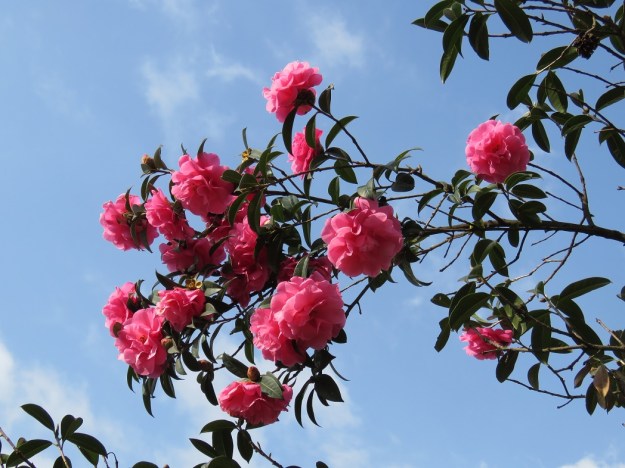
Give me our small leafed camellia hedges any day. A hard prune in early spring followed by a light tidy-up in autumn is all they need. Also they light up a winter’s day while feeding the birds and over-wintering monarch butterflies. Camellias ‘Fairy Blush’, transnokoensis and microphylla are our preferred options.

We can and do fuss over some plants but utility plants? No. They need to know their place in life and that means not being so demanding.

First published in the September issue of NZ Gardener and reprinted here with their permission. 
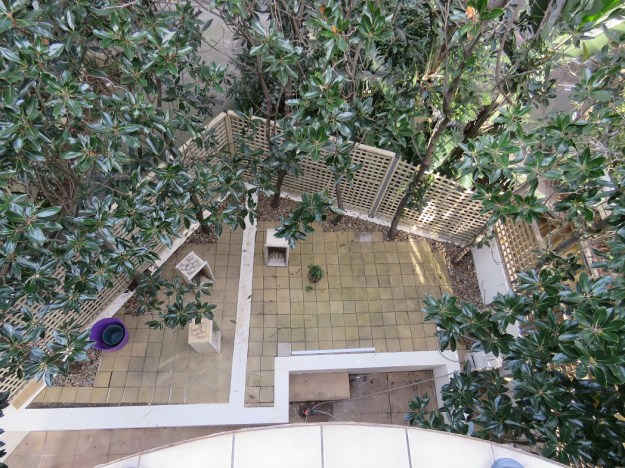


Urban living – Magnolia grandiflora ‘Little Gem’ and wheelie bins

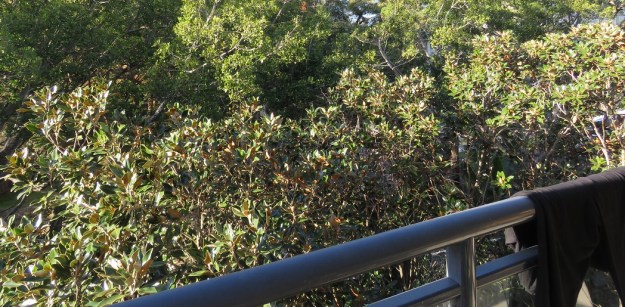
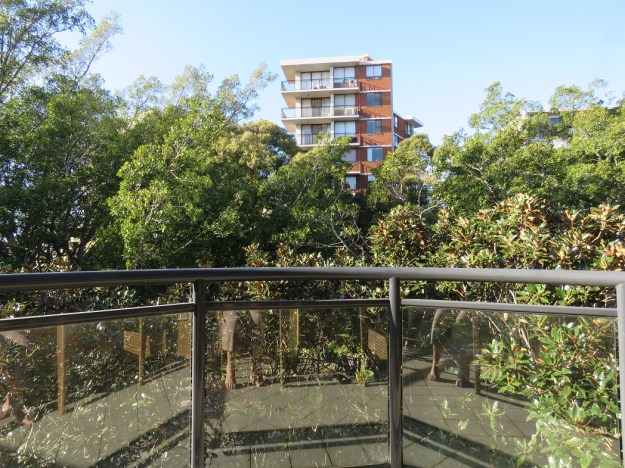
IMG_0741Magnolia grandiflora ‘Little Gem’. Again. Beloved of landscapers and non-gardeners alike, it is even more popular in Australia than in New Zealand. For readers who continue to think that the name ‘Little Gem’ means this is a dwarf tree that will only reach two or maybe three metres high, I offer you these plants photographed from Sydney daughter’s third floor balcony. They are already head height on the third floor and will have more growing to do.

These particular plants have been stretched upwards by close planting at not much more than metre spacings. Trees will reach for the light when there is competition but there is nothing unusual about ‘Little Gem’ reaching this height. Apparently the owners of the ground-floor apartment are not so keen on them. I can understand this. All they will see is the bare trunks at the base but to them falls the task of cleaning up the leathery leaves which take a very long time to break down. It is our daughter who gets the benefit of flowers and foliage three stories up.

IMG_0744

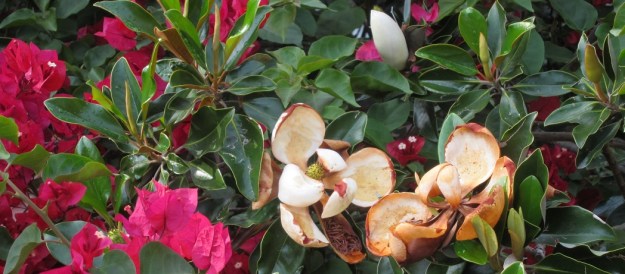
IMG_7138Just be warned if you are planting this handsome but ubiquitous tree in a small space. Also, do not expect a glorious floral display from the evergreen grandiflora magnolias, such as you get from deciduous magnolias and members of the evergreen michelia family. The grandiflora flowers are individually showy but short-lived and generally few in number at any time. The bougainvillea in this photo from the third floor balcony has since been removed by the ground floor owners and I can’t blame them for that. Like most climbers, it flowers on the top growth, so they would have had all the problems of rampant and wayward growth with fierce thorns but none of the delight of the colourful bracts.
IMG_0750

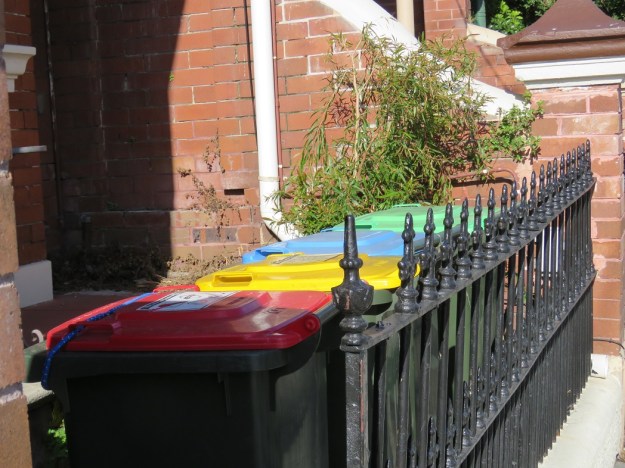
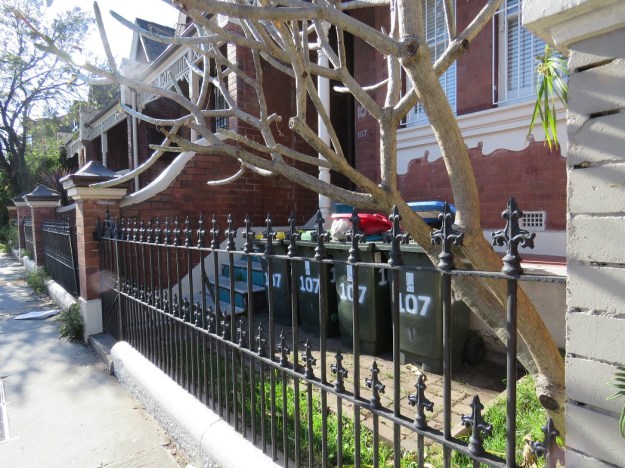
When a frangipani and wheelie bins fill your only outdoor space….

Urban living is a source of some fascination for me, a long-term country dweller with huge amounts of personal physical space – even more so when it is high density, inner city living rather than suburbia. There is much discussion in our largest city of Auckland these days about the need for intensification of housing in the face of a rapid growth in population. I could not help but notice in Sydney that the provision of space for rubbish and recycling collection is often overlooked in the planning of both building and the provision of services. When your only outdoor space is almost totally taken up by a plethora of recycling bins, it seems a failure of something.

IMG_0755

After a wait of 17 years – flowers!

Camellia impressinvervis

Camellia impressinvervis

When I published my article on The Golden Camellias of China and Vietnam back in early June, I added an excited postscript noting that one of our plants of a yellow species was about to bloom for the first time.

Not just one, it turned out, but three! These were plants that we bought in 2001, back in the heady days of Neville Haydon and his Camellia Haven Nursery and they were probably two-year old grafts at the time. So it has only taken about 17 years for them to flower in our conditions. We are marginal for these tropical species.

Fortunately, Neville is still available and switched- on, despite advancing years, and was able to identify the species from photographs. The labels on the plants here had long since gone. So this year, we have flowered C. euphlebia, nitidissima and impressinervis. The nitidissima we will have bought under that name because we already had C. chrysantha and would not have bought a second one and it is likely that they were thought to be different species back then. So we probably have two different forms of it.

Camellia euphlebia

Camellia euphlebia

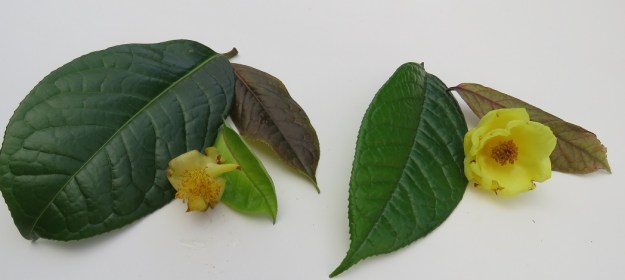
They did not all flower at the same time, so I could not get a photo of all three in a row. What I can say is that C. euphlebia only had a four or five blooms in total and they were very small but the foliage is the largest of all and handsome in its own right.

Camellia nitidissima

Camellia nitidissima

C. nitidissima is the stand-out for us – plenty of flowers. Too many to count, even. Blooms were large enough to stand out on the bush and the foliage and form is handsome. Unfortunately our earlier form of C. nitidissima that we have under the name of C. chrysantha did not flower this year, so I could not compare the two forms.

C. impressinervis to the left, C. nitidissima to the right

C. impressinervis to the left, C. nitidissima to the right

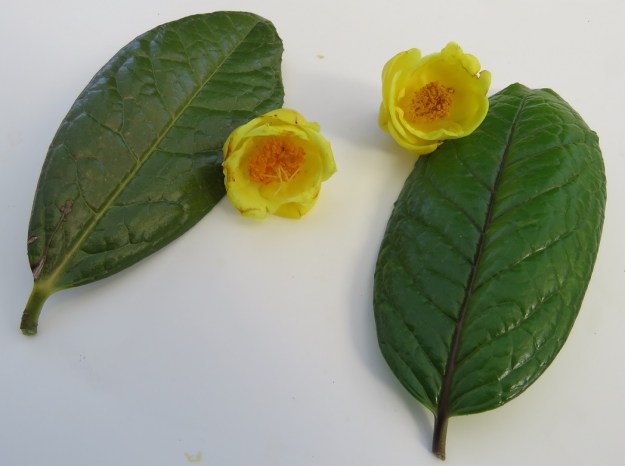
C. impressinervis has blooms of similar size, substance and colour to nitidissima but not as many of them. It also appears to put up filaments (presumably petaloids?) in the centre of the showy boss of stamens. Our plant is upright with the typical bullate foliage and it set at least 100% more blooms than C. euphlebia this year (in other words, about 10).

C. euphlebia to the left, C. nitidissima on the right.

C. euphlebia to the left, C. nitidissima on the right.

These are collectors’ plants. I am not aware of them still being in commercial cultivation in New Zealand. But at least they are in the country and anybody determined to get hold of them will be able to find material to graft plants for themselves. Though most people will need to learn how to graft first but the decline in technical skills is another topic altogether.

When you have waited 17 years for flowers, it is a pretty exciting experience (in an understated gardening sort of way) when the first blooms open.

Why do so many New Zealanders hate trees?

IMG_0878I read a report last week about leading Auckland mayoral candidate, Phil Goff’s plan to plant a million trees around Auckland.  Good luck on that one, Phil, I thought. For many New Zealanders do not like trees.

I was telling Mark about findings in The Sceptical Gardener, by Ken Thompson, who is clearly interested in the effect of a garden and trees on real estate prices. First he quoted a US study. From Lubbock, in Texas, no less. The shorter version is that if you have a garden that is a rich, layered eco-system that supports a wide range of different birds, the correlation is that it adds US$32,028 to the value of your real estate when you go to sell it. There is more – another chapter on determining the value of trees, both planted on your own section and also on the road verge. A Perth (Western Australia) study shows broad-leafed trees on the road verge add AU$16,889 to the value of your adjacent real estate. That is a very precise sum.

“Not in New Zealand,” was Mark’s comment, articulating what I had already thought. “It is more likely to devalue your property by that amount in New Zealand.” For many New Zealanders do not like trees.

4589Why, when we live in a country that was until very recently, heavily forested, do so many people hate trees here? Why do so many folk want to hack back or cut out anything over two metres in height? And why do we so often see the death sentence pronounced and carried out on trees once they have reached about fifty years of age? “Past their use-by date”, it is often claimed even though the tree may in fact have a life expectancy of hundreds of years.
I used to think that maybe it was a visceral response that harks back to the difficult conditions encountered by our early settler forbears who arrived expecting to find pleasant green, rolling lands but instead had to start by hacking out dense, impenetrable forest in order to find a place to stand.

Upon reflection, it is more likely a response to conditions whereby our climate is not quite as warm as most of us would like and our housing stock is generally of low quality – at least when compared to other western societies and cooler climates. Often poorly insulated, if at all, and inadequately heated, most of us rely on passive solar heating so we want sun, sun and more sun. Woe betide any tree that might block a ray of sun or indeed any view. We are still a very new country with little respect, let alone reverence, for the past.

Third floor balcony of a Sydney apartment

Third floor balcony of a Sydney apartment

I am just back from a visit to Australia where both our two daughters live and I could not help but notice the greater role played by trees in that country. Sydney daughter has a third floor apartment with a good-sized balcony and how bleak that setting would be without the surrounding foliage. It is high density living not far from Bondi, with heavy traffic and residential high rise all around. Yet despite that, there are only three apartments that overlook her living area, both indoors and outdoors and the trees cushion the heavily urbanised environment. The trees are a combination of large specimens on the verge and trees planted in the garden of the ground floor apartment.

Canberra suburbia

Canberra suburbia

Canberra daughter lives in a much harsher climate (hot in summer and very cold in winter) but is in one of the desirable leafy suburbs with large street trees. Canberra is a planned city and in her area, the trees are allowed to grow to maturity even at the expense of footpaths. There aren’t many footpaths at all and those that do exist, appear to be laid in slabs which would accommodate tree roots better than the unimpeded level surface poured in one that we demand in NZ suburbs. Additionally, front fences are banned – only hedges allowed – which avoids the prison look of some of Auckland’s leafy suburbs. Daughter tells me that public policy is such that where tree replacement is required, no more than 20% of trees be felled at any one time.

So good luck to Phil Goff and his million trees. Increasing housing density in Auckland means that leafy public plantings are going to be even more important to soften the urban environment. But he will be fighting some hostile attitudes from many residents.

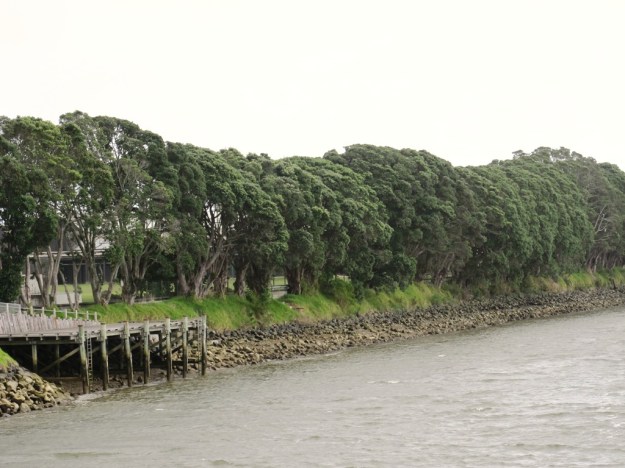
064Some readers may recall our lost campaign to try and save about 29 mature pohutukawa that lined the river in our local town of Waitara.

IMG_5481Believe it or not, some folk actually think this barren wasteland (now grassed) is an improvement. Three small specimens have been planted to replace the missing twenty-nine. Eventually, that is. As long as tree-hating local residents and the powers-that-be don’t hack them out before they ever reach maturity. For this is New Zealand and urban trees are not greatly valued by many.
Reticulata camellias – from China with passion

A reticulata hybrid bred from C. lindl and named ‘Liuye Yinhong’, photographed at Kunming Botanic Gardens

A reticulata hybrid bred from C. lindl and named ‘Liuye Yinhong’, photographed at Kunming Botanic Gardens

C. lindl

C. lindl

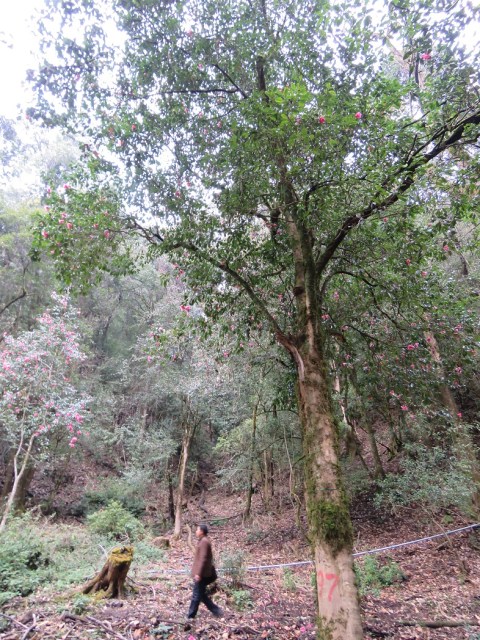
There is a special thrill to seeing a plant in its natural habitat. The species are often very different to the plants we know and grow in our gardens. So it was with the reticulata camellia known as ‘lindl’ that is indigenous to the forests on Baotai Mount in Yongping County, south-west China. It may be the parent of many of the named reticulatas grown as garden ornamentals, but in itself, it is not a showy garden plant. It is a naturally occurring forest tree – and by tree, I mean anything up to 18 metres high.


C. lindl is the is the dominant indigenous reticulata camellia species on Mount Baotai.

C. lindl is the is the dominant indigenous reticulata camellia species on Mount Baotai.

The city of Dali in the Yunnan Province of China proudly proclaims itself as the homeland of camellias so it was only appropriate that they hosted the International Camellia Congress in February this year. Their literature claims records show that camellias have been cultivated for as long as 1500 years and based on what we saw, you would be hard pressed to find anywhere in the world where they are cultivated more extensively than in their home territory. They are a commercially significant plant – to the envy of every nurseryperson who attended the congress.

A private courtyard garden in the village of Longxiadeng

A private courtyard garden in the village of Longxiadeng

Public plantings in parks and temples featured reticulata camellias- or retics, as they are often called by camellia folk. Domestic gardening we saw was largely based around courtyards, densely furnished with container grown plants and the retics were dominant. Ordinary folk walking down the street carrying a plant home were carrying retics in bloom. We saw extensive bonsai being carried out on big old reticulatas that have been dug up and brought in to remodel in a new way.

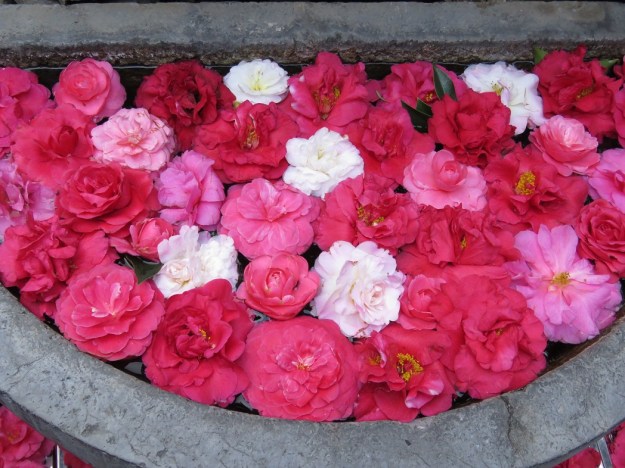
Zhangjia Garden – a modern recreation of traditional vernacular architecture with extensive displays of camellias (10 000, apparently), almost all grown in containers in the five internal courtyards. The majority are reticulatas, as can be seen in this temporary display in a stone trough.

Zhangjia Garden – a modern recreation of traditional vernacular architecture with extensive displays of camellias (10 000, apparently), almost all grown in containers in the five internal courtyards. The majority are reticulatas, as can be seen in this temporary display in a stone trough.

There is not a big range of different named cultivars. Mark, who finds interest in variety and difference, found the dominance of maybe six to ten varieties began to pall a little. Some are the same as selections seen around New Zealand, although they have been renamed by Western gardeners. There do not appear to be dramatic new breakthroughs in colour, flower form or growth habit in this branch of the camellia family.  They just are. And they are celebrated for what they are and given pride of place in the local culture.

The reticulata camellias in our garden are far more recent with most dating back a mere 50 years or so. In that time they have made small, open trees, maybe 4 metres high. Every year they flower in abundance with blooms that can be up to the size of a bread and butter plate. I mentioned the curse of petal blight in my June column and it is true that reticulatas also suffer from this unpleasant affliction. However, the sheer weight of the large blooms means that most will fall cleanly, rather than hanging about attached to the plant as the japonica camellias tend to.

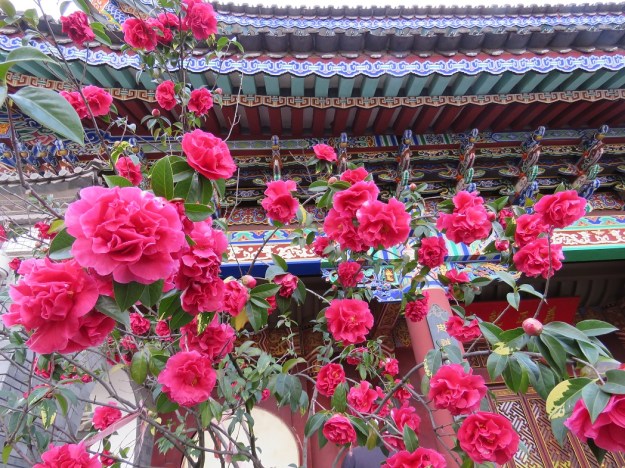
Reticulata camellias are used extensively in public plantings in the Yunnan, such as this one at a temple in Dali.

Reticulata camellias are used extensively in public plantings in the Yunnan, such as this one at a temple in Dali.

Reticulatas used to be part of the usual camellia offering in this country. Sasanquas for hedging and autumn colour, japonicas and hybrids for mass blooming from mid winter to spring and reticulatas for their big show-off blooms. Sadly, no more and that is a reflection of the downward pressure on plant pricing and the move to plants that can be more easily produced in larger numbers. The issue is that very few reticulatas grow on their own roots so they are not able to be grown from cutting.  They need to be grafted onto rootstock and they are not easy to graft successfully. The prized variegations that can give bi-coloured blooms and, at times, foliage are indicative of virus in the plants and that virus weakens plant growth and makes them harder to graft.

If you see any reticulatas offered for sale, buy one or more on the spot if you want them. You can always hold them in a container until you have their garden position prepared. You may not see them again if you wait until you are ready. The only alternative is to go back to the ways of an earlier generation and learn how to do your own grafting.


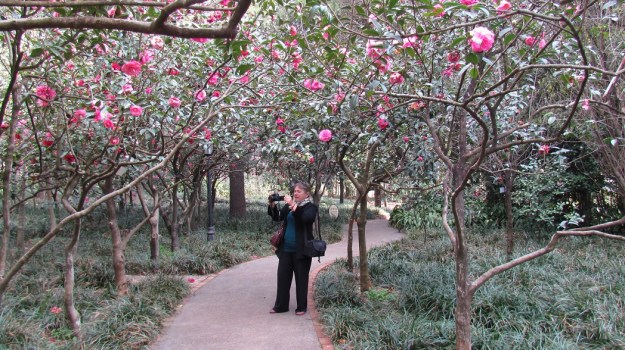
Yours truly in the Kunming Botanic Gardens (photo: Tony Barnes)

Yours truly in the Kunming Botanic Gardens (photo: Tony Barnes)

First published in the August issue of New Zealand Gardener and reprinted here with their permission. 

Baotai (24)