Tag Archives: Cyclamen hederafolium

Let there be flowers and the gentle change of seasons

In a world that seems to be growing more chaotic, unstable, downright dangerous and even vicious by the day, let there be flowers.

I know I am not alone in limiting my time following the news and on social media. Never in my life did I think I would be taking life guidance from RuPaul but his advice to ‘look at the darkness but don’t stare’ are words that I repeat to myself every day. It is one thing to be aware of what is happening but it can be overwhelming if I spend too much time following it closely.

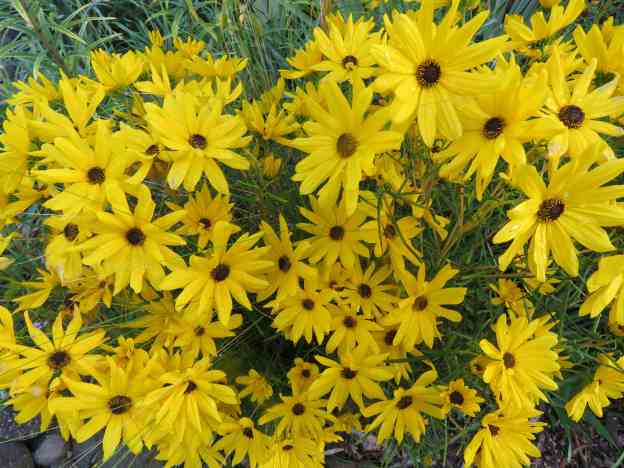
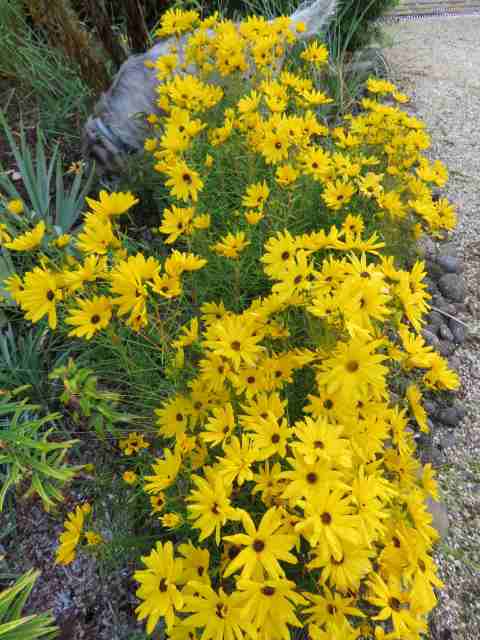
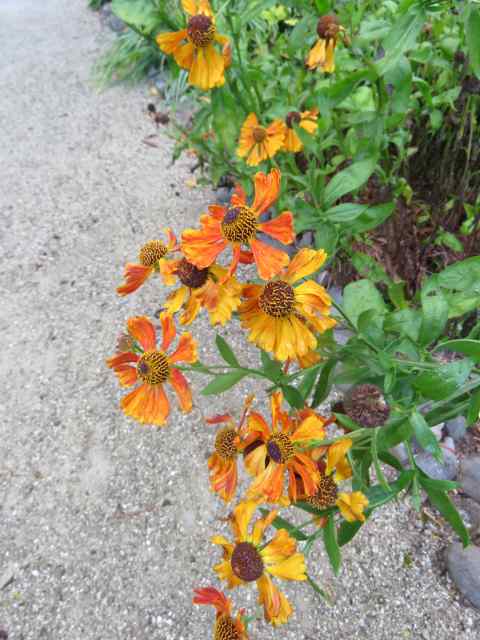
The bright cheer of the dwarf helianthus makes me smile. This is a named cultivar but I have forgotten where I recorded the name.

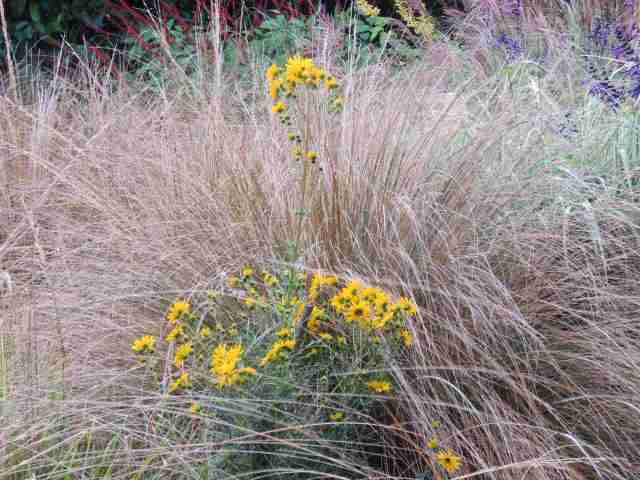
Instead, I give you the gentle predictability of the change of season from summer to autumn here with photos from yesterday. I have used the shorter version of the helianthus in the borders but the tall leggy form – likely closer to the species or as it is found in the wild – seemed to fit better in the controlled abandon of the Court Garden. No more. We are in danger of losing it because it is not as capable of coping with competition as I thought. As soon as this remaining clump has finished flowering, I will relocate it to the more cultivated environment of the borders where it will be given its own space to thrive.

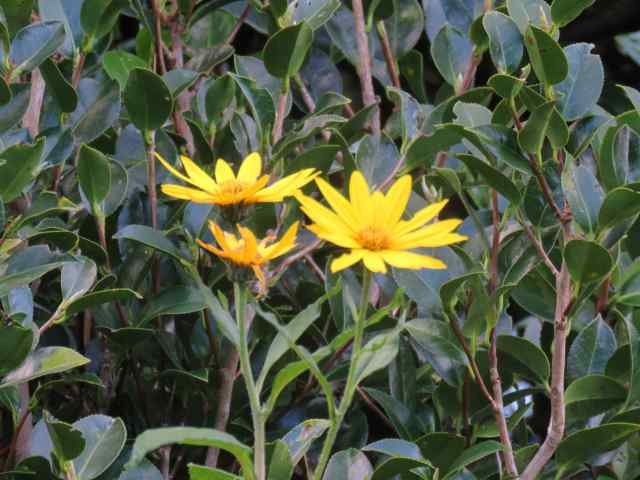
The Jerusalem artichoke is also a member of the helianthus family but it does not justify its place as an ornamental plant. Not enough flowers, I am afraid, but an abundance of tubers which I dare not eat. While tasty, no matter how hard I try, I can not find ways to prepare it that improve its digestibility without the unfortunate side effects. Its name as fartichoke is fully justified.

The heleniums are in the twilight of their season but remain eyecatching. These have one of the longer flowering seasons of the summer perennials and fully justify their prime position in the borders.

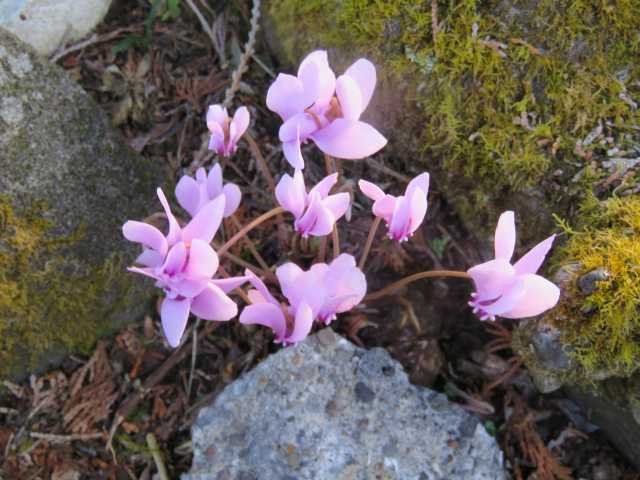
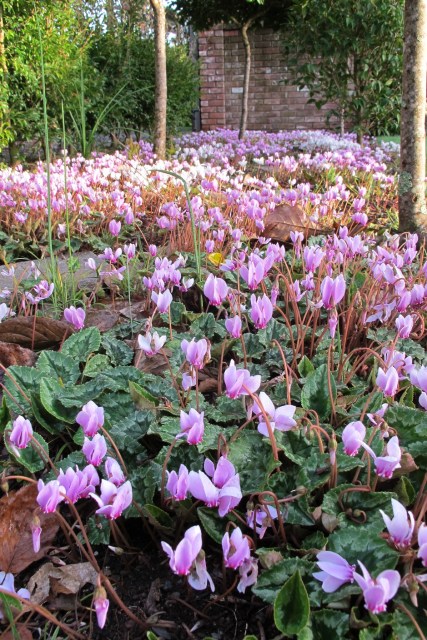
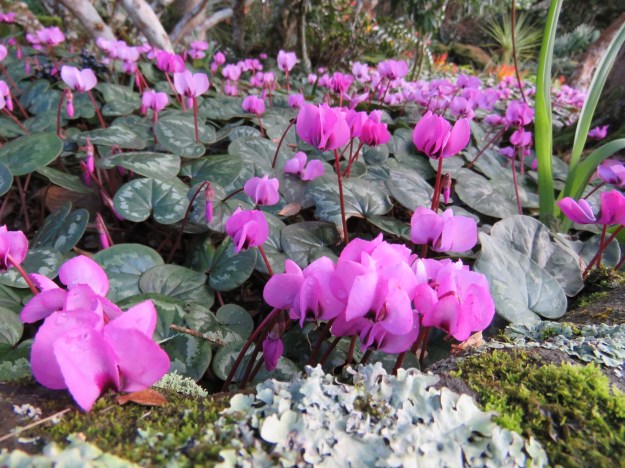
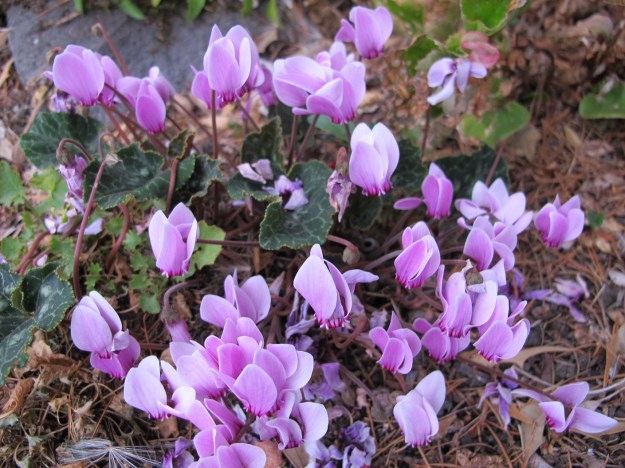
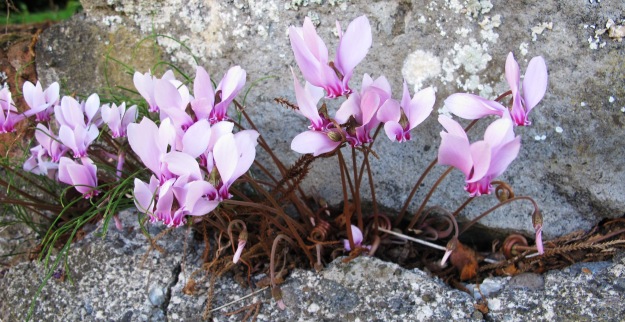
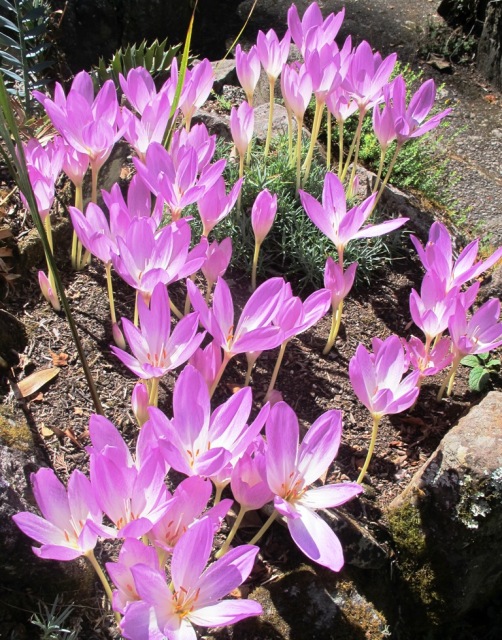
Cyclamen hederafolium are coming into their autumn peak and what a delight they are. We have many of them, many many in fact because we encourage them to seed down in their pretty pink and white charm. I am not a fan of the bigger cyclamen hybrids but the species are a source of great delight throughout the garden.

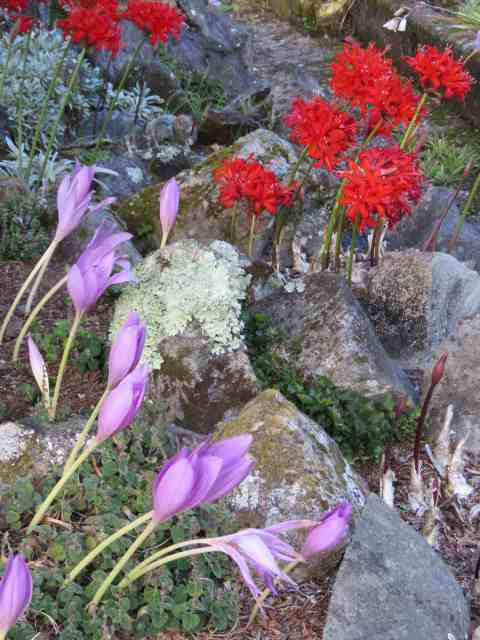
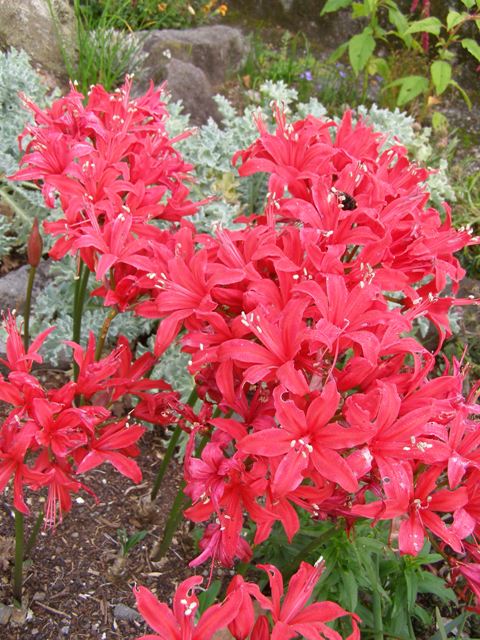
The rockery is hitting its stride with its autumn display. The colchicums are a fleeting delight but one we would not be without. The nerines are just starting, mostly red so far but plenty about to open in other colours. I live in hope that the Lycoris aurea will stage a reappearance. I planted a pot of flowering bulbs out in the rockery years ago but I can’t remember where and it has never flowered since. It may have gently withered away to nothing or it may still be masquerading as a random clump of nerines which I just haven’t noticed aren’t flowering. Perhaps our hot, dry summer will have triggered it to flower. Or maybe not.

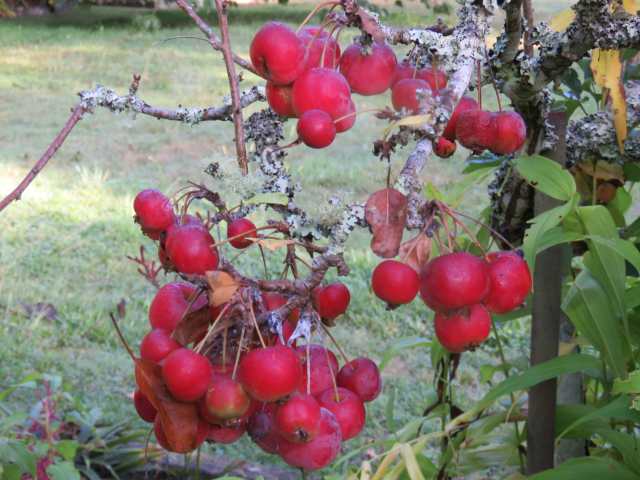
We have two dwarf crabapples in the rockery, standing little more than 1.2metres high after about 50 years. Their flowering is insignificant and their form and foliage unremarkable but they justify their place with their ornamental fruit in autumn.

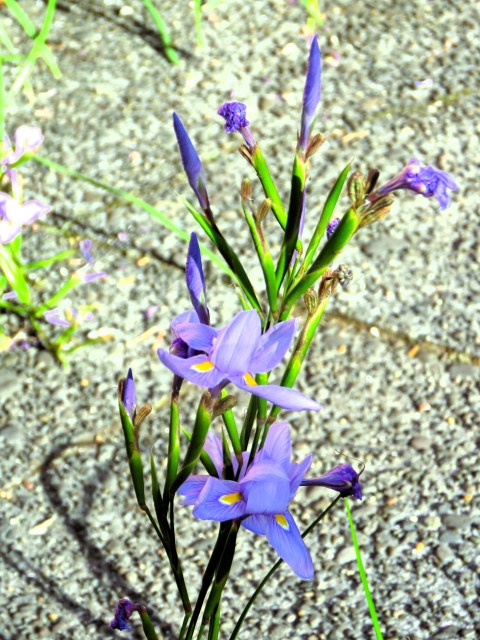
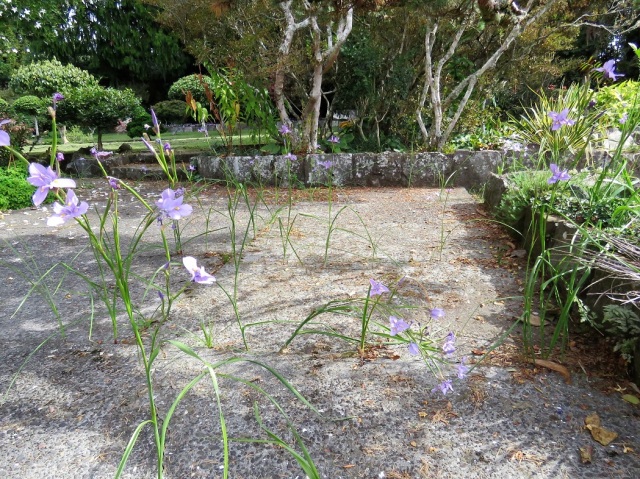
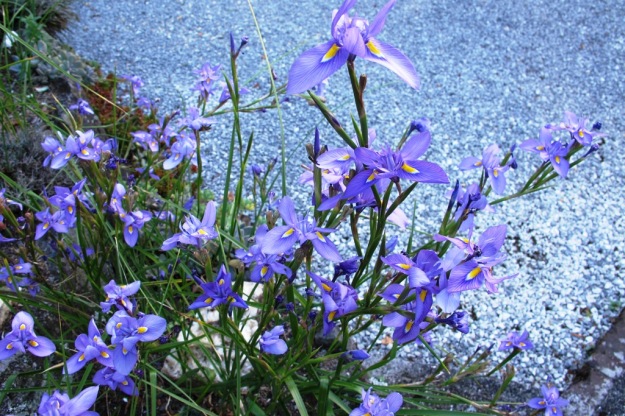
Moraea polystachya, an autumn form of the peacock iris, seeds around enthusiastically but harmlessly and rewards us by popping up randomly – on the edge of the drive in this photo – and having one of the longest seasons in flower of any of the autumn bulbs because it keeps opening a generous succession of buds.

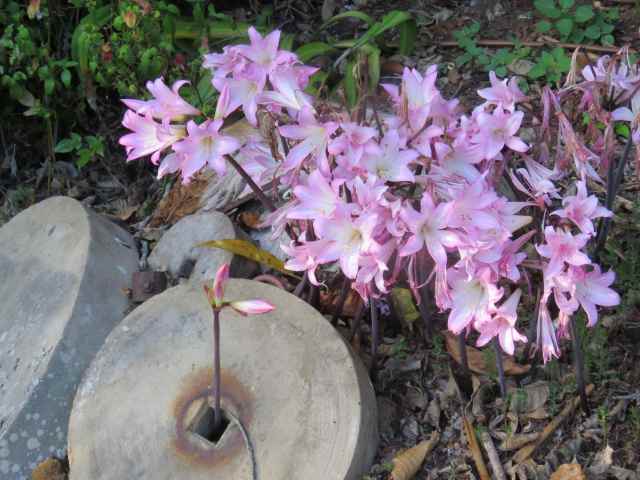
The belladonnas are bold, a bit scruffy and have bulbs and foliage that are too large to make them obliging garden plants. But they are a welcome addition in wilder areas, in this case on the site of the old woodshed we removed this summer before it fell over of its own own accord. We don’t know anything about the grinding wheels except that Felix must have gathered them up fifty years ago and there are three in graduated sizes.

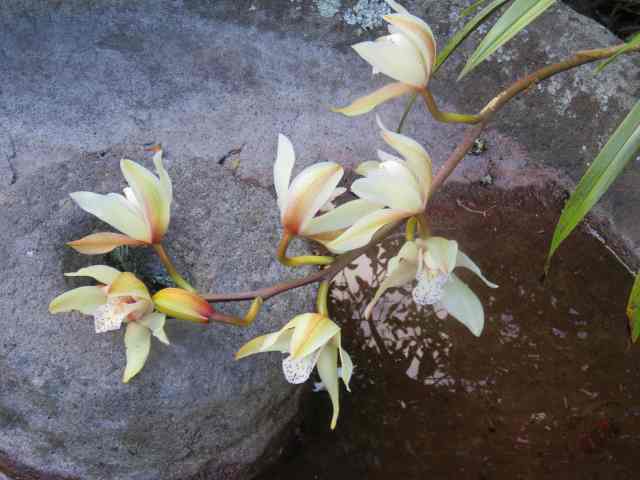
The first cymdidium orchid is opening. This somewhat understated one is always the first of the season and is a top performer in its spot, arching over the old stone millwheel which has been repurposed a bird bath.

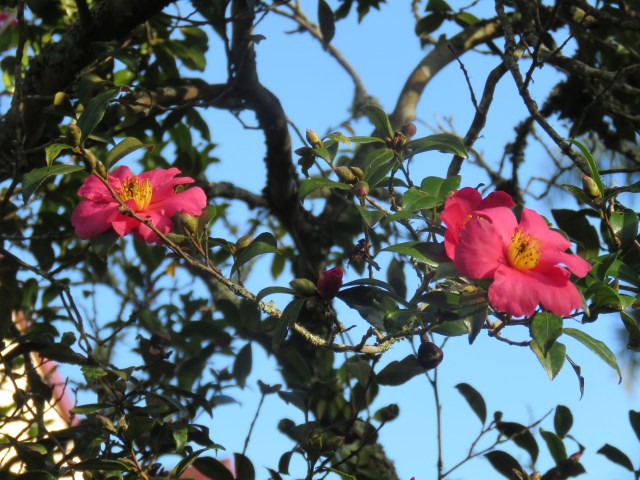
Finally, camellia season has started. Camellia sasanqua ‘Crimson King’ is always one of the first to open. Even with climate change, there is a reassuring predictability in the cyclic nature of the seasons.

May there always be flowers. I can stare at them as long as I like without fear of being overwhelmed by a sense of despair, anxiety and helplessness. In the flowers and the seasons lie promise and joy and we need a whole lot more of that at this time.

Autumn flowering self-seeders

Cyclamen hederafolium gently drifting itself in a most rewarding fashion

Over the years, we have tried growing any and all of the cyclamen species we could find. I see there are 23 species but we wouldn’t have had that number available to us. Most of them come from dry parts of Europe and North Africa, often with cold, dry winters – conditions that could not be further from ours. This is why we have only ever succeeded in naturalising three different species. Coum is our winter cyclamen, repandum in spring but it is the carpets of hederafolium that are delighting me in autumn.

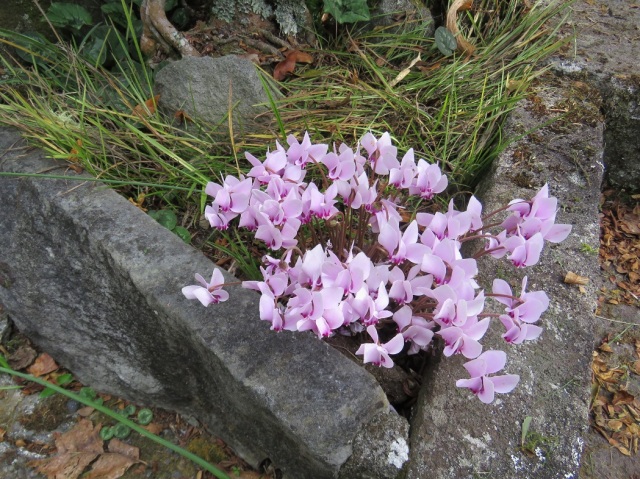
Cyclamen grow from round, flattish discs that start tiny but can get steadily larger over the years. This is just one tuber, about the size of a saucer, with a big show-off display of flowers.

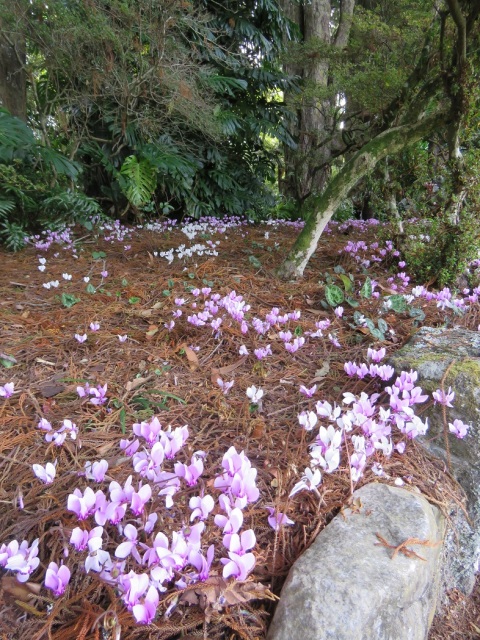
We didn’t plant all these hederafolium in pretty pink and white. We probably started this area with maybe three or four tubers but, over time, they have gently spread. That is what I mean by naturalising. We have them growing in cultivated conditions all through the rockery and in other garden beds and also growing in grass in the park meadow. I thought this drifting area was interesting because of the conditions where they have spread and the showy display they make.

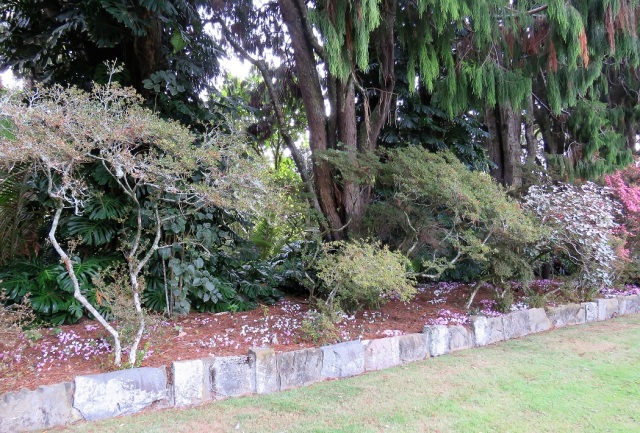
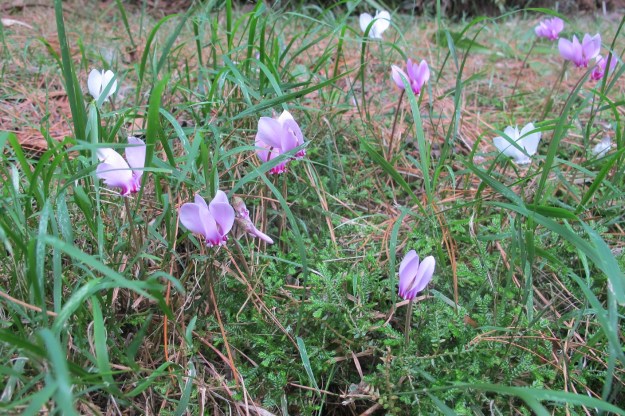
For context, this is the wider view of the drift of cyclamen in the top photo. That ground is never fed and never watered so is very poor and dry but cyclamen are adapted to such conditions

They are growing in extremely poor ground, bone-dry and bereft of goodness because the enormous rimu trees suck up all the available moisture. There is also a natural carpet of rimu needles covering them. But, there is no competition from other bulbs or shade loving perennials. This means they never get swamped or crowded out by other plants or so wet in the shade that the tubers rot when dormant. And when the seed spreads, it has a fair chance of germinating and growing because the whole area is largely left undisturbed. Hederafolium sets seed freely and Mark has been pleasantly surprised when he has scattered the seed further afield and found cyclamen flowering there a few years later. It is best sown or scattered fresh, though. Gather the ripe seed and spread it at the same time rather than storing it for later.

Moraea polystachya gently seeding its way around

While on bulbs naturalising, I don’t mind the lovely blue Moraea polystachya seeding down in even less hospitable conditions – the cracks in the old concrete. It gently seeds itself through the rockery but not at an alarming rate and it cohabits happily with other plants. Also, the corms are large enough to find easily if I want to move them. It also has the longest flowering season of any of the autumn bulbs because it keeps flowering down the stem. They are iris-like in appearance and if you trace back the family tree, you get to what most of us might call the broader iris family.

Windflowers or Japanese anemones

Also spreading alarmingly are the Japanese anemones which aren’t even from Japan, commonly known as windflowers. I love them and am prepared to wage ongoing war on their spreading ways but they should always come with a warning. Don’t plant them anywhere near treasures of a more refined disposition because they will swamp them. It is best not to plant them near trees and shrubs because they spread below ground and you will have them all through the root systems of other plants all too soon. If you can, define a space and keep them to it which means having a clear area around them so you can see when the roots are popping up growing tips beyond their allotted space.

Japanese anemones

Naturally, I haven’t done this myself – at least not on these clumps which are in the Iolanthe cottage garden/meadow. I know I will regret it but I still have a sentimental fondness for them at this time of the year.

Finally, unrelated in subject matter, but the recent cyclone opened up a view of the sunrise that we can see as we sit companionably over the pre-breakfast cup of tea. It is an ill wind etc

Pink and white detail – species cyclamen.

It takes a fair number of cyclamen to create a carpet but it can be done over time

Even though we garden on a large scale across 10 acres, the little pictures are as much a delight as the big ones. For many months of the year, the species cyclamen give us charming detail. Over the years, Mark and his father before him gathered up all the different species they could find. When it comes to showy and proven garden performance, we now rely on four different ones which take us through most of the year – C. hederifolium flowers from January to late autumn, C. coum which takes us through winter, C. repandum for spring and C. purpurascens which flowers on and off all year round. C. graecum also flowers well but does not increase readily.

Cyclamen coum

There is a world of difference between the dainty species and the big hybrids which are sold primarily as house plants. Those are mostly bred from C. persicum, which we also grow but in itself it is not a stand-out performer in our conditions. I am not a fan of the hybrids, even less so when they are used as garden plants. To my eyes, they lack the charm and refinement of the species. They have been bred for a different purpose and have flowers which are much larger, often in different hues and sometimes selected for novelty value in flower form. But that is all a matter of taste.

Cyclamen graecum

A key to understanding cyclamen is knowing where they come from. This explains why C. libanoticum failed to establish as a garden plant here. It is native to the mountains of Lebanon – hardly conditions we can replicate. As it has the most beautiful flowers of any cyclamen I have seen, I was disappointed – though Mark tells me he still has it growing in his nova house (best described as his private but chaotic treasure house of obscure and curious plant material which may or may not transition to the garden, eventually).

Naturalising hederafolium by scattering seed

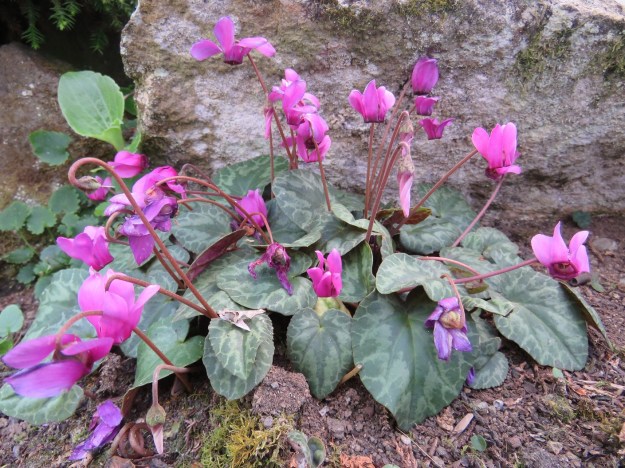
C. hederifolium (formerly known as neapolitanum) has been the easiest to naturalise for us – to the extent that we can even claim that we have carpets of it. It has a wide distribution from southern France through the Mediterranean to western Turkey, growing in range of conditions from rock and scrub cover to woodlands. We find it is happy in both full or partial sun on the edges of woodland areas but it needs good light levels so is not so satisfactory in shade. Some years ago, Mark scattered seed across grassy banks in our park and now we have it naturalised in meadow conditions. C. hederifolium sets lots of seed which is easy to germinate as long as it is sown fresh and not stored. The seed pods form on the end of corkscrew spiral stems. If you know somebody growing it, you may be able to request some seed.

Cyclamen purpurascens

If only C. purpurascens would set seed as freely, we could use it much more extensively. It is one of the more hardy, European species, occurring naturally as far north as Poland. It is also a terrific performer, evergreen and flowering much of the year. But it sets very little seed and that seed does not germinate readily so it is not an easy plant to increase and naturalise, despite its unfussy ways once it is growing.

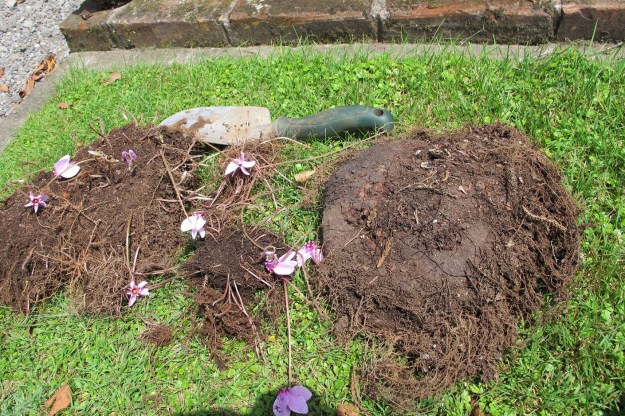
Cyclamen hederifolium tubers with trowel to give scale

Cyclamen grow from flat, disc-like tubers. While hederifolium tubers can get very large – I have measured up to 15cm across on old specimens – our more delicate coum and repandum stay small. I can’t recall ever seeing a repandum tuber much larger than my little finger nail and they are mostly smaller than that. While they still set good-sized blooms, it does mean that you need a fair number of them to have much impact. Siting is also critical. They are not a suitable option where ground is being cultivated. No matter how careful you are, the tiny corms look too much like soil when they are dormant and are therefore easy to discard or dig in too deep. Nor do they like companions which can overshadow and overpower them. Our main patches are on woodland margins, particularly as ground cover beneath tall, limbed-up evergreen azaleas. We leave them undisturbed and they reward us with low carpets of bloom, sometimes combined with snowdrops (galanthus) or the little, dwarf narcissi.  Excellent drainage is also vital. All tubers will rot out in wet or heavy soils.

Hederifolium again

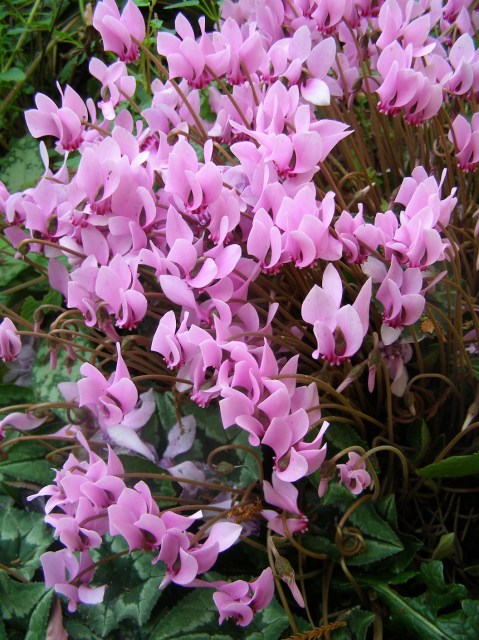
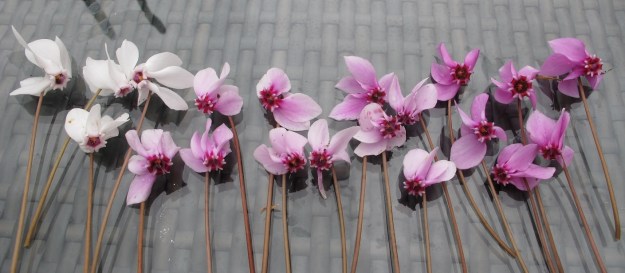
Generally, cyclamen show the typically heart-shaped leaves, usually marbled white or silver and a distinctive flower with upswept petals. They come in white and all shades of pink from palest through to deep cerise. Almost all of them are fully deciduous and like to sit on or in line with the ground surface, rather than being buried.


Shades of Cyclamen hederifolium

As to whether  the family name is pronounced “sike-lamen” or “sick-lamen”, we go with the former though Wikipedia tells me that is the American pronunciation whereas the latter is the British version. Take your pick.

First published in the May issue of New Zealand Gardener and reprinted here with their permission. 

Rock on – our rockery in autumn

Nerine sarniensis hybrids blooming in the rockery

Nerine sarniensis hybrids blooming in the rockery

When I am old and maybe decrepit, needing to draw in the boundaries of the garden, I shall fluff around in the rockery. I really enjoy this area and, as we enter autumn, my heart sings with the new season blooms.

Traditionally, rockeries are for growing alpines and sometimes retaining banks. However, we can’t grow alpines in our climate and our rockery is on the flat. It is pure 1950s vintage, built from a combination of rocks of various sizes, concrete and some brick, with sunken paths and raised beds divided into many hundreds of little pockets of soil. It is designed for highly detailed gardening and at about 20 metres by 10 metres, it is relatively large.

The purpose of the multitude of small beds is to keep bulbs separate and to confine the more invasive ones. Most of the pockets have two or three different types of bulbs in them to give seasonal interest.

There is always something to see, though summer is the toughest season. Because there is so much stone and the beds are elevated, parts of it dry out almost to dust. We have dwarf conifers, cycads, and a few other small shrubs to give both all year round structure and summer shade. There are a few smaller perennials and a limited range of annuals and biennials but generally, the rockery is about the bulb collection.

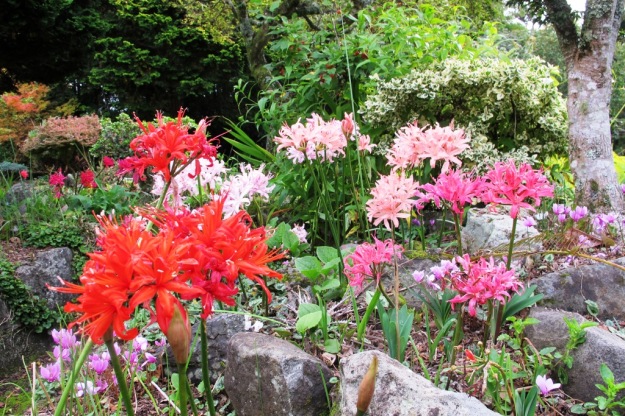
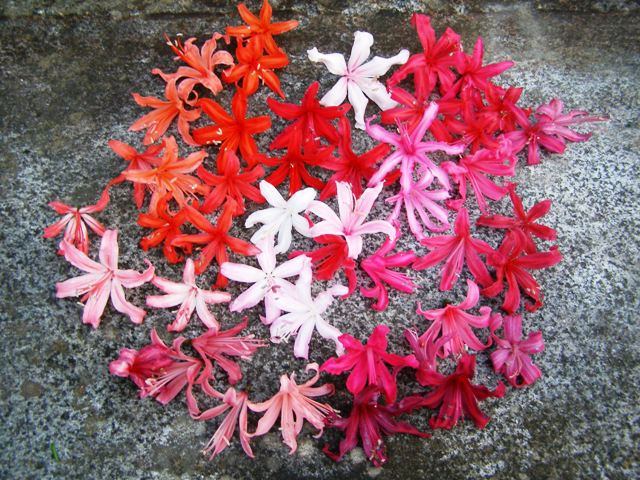
The range of nerine colours at one time

The range of nerine colours at one time

As we enter autumn, it is as if the rockery heaves a sigh of relief and leaps back into life. All the bulbs whose growth is triggered by autumn rains start to move.

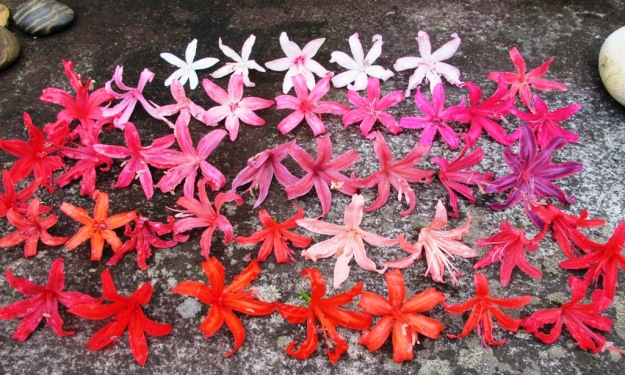
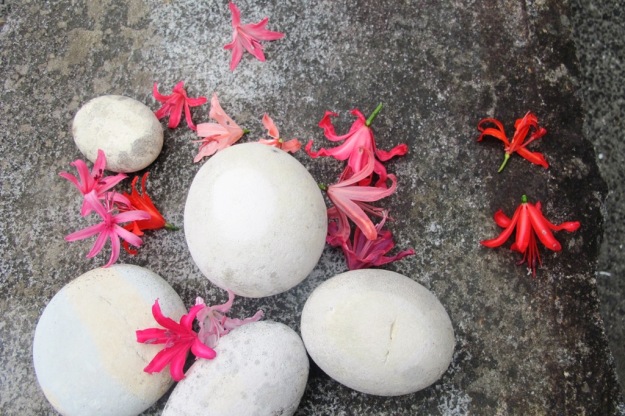
As a general rule, we find that the species bulbs look better. They are usually smaller flowered and more delicate in appearance than the showy hybrids which can look out of scale and even vulgar in this particular context. The exception is the nerines which peak this month. While we grow some nerine species, it is the sarniensis hybrids that dominate. A few of these are of Exbury origin but most are the result of breeding efforts by both Felix and Mark Jury. The colour range is delightful – from white, through every shade of pink including near iridescent highlighter pink, to purple, corals, almost apricot, oranges and reds. Unlike the floristry business, we want shorter, squatter stems so that the heavy heads are held upright even through autumnal weather.

Cyclamen hederafolium

Cyclamen hederafolium

Also lighting up the autumn is Cyclamen hederafolium (formerly known as C. neapolitanum) which hails from southern Europe and Turkey. This is the easiest of the dainty species cyclamen to grow and it has gently naturalised itself here. It throws its first brave flowers up in January but peaks this month. It is one of a number of autumn bulbs that bloom first before the leaves appear. Others are most of the nerines, colchicums and Haemanthus coccineus.

Moraea polystachya

Moraea polystachya

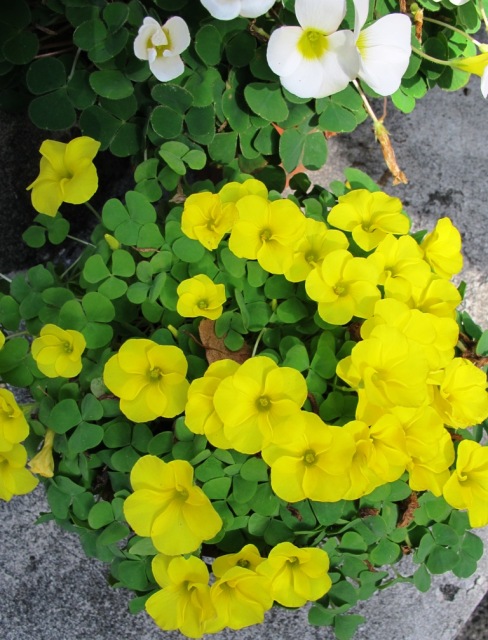
The pretty autumn flowering peacock iris, Moraea polystachya, outdoes almost every other bulb with its long flowering season. It seeds down gently into the cracks between the rocks without becoming an invasive menace. Some of the ornamental oxalis also give extended displays of colour but not all oxalis are born equal and neither are they all born with good manners. The most reliable performers in our rockery are O. purpurea ‘Alba’, O. luteola and O. lobata. They have been here for decades and never looked threatening.

O. luteola and purpurea 'Alba'

O. luteola and purpurea ‘Alba’

Colchicum autumnale

Colchicum autumnale

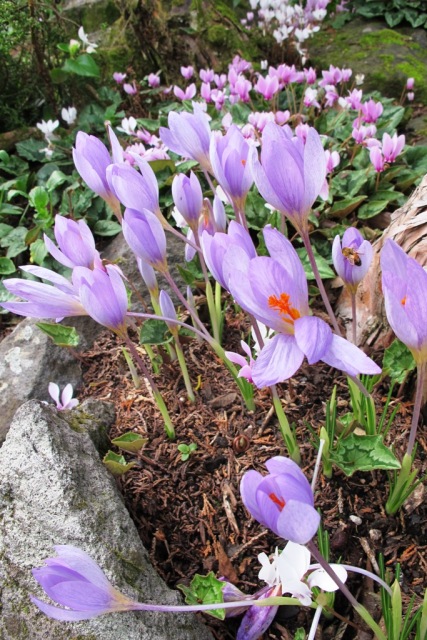
Then there are the bulbs with a much shorter season. Colchicum autumnale makes a bold statement with its big lilac chalices held above bare soil. Hippeastrum bifida is a transient delight for us. We have it in both pink and red and the blooms look as if they have been touched with gold leaf when the sun shines through. The autumn flowering leucojum is one of the daintiest and prettiest of tiny blooms and the crocus also delight.

Autumn crocus (species unknown) with cyclamen hederafolium

Autumn crocus (species unknown) with cyclamen hederafolium

The rockery is not what I would call low maintenance. The more time I put into it, the better it looks. In spring I completely replaced the soil in maybe a dozen pockets in my efforts to eradicate the pretty but invasive Geissorhiza aspera. I do not lie when I tell you that we have battling it for well over 25 years, hence my extreme action in replacing the soil in the worst affected areas. We have to be vigilant on weeds, slugs, snails, narcissi fly and weevils. I wire brush the rocks from time to time to stop the moss growth from hiding their shapes. There is plenty there to keep me busy in my dotage and, with the raised beds, I can do a lot of it sitting on a stool. Sometimes it is the detail and the little pictures in the garden that delight.

024First published in the NZ Gardener April edition and reprinted here with their permission. 

Autumn bulbs

While late winter and spring are the peak seasons for the many of the bulbs, the lesser known autumn flowering varieties offer fresh seasonal delight at a time when many flowering plants have finished or are passing over. The triggers for these bulbs are a drop in temperature, declining day length and summer rain. They are neither easily available nor widely grown but that may be a chicken or egg situation because many of them are not difficult or touchy.
Moraea polystachya - the autumn flowering peacock iris

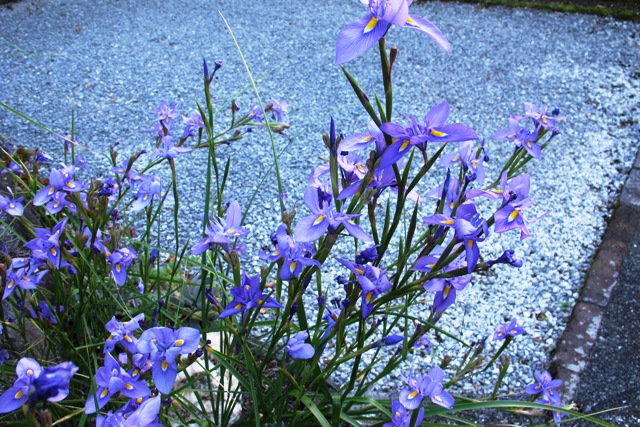
Moraea polystachya – the autumn flowering peacock iris

The bulb that gives us the longest flowering season of all at this time of the year is the lovely lilac- blue, autumn Moraea polystachya from South Africa. Each flower is a dainty iris and while individual blooms are brief, new ones open down the stem for many weeks on end, stretching into months. The foliage is fine and light and the wiry flower stems can reach about 50 cm high. It grows from corms and will gently seed down without becoming an undesirable weed. It is particularly attractive popping up in cracks between pavers or on the edges of paths. The problem will be sourcing corms to buy. If you see one growing in somebody else’s garden, ask for seed which is easily raised and should flower in its third year.
Haemanthus coccineus

Haemanthus coccineus

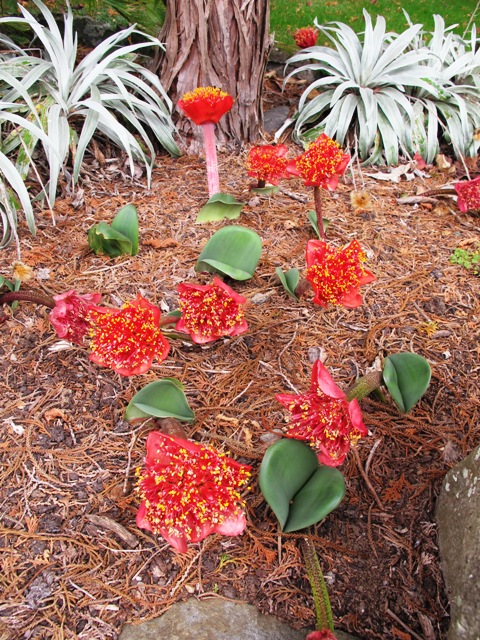
Haemanthus coccineus is most valued for its striking winter foliage – enormous, fleshy leaves which lie flat to the ground, giving the plant its common name of elephant ears. But in early autumn, up pop bristly red flowers looking somewhat like a dish brush head. In fact they are a large cluster of red stamens, each tipped with a generous amount of golden pollen and all encased in six petals that almost resemble a plastic cup. Flowering is triggered by rain and comes just before the new foliage starts to emerge. Plants need excellent drainage and some protection from heavy frosts but will thrive in semi shade.
Colchicum autumnale

Colchicum autumnale

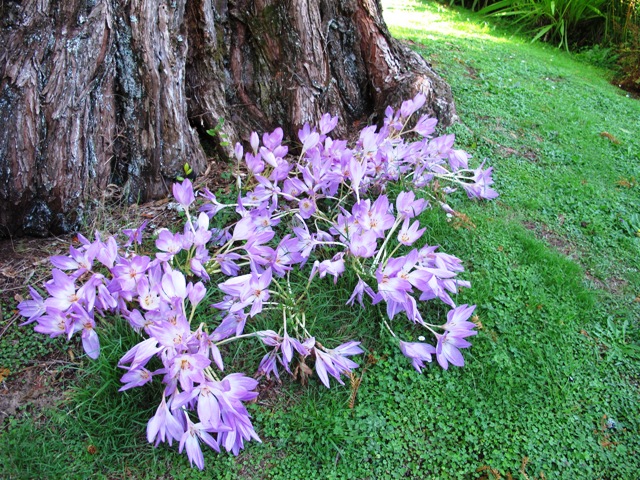
Colchicums are often referred to as autumn crocus, but they are only distant relatives at best and are generally much larger flowered toughies that are easy to grow. Most are so vigorous that they can be established in grass for the meadow look, but keep them away from mown areas because the foliage hangs on right through to spring. Each flower is a cup with six petals and while not long lived, a bulb can put up a succession of blooms. It flowers well before the foliage appears. Most colchicums hail from Europe and are in lilac pink to purple shades. For those who prefer all their flowers in white, there is a white form available but purists may prefer to stay with the dominant colours of the European meadows. The major drawback to the colchicums is that the foliage takes such a long time to die off that it can have a protracted scruffy period but it does at least have lush foliage in the bare winter months.
Nerines sarniensis hybrids

Nerines sarniensis hybrids

Despite their common name of the “Guernsey lily”, nerines hail from South Africa. While there are over 30 different species, the ones most widely available include N. fothergillii (scarlet flowers often referred to as the ‘spider lily’), N. bowdenii (late season flowering, sugar pink with long stems) and N. sarniensis hybrids. It is the hybrids that bring the larger flowers in desirable colours which can range from smoky hues, purple, salmon apricot and across the whole spectrum of shades associated with pink and red. There are white cultivars though I would have to say that we have never found a good pure white form which performs well. All make excellent cut flowers and have a long record of use in floristry.

Nerines have large bulbs which like to sit half in the soil and half baking in the sun. They will struggle in very cold, wet conditions and won’t flower in the shade.
Cyclamen hederafolium

Cyclamen hederafolium

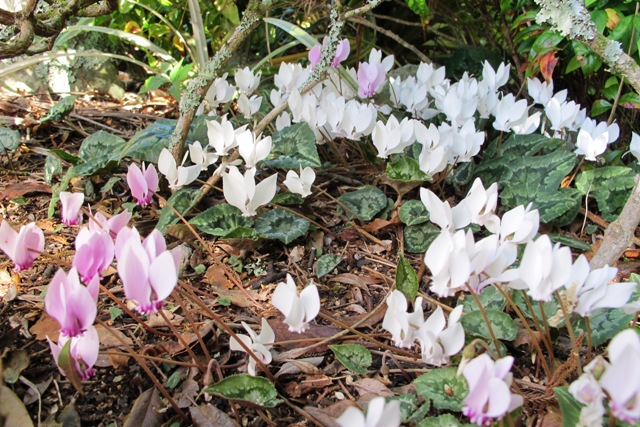
Cyclamen hederafolium is one of the star performers for us, opening its first flowers as early as January and continuing through late summer to peak in autumn. Once the flowering is finished, the lovely heart shaped dark green leaves which are lightly marbled in silver remain a feature through winter. Flowers vary in colour from pure white, pale pink to dark pink, though not on the same tuber. As long as the tuber does not rot out, it can get very large over time – at least as big as a bread and butter plate. It is best nestled into the soil, as opposed to buried beneath. In C. hederafolium, the roots, flower stems and leaves all sprout afresh each year from the top of the tuber so you need to plant it the right way up. It will grow in full sun through semi shade to woodland conditions of high shade and, when happy, it will seed down over time and naturalise – as long as you don’t garden around it with weed spray. Good drainage is the key.

The species cyclamen have a delicate charm which has long gone from the pot hybrids sold as indoor plants. C. hederafolium is the easiest and most reliable of the species. There is nothing rare about it, except I failed to find anybody selling it this season. It is easy to raise from seed if you know of somebody with a plant. Harvest the seed in late spring and sow it in a pot or tray immediately. It can reach flowering size in as little as 18 months.
Ornamental oxalis

Ornamental oxalis

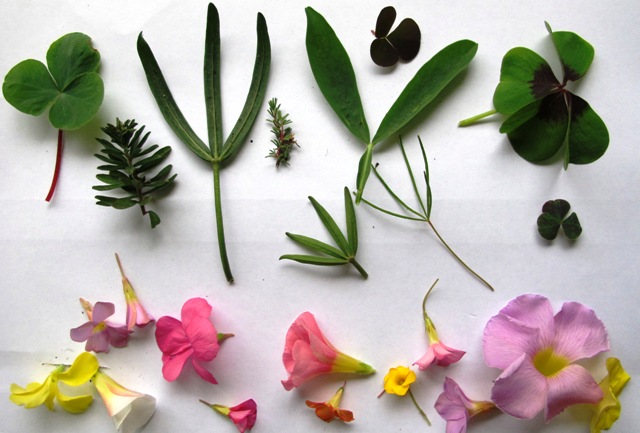
Oxalis. Spare a thought for the poor, maligned oxalis family which gets dismissed out of hand because of a few bad eggs. Call them by their romantic common name of wood sorrel if it makes you feel better. There are over 800 members of the family and by no means are they all invasive weeds. Neither are they all worthwhile garden plants either, but some of them are autumn stars for us. All oxalis need full sun because they only open their flowers in the bright light. If you remain nervous about them, plant them in wide, shallow pots and place them on sunny steps to give you a seasonal display. When you repot them after a year, you can see clearly which ones show invasive potential because they will have formed multitudes of babies. These ones are best kept in pots forever but others are perfectly garden safe.

Over the years, we gathered up maybe 30 different oxalis species and you can often find dry bulbs of different ones offered for sale on Trade Me. Some have very short flowering seasons and I am not sure it is worth my time to repot them each year. Others are exceptionally good. The best of all is O. purpurea alba. It has an abundance of very large, glistening pure white flowers with a golden centre and it flowers over a very long period. The foliage is a flat mat of green, slightly hairy, clover-like leaves. We have had it in the garden here for decades and it has never been badly behaved or shown invasive tendencies. There are other forms of O. purpurea with pink flowers and with burgundy red foliage (O. purpurea ‘Nigrescens’). While these are also very showy, they can be a bit too rampant and are best kept in pots.

Other personal favourites are O. massoniana (feathery foliage and masses of pretty flowers in apricot with a yellow eye), O. hirta lavender and the sunny yellow O.luteola. There are no blue or green flowered oxalis, as far as I know, but they come in pretty much every other colour.

Other autumn flowering bulbs which we value, but which will be even harder to source are Lycoris aurea (which looks like a golden nerine), Rhodophiala bifida and some of the autumnal tricyrtus, particularly T. macrantha.
???????????????????????????????

The Guernsey Lily 

Guernsey’s only claim to nerines is cut flower production. The exact method of arrival to the Channel Islands is unknown but there are records of N. sarniensis growing, and presumably flowering, in Paris as early as 1630. By the 1800s, Guernsey already had a flower export trade in full swing and was sending nerines to England. The local folklore version, laying claim to the nerine, has charm.
The Guernsey lily folk tale from the Visit Guernsey website:

Legend holds that a handsome fairy prince met and fell madly in love with Michelle de Garis, a beautiful Guernsey girl. Michelle left her cottage early one morning to see to her cows. As she entered the meadow, she was surprised to find a young man asleep on the grass. He had a particularly small stature, was finely proportioned, and remarkably handsome.

Michelle stood and admired the small man dressed in green and with bow and arrow. When he awoke he told Michelle that he was a fairy prince from England and asked for her hand in marriage, as they had both instantly fallen in love. She agreed but as they headed to Fairyland she asked that she leave a token to reassure her family. The prince gave her a bulb, which she planted.

Michelle’s mother later discovered a beautiful flower above Vazon bay, on the west coast of Guernsey. It was the colour of Michelle’s shawl and sprinkled with elfin gold – the Guernsey lily.

Sometime later on, many fairy men came from Fairyland, entranced by Michelle’s beauty and looking for a Guernsey girl of their own. They asked that Guernseymen gave up their wives and daughters, which ended in many battles between the fairies and Guernseymen. The Rouge Rue (Red Road) is said to have been named after a particularly fierce battle.

First published in the May issue of NZ Gardener and reprinted here with their permission.