Tag Archives: Mark and Abbie Jury

Gates

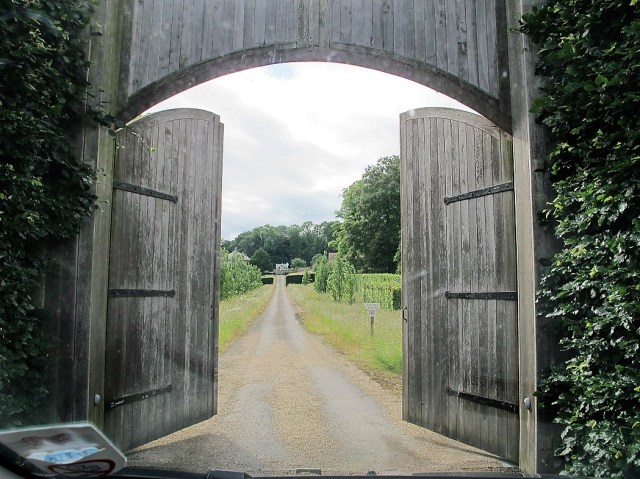
Do people think enough about gates? I am not entirely convinced many do. Gates can vary from this grand, modern entrance – electronically controlled from the distant house. Being in the UK, these are more likely to be constructed from oak rather than the utility tanalised pine favoured in this country. I regret to say that it did not occur to us at the time to inspect how much and what type of bracing went in behind to hold it true and flat.

At the other end of the spectrum, this unused little gate between us and the neighbours never fails to delight me when I walk past it, even though it has probably not been used in four or five decades. It often makes me think of the very famous Heaven’s Gate at Hidcote. I don’t seem to have a good photo of it from our one and only visit. In the photos we had seen, it looked like a *focal point* – a visual punctuation point which served no other purpose than to terminate the red borders. In fact, it was an entirely logical gate when we saw it in person – leading to another garden area but also framing a glorious borrowed view of countryside beyond. I will not deride a gate that frames a worthwhile borrowed view.
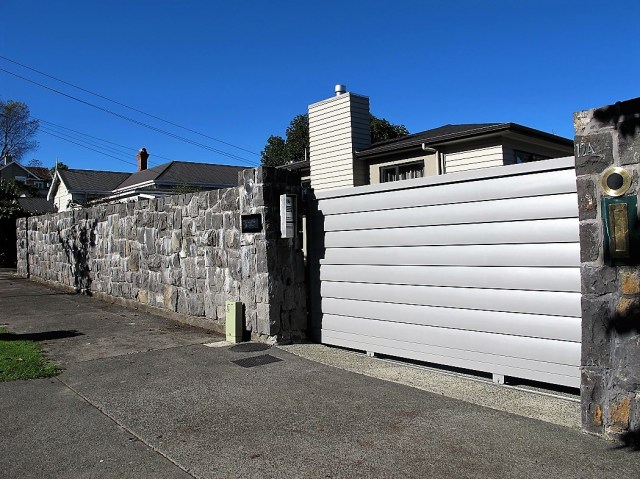
Modern urban gates – I have a few photos. This expensive, utility model makes me think of a prison gate and I have no interest in walling myself into a voluntary prison.
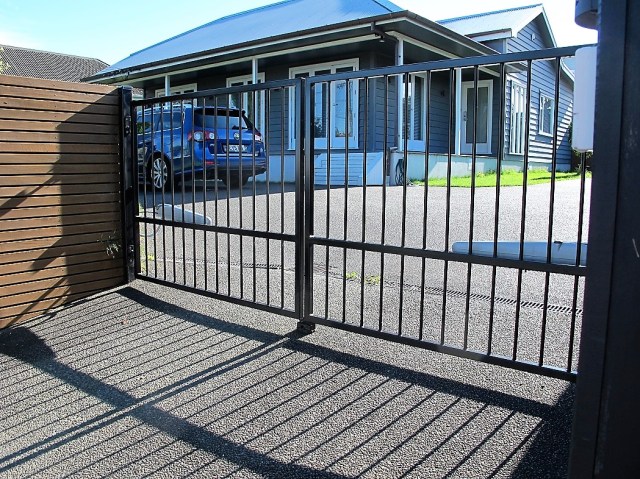
This one is a utility, modern take on older styles. I probably noticed it enough to photograph when we were discussing gate design because what we settled on was a combination of old and new.
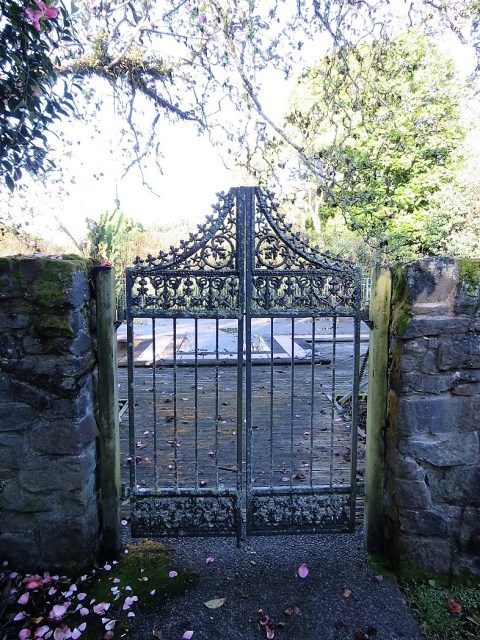
The gates to our swimming pool were the first set we had made. Swimming pools in NZ must all meet stringent fencing and gate standards to avoid accidental drownings of small people.

I must acknowledge a debt to my sister for our gates. For historical reasons, there is so little antique iron lace in our nearest city, New Plymouth, that I have never even noticed any at all. But the old Dunedin cottages in the 1860s were routinely adorned with iron lace verandah decoration, even the simplest workers’ cottages.
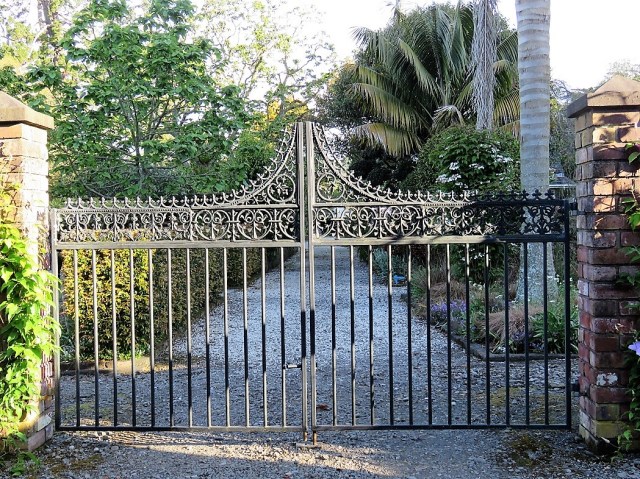
We only ever close our driveway gates when we are controlling the flow of garden visitors but I do like the look when they are closed

I was told – and I have no idea whether this is true or not – that this cast iron lace came out as ballast in the ships that came to Dunedin in the goldrush days. From the docks, they found their way onto modest cottages. In the early 2000s, that same iron lace found its way from cottages being renovated for the new era to the wreckers’ yards. My sister went around all the demolition yards and bought all the iron lace for me. I can not recall now if it was $21 or $23 a piece but it was a bargain.

Marigolds in a window in the wall

It was not as cheap to get some of these iron lace pieces set into welded gates but I have never regretted the expenditure. I love our gates and window. None of them match. Sometimes even one side of the gate is not a perfect match to the other side but that quirkiness adds to the charm. These are all corner pieces from verandahs that we have turned upside down to make gates so the designs are sometimes inverted.

Thistles in the low gates in to the courtyard

For the technically minded, I think the old iron was first sand-blasted, then welded onto made to measure gate frames, galvanised and commercially spray painted to get a finish that would last down the years. I looked at modern iron gates and they are very simplistic compared to our mix of old and new.
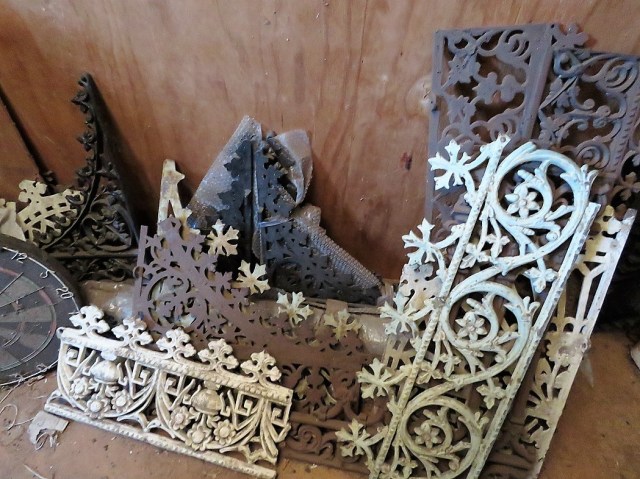
I think I worked out that we have enough pieces to do another three sets of gates and a couple of single gates, should we feel the need of more

Should the need arise for further gates, we have a little stash of iron lace still waiting to be used. One of the children may end up inheriting it. As time passes, these are probably becoming ever more collectible, as is said.
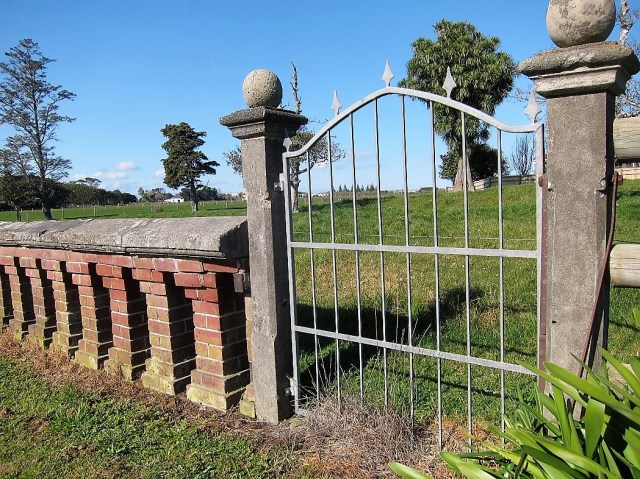
I pass this one driving to town. No longer in use but genuinely old and honest in its modest ornamentation

Missing tools and found umbrellas

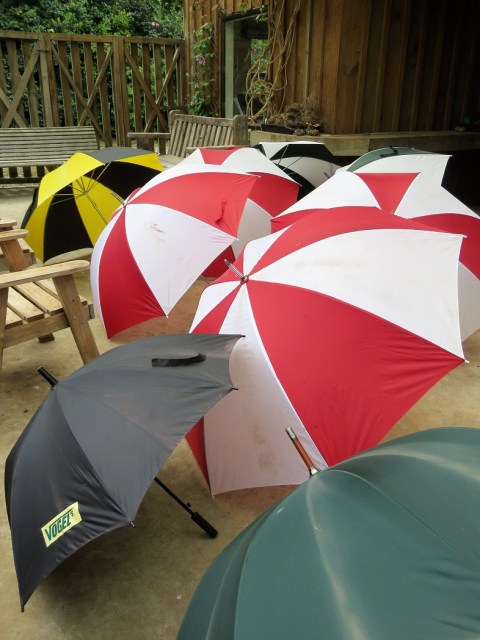
From a few years ago. The red and white umbrellas are still in use

Ha! My reference in my last post about having lost not one but two flax-cutter tools spawned a few replies. Most people, it seems, lose trowels, weeding forks and secateurs in the garden. One person owned up to managing to mislay a spade for quite some time as well.

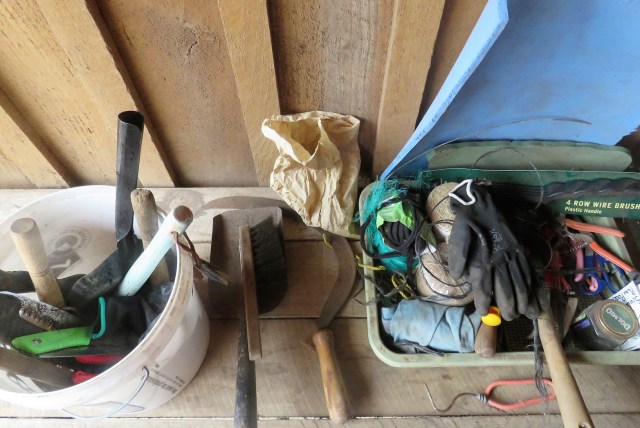
The bucket on the left holds my tools currently in use. Other bits and pieces are stored where easily accessible.
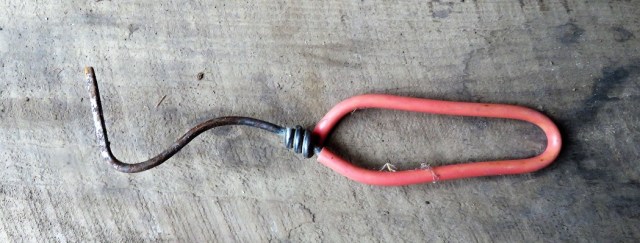
The simple Wonder Weeder but not. alas, the one I mislaid this week

I try. I really do. I keep a tray of small garden items on a bench and take what I need from there and place them in a bucket to carry around the garden. Still, I managed to misplace a handy little weeding implement we know under its original brand name of ‘Wonder Weeder’ in this country. No matter that I realised within five minutes that it was missing in a confined area, I have yet to spot it. I am confident that it will reappear, that this is a case of not being able to see for looking. This is better than Mark who has put down his good secateurs and our brand-new pruning saw somewhere and has yet to locate them again. (Note: he has since found them in the grape house.)

I am generally well organised indoors and ours is not a household of odd socks waiting for their mate to reappear. However, I would like to know where sunglasses go to hide. I think I have lost three or four pairs in the garden and Mark sheepishly went to buy himself another couple of pair when he lost the last of his. Only one has ever reappeared so somewhere there are six or seven in concealment.

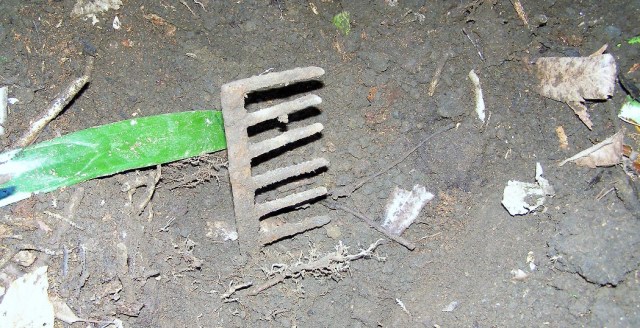
By the time I exhumed it, only the rake head was left

It does, however, allow me to dredge out a couple of old photos. The first was a rake head, exhumed from a patch of clivias I was dividing. Well, I assume it was originally an entire rake left there in error when the first plantings were done more than a decade earlier. I take no responsibility for that because I didn’t do that planting.

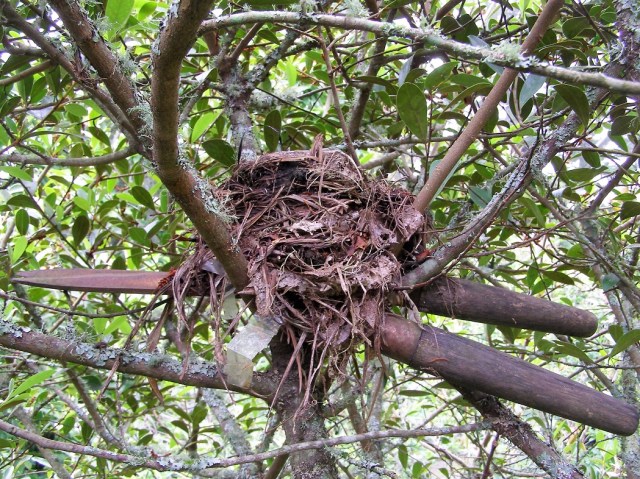
The case of the missing hedgeclippers was finally solved

But truly, the best and funniest example is the missing hedgeclippers. “I wondered where they had gone,” said Mark a year, or maybe two later. Clearly, he always meant to go back and do some more pruning on the Magnolia laveifolia at the time but by the time he needed the ladder elsewhere, he had forgotten about the clippers. They made a good nesting platform.

Another example of online shopping in these days of pandemic

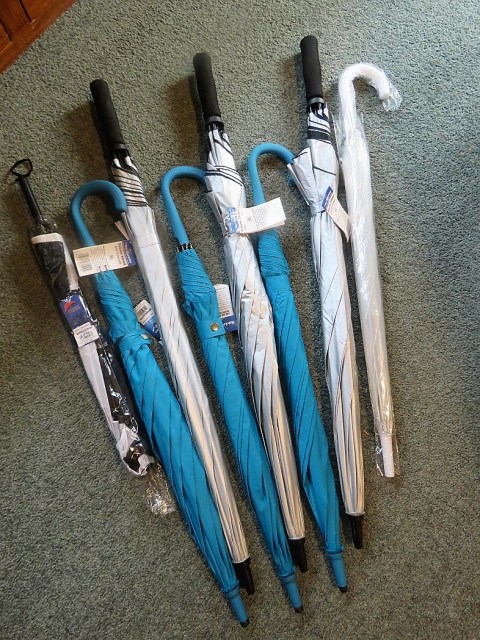
Mark and I lead a life filled with umbrellas. This has a lot to do with the both the climate and the geography of our property. It is a fair distance out to the letterbox and similarly, the distance from the house to the all-purpose shed we are in an out of all day long is far enough to get drenched in a downpour. Mark always reaches for an umbrella, not a raincoat, when he is heading across the road to move the electric fences for his steers or to inspect his trial plants. We have umbrella stands on both the back doorstep and at the shed. Even operating off about eight in regular use (plus my good one in the car and the folding umbrellas for travel), it is still possible to run out at one end or the other. It is also very handy to have plenty of umbrellas when the garden is open and that time is looming large. So, I was delighted when my new supply arrived this week.

The glory of the new umbrella haul

Briscoes’ sale brollies, of course (that is a reference which will only make sense to New Zealanders) but are they not a pretty combination this time? The little penguin one is a present for my grandson. The clear one is because that style is handy when leading tours around the garden on a rainy day (and I have a few of those tours coming up).

For I have measured out my life, not in coffee spoons, but in brollies and lost sunglasses.

Staying local in my neighbourhood

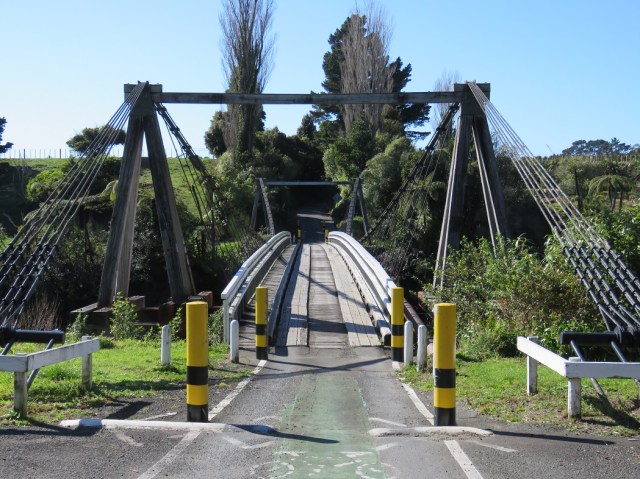
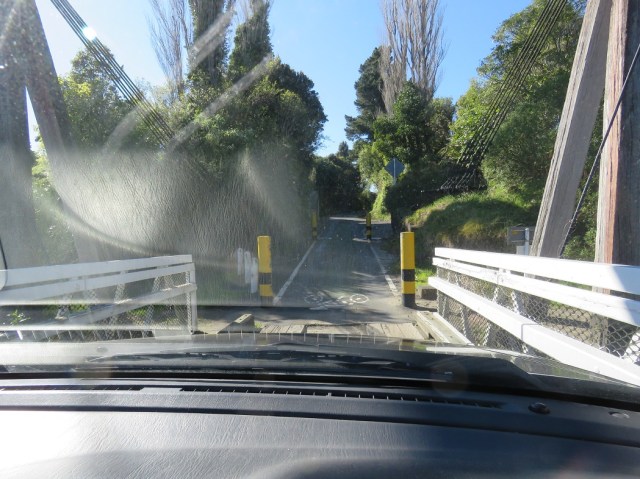
More about the bridge further down the page

Our world has shrunk again to a very small, very local area. Mark left the property this week for the first time since the Delta Covid outbreak started on August 17. To be honest, I wasn’t sure how he would cope with this new era of compulsory mask-wearing and scanning but he managed just fine. And if my Mark can cope with masks and scanning, so can everybody else. I know the rest of the world has been masked for the better part of the last 20 months but it is very new here, though I had our range of reusable, pretty masks at the ready.

On my weekly shopping trips (I am not just the designated shopper here, I am and always have been pretty much the only shopper), I have been amazed at the exceptional levels of compliance in our local areas. Everybody is not only masked, scanning and maintaining physical distancing, they are doing it with patience and good grace. Melbourne son keeps saying to me that New Zealanders are compliant people. I was surprised when he first said this because I do not think that we have a particularly compliant culture. Upon reflection, I don’t think what is happening here is unquestioning obedience. I think it is more about a shared vision and a strong sense of community and for that, we can thank the very clear messaging and communications from our government.  

Fingers crossed that this Delta incursion over our border can be eliminated in good time so that our garden festival can go ahead in just over seven weeks. I am hoping we can do it without needing to mask but, if necessary, we will mask and not complain.

In the meantime, special thanks and acknowledgement to Aucklanders. Yet again, Auckland is bearing the brunt of lockdown measures to keep the rest of the country safe and free from Covid and it is really hard. The rest of us need to be very grateful to them. The alternative of having Covid running through our country is grim, indeed.

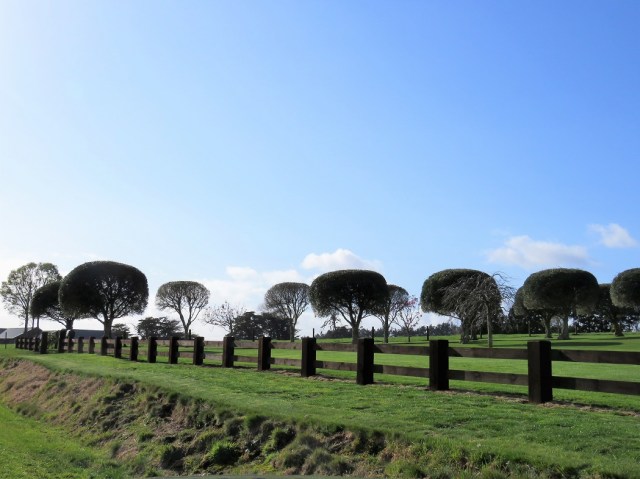
My eyes have been focused locally on my once-a-week trip out to get essential supplies. Somebody had been clipping hard but with great precision on this driveway sited on the crest of small hill across the river from here. I don’t even know what those trees are. I didn’t get close enough to inspect but they certainly make a sharp statement. Are they incongruous in their rural setting or a really interesting contrast? I lean to the latter.

Rhododendron Kaponga

I spotted this red rhododendron last week and went back to have another look yesterday because I regretted not stopping at the time. Last week it was glowing brightly in the light, not quite so much yesterday but still bold and vibrant. It is a local selection of R. arboreum which is named ‘Kaponga’, renowned for its high health. When it comes to rhododendrons, those big ball trusses are not my personal favourite, but I couldn’t fault this handsome plant. The fact the property owners stained their fence dark rather than leaving it in its tanalised state helps show off all the plants to advantage.

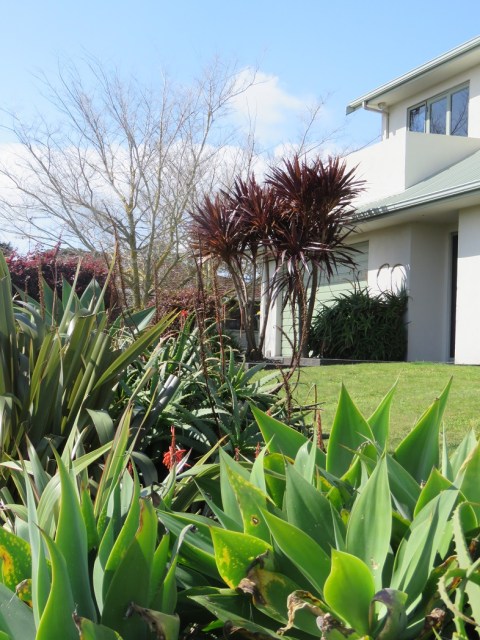
In my local town, I stopped to photograph this handsome pair of red cordylines (cabbage trees) which look very sculptural in front of a fairly plain house. There are a number of named red forms available, but they are generally just selections of our native C. australis ‘Purpurea’. True, close up the foliage looks as chewed as all other NZ cordylines but that is because it is a native moth whose caterpillar munches on the leaves.

Almost opposite was a new garden which was really quite amazing. I think we could describe it as largely Italianate with a touch of pre-Raphaelite. I will say no more except to note that it has been constructed and furnished with much care and attention to detail and is clearly a source of pride to its owners.    

You do need to line up carefully. There is not a lot of room to spare.

Finally, back to the bridge at the top. It is the historic Bertram Road bridge, not far from us. I have a bit of a thing for bollards so I was delighted to find @WorldBollard on Twitter. It is the official account of the World Bollard Association (who knew?) and clearly over 30 000 other people have an interest in bollards, too.

There are eight bollards standing guard and all of them look something like this. Oh, the stories they could tell.

Bollards play an important role on this bridge. When it was restored and reopened to vehicle traffic, maybe back in the 2000s, the bollards were not quite as resolute as these current ones. But a stupid driver of a heavy transport truck thought he would ignore the warning signs and take a short cut over the bridge, demolishing the sides and a fair amount of the decking. Personally, I think he was lucky to get the truck off the bridge without it collapsing into the river because he far exceeded the allowable weight.

When the bridge was reinstated, the bollards were moved in to narrow the space further. Judging by the state of them, they have inflicted quite a lot of damage in the last few years as people have found their vehicles – particularly the modern twin cab utes – are too wide to fit. They are renowned too, I am told, for taking out wing mirrors.

It is just a question of lining the car up to stay very close on the driver’s side, keeping very straight and taking it slowly. Personally, I have never even brushed one of those bollards. Our Sydney daughter declared she would not be risking it herself when I took her over the new narrowed version on her last trip home.

From our neighbourhood to yours, stay safe. Fingers crossed for positive progress this week on dropping Covid case numbers down to low single figures.

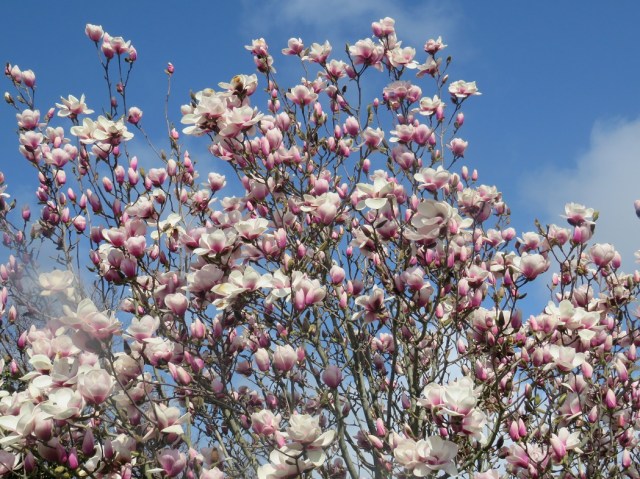
Magnolia Milky Way – a Felix Jury hybrid – out the front of Pat’s place on the drive home
  • For overseas readers: we had one Covid incursion that escaped our border quarantine and that one single incident has so far produced 902 community cases. We know they all came from that one single infection because all cases are genomically sequenced in NZ. New daily infections had dropped to just 11 on Friday so Saturday’s 23 cases were a disappointment. That is over the entire country but we want it back to zero again. We are playing the long game here, playing for time to get the population vaccinated and also to see how Covid is going to pan out internationally before we risk opening the border without the current tight quarantine. ‘Learning to live with Covid’ still looks pretty undesirable when we have been so successful in learning to live without it.
Milky Way again

A mildly controversial opinion

Read down for my comments about staged photos

I have decided I just can’t get excited about hellebores. The most common hellebore – Helleborus orientalis – in particular, but not exclusively so. Not in our conditions with its mild climate and the explosion of spring flowers we get before winter has even officially ended. I have seen them in colder climates and they are way more rewarding than here.

Orientalis as a garden plant just doesn’t spark joy for me

I have tried and so has Mark. I have mollycoddled them, replaced inferior performers with better selections, weeded out endless seedlings, scrupulously dead-headed them to reduce unwanted seeding and to hold the infestations of aphids at bay, removed unsightly foliage (it takes years for scruffy spent foliage to drop and decay of its own accord), given them compost, bought new selections and still they are underwhelming. Mark has raised many seedlings of controlled crosses to get cleaner colours and flower spikes that stand above the foliage and they can look very promising in nursery pots and very average in the garden.

I don’t know how many H. niger we have raised and planted out. It is the pretty, low-growing white with the upward-facing flowers held just on the foliage. It is a one season wonder for us. I was delighted with ‘Angel Glow’ but after three very pretty seasons, it has all but disappeared this year.

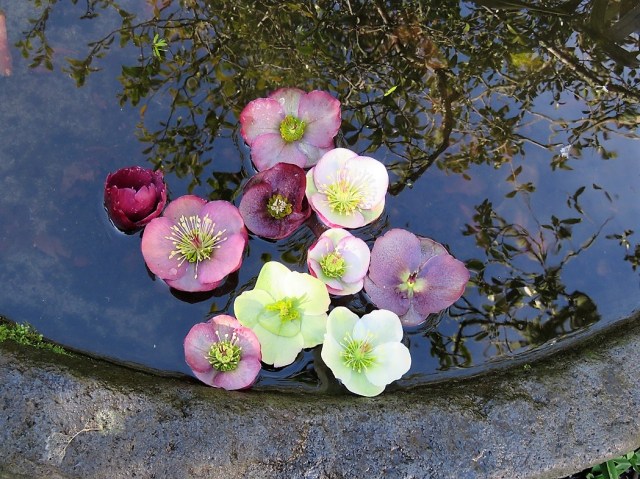
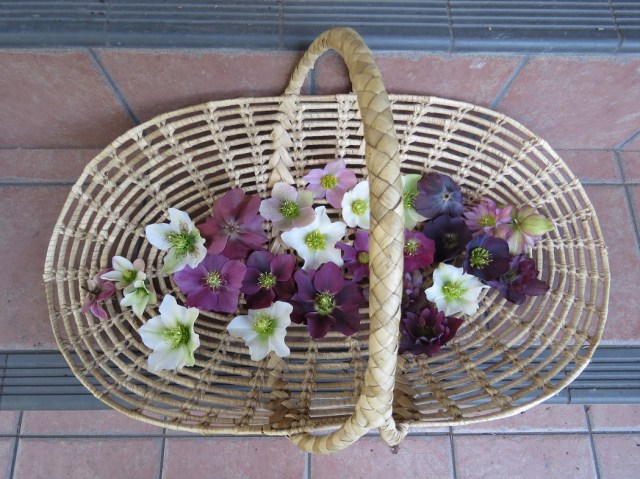
The temptation was too great. I floated flowers from the ‘Marbled Group’ but it is their all round performance as garden plants that impress.

They are not all without merit. I remain sold on the ‘Marbled Group’ from UK breeder, Rodney Davey. ‘Anna’s Red’ and ‘Penny’s Pink’ remain the best of that series in our garden but we also have ‘Molly’s White’, ‘Ruby Daydream’ and ‘Sophie’s Delight’. Just a word of warning: ‘Anna’s Red’ made a big and luscious plant so I thought I would divide it to use it further. It did not appreciate this treatment and has been slow to recover- as in a few years, not months. Mark informs me that hellebores do not generally like being dug and divided in the same way as other perennials. They can sulk somethin’ chronic.

Helleborus x sternii
Helleborus foetidus
Helleborus argutifolius

Helleborus x sternii is a mainstay in the woodland garden and very easy care. All it ever needs is the spent flower spikes removed at the end of the season. So too with H. argutifolius which is one of the parents of x sternii. H. foetidus is fine – more utility than exciting and it can spread a bit but it has interesting foliage. What these three have in common is that they all have green flowers but hold their flower spikes up above the foliage.

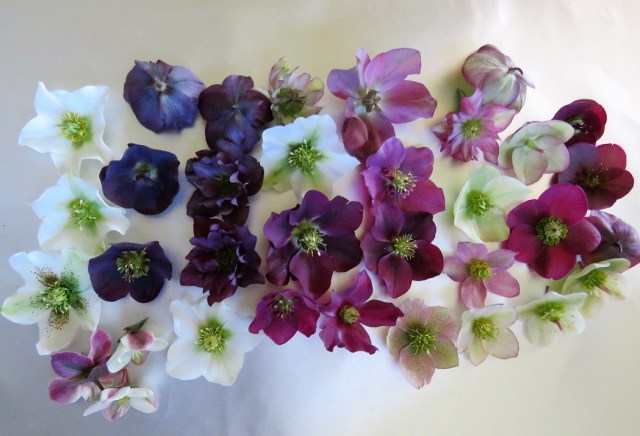
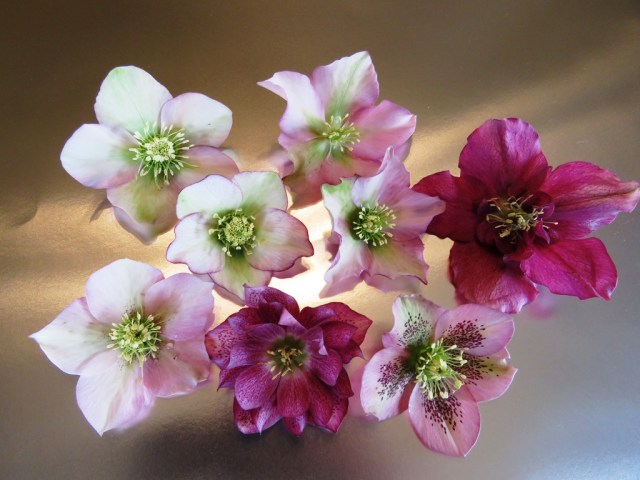
The staged photo of cut blooms shows they are individually pretty but I do not generally rate them as garden plants in our conditions

And therein lies the problem. There are many lovely staged photos of picked blooms arranged to face upwards. I have done a few myself. But that is not what they look like in the garden where H. orientalis is characterised by downward facing blooms. And as soon as one gets into the popular double blooms, the extra weight drags them over even further. Also, the interest in the dark slate colours – the deeper purplish-black the better – is based on picking a flower and looking at it facing upwards. As a garden plant with those dark flowers, they just tend to meld into the backgound. The best I can say is that orientalis opens a wider colour range than the other types we grow.

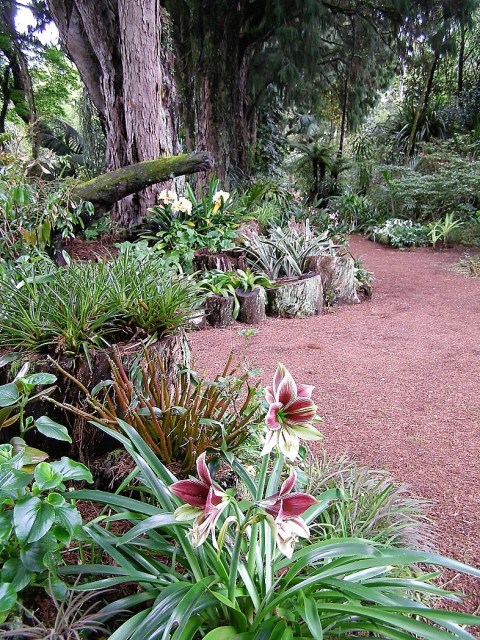
This sight sparks more delight for me than rather lacklustre H. orientalis – and comes at the same time of the season

While I am in awe at the far-reaching and long-standing enthusiasm that has made H. orientalis such a popular plant, they are best in cold climates which don’t have the same options we have. Colder, drier climates are even better. With calanthe orchids and Hippeastrum aulicum both in full bloom at the same time, I am not convinced that the utility hellebores that grow in similar conditions are worth more effort on my part. If you really want to grow them in softer climates like ours, keep them in a pot. They seem to perform better in controlled conditions. I don’t love them enough to give them that sort of special attention.

Yet another staged photo. I see I have done a few of these over the years.

Nau mai, haere mai. Welcome to Festival 2021

Believe it or not, the Taranaki Garden Festival has run every year for 34 years. It started life as a rhododendron festival and we still have a few rhododendrons in the garden, quite a few in fact, including the lovely sino nuttallii.

The official programme for the Taranaki Garden Festival was launched this week.

Last year, when we reopened for the first time in seven years, it coincided with the domestic tourism boom after our short lockdown. The numbers were astounding but we managed, bar the poocalypse. This year, I thought visitor numbers might receive a further boost from Australian garden-lovers starved of other travel destinations. Chance would be a fine thing.

We follow Australian Covid closely with our immediate family spread across three states there. We had hoped for an extended weekend get-together in August. Somewhere more northerly in Australia we thought – maybe the Whitsundays or even the Sunshine Coast, thereby introducing a fourth state into already complicated travel plans. For overseas readers, this was because of the introduction of a quarantine-free travel bubble between NZ and Australia. That is not going to happen since the arrival of the Delta variant into Australia and the suspension of the travel bubble. Clearly planning ahead with any certainty is not an option at this time, though I have pointed out to our children that when the bubble reopens, it does appear that there is less likelihood of getting trapped on this side than on the Australian side. But I am guessing only a few intrepid Australians who can risk getting trapped away from home by a Covid outbreak may turn up for our garden festival.

The world may be sick of Covid but Covid is not done with us yet.

Hippeastrum papilio in the Rimu Walk

Back to the festival. We are reopening but only for the ten days of from Friday 29 October to Sunday 7 November. I was so shellshocked last year, I wasn’t sure we would reopen but the addition of Zach to our small team has taken the pressure of preparation right off me and the garden has never looked better. We have never been so advanced in our preparation this early before. There will be no neglected areas or tasks unfinished, the way we are going. It brings the pleasure back to gardening when the anxiety and pressure of getting it to opening standard is relieved by an extra pair of very capable hands.

The Court Garden in early November – one of a series of five new summer gardens we have created in the years we spent closed

Following the success of the workshops Mark and I offered last year (well, mostly me, to be honest but I am reliant on Mark as my in-house technical advisor and resident expert), we are offering more this year. So many people missed out on  ‘New Directions with Sunny Perennials’ that we are offering it twice this year, with another valuable year of experience under our belts. The blurb reads:

New Directions with Sunny Perennials

For over a decade, Mark and Abbie have been looking at modern trends in perennial gardening, variously described as ‘Dutch New Wave’, ‘New Perennials’ and the ‘New Naturalism’. This has culminated in the planting of the summer gardens. Join them for morning tea and a talk on key points they have distilled from visiting over 90 gardens in England, France and Italy, tracking the work of six contemporary designers and how they have applied this in their own garden.

Monday 1 Nov and Saturday 6 Nov 10.15am – 12.00

Are you looking for gentler ways to garden?

Instead of repeating the meadow workshop, we have expanded it to take in managing a wild garden as part of our personal commitment to finding softer, more naturalistic and sustainable ways to manage our garden.

A Gentler Way to Garden

The Jurys have been exploring strategies to ensure their garden is not only beautiful but also sustainable in the longer term and biologically friendly. Join them to learn about meadow styles and management and the techniques underpinning their new Wild North Garden and their park meadow.

Sunday 31 October 10.15am – 12.00

We are well on the way to being ready to open the Wild North Garden

All the information is online here and you can request a hard copy of the programme. Bookings for our workshops are essential and can be made through that link to the Festival Office.

We would love to see some of you here this spring.

Melding the old gardens with the new into a single garden experience