Tag Archives: Mark and Abbie Jury

Welcome rain!

The weight of the water is bringing down all sorts of flowers – in this case Gloriosa superba

It is raining! 40 ml in the latest report from Mark on Saturday afternoon and it looks as though there is plenty more to come. The advent of rain is not usually something we get excited about, on account of it being so regular. We have, as I often say, a climate here with high rainfall and high sunshine hours. We would generally expect somewhere just over 100mm or 10 cm in January. I think we only had one passing rain event this January and it didn’t do anything more than temporarily dampen the dust.

We never have to worry about watering the garden, except Mark’s vegetable garden. We don’t have an irrigation system and about 90% of the garden can’t be reached with a garden hose. It is not usually an issue and it would be ludicrous to garden on the scale we do with an irrigation system. Where necessary, we can cart the occasional bucket of water but that is only for particularly stressed plants. I am sure come Monday, if it is still raining, we will be wanting it to stop but right now, it is a welcome relief.

Who orders plants in mid-summer? Why me, of course but I am saved by the rain.

It is just as well the garden is getting a comprehensive drink because a small order of plants arrived on Thursday and I was wondering how long I would need to wait before it would be safe to plant them. In our day, mailorder plants were the mainstay of our business and we sent off thousands of orders over the years.  I only mention this because I was so impressed by the brilliant packing and condition these sturdy plants were in when I received them (from Seaflowers Nursery, for those who are wondering). I wouldn’t normally order plants for delivery in high summer but I had a discussion with Kate from Seaflowers about whether the first flowering on our Ratibida pinnata was in fact a Ratibida or whether it may be Rudbeckia laciniata so I ordered both to compare. I am now confident it is Ratibida but also pleased to have the other for the garden.
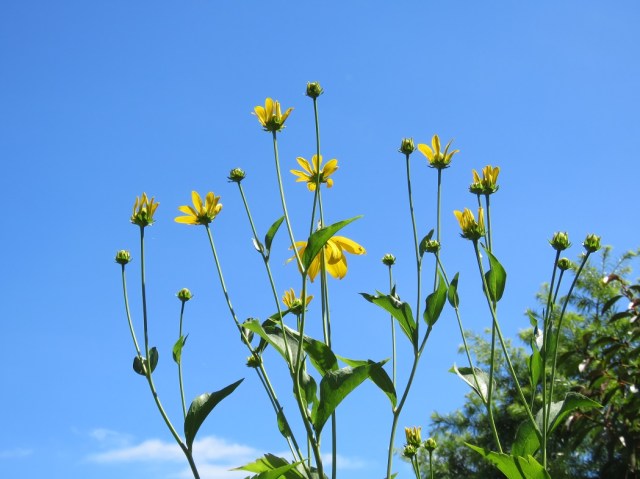
Ratibida pinnata. The flowers have since opened more to show the coned centre that is also seen in echinaceas and some rudbeckias but it was a bit wet for me to get another photo

I had photographed a fine white echinacea a couple of weeks ago when I visited the flower graves at the Te Henui cemetery and thought I could use them. When I saw it – or something very similar –  on the online list, I added 3 of it but I am now thinking that maybe I should have ordered 15. Mark keeps reminding me we are not getting younger and maybe we could be extravagant in taking short cuts to get the effects we want now.
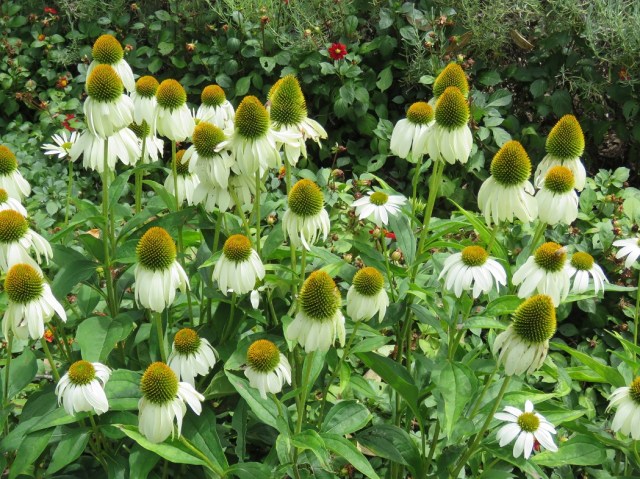
The white echinaceas in the cemetery which saw me ordering Echinacea purpurea ‘Happy Star’ which may or may not be the same but is certainly similar
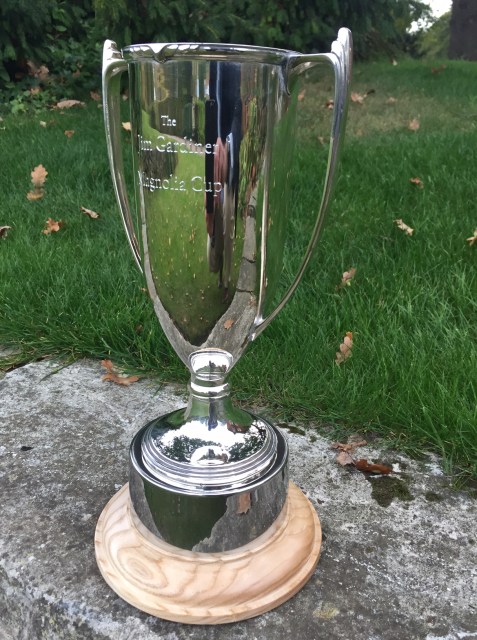
This shiny cup is Mark’s for the year, even if he never get to hold it

Mark has been awarded a cup! A very shiny cup, although this photo may be the closest he ever gets to it. In these trying times of pandemic, travelling to the UK to receive it in person is right out of the question. It is from the UK’s prestigious Royal Horticultural Society and it is the Jim Gardiner Magnolia Cup, awarded annually to recognise the international contribution of the recipient to the genus Magnolia. I think Mark may just be the fourth recipient so far and the company is very select. While it is a niche speciality, he feels genuinely honoured and it made our week. The citation references his “development of high-quality hybrids, now regarded as garden classics and the introduction of the Fairy series. Gardens across the world are richer thanks to your dedication, discernment and creativity”.  That handsome accolade is one we get to keep as personal, even if the cup remains back in its UK home.

Not at all in the same league, I have my first garden column in the new, glossy Woman’ magazine coming out. It has just gone to print so presumably it is the March issue. I am not a great magazine reader, unless I am waiting for the dentist, but I rushed out to buy a copy of this one to get a feel for it and promptly felt nervous. It has a fine line-up of women writers as contributors, including a younger generation whom I hold in very high regard. We will see how things progress in that quarter.
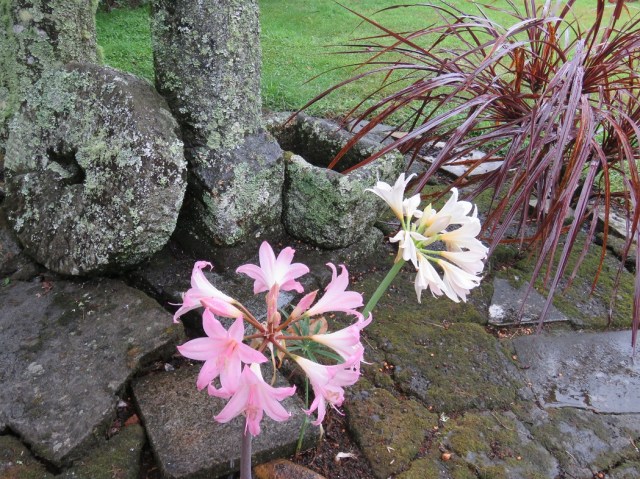
The somewhat unregarded belladonna

Disconcertingly, the first belladonnas are open. It is like the clarion call of autumn when the bulbs start blooming. You will find me over in a corner of the garden crying, “No! No! It is only the start of February! We are not ready to be confronted with the earliest harbingers of autumn quite yet. Wait til the end of March, please.” But the plants care not one whit for our wishes. They will follow their seasonal triggers.
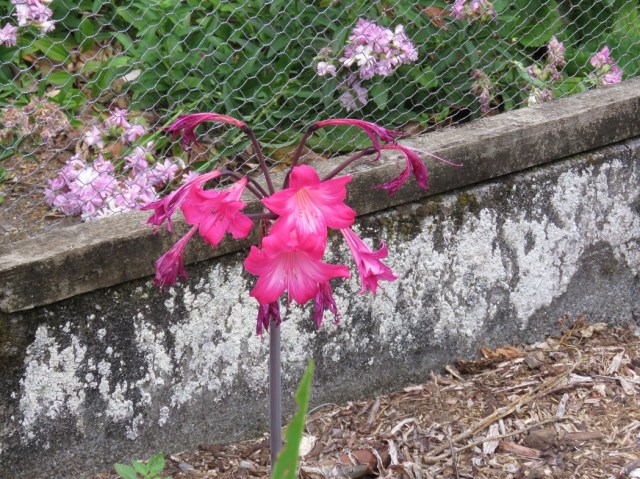
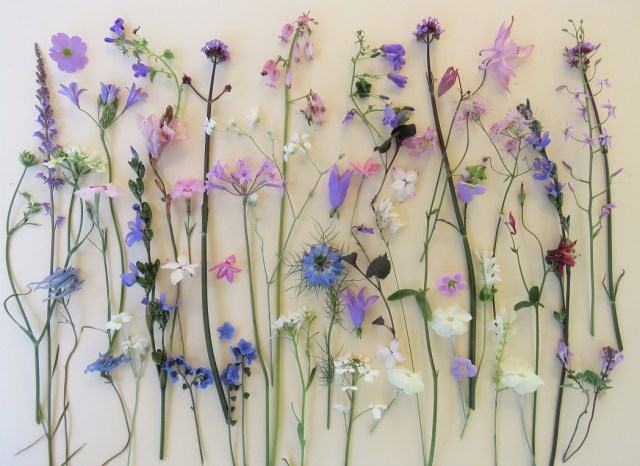
Seasons Greetings

What can I say about Christmas 2021? May you find peace, happiness and tranquillity wherever you are in these difficult times. And may you and those around you stay safe and well.

All the best,

Abbie and Mark

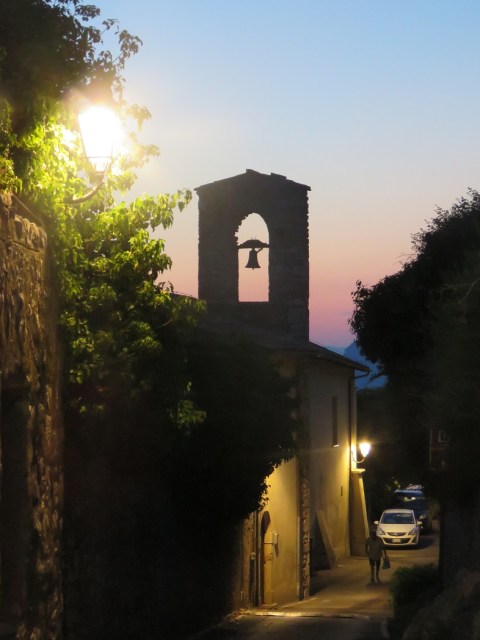
Not, I admit, a Christmas scene. It is in fact June 2017 in Sermoneta, a hilltop village in Italy and it feels like another world now. But I like the photo.

A lucky escape

There was a clue from the back doorsteps but neither of us noticed it immediately

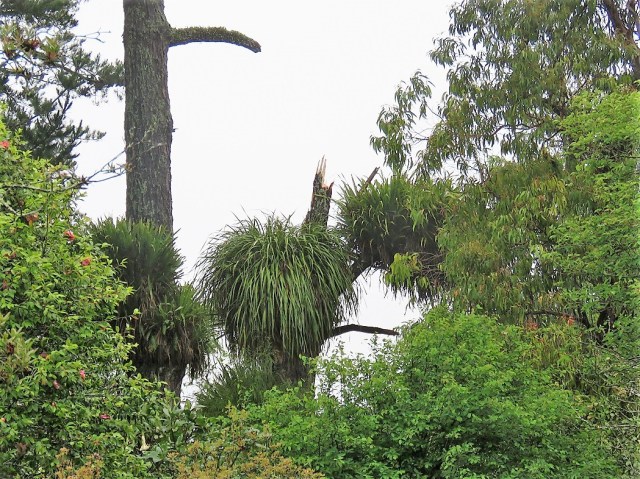
Mark is an under-stated man who never gets carried away by the drama of a situation. As we sat down for our early evening conversation before dinner yesterday (a glass of wine may have been involved), he let me tell him about something that had distracted me during the afternoon before starting to tell his news. “I was wondering,” he said, “when I planted rimu trees to take over from the old pines, why I placed one so close to one of the younger pines which had good foliage.”

I didn’t even realise he had done this long-term sequential planning for replacement trees under the old pines. Some of these trees are now coming up to 150 years old. When he referred to a ‘newer’ one, he was referring to those planted by his very late Uncle Les when he still lived with his parents here, rather than those planted by his great grandfather – so ‘newer, younger’ in this context means maybe 100 years old.

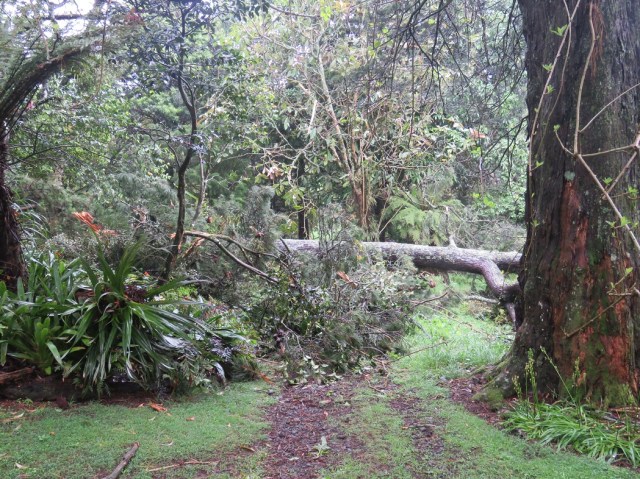
Then came the kicker comment: “It seems I didn’t have to worry about that.” I have lived with Mark long enough to know what he meant – the pine tree had come down. This would not have been anything more than inconvenience and a big clean-up job were it not for the timing. When we had a tearing gale during the garden festival ten days ago, we closed off the Avenue Gardens as a safety measure and changed the route for visitors to walk up the very path the tree has fallen across and blocked entirely.

We closed off this path as being too risky during the gale force winds ten days ago …
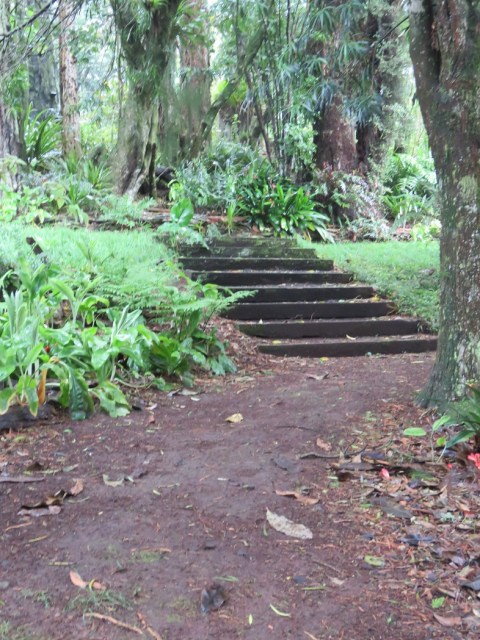
… and redirected to this route
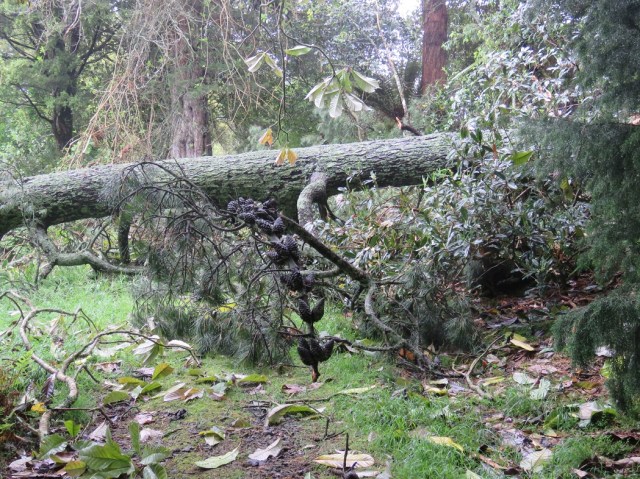
Now it looks like this. At least it didn’t happen during the recent garden festival

The mystery to us is when it fell because neither of us heard it. I walked up that path mid afternoon on Friday. Mark found the fallen tree late afternoon on Saturday. So there is a 25 hour time frame and in that period, there was rain but no wind. There would have been a loud crack, the sound of breaking branches and then a loud whoomp when it hit the ground. But we heard and felt nothing. Mark thinks it must have happened at night when we were both in deep sleep but I am sure we would have woken because it is not that far from the house. I think it must have happened when I was out shopping on Saturday morning and Mark was working in the shed with the radio on. He is adamant he would have heard it and felt the vibration. Maybe it thought nobody was here to hear it so it did not make a sound? (*Philosophy joke.)

Ah well. A whole lot of firewood has arrived, more than enough for us so we will be sharing it. And we have learned yet another lesson about the unpredictability of when and which way trees may fall when they come down.

It looks smaller in the photograph than it does in real life. I had neither person nor dog to pose for scale. It is about 100 years old.

Rhododendron season

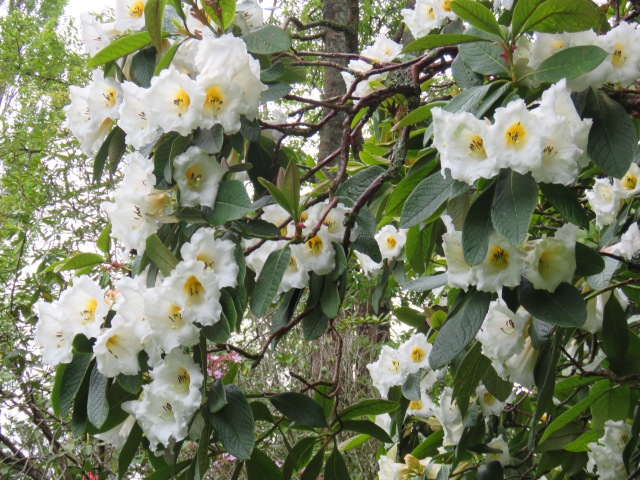
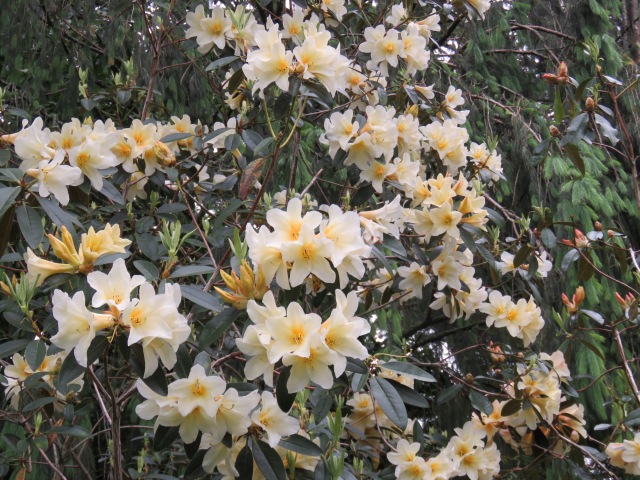
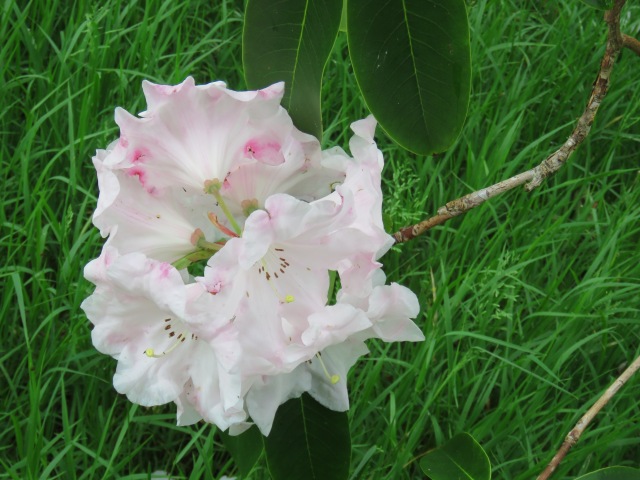
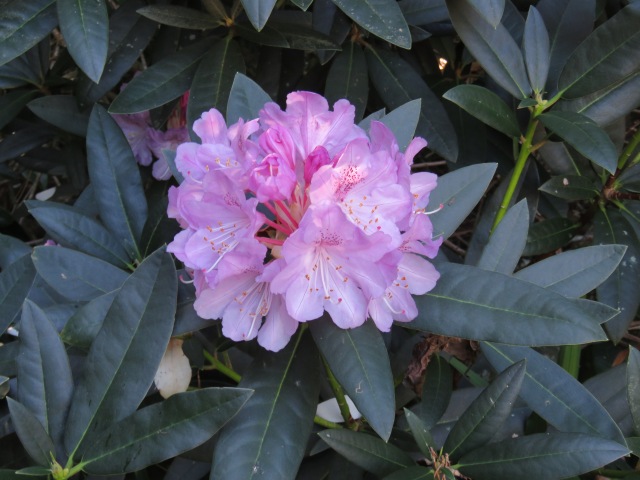
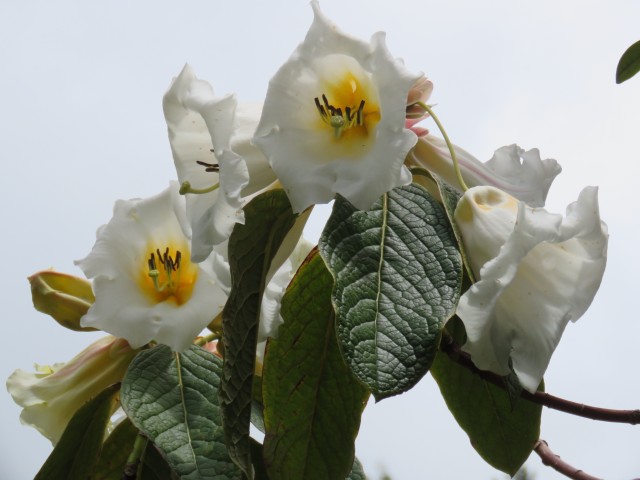
My favourite rhododendron – R. sino nuttallii

Occasionally, Mark and I torture ourselves remembering our years retailing plants. Do not get me wrong. The nursery served us well and enabled us to put our children through university and to retire early. We met many lovely people and to this day, former customers will tell us what they bought from us. Sadly, it is the obnoxious ones that stick most clearly in our memories. There can’t have been that many of them because, between us, we can come up with individual details and sometimes even names. I doubt that any read my posts.

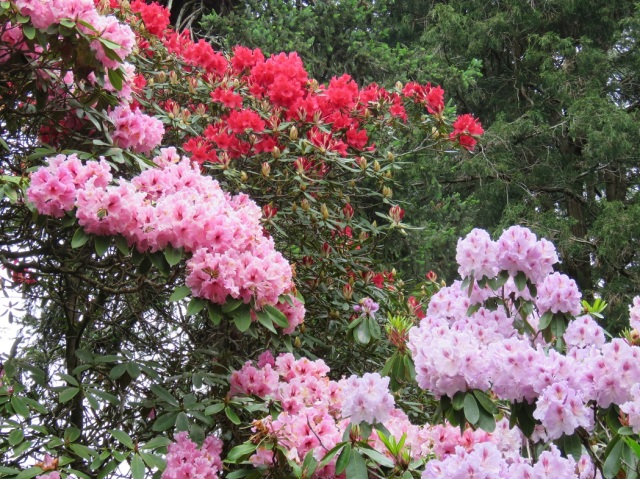
The classic rhododendron look with ball trusses – left to right ‘Norrie King’, a red whose name neither of us could pull out of the memory banks and ‘Derrell’ King
One of Felix’s yakushimanum crosses – this type of rhododendron does not spark joy for me, personally speaking.

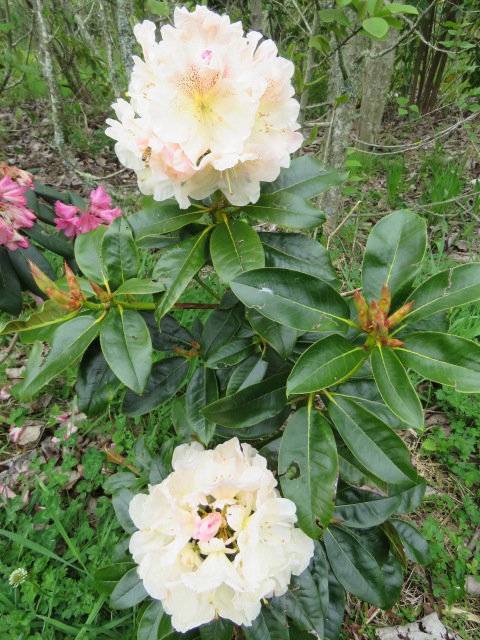
Mark built the nursery on rhododendrons in the first years and indeed, the garden here was primarily seen as a rhododendron garden. They were a hot ticket item and well over 100 000 were produced in Taranaki alone every year. Quite early on, Mark analysed the fact that many of our mailorder customers came from the upper half of the North Island and decided that if he was going to sell them rhododendrons, he would pick the varieties most likely to perform well in warmer climes. Most of the big, showy American hybrids that were flooding into NZ at the time – the likes of ‘Puget Sound’, ‘Lems Cameo’, ‘Anna Rose Whitney’ and so many more – needed colder winters and less humid summers than we can provide. We have lost many of those American and European hybrids in the garden here now and I am sure they never did well in Auckland.

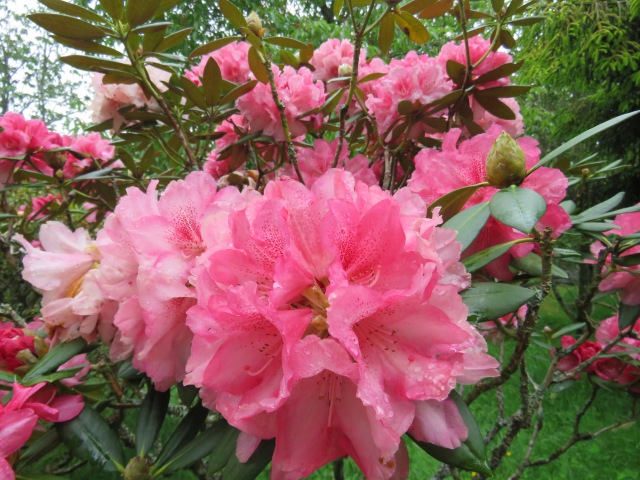
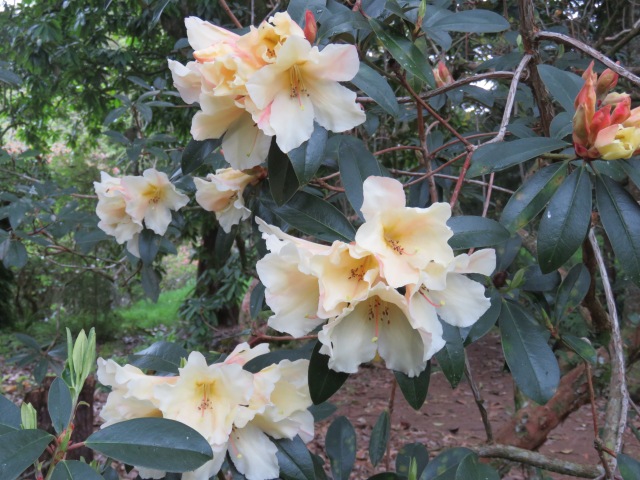
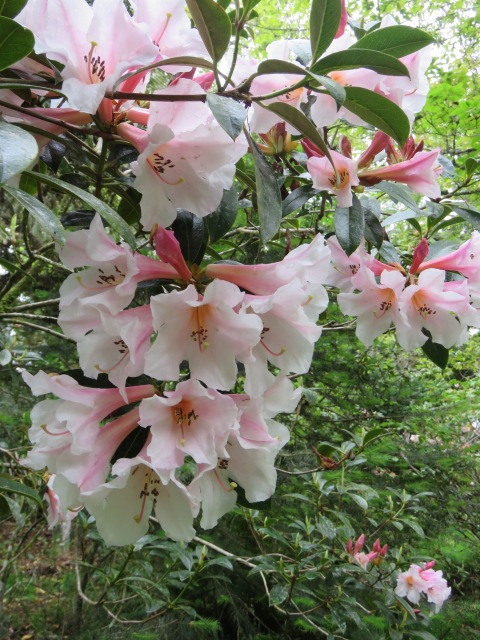
One of Felix Jury’s cultivars – Rhododendron ‘Barbara Jury’ showing the tupical maddenii form

He targeted a range within the maddenii group which were usually characterised by looser trusses of bell-shaped flowers, fragrance, mostly paler colours and, most importantly, healthy foliage in warmer climates. Many were from his father, Felix’s breeding efforts and Mark added to them.

‘Moon Orchid’ – a sister seedling to Barbara above

This week when the R. sino nuttalliis are looking so glorious they can take my breath away and many of the maddeni hybrids are flowering, I thought back to those retailing days. It was a constant uphill battle to convince customers that these were splendid plants much better suited to their conditions when their mental image was entirely focused on the classic rhododendron look of big ball trusses sitting atop the foliage. In the 1990s, if they were male customers, they not only had to be big ball trusses, they had to be RED. It became a joke here that every time a nursery plant opened a big truss of red flowers, a man would buy it on the spot. If women bought a red rhododendron, it was almost always for their husband.  Maybe times have changed in the decades since.

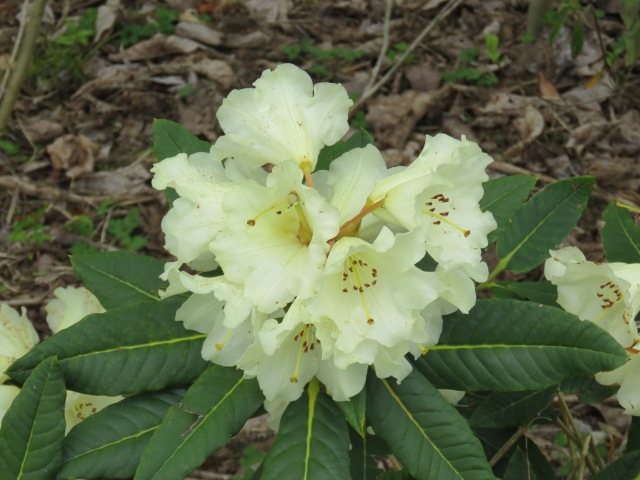
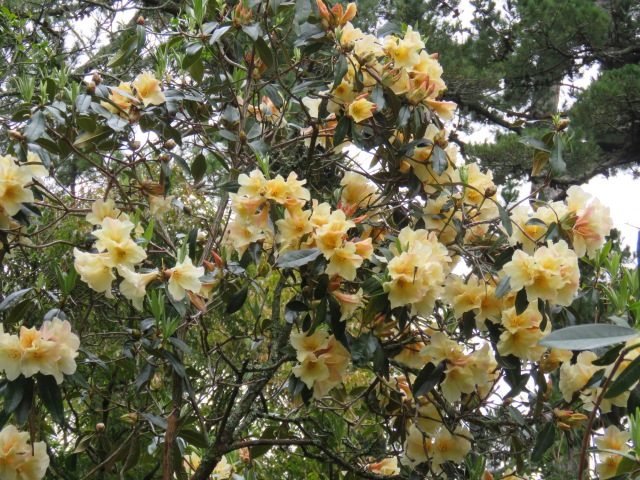
One of the loderis – we think it is ‘Venus’. It is a bit of a ratty plant all year except when in bloom when it is glorious

A rhododendron friend who went around the garden last week commented on how lovely it was to see mature rhododendrons in a garden setting. I had forgotten that huge gulf between tidy, little nursery plants standing maybe 50cm high in their pot and the large specimens we have in the garden. I don’t miss those days of nursery production and sales one bit.

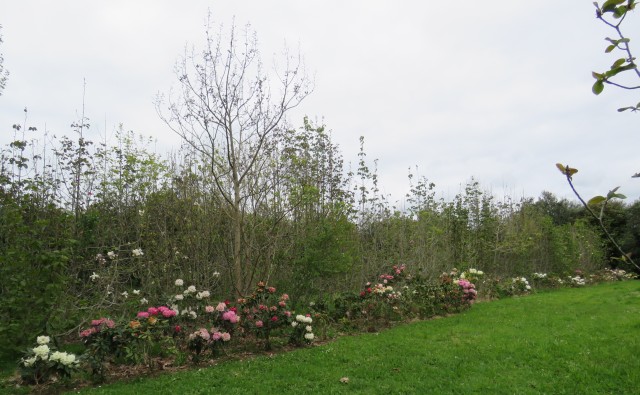
Just a random row in the trial area
Look at how clean the foliage is, given the total absence of any attention and very open conditions

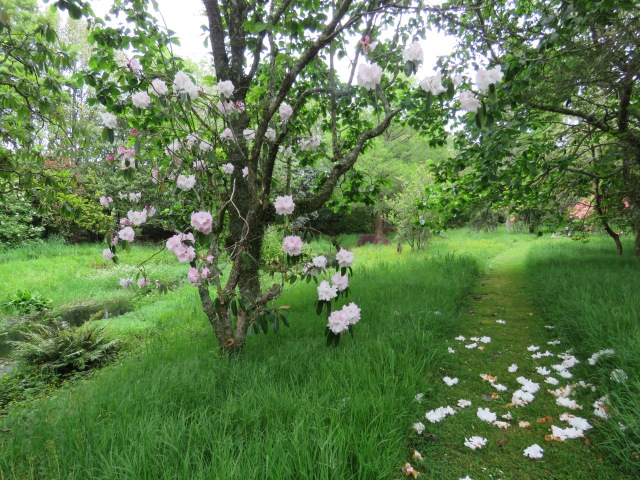
Ironically, as rhododendrons fell from favour in the market, Mark started to get the breakthrough of big, ball trusses on plants that kept good foliage (not turning silver from thrips and getting crispy brown edges to the leaves). We have a long row of them quietly growing in full sun and open conditions in the trial grounds. They are not my favourite; big ball trusses are less appealing to me and they have no scent. Mark is a bit underwhelmed by the flower colours – he doesn’t see any colour breakthroughs in them. But what sets them apart is that growing over the years with no care, no spraying, no fertiliser, no pruning and in full sun, many of them have kept excellent, clean foliage and they cover themselves in blooms every year. That is the breeding step that he managed.

More seedlings but it is the foliage we are admiring

They were bred specifically for our conditions but the commercial market for rhododendrons in NZ is so small now that there is no incentive at all to release them. He just reached that breeding goal too late for our nursery days and for when rhododendrons were an elite and fashionable line. Such is the life of a plant breeder. They can just sit over in the trial grounds. We have the space and they are not doing any harm there.

Is there anything lovelier than a sino nuttallii?

I have long said that if I could only grow one rhododendron, it would be a R. sino nuttallii. I doubt that they are available commercially here these days when specialist growers have all but gone, although some of the nuttallii or madennii hybrids are still around. Most of you will just have to enjoy them vicariously and take my word for their bold beauty and delightful fragrance.

An unnamed seedling in the maddenii range
Another unnamed seedling which is a full sister to ‘Barbara Jury’ and ‘Moon Orchid’.

2021 Taranaki Garden Festival in Covid Times

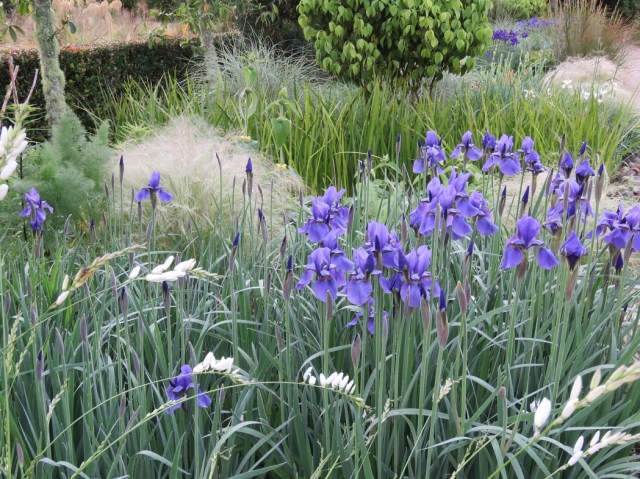
White ixias and Iris sibirica ‘Blue Moon’ in the summer borders

As you read this, we will be on the last day of the 2021 Taranaki Garden Festival. Ten days may not sound long but it is very long when you are meeting and greeting visitors solidly, especially given our lives where we spend long periods of time alone with our own thoughts in the garden. So forgive me if I seem a little tired.

It has been an odd festival. Last year broke all visitor records when the country was Covid-free but nobody could travel overseas. This year was shaping up to be even larger until Delta took hold in Auckland and then Waikato. With internal borders closed to the north of us, we kept our fingers crossed that they would reopen in time for the festival but it became clear that would not be the case. When we had ten coaches cancel in the week before festival, it was a bit… deflating, shall I say? With those northern borders closed, we could see that 40% of the visitor base simply couldn’t travel. Added to that, a fair number of people to the south didn’t want to travel and who can blame them? Preparing the garden for a festival that seemed to be dwindling day by day felt very much like being all dressed up for a party but nobody was coming.

In the end, it has been fine. Yes, visitor numbers are way down on the early indications but overall, we have still been running above our long-term average. Not hugely above but better than expected.

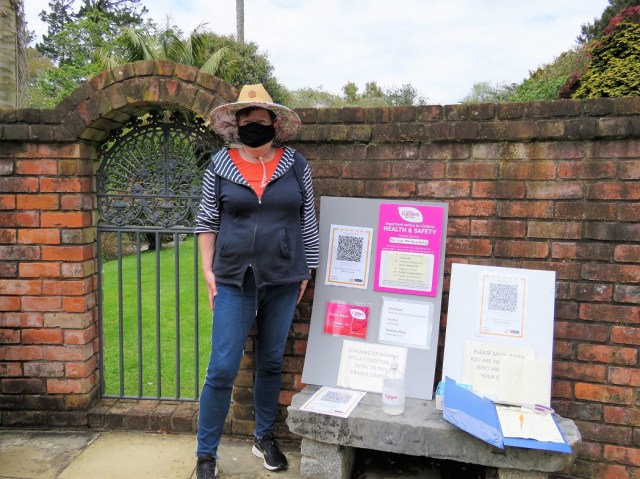
Our friend and helper on the gate during a Covid festival

A Covid festival has been different to manage, especially in this country where we were late to adopt wearing masks. But I can report that the particularly loud – rabid, even – but small number of Covid deniers/anti maskers/anti vaxxers are not garden lovers. We have had 100% cooperation on scanning or signing in and keeping to our masking policy (mask at the entrance and then carry it around the garden to wear if near others). None of us likes masking but nobody wants to spread Covid in areas of this country that are still blessed to be free or largely free from it at this stage*.  The good-natured compliance has been a surprise to us but very welcome. It seems that when expectations are clear, people respect the protocols. I have found managing physical distancing challenging when taking workshops and leading tours around the garden but goodwill goes a long way.

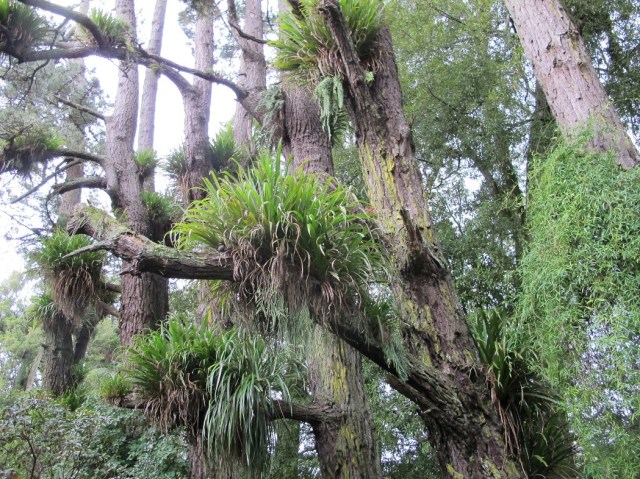
Even we never work beneath these trees in windy times; we were not going to risk visitors’ safety.
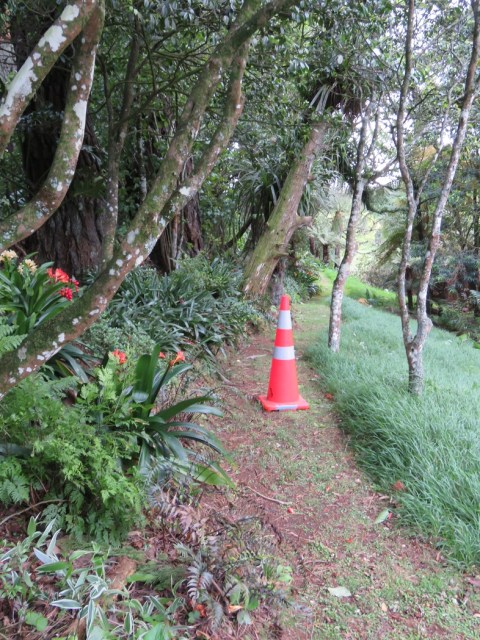
Blocking off paths and redirecting visitors around danger areas

Wednesday – oh windy Wednesday. It is a long time since we have experienced a wind such as the one that blew relentlessly all night and day. It was not so much wind as a howling gale. At least we managed to remain open and areas of the garden are so sheltered that all that could be heard was the roaring in the treetops above. A few other gardens were forced to close entirely. For the first time, we closed one section of our garden. Walking the Avenue Gardens beneath our giant old-man pines was a significant safety risk so we redirected the routes to skirt around that area. But brave souls still turned up to visit.

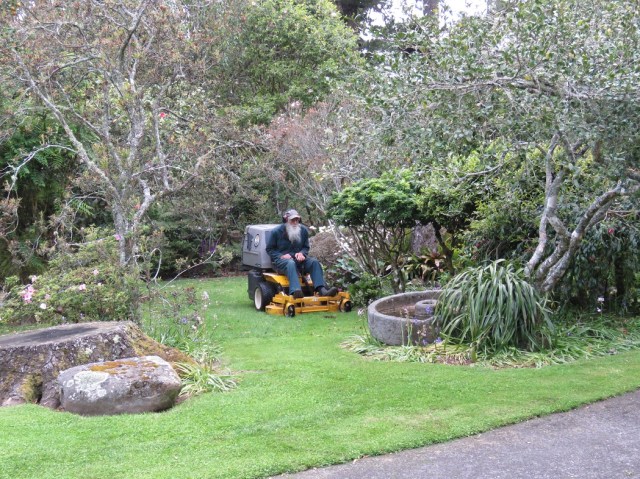
Lloyd ‘vacuuming’ the lawns at 8am
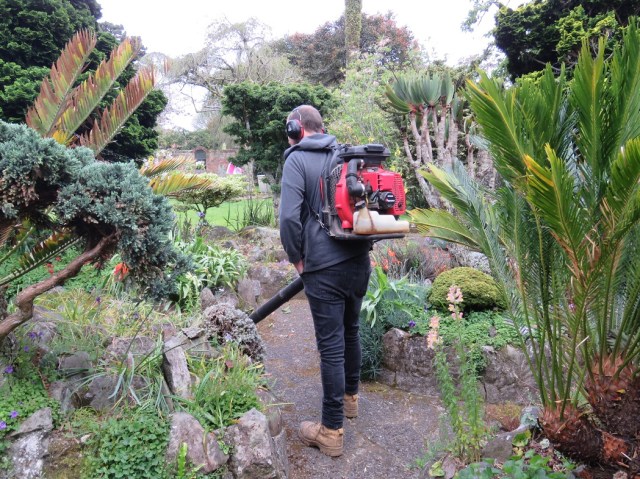
Zach on the motor blower
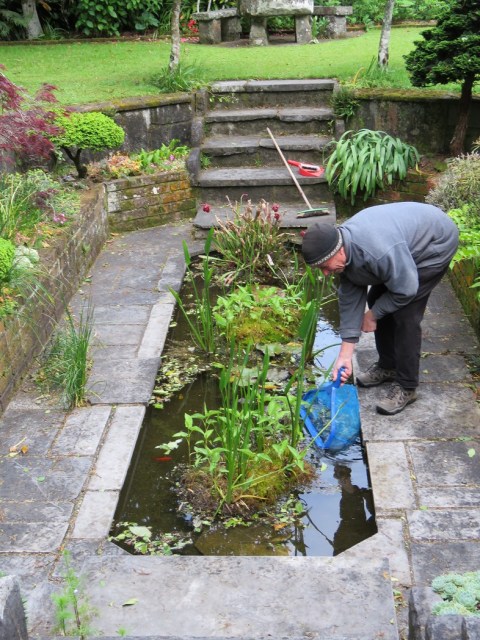
Mark scooping the pond and sweeping the sunken garden. I don’t do selfies so there is no photo of me but I was equally busy.

On Thursday morning, the place was a mess. Nothing big came down but everything loose, small or dead certainly did. Never have I been so grateful to our small team. By 8am the next morning, we were all out doing a rapid clean-up. Zach was on the motor blower, Lloyd was vacuuming the lawns with the lawnmower, Mark was scooping all the debris out of the freshly cleaned goldfish pond and sweeping the sunken garden and I was reopening the Avenue Gardens. Soon after 9am, there was little evidence left of the storm damage and even I was impressed at the speed and efficiency with which we managed the restoration of order and garden decorum.

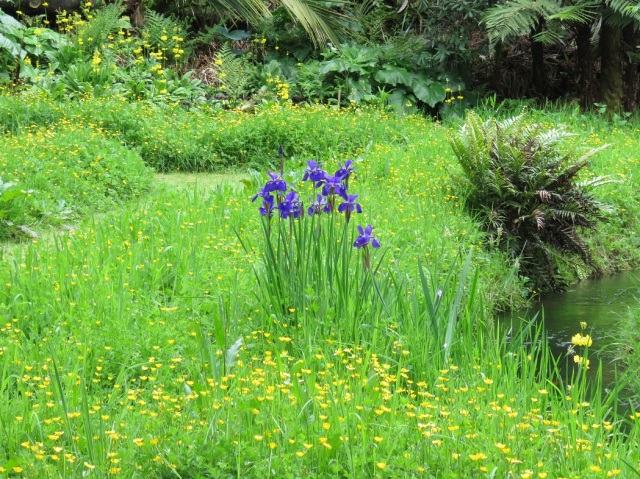
Zach and I have already scoped out patches of blue Iris sibirica we can raid to extend the patch in the park that is flowering so prettily

At 5pm today, we will bring in the flag and signs and close the gates. We have no intentions of opening for more than the ten days. Festival is most affirming for us. We are delighted that people come and respond to what we have here and clearly enjoy their visit. The praise is balm to our gardening souls. It will sustain us for the next 355 days. Tomorrow, we will be back out in our gardening clothes (looking more like old tramps, if I am honest), masks put aside for trips off the property only and moving more Sibirican irises down to the meadow by the stream. There is plenty to keep us busy.

Footnote: it appears our Covid-free honeymoon is over. It has been found in wastewater nearby so we now go into a holding pattern as we wait to find how much Covid we have in our area.