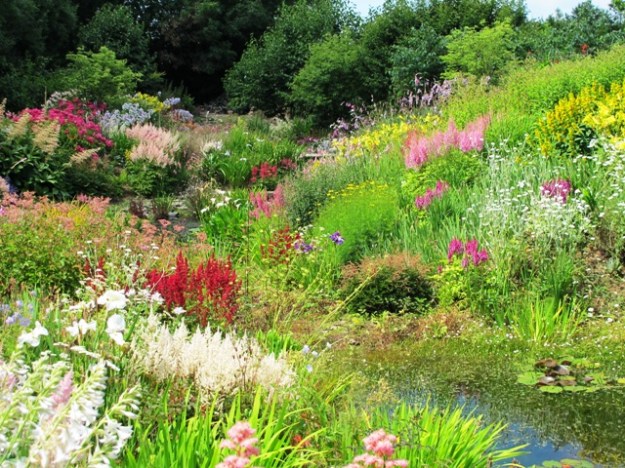
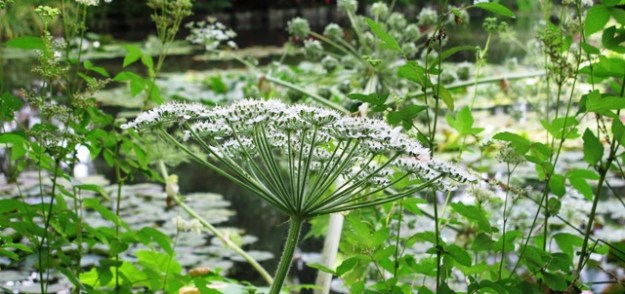
 My first encounter with a garden strongly promoted for its romanticism was in northern Italy – Villa San Remigio. If you have ever been to the Italian lakes district, you will nod in agreement when I say that the whole place seems impossibly romantic. Stresa, Mennagio, Bellagio (the Lake Como one, not the Las Vegas one) – in the right circumstances these are places of charm bordering on enchantment.
Villa San Remigio had a wildly romantic back story – the love affair between a Neapolitan poet and musician and an Irish artist. If my memory serves me right, there was some sadness, earlyish deaths and childlessness. It had the mandatory handsome villa and a particularly lovely old church along with beautiful views across Lake Maggiore. But were the gardens romantic? It was all gentle decay when we were there, especially of the old concrete (and there was a lot of old concrete in larger than lifesize shrine-like constructions and terraces) and whoever managed the place was hoping to get grants for a major restoration. It may have been done by now but competition for restoration money is stiff in a country with such a long history and so many things in need of major investment.
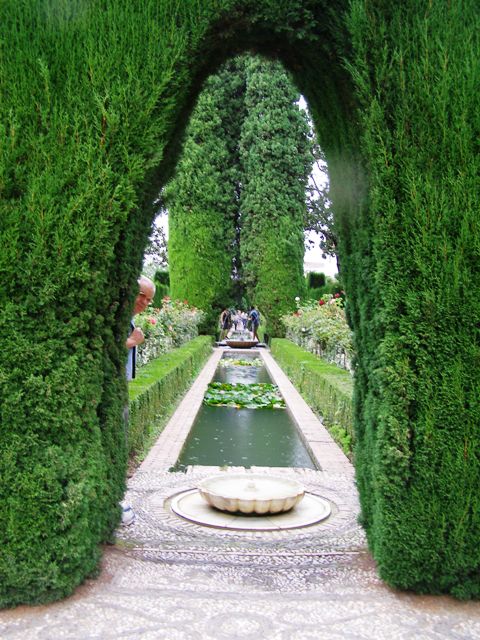
The gardens at the Alhambra are re-creations. Note the gentlemen on the left, politely trying not to intrude on my photo.
I searched on line and found an article in the UK Telegraph, listing their pick of the ten most romantic gardens. Villa San Remigio wasn’t on it, but the Alhambra in Grenada, Spain and Monet’s water lily garden in France were and I have been to both of those. The Alhambra is an amazing place but the gardens are a modern re-creation. It is the whole package there that makes the romance – the history, the beautiful palaces which are on quite an intimate scale, the light, the view across to the Albaicin (or medina)…. The garden enhances but does not generate the romance. The most recent. modernistic gardens at the Alhambra were anything but romantic.
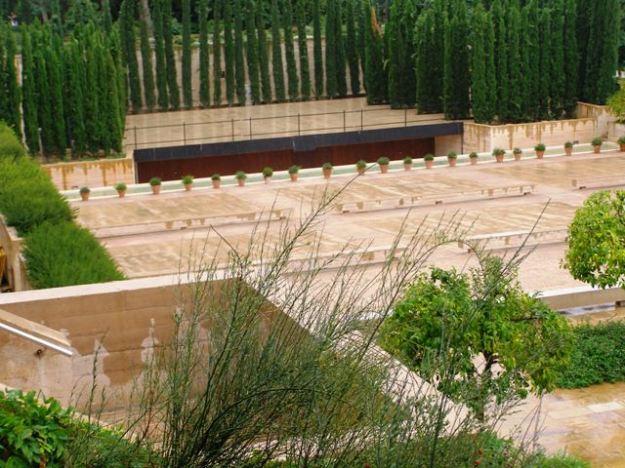
There is nothing romantic at all about the latest, hard-edged modern garden addition at the Alhambra.
Monet immortalised his garden in so many paintings which imbues the place with added mystique. An analysis of the garden itself rather belies that. However the water lily garden is loosely maintained and in a naturalistic style which contrasts with his more rigid stripes in the upper garden.

Monet’s waterlily garden is charming enough, as long as you don’t mind sharing it with many strangers.
What these gardens have in common is a rich history, age and gentle decay, some solid architecture of note and romantic back stories. The gardens do not necessarily stand on their own merits. And let’s face it, in this country we lack most of the above although some of us can manage some gentle decay. But age is measured here in decades, not centuries.
These gardens – and most of the ones on the Telegraph list – are all well out of private ownership now but the love of romantic gardening dates back to the original visions of private owners, albeit generally ones with considerable personal wealth to achieve their dreams. These days the romance is a product of sophisticated marketing. I am yet to be convinced that an institution or business ownership model is capable of generating a romantic garden.
But private individuals can and do. I would disagree with the Telegraph’s list but that is because I am interested in the modern return to romantic gardening – what is being done here and now, not what was done last century or the centuries before.
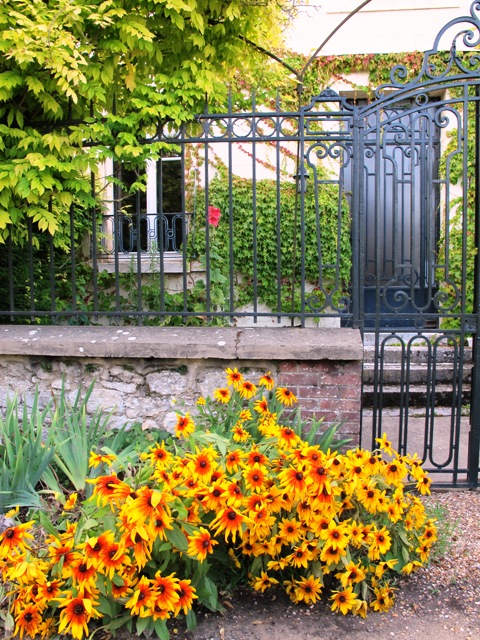
The soft-edged naturalism, helped by French village style, showed romantic gardening at a very domestic level.
We spent a couple of nights in the village of Giverny where Monet’s garden is located. I am quite willing to admit that our delight in the charm of the village may have been influenced by the departure of the daytime crowds, the soft evening light and the consumption of the fermented fruit of the French vine, but we found ourselves more engaged with the village scenes than we were with the star attraction. This was romanticism on a very personal, domestic level. The soft-edged naturalism, often with charming detail, has nothing to do with great wealth, grand vision and power. It is equally within the reach of the individual.
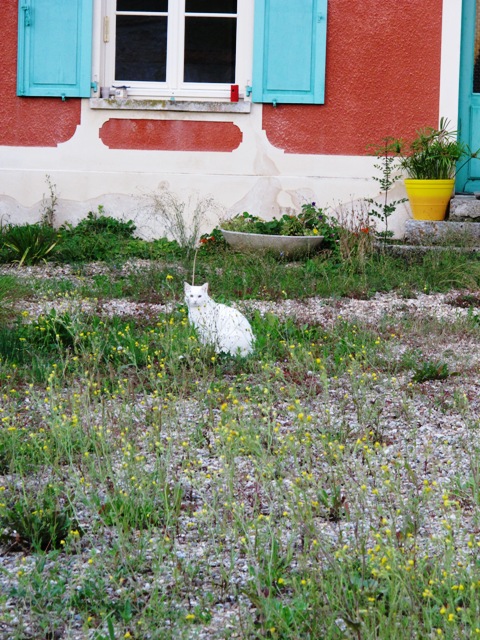
In the village of Giverny, even le chat français and le yellow plastic pot had a certain romantic charm in the evening light.
The Romantic Garden Part 1
First published in the Waikato Times and reprinted here with their permission.

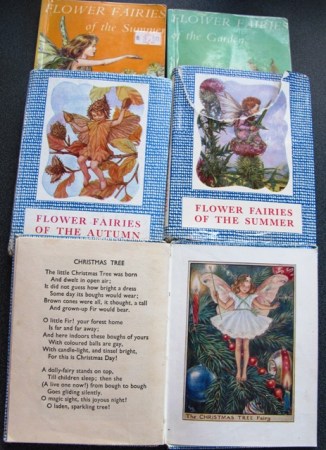
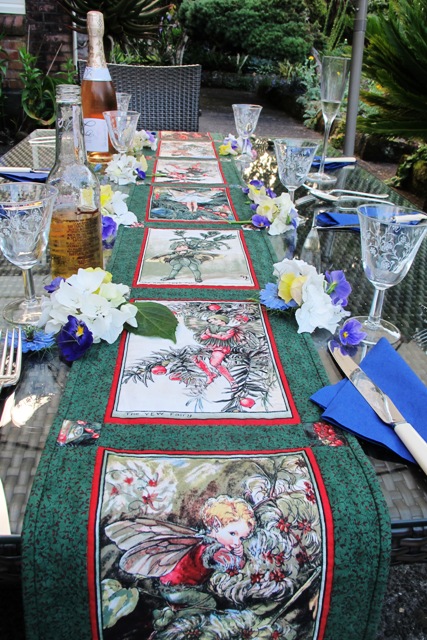 Garden lore: A Flower Fairy Christmas
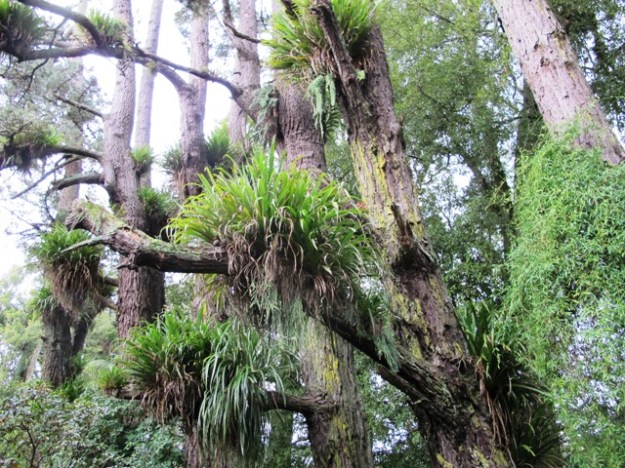 It is both a blessing and a curse to have a garden with very large trees. The pines (mostly Pinus radiata), native rimu trees (Dacrydium cupressinum) and Australian eucalypts all date back to 1870 to early 1880s when Mark’s great grandfather planted them. The rimus are rock solid with a life expectancy of many hundreds of years but from time to time we lose a pine or gum.
 While we can manage most of our tree work ourselves, this one posed a major problem. It broke about 6 metres up where Mark’s grandfather had topped the row in the early 1900s, creating a weak point. But it didn’t break cleanly and the top formed a major swinger. We did the initial cleanup but dealing to the body of the tree required specialist attention.
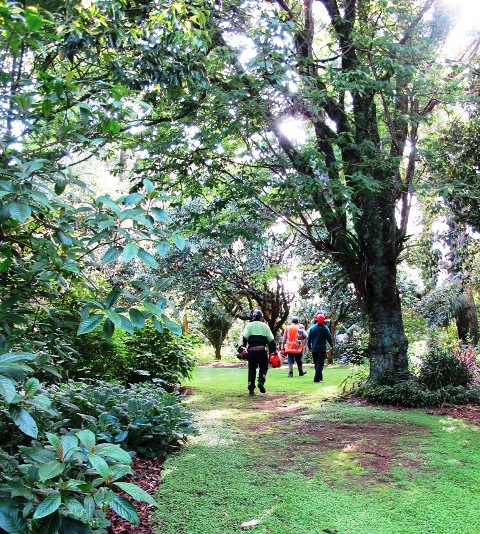 Enter the arborist crew this morning.
 There was a lot of consultation for this was a tricky operation.
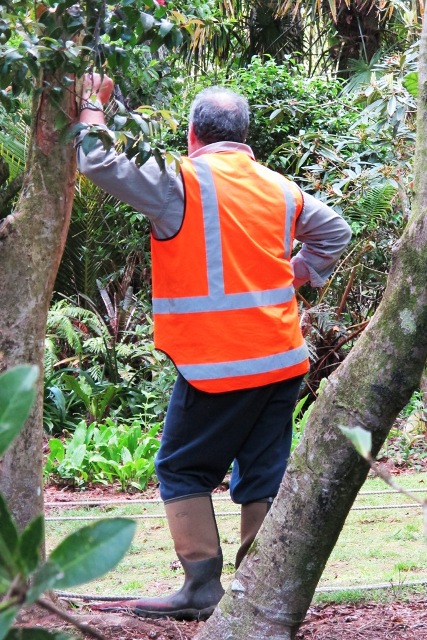 And a lot of supervision.
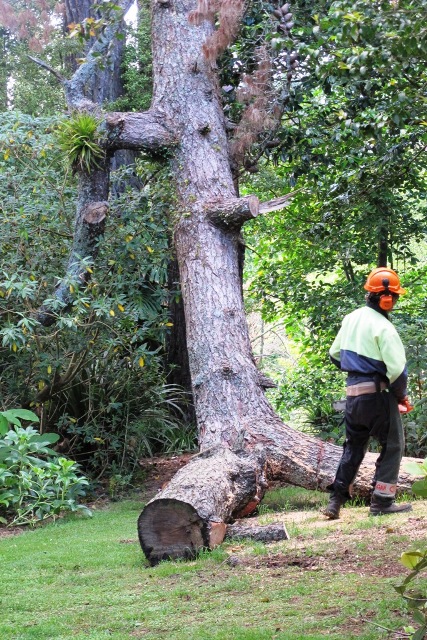 Cuts were made but things did not quite go to plan.
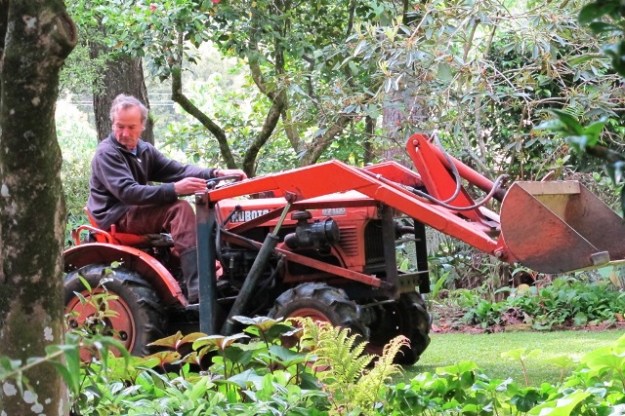 Soon, more equipment was needed. Do not laugh at our baby tractor. It is enormously useful, though not quite equal to this task.
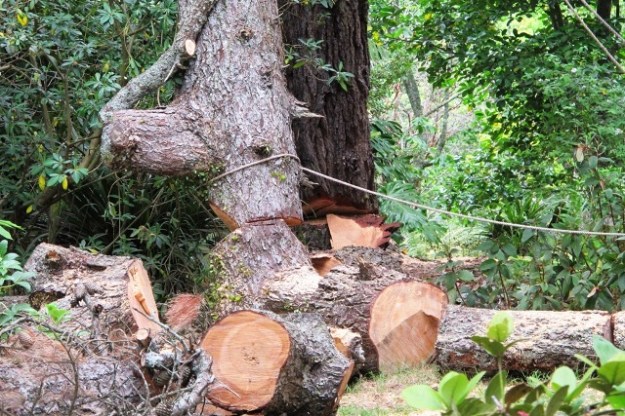 Both ends of the tree were cut through but it remained determinedly in position, defying all attempts to unbalance it.
 There was much manly consultation.
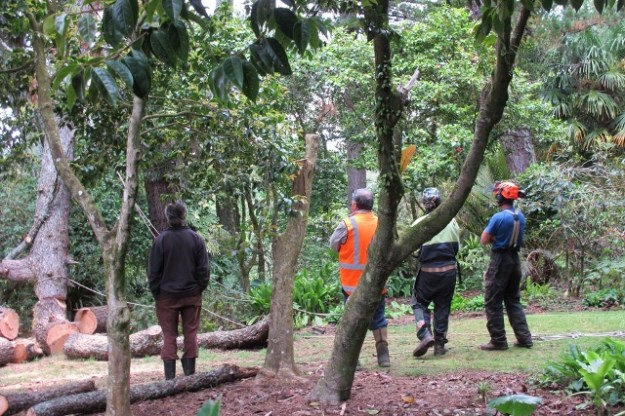 And even more consultation. Lots of consultation. A winch was needed, they decided. The crew departed for more gear.
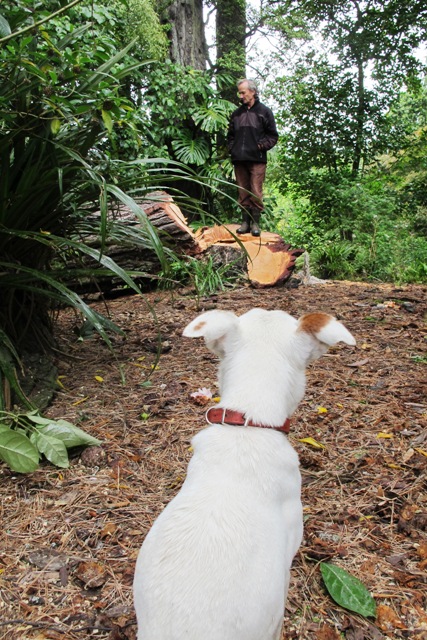 In the end, the crew returned with us not even noticing and both Mark and I missed the final rites when the tree was winched down. We were a little disappointed. It all seemed a bit of an anticlimax but is at least a major problem solved. It is remarkable how a tree some 40 metres high can eventually come down with minimal damage.
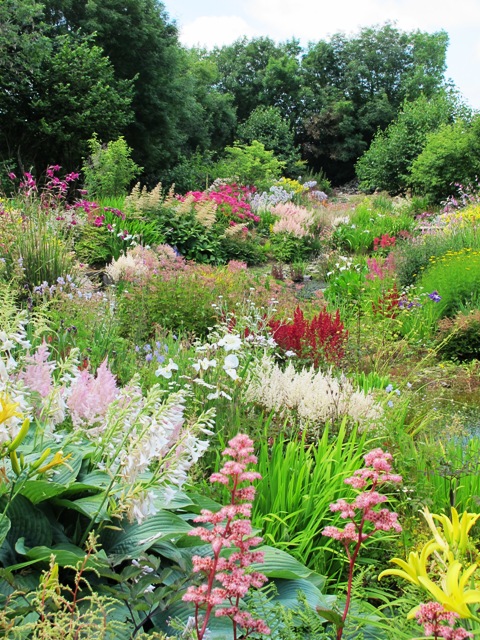 1) I want to try and capture the magic of a particular garden in a few words and photos. This is Wildside in North Devon and was quite simply one of the most exciting modern gardens we have seen. It is not that we will try and re-create it at home, but we found it interesting, stimulating and inspirational in many ways. It has been about 10 years in the making to this point.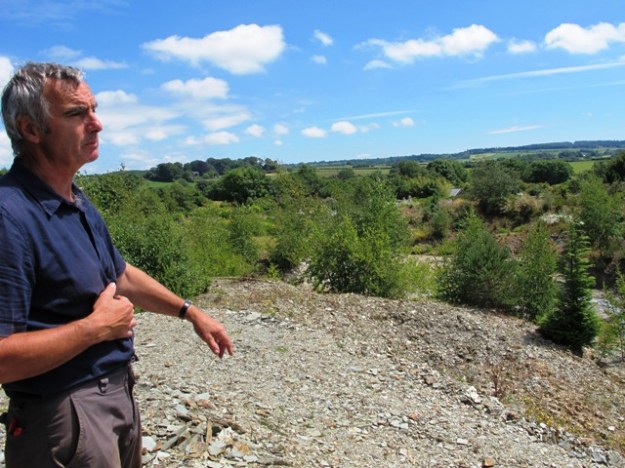
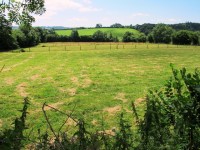 2) The creator, Keith Wiley (and let us acknowledge the active assistance from his partner, Ros) has taken a 4 acre (1.6ha) flat field and created a landscape. When he started, it looked identical to this neighbouring field. All the top soil was removed and substrata redistributed to create ponds, canyons, shallow valleys and hills. At this stage, it is still possible to see this process in the upper garden which has yet to be planted. Once shaped, Keith returned the top soil in varying depths, depending on what plants he planned to grow in each area.
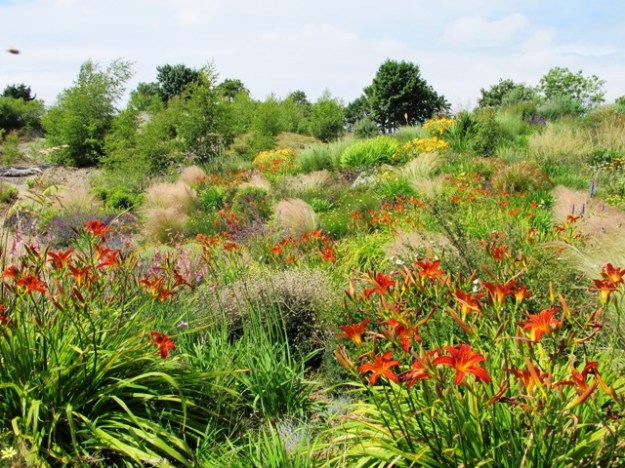 3) The interaction between the created landforms and the plants are the key components of this garden. When we visited, the upper garden was dominated by oranges, golds, yellows and whites. We would love to have been able to return a few weeks later because we could see that the dominant colour was going to change to blue and it would have looked very different. It takes exceptional plant skill to be able to get that transition and successional planting across seasons, let alone within the same season.
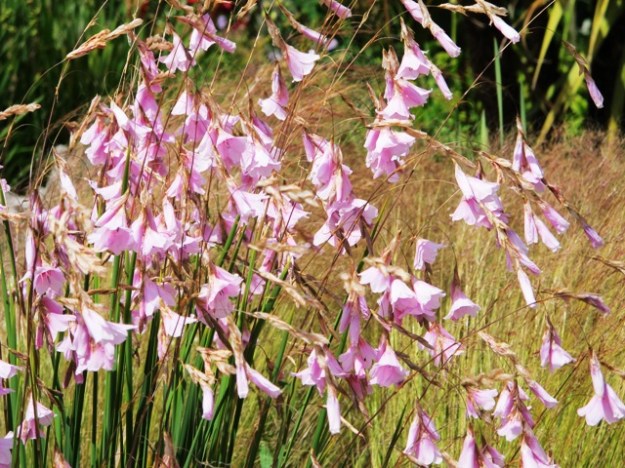 4) These are dierama, commonly called Angel’s fishing rods, one of the few corms and bulbs that were in flower in midsummer but this was a garden which was rich in drifts of bulbs – another layer of plant interest and a means of ensuring colour and detail when most perennials are either dormant or resting. In keeping with the modern perennials movement, there were grasses used but in moderation. Plants were in good sized clumps and often in drifts, but always in combinations, not chunky blocks standing in their own right as seen in many modern gardens.
 5) There is very little hard landscaping and very little ornamentation. There may have been one small lawn, from memory, but this is a garden of plants and flowers. Some may consider the lack of formality and structure to be a shortcoming, certainly in a country with a long history of landscaped gardens full of permanent features. We saw a garden that pushed the boundaries of the prairie style and New Perennials movement, combined with the creation of sustainable ecosystems, underpinned by exceptional plantsmanship.
 6) We travelled a long way to visit Wildside which is on the edge of Dartmoor, near Yelverton, and we would gladly travel a long way to see it again. However, it is currently closed to the public and it is uncertain when it will reopen. The owner told us that he needed to get the house built. After a decade of living in temporary quarters while giving priority to the garden, they had reached the point where the house had become a priority.
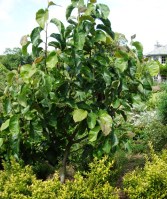 Yes, a prologue. We first became aware of Keith Wiley’s style when we visited The Garden House in 2009 – the garden of the late Lionel Fortescue which Keith managed for many years. True, he had no hand in the first sight to gladden our eyes. As we went to enter the garden, lo and behold there was Mark’s very own Magnolia Felix Jury in prime position. To say we felt proud would be an understatement.