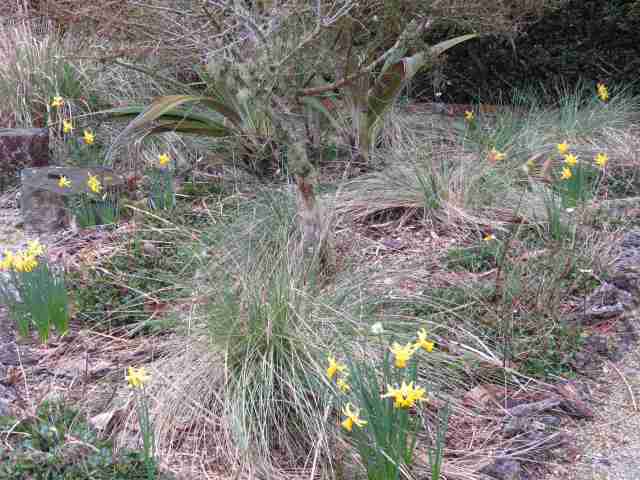
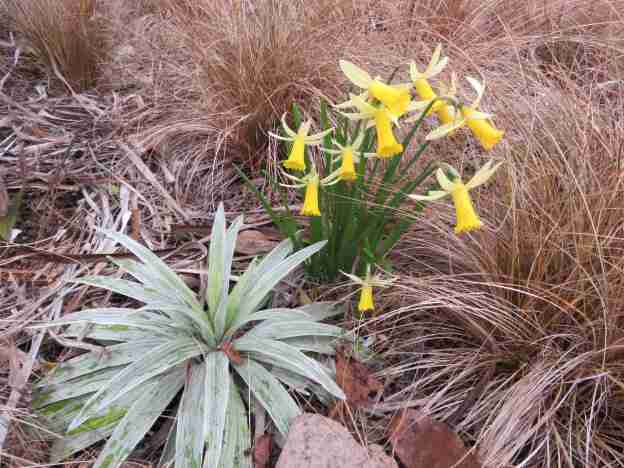
It has been a bitter cold week over the entire country, it seems. These matters are all relative; our daytime temperatures have barely made double digits so sitting in the 10°C to 12°C range with night temperatures about 10° lower. We have certainly complained at length about it. I have been most appreciative of the cheerful narcissi in flower. Yellow must be the most universally cheerful colour of all.

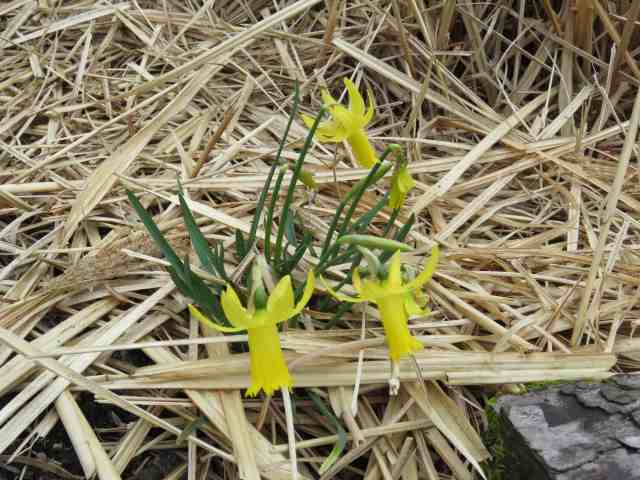
We like the early flowering ones. They cheer up a winter’s day and they are done, dusted and starting to die back when the nasty narcissi flies start hatching out as spring warms up. If you think your narcissi are reducing in number or if they are all foliage and no flower, dig up a few and examine the bulbs. If they feel soft when you press them and if they have few or even no roots, then you have an infestation of narcissi fly.

Zach has started the spring trimming round. First up were the Podocarpus parlatorei arches. It is a podocarp, as is our native totara, but this one is from Argentina. Mark had them as pillars but when Zach joined us in 2021, he started training them as arches. We own good, tall ladders in case you are wondering. Unfortunately it all has to be clipped by hand because the stems just bend with the electric hedgetrimmer but the end effect is to add some formality to the summer gardens, a defined axis.

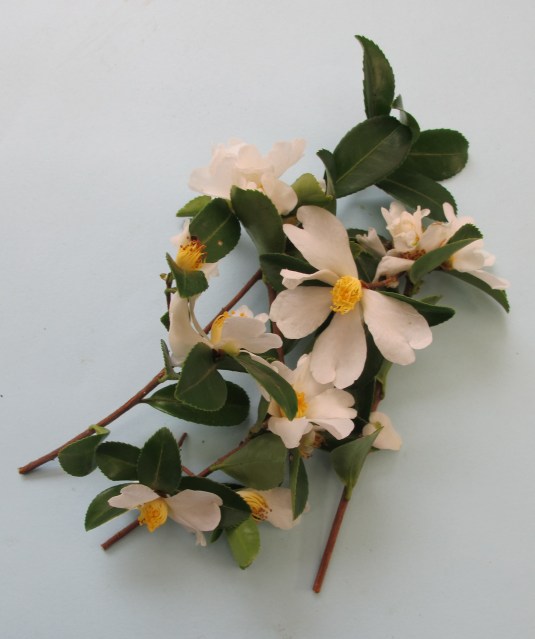
The arches terminate at what we refer to as the wave garden on account of the wavy hedges. Those undulating hedges are not an original idea; we have seen them used overseas and they are a hallmark of English designer, Tom Stuart Smith. However, they are usually done in buxus hedging. Our ones are in Camellia microphylla. This species camellia has a short but pretty enough flowering season in autumn so it has finished for the year. The advantage of using a camellia is that it doesn’t get buxus blight and can be left entirely to its own devices bar one trim after flowering and second tidy-up after its spring flush of fresh foliage.
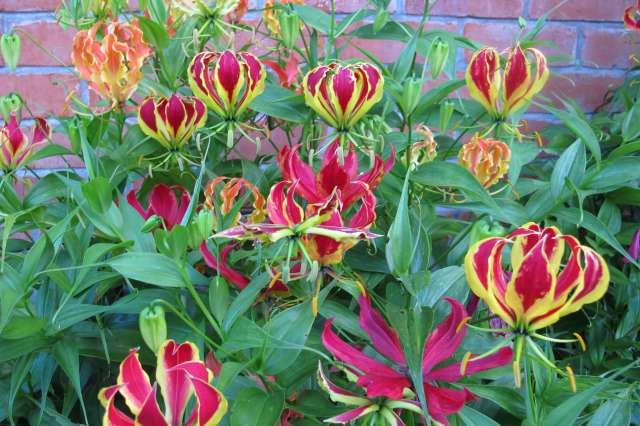
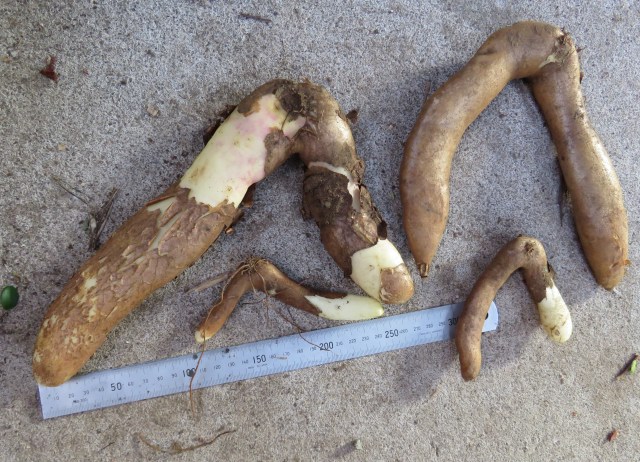
Look at these gloriosa tubers! The so-called climbing lily is not a lily but it is a good cut flower in summer. It is also making itself a great deal too comfortable so we are often thinning them. Zach dug out a bucket full and verily, we were astonished at their size. The smaller two at the front of this photo were what we would usually refer to as a good size, certainly not small. But they are utterly dwarfed by the big thumpers. Gloriosas are actually part of the colchicum family. The gloriosas grow from the tips, not from the centre V (which was last year’s growth point) so you need to make sure your tubers have at one intact tip, preferably two if you are buying it.
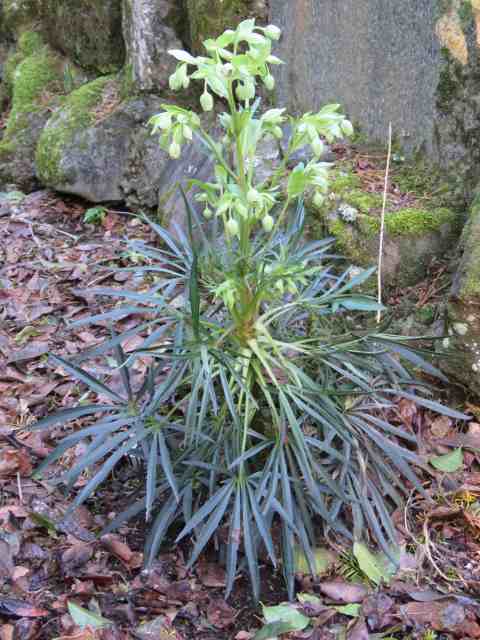
Finally, I say I am not the world’s greatest fan of hellebores but really, I think I should limit that to the common Helleborus orientalis. I think they often perform better in colder climates whereas we can grow some lovelier plants in our generally temperate conditions (cymbidium orchids, amyone?). But look at this fine, self-sown specimen of Helleborus foetidus. And spare it a thought. I went to check the spelling and came across its Wikipedia entry:
Helleborus foetidus, known variously as stinking hellebore, dungwort, setterwort and bear’s foot, is a species of flowering plant in the buttercup family Ranunculaceae, native to the mountainous regions of Central and Southern Europe and Asia Minor.
What did it ever do to deserve descriptors of stinking and dungwort. Dungwort? I have never actually noticed its aroma but I have often thought ‘now there is an under-sung, remarkably elegant plant’.
Stay warm if you are in Aotearoa this week. Stay cool if you are in the northern hemisphere, suffering from extreme heat, drought and rampant fires.